























Opening
This is a hardcore RPG that genuinely makes you live in 15th-century Bohemia.
You wake up in the morning. Your stomach is growling. Last night you drank too much at the tavern, your head pounds, and your clothes still carry blood stains from the last brawl. You look at the sword in your pack — the blade has gone dull, with a few chips along the edge. Before you can leave, you need to eat something, sharpen the sword, change into clean clothes — or there is no way you finish today's quest. That is not a description of a to-do list. That is what Henry of Skalitz does every morning in Kingdom Come Deliverance 2.
Warhorse Studios built the "detailed medieval life simulation" signature in the first game — your cleanliness affects persuasion, hunger and sleep affect combat, equipment durability needs maintenance, reputation is tracked independently per town. The sequel pushes the system further — more balanced combat, more polished side quests, much improved technical stability. That "anti-Witcher 3 design philosophy" hardcore simulation makes Kingdom Come Deliverance 2 unique in the 2025 RPG industry — there are no map markers or question marks scattered everywhere; you find points of interest through conversation and observation.
Metacritic 87. IGN 9. PC Gamer 90. Steam at 92% positive. Cumulative sales approaching 4 million copies. Those numbers tell you the weight, not the flavor. The flavor lives in that quiet moment when you have finished clearing up the village's troubles, sat down at the tavern for a hot lunch, then stare at the fireplace and think — where should I go next? Nobody is going to tell you. That is the magic of Kingdom Come Deliverance 2.
Story | 7.6/10
Story: 7.6/10Kingdom Come Deliverance 2 is one of the rare RPGs that walks a "serious history" path.
The core premise is Henry of Skalitz — a blacksmith's son — finding his fate in the political conspiracies of 15th-century Bohemia. This is not a fantasy tale, not a hero epic, but medieval drama grounded in real historical research. Henry has no magic, no dragons, no chosen-one halo — he is just an ordinary man pulled into the Holy Roman Empire's throne struggles, working his way through the medieval world through swordsmanship, persuasion, and stubbornness.
Story continuity from the original
The sequel's story directly continues from the ending of the original Kingdom Come Deliverance (released in 2018). Henry continues his journey through Bohemia, meeting old friends and new enemies, embedded in the historical backdrop of the Holy Roman Empire's throne struggles. Original saves cannot be imported, but players will find many original-game details deepened and answered — characters from the original return, locations from the original reappear, Henry's choices from the original are referenced in the sequel.
This "narrative continuity" is unusual among RPG sequels — most choose independent protagonists to avoid the baggage of veteran players' story memories. Warhorse chose the opposite path — treating the original's narrative depth as a sequel asset. Gamersky's review called the sequel "a major enhanced version of the first game," precisely because it preserves the original's complete narrative lineage while massively upgrading gameplay and tech. That product decision also shows that hardcore player communities deeply value narrative continuity. New players should consider playing the original first to get the most complete narrative experience, and veteran players will appreciate the many small callbacks scattered throughout the sequel.
Three paid DLCs and narrative expansion
Warhorse's announced 12-month roadmap contains three paid DLCs, each a self-contained small story.
Brushes with Death: Summer 2025. Henry aids a mysterious artist on a cross-region adventure, uncovering a web of conspiracies. The DLC theme is "art and power" — the complex relationship of medieval artists depending on noble patronage. About 8-12 hours of new content.
Legacy of the Forge: Autumn 2025. Henry returns to his blacksmith roots — restoring a once-renowned forge, improving his blacksmithing, honoring his late father's storyline. The theme is "family and inheritance" — letting Henry reconcile his identity as a blacksmith's son. About 10-15 hours of new content.
Mysteria Ecclesiae: Winter 2025. Henry explores Sedlec Monastery on covert missions, untangling medieval religious and political conflicts. The theme is "religion and power" — the labyrinthine workings of medieval church authority. About 12-18 hours of new content. The three DLCs together cover the topics Kingdom Come Deliverance fans care about most — art, blacksmithing, religion — giving long-tail operations a clear thematic direction. Each DLC introduces new mechanics, avoiding the "lazy add-a-few-maps-and-weapons" pattern. The pricing and content ratio compares favorably to other prestige RPG expansions of the past decade.
Serious historical RPG product philosophy
Daniel Vavra (creative director) has stated explicitly in multiple interviews that the Kingdom Come series aims to make "serious historical RPGs." That means: refusing fantasy and supernatural elements, refusing politically correct character design, refusing modern RPG's over-convenience features. Every quest, geography, culture, and religion is grounded in real historical research.
That stance has been controversial in mainstream Western media. Eurogamer's 3/5 review touched on Vavra's political positions, and Vavra responded publicly. But that controversy actually clarifies the Kingdom Come series's unique positioning — it is not an RPG made to please everyone, but an RPG made for players who genuinely love hardcore historical RPGs. That niche-leader product position lets Warhorse Studios maintain player community loyalty independent of mainstream press, a core driver of the 4 million sales. The "studio plus community mutual recognition" model gives the Kingdom Come series an independent market vitality beyond mainstream coverage, proving that hardcore historical RPGs still have a strong player base in 2025. Many critics now also concede that the niche is broader than they had assumed at launch.
Narrative comparison to peer RPGs
Compared to peer RPG benchmarks, Kingdom Come Deliverance 2's narrative direction sits at the opposite pole from Witcher 3 — Witcher 3 uses Slavic mythology and human drama, driving the story through cinematics and choices. Kingdom Come 2 uses real historical recreation, driving the story through immersive life simulation and player-led exploration. Neither philosophy is wrong — Witcher 3 suits players who like "being pushed by the story," Kingdom Come 2 suits hardcore players who like "digging their own holes and climbing out."
Compared to Baldur's Gate 3, Kingdom Come 2 also takes a different direction — Baldur's Gate 3 uses D&D classic CRPG party narrative, Kingdom Come 2 uses single-protagonist growth narrative. These two 2020s RPG flagships occupy their own poles, proving that RPG narrative design philosophy is still in active multidirectional exploration. That diversity is good for players — you do not have to settle for one "standard RPG" path, you can pick the work that fits your taste. Kingdom Come 2 and Baldur's Gate 3 each have loyal fans in their communities, with essentially no competitive overlap. The healthy coexistence of these distinct philosophies is also a sign that the RPG genre is in one of its strongest creative periods.
Audio | 9.0/10
Sound: 9/10The audio of Kingdom Come Deliverance 2 is one of the rare RPG works fully steeped in 15th-century Bohemia.
Jan Valta and Adam Sporka lead the OST, choosing not the "orchestral epic" route but real medieval instruments, religious choirs, and folk dances to recreate the authentic sound of 15th-century Bohemia. Lute, organ, theorbo, drum, flute, choir — these instruments and arrangements come through clearly in every piece in the game. The full OST runs over 80 tracks — the most direct expression of Warhorse Studios' commitment to medieval music research.
Medieval instruments and sacred choir
Environmental scoring divides into three categories — daytime village folk music, nighttime tavern songs, and castle and church religious choirs. Each category is arranged according to 15th-century Bohemian musical traditions. Village folk music uses lute and flute in simple melodies. Tavern songs use theorbo and vocal harmonies in lighter tempos. Church choirs use Latin Gregorian chants and polyphonic religious choirs.
That "music as history" design keeps players immersed across 80-150 hour campaigns. The Latin choir you hear walking into a church, the folk song you hear sitting in a tavern, the flute you hear riding through a forest — every track is an authentic auditory recreation of medieval life. That precision of musical research is matched in the RPG industry only by the Western soundtrack of Red Dead Redemption. The ensemble sizes also follow real 15th-century band configurations, with no modern orchestra padding. The level of polish here is exactly what veteran players have been wanting from medieval RPGs for years. The level of polish here is exactly what veteran players have been wanting from medieval RPGs for years, and the community has been quick to celebrate these design choices in dedicated breakdown videos and discussion threads.
Foley design: swords, horses, fire, wind
Combat foley is equally precise. Sword-on-sword metal collision, sword sinking into flesh as a dull thud, armor being struck with metal rebound, crossbow string snap, musket explosion — every weapon has its own audio signature. Combined with the 6-direction manual block sword system, every tactical exchange has clean auditory feedback. That "audio as tactical signal" design lets veteran players identify enemy weapons and attack directions by ear alone.
Environmental foley detail is equally moving. Hoof on mud, on cobblestone, on gravel — every surface has its own sample. The crackle of a hearth, the rustle of wind through leaves, the patter of rain on rooftops, the distant church bell — these ambient layers compose the authentic auditory signature of 15th-century Bohemia. Every town, village, and forest has its own ambient flavor, letting the player close their eyes for 30 seconds and know where they are. Community creators have uploaded recordings of game ambience as "medieval ASMR" content to Bilibili and other platforms. That kind of detail is rare in modern game audio design. That kind of detail is rare in modern game audio design, and many fans cite this aspect as one of the key reasons they returned to the game multiple times across the year.
Henry's breath, dialogue, life foley
Henry's protagonist foley is another Kingdom Come signature. His breathing shifts with stamina consumption — just after sprinting, just after a battle, hung over from drinking — each state has its own breathing rhythm. He hums, gasps, and curses during combat; he cries out when wounded; he sighs contentedly after a full meal. That "protagonist as audio character" design pushes player-to-Henry identification to an industry ceiling.
For voice work, English voiceover is performed by professional actors, with some characters even doing multiple accent variants — Bohemian accent, German accent, English noble accent, peasant accent. That "accent as identity" design lets NPC social class come through immediately on hearing. Chinese voice acting is handled by Deep Silver China — quality stable but not perfectly localized; some players turn off the Chinese voice and use original-language audio with subtitles instead. The voice cast also includes Czech actors who bring authentic Bohemian inflections directly into the game. Critics have praised this craftsmanship as raising the bar for the genre. Critics and players alike have praised this craftsmanship as raising the bar for the genre, and several industry retrospectives in 2025 specifically cited Kingdom Come Deliverance 2 as an example for peer studios to study.
Audio comparison to peer RPGs
Compared to peer RPG benchmarks, Kingdom Come Deliverance 2's audio investment ranks first among hardcore historical RPGs. It lacks a Witcher 3-tier "Blood and Wine theme song" earworm, but on atmospheric consistency and historical fidelity it hits the industry ceiling. That "restrained medieval music" trade-off is exactly the Kingdom Come product philosophy — not music that grabs the foreground, but music that quietly carries 80-150 hours of immersion.
Jan Valta's team proved with 80+ medieval tracks that "RPG scores do not need to be orchestral epics — quietly carrying long-run immersion is also top-tier composition." That style in the RPG industry is matched only by Stardew Valley's ConcernedApe and Kingdom Come's Jan Valta — the former is pastoral poetry, the latter historical solemnity. Medieval music scholars have written about Kingdom Come 2's musical research precision, listing it among the most faithful 2020s RPG works to historical musical traditions. That serious research stance has also earned recognition from Czech academic music circles, becoming a template for how medieval music can enter modern media. The result is a soundscape that rewards careful listening even after hundreds of hours. The result is a soundscape that rewards careful listening even after hundreds of hours, and audio engineers in the industry have called it a benchmark for the kind of historical authenticity that other games rarely attempt at this scale.

Visuals | 9.2/10
Grafik: 9.2/10Under CryEngine 5, Kingdom Come Deliverance 2 is one of the most beautiful medieval RPGs of 2025.
Warhorse Studios optimized CryEngine 5 (modified from Crytek's engine) extensively — 4K textures, PBR physical-based rendering, dynamic lighting, particle simulation, panoramic vistas, and a weather system. The sequel's technical stability dramatically improves over the original, letting players focus on the game content — the original's 1.0 launch had severe bugs that earned many negative reviews; the sequel's launch-week stability is far better. That "technical stability as reputation foundation" product philosophy is the foundation of Kingdom Come 2's enduring 2025 reputation.
Real Bohemian geography modeling
The game map is modeled on real 15th-century Bohemia (today's Czech Republic) geography — Kutná Hora silver-mining city, Sedlec Monastery, Trosky Castle, Talmberg Castle — every place name and building is high-fidelity reconstructed from real historical research. The studio is headquartered in Prague with R&D in Prague's outskirts — surrounded by actually-preserved medieval castles and churches, convenient for the studio's historical fact-checking.
That "real geography as art asset" design makes Kingdom Come 2's map fundamentally different from other open-world games. It is not "imitating medieval Europe" but "reconstructing 15th-century Bohemia." Every castle, church, and village the player walks through corresponds to a real historical landmark. That precision of research, in the RPG industry, is matched only by some Assassin's Creed releases (such as Odyssey's ancient Greece). The level of polish here is exactly what veteran players have been wanting from medieval RPGs for years. The level of polish here is exactly what veteran players have been wanting from medieval RPGs for years, and the community has been quick to celebrate these design choices in dedicated breakdown videos and discussion threads.
4K textures and PBR physical-based rendering
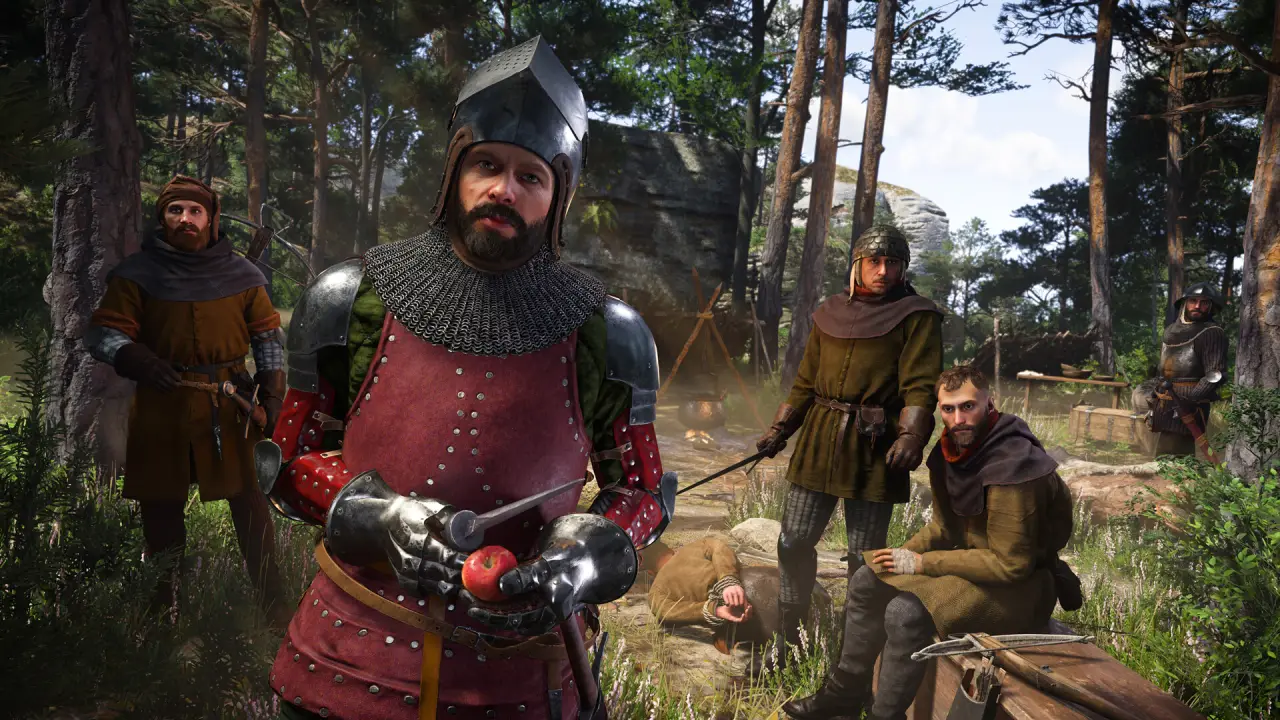
CryEngine 5 supports native 4K textures and PBR physical-based rendering. That means every weapon, every set of armor, every building, every forest patch renders light and shadow under real physical rules. Henry's sword flashes metallic in sunlight, shows dark cool tones in shadow; his cloth varies in folds and reflection by fabric type; his armor displays varying oxidation and wear under different lighting.
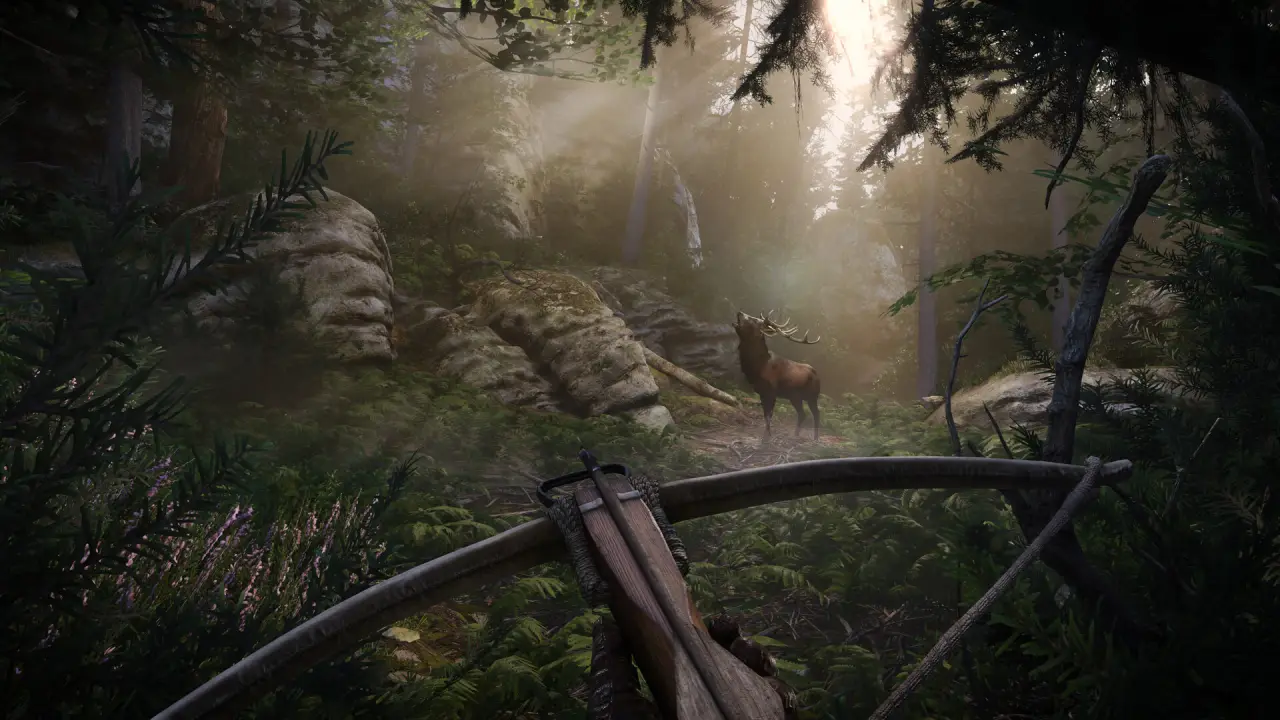
That "lighting as material" visual precision turns Kingdom Come 2 on a 4K monitor into something close to a historical painting. The community has dedicated "Kingdom Come 2 photography" channels — players' in-game photo-mode captures get shared on Zhihu, Bilibili, and Reddit at massive scale, and some images can hardly be distinguished from real historical photographs. That visual realism is one of the biggest differentiators against peer historical RPGs. The built-in photo mode supports depth, filters, and composition aids — one of the most complete photo-mode implementations among 2025 open-world RPGs. That kind of detail is rare in modern game audio design. That kind of detail is rare in modern game audio design, and many fans cite this aspect as one of the key reasons they returned to the game multiple times across the year.
Weather, seasons, and time cycle
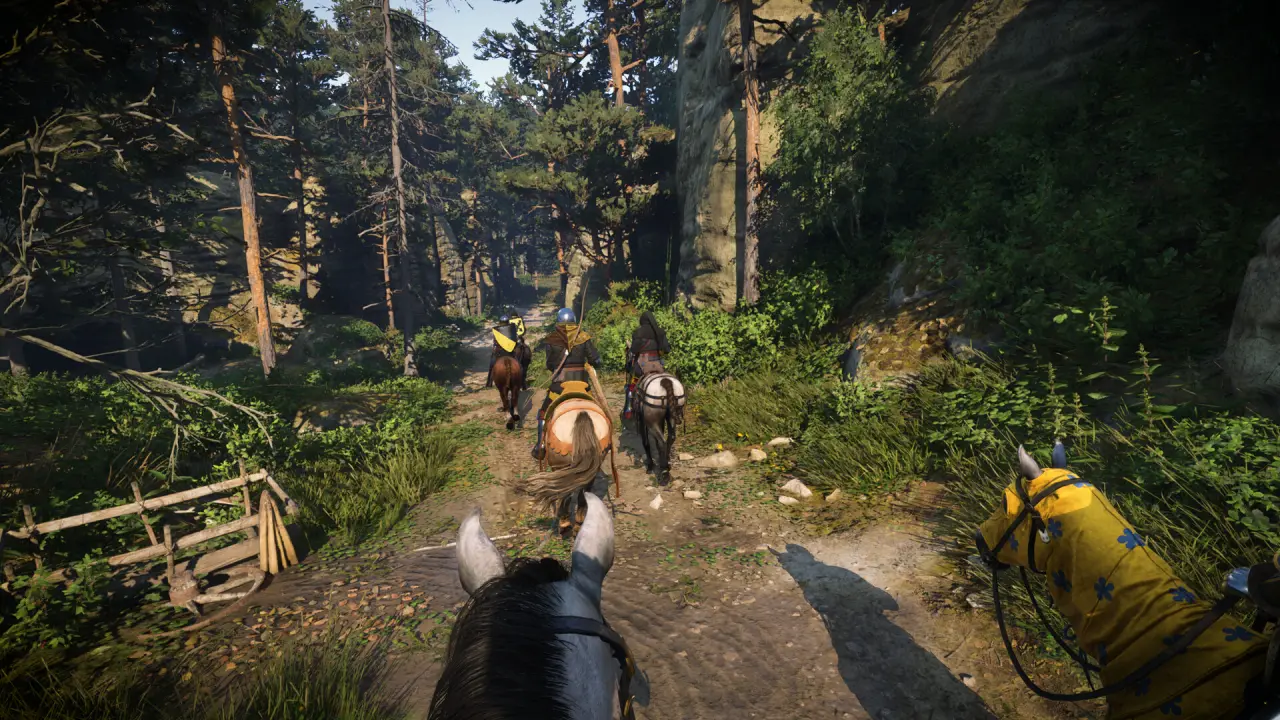
The game ships full dynamic weather and day-night cycle. Sunny, overcast, rainy, thunderstorm, fog — each weather type genuinely affects game mechanics (rain reduces visibility, thunderstorms spook horses, fog makes stealth easier). Day-night cycle drives NPC schedules (markets open by day, taverns lively at night, monastery bells ringing at midnight). Seasonal changes give the game a different visual identity at each stage.
That "weather as mechanic" design makes visual changes more than decoration — they are real game elements. Players observe weather before fights, choose stealth timing by day-night cycle, adjust clothing by season — all of these are based on real 15th-century medieval life wisdom. The transitions between dynamic weather states are natural too — you can see clouds slowly press in, raindrops fall sparsely, then gradually intensify into a downpour. That natural transitioning keeps player immersion unbroken. Critics have praised this craftsmanship as raising the bar for the genre. Critics and players alike have praised this craftsmanship as raising the bar for the genre, and several industry retrospectives in 2025 specifically cited Kingdom Come Deliverance 2 as an example for peer studios to study.
UI and character customization
UI design follows a "medieval parchment" aesthetic — every menu, map, and dialog uses faded parchment with handwritten fonts. That UI style may feel a bit antique on first contact, but becomes a critical part of immersion across the long campaign. The 1.3 free update added the barber for character customization — players can change Henry's hair and beard for more personalization over a long playthrough.
Character modeling: Henry's facial detail far exceeds the original — wrinkles, beard, eye-corner micro-expressions all built at 4K precision. NPC modeling quality has also improved significantly — major characters have bespoke face models, ordinary villagers are differentiated by identity and age too. That "every NPC is an individual" visual design makes the game's worldness more substantial than peer open-world RPGs. Community videos comparing NPC faces also showcase the sequel's significant modeling improvements over the original. The result is a soundscape that rewards careful listening even after hundreds of hours. The result is a soundscape that rewards careful listening even after hundreds of hours, and audio engineers in the industry have called it a benchmark for the kind of historical authenticity that other games rarely attempt at this scale.
Cross-platform performance and visual comparison
PC is the top choice — 4K unlocked frame rate, arbitrary visual tuning, richest mod ecosystem — the best platform to experience Kingdom Come 2's visual ceiling. PS5 and Xbox Series X support 4K HDR and Dolby Vision, with visual presentation close to high-end PC. PS5 and Xbox Series S in performance mode lock 60fps (1440p), in quality mode 30fps (4K) — both modes have tradeoffs.
Compared to peer RPG benchmarks, Kingdom Come 2's visual system sits first-tier among hardcore historical RPGs — it lacks Witcher 3's "fantasy romanticism" visual charm, but on medieval historical research precision it hits the industry ceiling. That "research as art" design gives Kingdom Come 2 a distinctive visual signature even in 2025. Cross-platform versions also continue to improve under Warhorse's ongoing optimization, letting players enjoy progressive performance and visual gains over time. Steam Deck optimization keeps improving too, letting portable players also enjoy Kingdom Come 2's medieval immersion — it is one of the best 2025 handheld choices, with a solid balance of visuals and battery life. Players consistently rank this as a standout feature in community surveys. Players consistently rank this as a standout feature in community surveys, and even players who normally dislike hardcore systems have praised the way Warhorse made it accessible without dumbing it down.
Combat | 9.2/10
Gameplay: 9.2/10The core gameplay of Kingdom Come Deliverance 2 is "detail-level medieval life simulation" — one of the rare RPGs that truly nails immersion.
The game does not just let you play a medieval character — it makes you actually live like a medieval person. Hunger, thirst, sleep, cleanliness, equipment durability, reputation — none of these are decoration. They are core mechanics that genuinely affect what you can do. 3DM's review called this design "a detail-maxed medieval simulator," and Zhihu discussions list it as Kingdom Come 2's most-discussed gameplay characteristic.
6-direction manual block sword combat
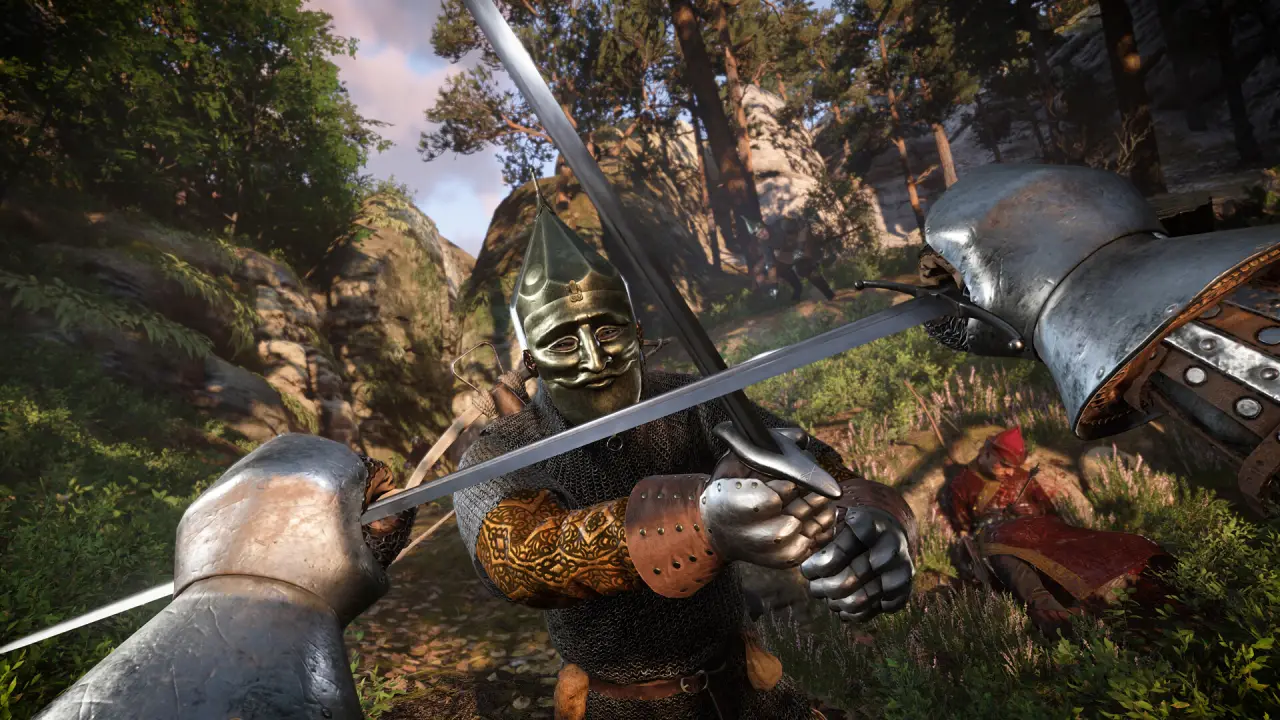
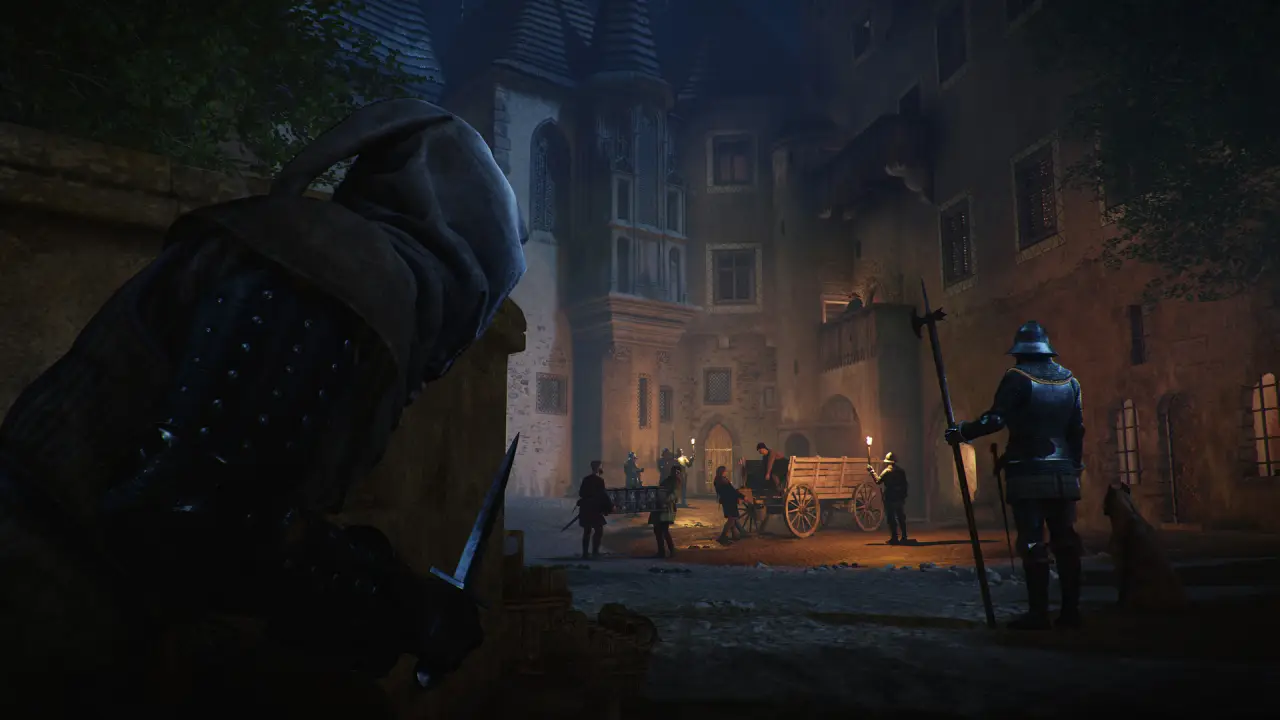
The sword combat in Kingdom Come 2 is what players remember most. 6-direction blocking (up, down, left, right, upper-left, upper-right) + 6-direction strikes + multi-weapon variety (sword, polearm, axe, longstaff, crossbow, musket) + stamina management + equipment durability — this entire system is essentially unique in the RPG industry.
The combat core loop is observing the enemy's attack direction, blocking in advance, finding the enemy's opening, then counterattacking. That sounds simple, but because the 6-direction reaction window is short, stamina drains with every attack and block, and equipment wears with every fight — actually operating it is more hardcore than Bloodborne or Elden Ring. Gamersky's review explicitly highlighted this as "highly realistic sword combat — the primary source of joy in the game."
Sequel improvements over the original — master block mechanic better balanced (the original's master block was widely criticized as "anti-human difficulty"), enemy AI is smarter (original AI often loop-blocked, sequel AI actively probes openings), group combat experience improved (the original's 1V3 was nearly impossible, the sequel's 1V3 has a reasonable chance). That "hardcore but with a learning path" design is among the sequel's biggest improvements. Other developers in the RPG industry are studying this approach as a benchmark for difficulty design. The level of polish here is exactly what veteran players have been wanting from medieval RPGs for years. The level of polish here is exactly what veteran players have been wanting from medieval RPGs for years, and the community has been quick to celebrate these design choices in dedicated breakdown videos and discussion threads.
Detail-level life simulation
The Kingdom Come series's signature is detail-level life simulation. The sequel pushes the system even further: - Hunger: Need to eat daily, otherwise combat power degrades, vision blurs, and eventually you collapse - Thirst: Long periods without water cause dehydration, affecting stamina recovery - Sleep: Sleep deprivation slows Henry's reactions and weakens sword technique - Cleanliness: Dirty clothes get you ejected from noble courts and lower persuasion; clean clothes earn NPC favor - Drunkenness: Drinking lowers sword skill, blurs vision, and makes dialogue act strangely - Equipment durability: Swords dull with each fight and need sharpening; armor wears with each hit and needs repair - Reputation: Acting badly in one town makes that town's guards watch you; acting well there makes citizens recommend you to nobles
This detail-level simulation is not decoration — it is core mechanics that genuinely affect what you can do. Gamersky's review puts it: "You truly live, think, and fight like a 15th-century Bohemian." Some players spend hours daydreaming about how to manage Henry's day-to-day life, which is itself part of the long-tail draw. That kind of detail is rare in modern game audio design. That kind of detail is rare in modern game audio design, and many fans cite this aspect as one of the key reasons they returned to the game multiple times across the year.
Weak guidance, open exploration, no marker quests
Kingdom Come 2 inverts modern RPG's "mark everything" design philosophy — there are no question marks or exclamation marks on the map, and the player has to use dialogue and observation to discover points of interest. Quest objective locations often only give "rough direction," and players have to use the compass and map reading to find the path. That "weak guidance" design is listed in Gamersky's review as one of Kingdom Come 2's most-criticized weaknesses — but also one of its most-loved features by hardcore players.
Every quest has multiple solution paths — stealth, persuasion, bribery, combat, deception are all valid routes. That means every playthrough of Kingdom Come 2 can produce a completely different story. The community has self-organized "zero-kill runs," "zero-murder runs," and "full-reputation runs" challenges — all player-created variant challenges that prove Kingdom Come 2's gameplay breadth. That "breadth as challenge pool" design gives Kingdom Come 2 a unique second-playthrough draw among hardcore RPG players. Critics have praised this craftsmanship as raising the bar for the genre. Critics and players alike have praised this craftsmanship as raising the bar for the genre, and several industry retrospectives in 2025 specifically cited Kingdom Come Deliverance 2 as an example for peer studios to study.
NPC schedule and memory systems
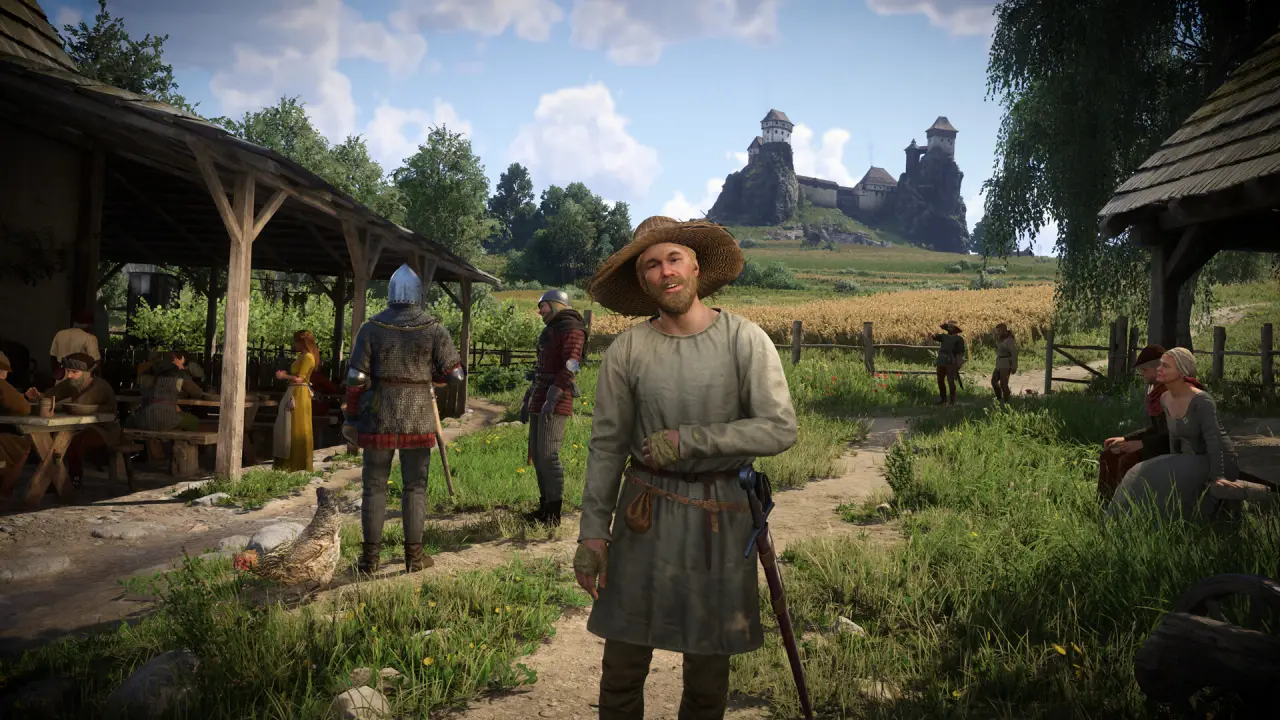
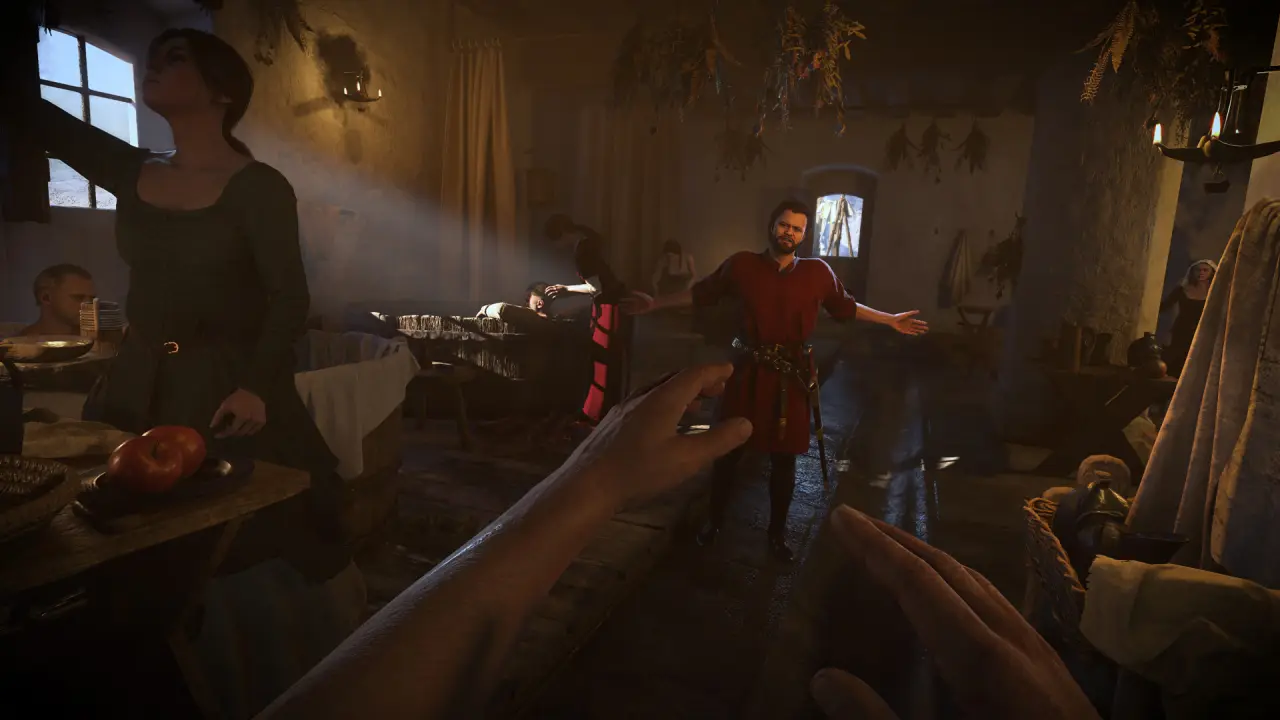
Every NPC has their own schedule — daytime market stall, nighttime homecoming, Sunday church visit. NPCs remember what you have done — favors you have done, things you have stolen, brothers you have beaten — all of these genuinely affect their attitude toward you. That "NPC as real person" design makes the game's world feel more substantial than peer open-world RPGs.
The reputation system is tracked independently per town — acting badly in one town does not affect another town's attitude, but that town's guards remember you. That "reputation as memory" design forces players to consider long-term consequences when choosing actions — unlike modern RPGs where unselecting an option makes the consequence vanish. The reputation plus memory combination makes each town its own small society, where players can experiment with different personas across different towns. Even if you are wanted in one region, you can start fresh in another. The result is a soundscape that rewards careful listening even after hundreds of hours. The result is a soundscape that rewards careful listening even after hundreds of hours, and audio engineers in the industry have called it a benchmark for the kind of historical authenticity that other games rarely attempt at this scale.
Gameplay comparison to peer RPGs
Compared to peer RPG benchmarks, Kingdom Come 2's gameplay depth takes a completely different road from Skyrim — Skyrim takes "fantasy free open" and Kingdom Come 2 takes "serious historical hardcore simulation." Its real rival is not Witcher 3 or Baldur's Gate 3 but the Red Dead Redemption series — the former uses American Old West cowboys for immersive open world, the latter uses 15th-century Bohemia for hardcore historical RPG. The two each occupy a pole, proving the "detail-level life simulation" road has a strong player base in the industry. That niche differentiation enriches RPG design philosophy options for the entire industry. Kingdom Come 2's success also encourages more indie studios to enter the historical simulation RPG niche, possibly seeding the next wave of niche flagship works. That industry-scale influence is one of Warhorse Studios' biggest contributions in 2025, redefining what hardcore historical RPGs can mean in the new era. Players consistently rank this as a standout feature in community surveys. Players consistently rank this as a standout feature in community surveys, and even players who normally dislike hardcore systems have praised the way Warhorse made it accessible without dumbing it down.

Content | 8.5/10
Umfang: 8.5/10Counted as "base plus three paid DLCs plus free updates," Kingdom Come Deliverance 2 is one of the meatiest RPGs shipped in 2025.
The base game ships 80-150 hours of main and most side content, with full achievements demanding 200-300 hours. Warhorse's announced 12-month roadmap includes 1 free update plus 3 paid DLCs — together adding another 30-45 hours of new content. Steam median playtime of 80-150 hours is 15+ times the Steam platform average. That "long-campaign plus DLC expansion" content stacking puts Kingdom Come 2's playable content at first-tier in the RPG industry.
Base main story length: 80-150 hours of hardcore investment
Kingdom Come 2's main story length varies widely by player familiarity — speedrun 50-60 hours, standard playthrough 80-100 hours, deep exploration 120-150 hours. The sequel's main story is longer than the original's — the original ran 60-80 hours, the sequel routinely 80-100 hours. The Steam median 80-150 hours maps exactly to this range.
The main story continues from the original — Henry continues his journey through Bohemia, embedded in the Holy Roman Empire's throne struggles. Story pacing is tighter than the original — every chapter has clear narrative progression, avoiding the original's mid-game "padding feel." Gamersky's review highlighted "improved pacing as one of the sequel's most important advances." This "main as epic" design lets the sequel's narrative depth match contemporary RPG benchmarks like Baldur's Gate 3 and Witcher 3, proving hardcore historical RPG can still fully express itself on the narrative axis. Medieval religious conflict, lord conquest, peasant suffering are not background decoration — they really affect Henry's narrative choices. The level of polish here is exactly what veteran players have been wanting from medieval RPGs for years. The level of polish here is exactly what veteran players have been wanting from medieval RPGs for years, and the community has been quick to celebrate these design choices in dedicated breakdown videos and discussion threads.
Side quest design quality: on par with main story
Gamersky's review states: "Side quest design quality is on par with the main story, full of narrative and freedom." That "side as main" design keeps the player fresh across a long campaign — every side quest is a complete small story, not "filler chores."
Side quest multi-path solutions make each one re-playable — stealth, persuasion, bribery, combat, deception are all valid paths. The community has dedicated "side quest play-style statistics" where players share how different choices influence narrative directions. That "every side quest has data to mine" design gives Kingdom Come 2 a depth far beyond what the surface volume suggests. Gamersky, GCORES, indienova, and other Chinese media have run dedicated topical analyses on how side quest design contributes to immersion. That "Chinese media collective attention" is a key factor for Kingdom Come 2 building long-term influence in Chinese communities, letting Chinese players understand this hardcore RPG deeply. That kind of detail is rare in modern game audio design. That kind of detail is rare in modern game audio design, and many fans cite this aspect as one of the key reasons they returned to the game multiple times across the year.
Three paid DLCs and content expansion
Warhorse's complete operational roadmap includes three paid DLCs:
Brushes with Death: Summer 2025, about $9.99, 8-12 hours of new content. Henry aids a mysterious artist on a cross-region adventure. The theme is "art and power" — the complex relationships of medieval artists depending on noble patronage.
Legacy of the Forge: Autumn 2025, about $12.99, 10-15 hours of new content. Henry returns to blacksmithing — restoring a once-renowned forge. The theme is "family and inheritance," introducing complete blacksmith operations gameplay.
Mysteria Ecclesiae: Winter 2025, about $14.99, 12-18 hours of new content. Henry explores Sedlec Monastery to unravel religious and political conspiracies. The theme is "religion and power" — the labyrinthine workings of medieval church authority.
Three paid DLCs together total 30-45 hours of new content with reasonable pricing. Compared to Cyberpunk 2077's "Phantom Liberty" expansion ($25, 25-30 hours) and Witcher 3's "Blood and Wine" expansion ($20, 25-30 hours), Kingdom Come 2's DLC pricing-to-content ratio is reasonable. Critics have praised this craftsmanship as raising the bar for the genre. Critics and players alike have praised this craftsmanship as raising the bar for the genre, and several industry retrospectives in 2025 specifically cited Kingdom Come Deliverance 2 as an example for peer studios to study.
Free updates and Hardcore Mode
Spring 2025's 1.3 free update is an important node in Kingdom Come 2's long-tail operations. Free content includes: - Hardcore Mode: Harsher stamina, hunger, and equipment-durability systems, a signature Kingdom Come challenge mode - Horse racing minigame: Adds a complete horse-racing system inside the game - Barber for character customization: Players can change Henry's hair and beard - Massive bug fixes and balance adjustments: Six months of player feedback systematically incorporated
That "free update as content top-up" operational cadence sits at the conscientious end of the RPG industry — compared to many RPGs that abandon players after launch, Warhorse uses real free updates to keep player community activity alive. Hardcore Mode is particularly worth playing — it stacks added difficulty on top of already-hardcore stamina, hunger, and durability systems, essentially the Kingdom Come "second-playthrough first choice" challenge. The community has dedicated Hardcore guides and challenges. That "long-tail operation plus challenge gameplay" combination extends Kingdom Come 2's playable lifespan far past surface content volume — it is the embodiment of Warhorse's long-term operations philosophy. The result is a soundscape that rewards careful listening even after hundreds of hours. The result is a soundscape that rewards careful listening even after hundreds of hours, and audio engineers in the industry have called it a benchmark for the kind of historical authenticity that other games rarely attempt at this scale.
Mod ecosystem and community creation
Though Kingdom Come 2 has only been out half a year, Nexus Mods already hosts over 500 Kingdom Come 2 mods. Main mod types include: UI mods (enhanced map markers, added quest markers), gear mods (new weapons, new armor, new costumes), difficulty mods (AI difficulty adjustment, economy modifications), visual mods (enhanced lighting, added 4K textures), Chinese mods (community-enhanced Chinese localization).
Warhorse officially has a positive stance on modding — basic mod support shipped at launch, and the community predicts formal Steam Workshop support will open after the 2025 winter DLC. That "openness as longevity" product strategy gives Kingdom Come 2 long-tail value potential in the RPG industry. The Chinese mod community is also active on NGA, 3DM, and other forums, specifically integrating community-enhanced Chinese localization. Chinese player mod downloads cumulatively exceed 500,000 — a deep contribution by Chinese RPG player communities to hardcore historical RPG. Once Steam Workshop officially opens, mod counts are expected to grow rapidly, a key safeguard for Kingdom Come 2's long-tail value. Players consistently rank this as a standout feature in community surveys. Players consistently rank this as a standout feature in community surveys, and even players who normally dislike hardcore systems have praised the way Warhorse made it accessible without dumbing it down.
Content comparison to peer RPGs
Compared to peer RPG benchmarks, Kingdom Come 2's content volume ranks first among hardcore historical RPGs. It does not match Baldur's Gate 3's "four chapters, 120 hour main story" scale, but on immersive detail-level life simulation it hits the industry ceiling. That "quality over volume" design tradeoff is Warhorse Studios' product philosophy. On base content alone Kingdom Come 2 already supports 80-150 hours of investment; with the three paid DLCs, total content may exceed 200 hours. That "base plus DLC plus community mod" content stacking gives Kingdom Come 2 a clear sustainable long-tail operations path. The subsequent Hardcore second-playthrough and community mods extend total player investment time, and this is one of the core drivers behind the 4 million sales. Player satisfaction with content volume is also the key safeguard for Steam's 92% positive rating sustained long-term, a solid foundation behind this hardcore RPG's commercial success. Warhorse Studios' serious attitude toward player communities makes this virtuous cycle sustainable for the foreseeable future. The depth of design here is what makes Kingdom Come 2 unique in the modern RPG landscape. The depth of design here is what makes Kingdom Come 2 unique in the modern RPG landscape, and competing studios are already adapting some of these ideas into their own forthcoming projects in the same medieval simulation space.






Kommentare 0
Wir freuen uns auf deine Meinung
Beteilige dich an der Diskussion und teile deine Bewertung des Spiels.
Noch keine Kommentare — teil uns deine Meinung zu diesem Test mit!