
























Opening
Most shooters hand you a wall to hide behind and a magazine deep enough to forget about. DOOM Eternal does the opposite. It starves you of ammo on purpose, then dares you to keep moving anyway.
What follows is the most aggressive first-person shooter ever built, and the moment id Software stopped chasing speed alone and started engineering precision. The 2016 reboot was loud and fast. This one is loud, fast, and ruthlessly mathematical — a game where every kill is also a transaction.
Chainsaw a lesser demon and it coughs up ammo. Stagger a heavy one and a Glory Kill refunds your health. Spray a crowd with the Flame Belch and armor shards rain off their backs. You are never just shooting; you are mining. The enemy is both a threat to dodge and a vending machine to crack open, and the entire campaign is built on that single, brilliant inversion.
The numbers are emphatic — an 89 on OpenCritic, an 88 on Metacritic, a Mighty rating that lands it inside the top one percent of everything the aggregator has ever scored. But the scores undersell the real trick: that overclocked, never-quite-safe rhythm of pushing forward is the thing no one has cleanly copied since. This review pulls the machine apart, panel by panel, to explain why it remains the high-water mark for the genre — and exactly who will adore it, and who will quietly walk away.
Story | 6.5/10
Story: 6.5/10The story of DOOM Eternal is a strange and revealing contradiction. Its narrative ambition is by some distance the largest the series has ever attempted, yet the execution wobbles often enough to leave plot standing as the campaign's single clearest weak spot.
A ruined Earth and a Slayer with a past
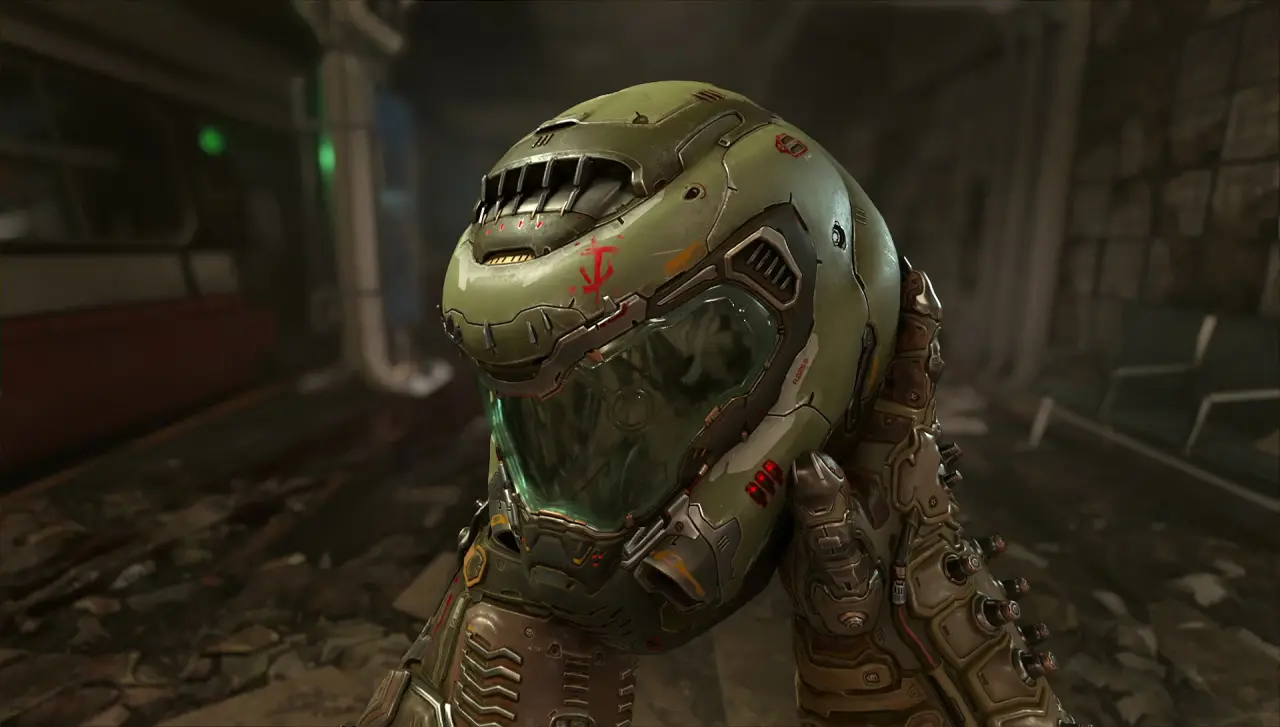
Fourteen years after the Mars catastrophe of the previous game, Earth has been overrun by demons and stripped of a staggering sixty percent of its population in the invasion. The Slayer's job, blunt as ever, is to derail the Khan Maykr's plan to sacrifice the whole of humanity for energy, and the game wastes no time getting you into the fight to do it.
What matters more is that Eternal finally cracks open the protagonist's origin. He is the original Doom Slayer, forged into an undying war engine by a defecting Maykr — the Seraphim — through a Divinity Machine.
For a character who has spent two decades saying almost nothing and answering every question with his fists, that backstory is a genuine revelation, and it scratches an itch long-time fans have carried quietly for years. The game also slips in third-person cutscenes for the first time, letting you regard this silent symbol of violence from the outside for once, and attach something like recognition to him rather than staring out endlessly from behind an empty visor. It is a small shift in framing, but it does more for the character than any amount of dialogue could, precisely because the Slayer has never been a talker and never should be.
Cosmology that overreaches the campaign that carries it
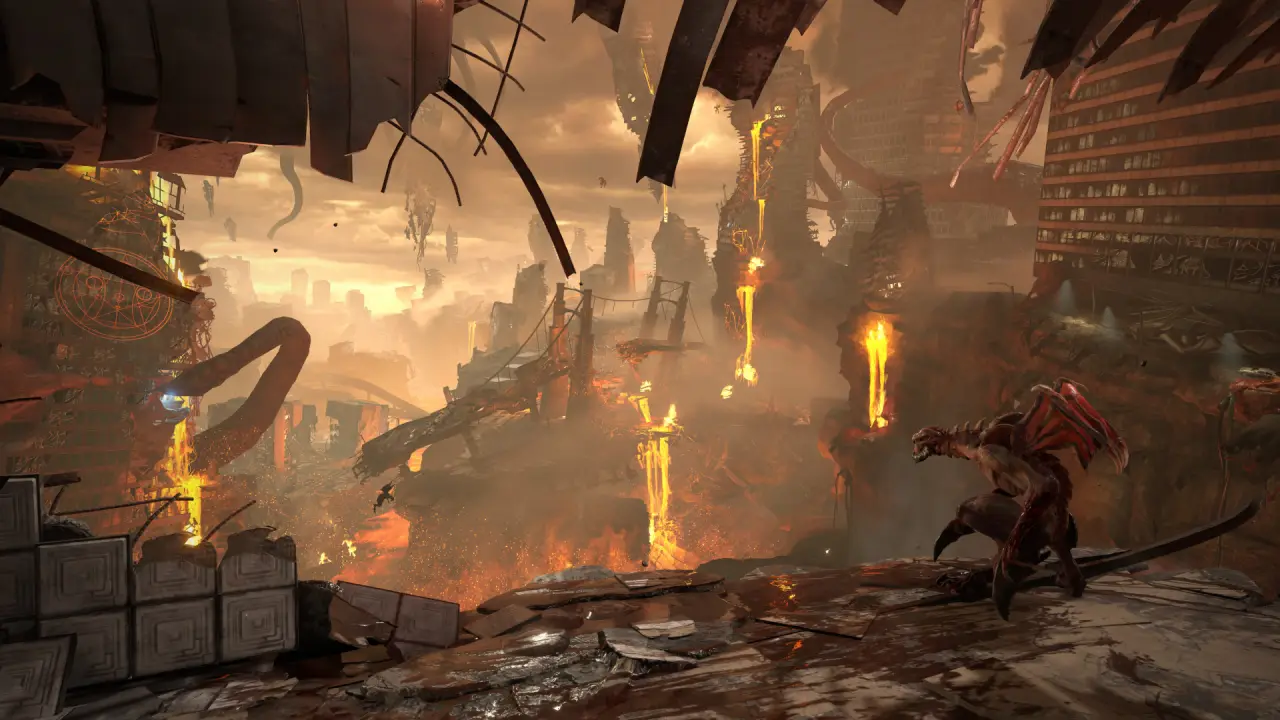
Eternal expands the series from a simple demon-shooting premise into a sprawling cosmic mythology with a genuine theological spine running through it. The world bulges with feuding factions: a corrupted UAC, the resisting ARC, the endless ravenous legions of Hell, and the Maykrs trading human souls for Argent energy in a grim cosmic economy. It is a lot of lore to carry, far more than the previous game ever attempted, and the sheer reach of it is admirable even when the delivery stumbles.
The biggest swing is the reveal that the Khan Maykr has secretly cut a deal with Hell to share the Argent energy it produces — a setup that plants seeds for the Dark Lord and the multiverse still to come.
The trouble is that nearly all of this density lives in codex entries scattered across the levels, while the moment-to-moment campaign itself stays stubbornly thin. The lore you read between firefights outweighs anything the cutscenes bother to dramatize. For players who only want to charge ahead, that fragmented storytelling is trivially skippable, and the grand mythology evaporates unread. This is the gap between Eternal and a true narrative benchmark: the ambition is enormous, but the game never finds a way to make most players catch it.
A complete arc that hides inside the DLC
Against its own lineage, the contrast is flattering. DOOM (2016) barely told a story at all, treating plot as ambient noise to be tuned out between fights. Eternal is plainly reaching an order of magnitude higher than that — it genuinely wants to tell a tale of vengeance and redemption, with stakes and a mythology and an emotional throughline, and you have to respect the swing even when it misses.
But the complete arc only closes across the two-part Ancient Gods expansions: Part One pits you against the true form of Samuel Hayden, and Part Two collapses every dangling thread into the final reckoning with the Dark Lord, Davoth. In other words, buy only the base game and you walk away holding half a story, suspended mid-sentence with no resolution in sight.
Parceling the climax and the real answers into paid DLC quietly magnifies how unfinished the core campaign already feels on its own. The verdict, then, is a familiar one for an action series stretching its narrative legs: full of ideas, short on craft, reaching for something it cannot quite grip. Eternal proves this franchise can carry a cosmology on its shoulders. It has simply not yet learned how to make that cosmology actually stick in a player's memory once the shooting stops.
Audio | 9.0/10
Sound: 9/10If combat is the skeleton of DOOM Eternal, the score is its pulse. Mick Gordon's music does not merely sound good; it reaches into the gameplay and shapes how every fight feels.
A metal score that rides the rhythm of your aggression
Gordon scored the base game by fusing heavy metal, djent, and industrial electronica into a single ferocious sound, one where every combat theme lands like a drum hit timed precisely to your own offensive.
The clever part is how the music locks frequency with the push-forward loop. Charge into a dense knot of demons, chaining chainsaw into Glory Kill, and the distorted guitar walls and machine-gun percussion climb right alongside your tempo, growing more unhinged as the fight escalates toward its peak.
The score is not ambient padding laid beneath the action; it is actively keeping the beat for your adrenaline, daring you to move faster. The critical consensus is that this metal soundtrack outdoes even the previous game's already excellent work, and it has become the single most recognizable sonic signature the series owns — plenty of players pull the tracks out to listen on their own, divorced from the game entirely, which tells you everything about how well it stands on its own two feet as music.
The fallout and the hand-off nobody saw coming
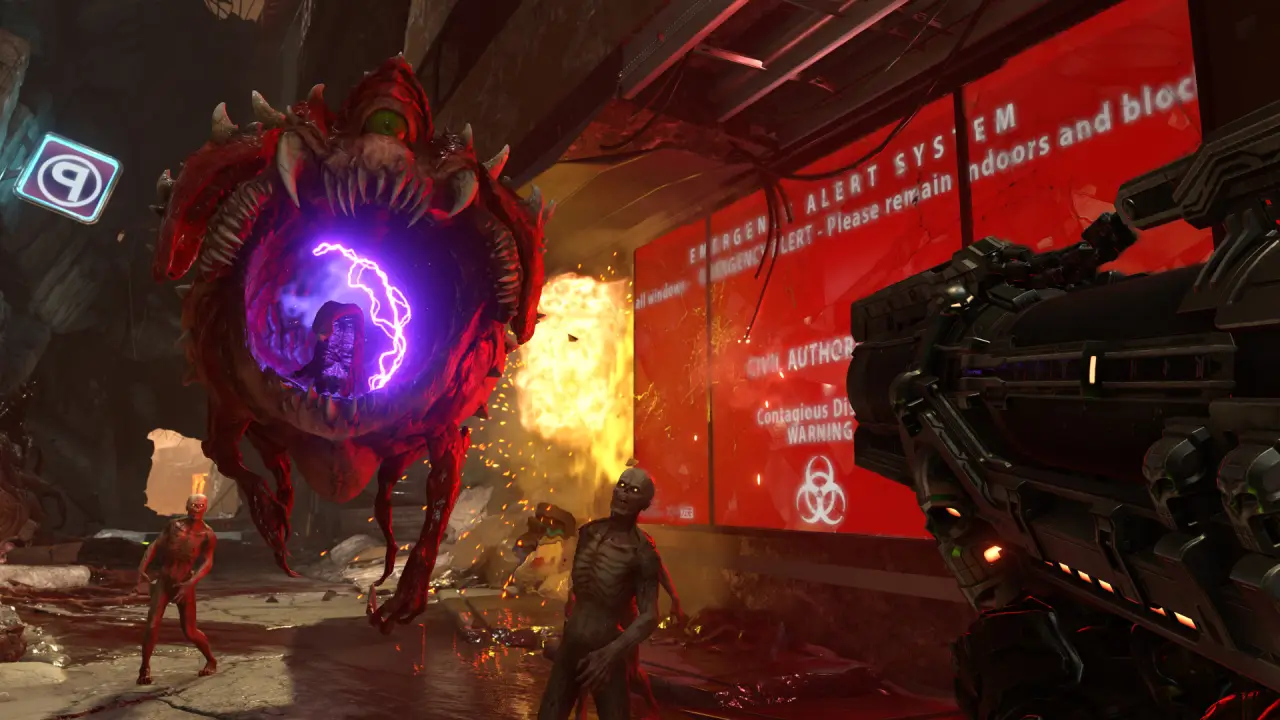
You cannot honestly discuss this music without the dispute that erupted in 2020 and overshadowed it. Gordon parted ways with the publisher over creative differences, and the release of the soundtrack album turned into a very public, very bitter mess that played out across forums and statements for weeks.
By the executive producer's account, Gordon repeatedly stalled, missed agreed deadlines, and the heavily compressed final album diverged noticeably from the in-game audio, so audio director Chad Mossholder ended up finishing most of the mixing himself. Gordon, naturally, told a sharply different version of events, and the whole affair hardened into the kind of he-said-she-said standoff the industry never quite manages to resolve cleanly.
The fallout was genuinely ugly, and it soured what should have been a victory lap for one of gaming's best scores. For the two Ancient Gods expansions, the baton passed to Andrew Hulshult and David Levy, who captured the essence of Gordon's signature so well — leaning darker and more cinematic than the base game — that they quietly proved the aesthetic was never one man's irreproducible secret, even if Gordon's originals remain the touchstone everyone measures against.
Feedback and the standout cues where it all converges
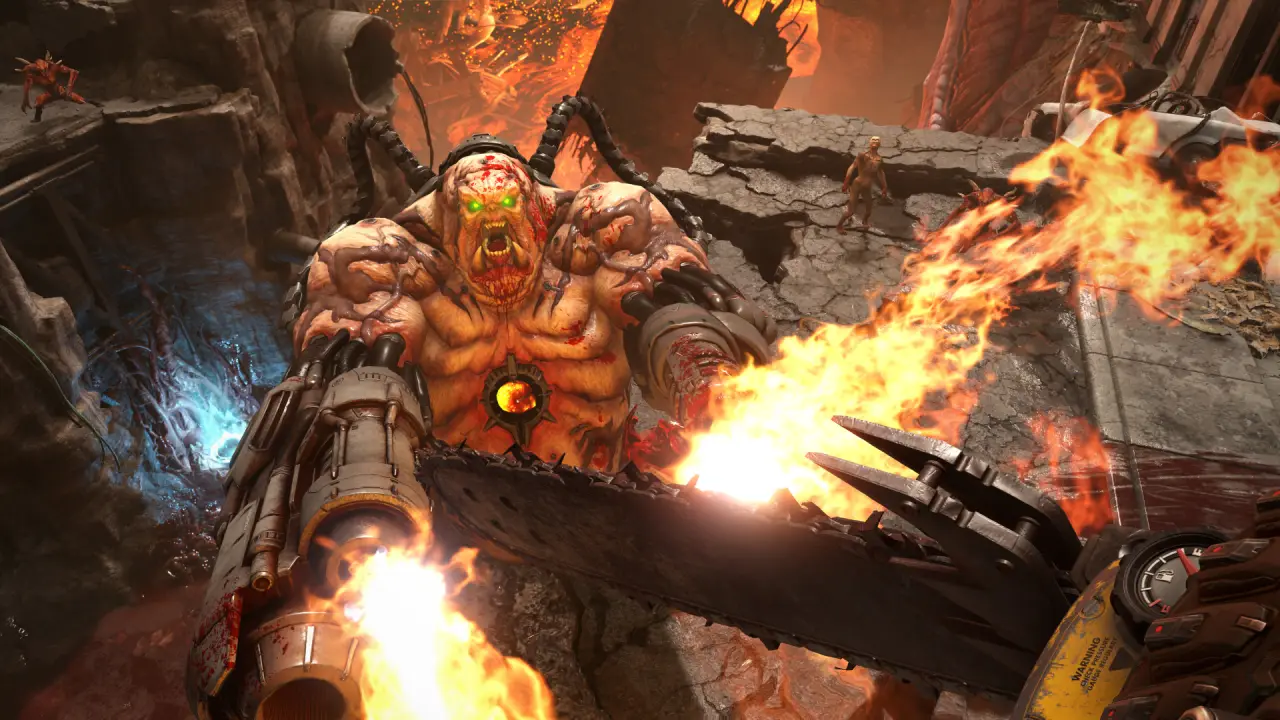
Beyond the score itself, the sound design is a genuinely load-bearing part of the combat feedback. The guttural roar of an approaching demon, the distinct bark of each weapon, and the meaty thump of a connecting Glory Kill all build a tactile audio layer underneath every single exchange, telling you what is happening even when your eyes are busy elsewhere.
Better still, each weapon carries its own distinct sonic fingerprint, so you can tell exactly what you are holding without ever glancing down at the wheel — a genuine asset in a game that moves this fast and punishes a wandering eye.
The expansion's audio peak is the final-duel theme nicknamed "Shady Hayden" in Part One, stacking layered choir over heavy improvised metal into a potent brew of horror, adrenaline, and rage, perfectly matched to the foe you are facing down: the true form of Samuel Hayden himself. Moments like that, where music, enemy, and story braid into a single tightening rope, are the absolute ceiling of what this game manages to do with sound, and they linger long after the controller is down.
Visuals | 8.5/10
Grafik: 8.5/10The visual achievement of DOOM Eternal is not really measured in showpiece effects or raw fidelity. It is measured in how tightly the look is bolted to the play — every single art decision bends toward serving that high-speed combat, and almost nothing sits on screen merely to look pretty for its own sake.
id Tech 7 and the 60fps that the design depends on
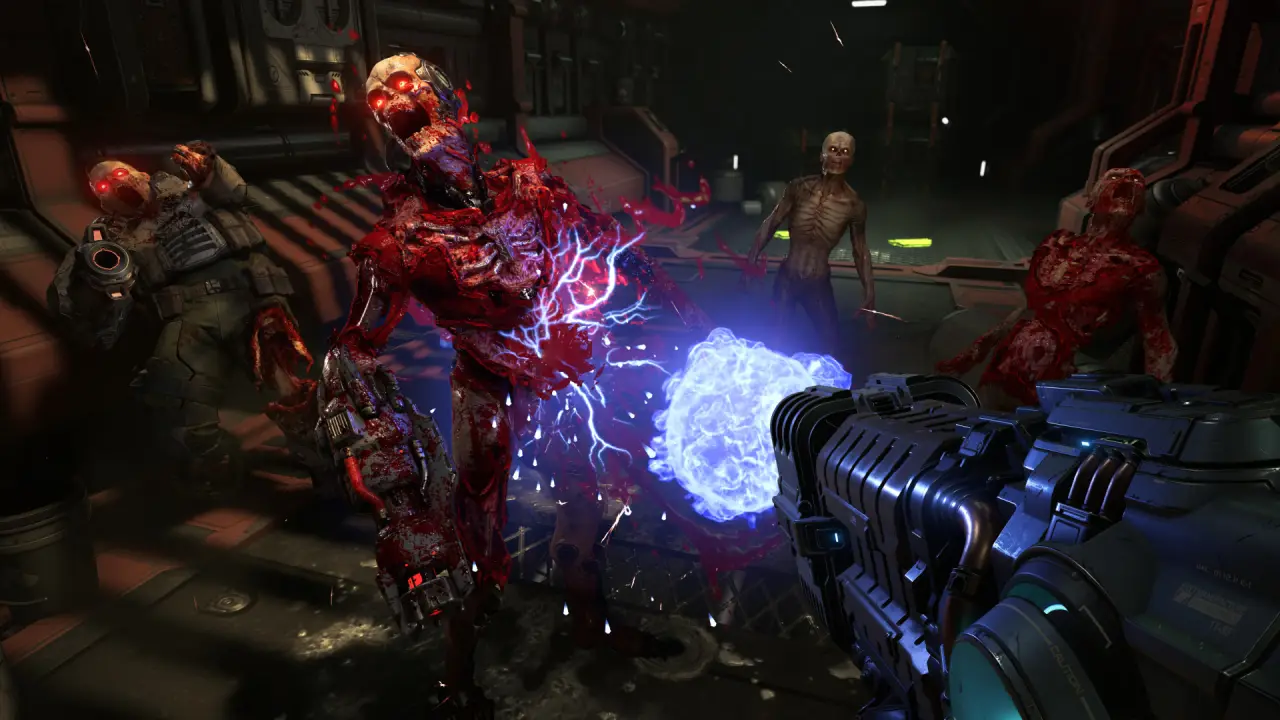
The game runs on id Software's in-house id Tech 7, an engine built to hold a heavy visual density and lock to 60fps at the same time, refusing to trade one for the other.
For a shooter that asks you to move fast and do resource math in real time, a stable frame rate is not a flex. It is the precondition the whole design rests on.
A single hitch severs that split-second decision loop and freezes you in the exact instant you needed to reposition, which in this game is often the instant between living and dying. "Gorgeous and smooth" is a phrase that recurs across reviews, and the smooth half is where the engine team earns its bragging rights. Eternal stands as a working proof that visual expressiveness and rock-steady performance do not have to be a binary choice, and that the right engine can deliver both without apology. That stability is not a background nicety here; it is the silent foundation every other system is built on top of, the thing that lets the resource math and the aerial dancing feel responsive rather than sluggish.
Demon design and a readability-first philosophy

The demon roster is exaggerated and instantly legible, and that is no accident. It follows a readability-first creed that runs through the entire game.
Every silhouette, every armored plate, every hit reaction is drawn to be parsed at a glance, because in the heat of a fight there is no time for a second look.
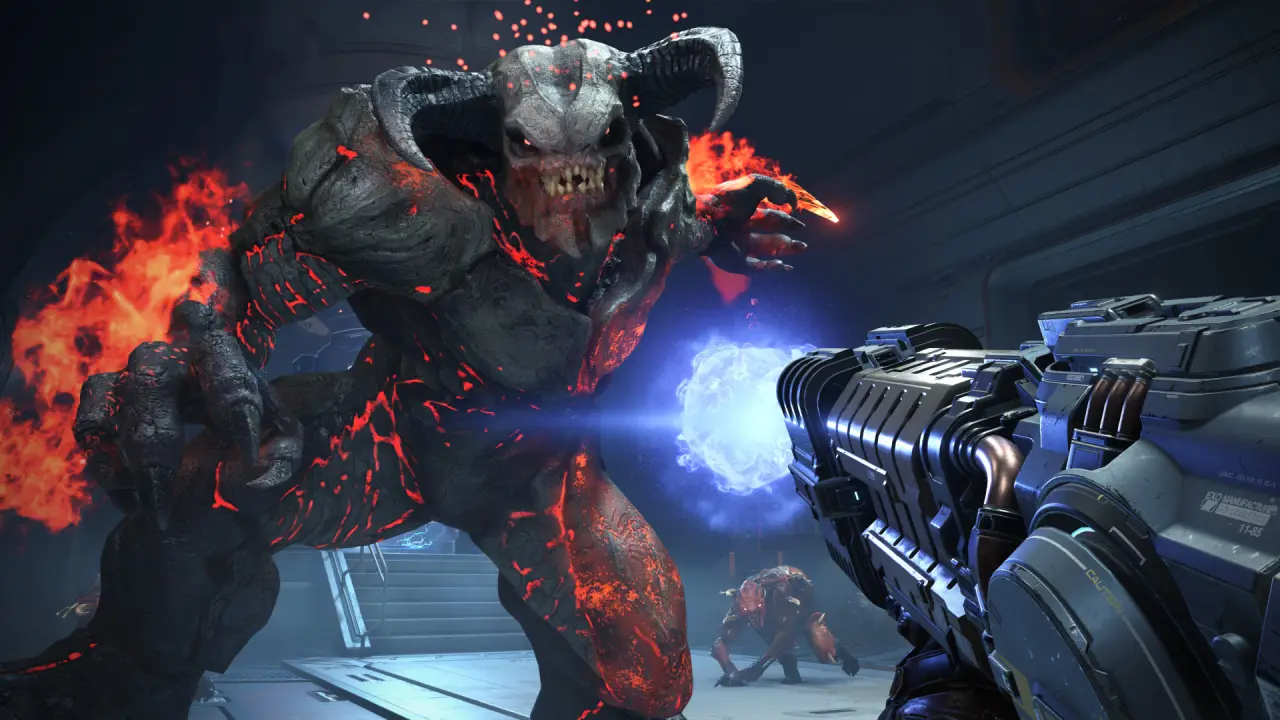
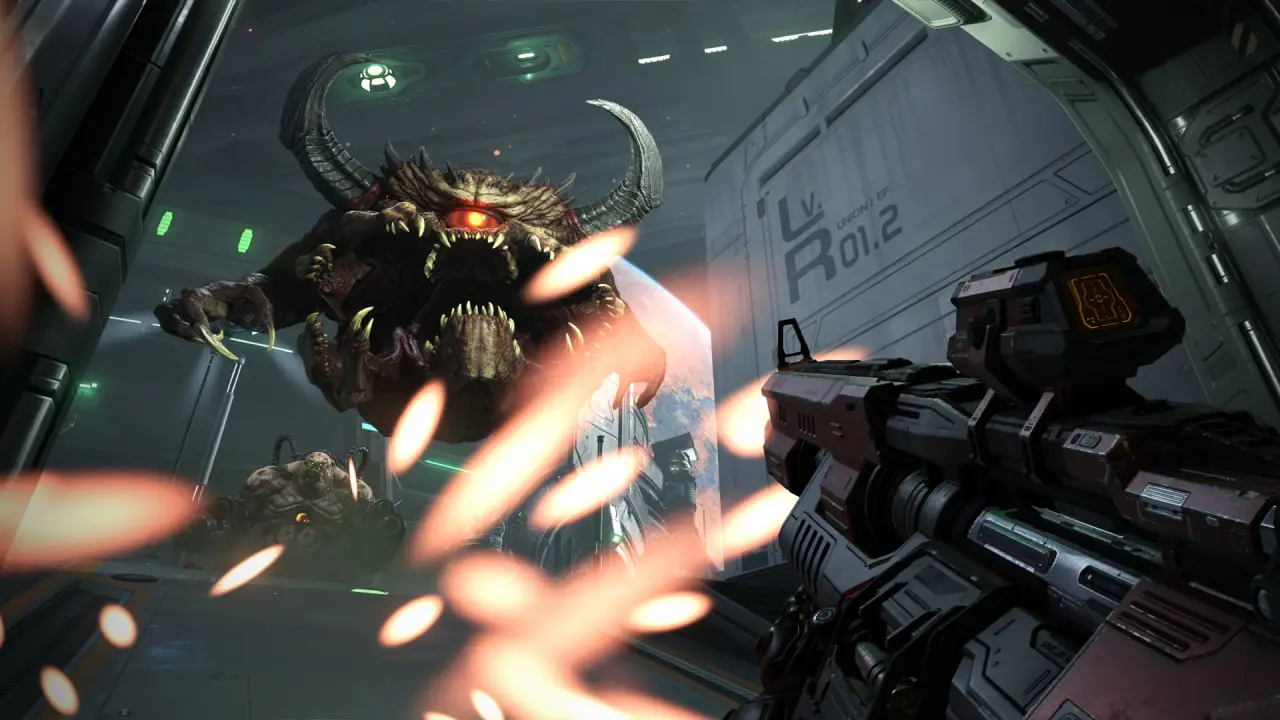
Married to the Destructible Demons system, you watch in real time as a chunk of armor flies off or a soft, exposed weak point opens up, and that visual information converts straight into your next tactical call without a beat of hesitation. The art is doing tactical work, not just decorative work, and that distinction sits at the heart of why the game looks the way it does.
The level art, meanwhile, ranges across lava-choked Hell, an Earth swallowed whole by demons, the pristine floating Maykr sanctums of Urdak, and the machinery-laden ruins of the ancient Sentinels. Across a campaign that runs well past a dozen hours, nearly every stage feels as fresh as the last, sidestepping the visual fatigue that so often plagues long shooters and keeps players reaching for the quit button before the finale. The variety is not just cosmetic, either; each environment subtly reshapes how the arenas play.
Platforms, accessibility, and picking the right version

The gap between the various platforms is wide enough to genuinely matter long before you ever reach the checkout screen. Eternal launched on PC, PS4, Xbox One, and Stadia, then added dedicated next-gen versions in June 2021 with 120fps and ray tracing, lifting both fidelity and frame rate a clear, visible notch above the originals.
The Switch port, handled by Panic Button, is a technical feat simply for running this demanding combat on handheld silicon at all, but the compromises in resolution and clarity are plain to see the moment you put it side by side with any other version.
The Switch version slid to the 80 tier on OpenCritic, the lowest of any release, so it suits players committed to handheld play and very few others; anyone chasing peak image quality and frame rate should default to PC or a current-gen console without much debate.
On accessibility, the HUD packs dense information yet reads cleanly — armor, health, ammo, and the weapon wheel all parse instantly, fully tuned to the rapid reads a fast fight demands, and that legibility is its own small masterclass in interface design. Taken together, Eternal's visuals follow a practical, play-serving line. It may not be the prettiest wallpaper-bait of its generation, but for the sheer marriage of image to feel and function, almost nothing else in the entire genre touches it.
Combat | 9.5/10
Gameplay: 9.5/10Reduce DOOM Eternal to a single sentence and it reads like a confession: this is a shooter rebuilt as an arithmetic problem you solve at a sprint. Resources are not flavor here. They are the engine that drives every decision you make.
The resource triangle that makes scarcity the fuel
The irreplaceable idea is a loop with three teeth: chainsaw, Glory Kill, Flame Belch, each locked to a different currency. Every weapon carries a stingy little reserve of ammo, and that stinginess is the entire point — it forbids the lazy hosing-down that defines lesser shooters and forces you to play with intent.
So the chainsaw stops being a trophy weapon and becomes a supply line: rev it into a weak demon and ammo spills across the floor, topping your magazines in an instant. A Glory Kill on a staggered enemy snaps a slice of health back onto the bar. A gout of Flame Belch across a clustered mob sends armor shards bouncing off their hides. Ammo, health, armor — three actions, three needs, braided into the breathing rhythm of every encounter. A Chinese outlet, Gamersky, nailed the feeling when it wrote that the design holds you over an open flame, keeping you permanently anxious about running dry. That anxiety is engineered, and it is the genius of the whole thing. Standing still behind cover means starving, and starving means dying, so you press forward by necessity rather than bravado. The demons double as deadly resource caches, and that single reframe is the wall separating Eternal from every cover-shooter that came before it.
Verticality as a survival tool, not a flourish
If the triangle is the brain, mobility is the legs. The Slayer ships with a double jump out of the gate, earns a horizontal dash early, and the arenas bristle with monkey bars and swing points that deliberately pull the fight off the floor and into the air.
None of it is decoration. In a sealed arena packed with demons, your movement options matter as much as the absurd arsenal strapped to your back, and frequently more. You carve evasive arcs through the air to slip incoming fire while your brain is already triaging which fodder to chainsaw and which staggered brute to cash in for health. Hands, eyes, and head all run overclocked, with no idle frames allowed and no safe corner to catch your breath. This three-dimensional battlefield is precisely what DOOM (2016) could never offer: the prequel gave you a single dash across mostly flat rooms, a fight that played out on a plane. Eternal tips the whole stage into a vertical playground, asking you to think about altitude and angle as readily as aim, and the combat blooms because of it.
Readable demons and a high-skill toolbox
Enemies here are not health bars; they are legible puzzles of weak points waiting to be read. The Destructible Demons system lets you chip away armor and limbs, exposing soft spots as a fight progresses, and matching the right weapon mod to the right target is what separates merely surviving from actually thriving in the chaos.
The advanced tools unfold in deliberate layers across the campaign. The Crucible blade one-shots the nastiest heavies that would otherwise eat half your ammo, a single BFG 10000 rewrites the math of an entire encounter in one flash, and the Blood Punch is a charged melee detonation you hold in reserve for the worst moments. The real connoisseur's pleasure is choreographing those tools into combos, compressing raw chaos into your own cadence through a string of precise, deliberate swaps. Critics keep calling it a strategy game wearing a shooter's coat, and the label fits snugly — every decision you make weighs resources, positioning, and kill priority all at once, at a density of thought no ordinary shooter asks for.
A steep wall that refuses to flatter you
That precision carries a tax, and the tax is a genuinely steep barrier to entry. Players who never learn the full toolkit get flattened, fast and repeatedly. Eternal has zero interest in coddling anyone who just wants to switch off and spray bullets at a wall of enemies.
The early learning curve has bounced people off for entirely real reasons — you must juggle the resource loop, the movement timing, enemy weak points, and weapon counters all at the same time, and dropping any single thread tips the whole fight into flailing panic within seconds. Clear the wall, though, and the reward is some of the most brilliantly designed combat in years, where every cleared arena feels like solving a fast-moving puzzle under pressure, satisfaction and adrenaline arriving together. The difficulty options run from gentle introductions to the punishing Nightmare tier, with a generous spread of accessibility toggles softening the climb for those who need it. But the core never blinks once: it respects your skill, and in the same breath it demands it.
Content | 8.0/10
Umfang: 8/10DOOM Eternal's content is built squarely around replay, not a one-and-done clear that you shelve the moment the credits roll. What it hands you is not a lonely main line at all but a whole ascending staircase of challenge that keeps raising the bar long after the story is technically over.
A campaign longer and denser than its predecessor
The main campaign runs roughly fourteen hours on a focused playthrough, and chasing full completion at a higher difficulty stretches it out toward twenty-two — noticeably meatier and more durable than the previous game ever quite managed.
But raw length is only the surface reading. The real difference is density, the sheer amount the game packs into every stretch of corridor and arena.
Eternal leans into more open level design, letting you read a situation and choose to explore first, bank some health and ammo from the quieter corners, then circle back to take on the tougher demons on your own terms rather than the game's. That deliberate ebb-and-flow keeps tense combat and looser exploration alternating, which defuses the grind of fighting nose-to-tail with white knuckles for the entire runtime, and it is a big part of why the campaign holds up across its full length without wearing thin.
The platforming stretches woven between arenas pull double duty as both exploratory variety and a genuine breath of rest between two high-intensity fights, a deliberate cooldown before the next surge. The result is a long game that rarely feels long, because it never once lets a single rhythm overstay its welcome or settle into monotony, and that pacing discipline is harder to pull off than it looks.
Optional gauntlets and the engine of replay
If the campaign alone leaves your appetite for challenge unfed, Eternal stocks a hefty pile of optional hardcore content waiting in the wings. The headliners are the six Slayer Gates, each one unlocked with its matching Slayer Key, each opening onto a sealed arena crammed wall-to-wall with vicious demons.
Only after you clear the entire floor do you collect the prized upgrade, which makes these gates a true proving ground for your combat fluency and your resource management under real, unrelenting duress. They are short, sharp, and utterly unforgiving, the kind of optional fight that exposes exactly how well you have internalized the loop.
Master Levels push the idea further still, rebuilding existing stages into denser, nastier configurations aimed squarely at the high-skill crowd determined to wring the combat system completely dry. They are not for everyone, and they do not pretend to be, but for the players they target they are pure, concentrated joy.
This optional layer hoists the post-credits ceiling sky-high. For an average player the main line is plenty to chew on, while for a dedicated expert, beating the campaign is merely the point where the real feast begins. It is the rare shooter that treats mastery as a destination rather than an afterthought.
Expansions, multiplayer, and the commercial wings
The full content map has to include the two Ancient Gods expansions. They are standalone campaigns that need no base-game save to launch, pitched a clear tier harder than the main game, widely regarded as the most hardcore, technique-testing material on offer here, while also finally closing the story's dangling ending.
On the multiplayer side, BATTLEMODE is an asymmetric one-versus-two affair, a single player driving the Slayer against two demon-controlled opponents, one hunter against two who hunt back.
The concept is genuinely novel and occasionally thrilling when both sides commit, but matches slide a little too easily into cat-and-mouse stalling, and the netcode falters badly on weak connections, leaving it the softest and least essential link in the content chain by some distance. Most players will sample it briefly and return to the campaign.
Even so, judged on sheer scale and reception, Eternal moved three million copies in its launch month — triple the prequel's haul — and went on to clear 450 million dollars in revenue, making it the series' most commercially successful entry by a wide margin and offering about the most direct possible proof you could ask for of how magnetic its content really is to the people who buy it.






Kommentare 0
Wir freuen uns auf deine Meinung
Beteilige dich an der Diskussion und teile deine Bewertung des Spiels.
Noch keine Kommentare — teil uns deine Meinung zu diesem Test mit!