

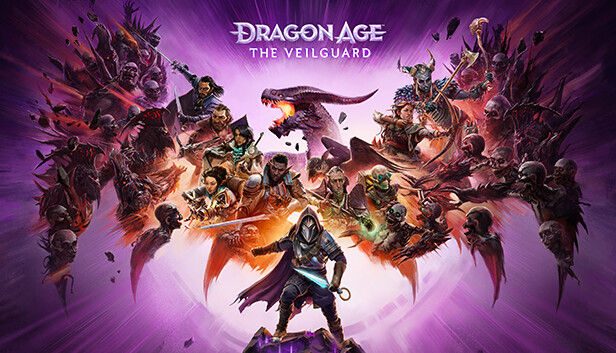
Dragon Age™: The Veilguard

Dragon Age™: The Veilguard

Als Einzelspieler-Rollenspiel setzt Dragon Age™: The Veilguard auf Rook, sieben Gefährten und eine Kampagne, deren Entscheidungen Thedas prägen. Der bestätigte Tiefstand bei €7.86 bei GAMIVO ist ein guter Anlass, das eigene Interesse an dieser Geschichte gegen das Budget abzuwägen. Die Gefährten bringen eigene Handlungsstränge und Fähigkeiten mit. Bei 20,99 € bei GAMIVO liegt der Preis auf dem bestätigten historischen Tiefstand; 67% von 41.514 Steam-Rezensionen sind positiv.

Shop-Angebote werden geladen
67%Steam-Bewertungen41.514 Bewertungen76Metacritic/10080OpenCritic/100
Erschienen: Oct 31, 2024
LGBTQ+ · Fantasy · Singleplayer · RPG · Action RPG
Dragon Age: The Veilguard - EN Global·Plattform:Steam·-87%ab~ €7.86ALLZEIT-TIEF13,13 € gegenüber Steam sparenJetzt kaufen
·Plattform:Steam·Steam-Preis für Deutschland~ 59,99 €-65%~ 20,99 €Jetzt kaufen
Dragon Age™: The Veilguard (PC) EA App Key GLOBAL·Plattform:EA App·-64%ab~ €21.68(~ $24.34)Jetzt kaufen
·Plattform:Epic·~ €59.99Jetzt kaufen
·Plattform:EA App·~ €59.99Jetzt kaufen
Dragon Age: The Veilguard Steam Altergift·Plattform:Steam·ab~ €63.06Jetzt kaufen
Dragon Age: The Veilguard PC Steam Key GLOBAL·Plattform:Steam·Credit/Debit Cardab~ RUB 3,669.00Jetzt kaufen
Allzeit-Tief ~ 16,03 €über Steam und Drittanbieter-ShopsAktuell auf historischem Tiefststand
Shop-Angebote werden geladen
Wunschpreis
Lege den Wunschpreis fest. Eine E-Mail informiert dich, wenn ein verfügbares Angebot der gewählten Region diesen Betrag erreicht oder unterschreitet.

Preisverlauf

Letzte 36 Monate · täglich aktualisiert
Allzeit-Tief~ 16,03 €2026-06Aktuelles Tief über alle Shops~ 7,86 €GAMIVOAktuell auf historischem Tiefstand
~ 24,98 €~ 35,54 €~ 46,09 €~ 56,65 €25-1026-0126-0426-0726-10~ 16,03 €

Die Preise umfassen Steam und 39 autorisierte Shops; gezählt werden nur reguläre Angebote. Das Diagramm zeigt wöchentliche marktweite Tiefstände und Steams offiziellen Preis über die letzten 36 Monate.

Der Preisverlauf wird in USD erfasst. Die gezeigten Beträge sind zum EZB-Kurs vom 2026-10-19 in EUR umgerechnet und dienen nur zur Orientierung; was du tatsächlich zahlst, steht auf der Shop-Seite.

01Über Dragon Age™: The Veilguard

Führe Rook und sieben Gefährten durch Thedas, um zwei entfesselte Götter aufzuhalten. Wähle Klasse und Herkunft, entwickle Fähigkeiten und verbinde schnelle Angriffe, Paraden, Ausweichmanöver und Gefährtenfertigkeiten im Kampf. Auf Steam bewerteten 67% von 41.514 Spielenden das Spiel positiv. Die Steam-PC-Version erschien am 31. Oktober 2024.

Mitwirkende

Musik
漢斯·季默 · 羅恩·巴夫
Entwickler
BioWare
Publisher
Electronic Arts

Steam-Spielerrezensionen

67%positivAusgeglichen41.514 Steam-Rezensionen

Niedrigster erfasster Preis in 36 Monaten

≈ 16,03 €2026-06-18 · SteamBasisspiel · dieselben Datensätze wie in der Tabelle oben; USD-Verlauf, kein regionaler Steam-Tiefstpreis.

Sprachunterstützung

SpracheBenutzeroberflächeUntertitelAudio
Chinesisch (vereinfacht)JaJa—
Chinesisch (traditionell)JaJa—
EnglischJaJaJa
9 weitere Sprachen anzeigen
SpracheBenutzeroberflächeUntertitelAudio
FranzösischJaJaJa
ItalienischJaJa—
DeutschJaJaJa
SpanischJaJa—
JapanischJaJa—
KoreanischJaJa—
PolnischJaJa—
Portugiesisch (Brasilien)JaJa—
RussischJaJa—

Daten zur Steam-PC-Version · 2026-10-20

02Vor dem Kauf

Spielmodus und Steuerung

Die Steam-PC-Version ist ein Einzelspieler-Rollenspiel mit voller Controller-Unterstützung.

Sprache

Die Benutzeroberfläche ist auf Deutsch verfügbar; deutsche Sprachausgabe ist nicht aufgeführt.

03Häufig gestellte Fragen

Worum geht es im Spiel?

Du spielst Rook und führst sieben Gefährten durch eine Kampagne, in der Entscheidungen die Schicksale in Thedas beeinflussen.

Wie funktioniert der Kampf?

Du wählst aus Krieger, Magier und Schurke. Angriffe, Paraden, Ausweichmanöver und Gefährtenfähigkeiten lassen sich im Kampf kombinieren.

Kann Rook Beziehungen zu Gefährten aufbauen?

Ja. Die Gefährtengeschichten können Beziehungen vertiefen; du kannst dich mit ihnen anfreunden oder eine Romanze beginnen.

8.0
Gesamtwertung
Externe Wertungen67%Steam-Bewertungen41.514 Bewertungen76Metacritic/10080OpenCritic/100
Grafik
9
Sound
8.5
Gameplay
8.5
Story
6
Umfang
8

“Looking for an action-fantasy RPG that looks gorgeous, carries a marquee score, and plays smooth — and you're not lugging a decade of series baggage? This one fits. But if you came for the pause-and-command, grimdark CRPG of Origins, brace yourself first.”

Unser Fazit

Eighty from the critics, sixty-eight from the players — a rare fracture

Critic versus player reception

Lay the numbers on the table. Veilguard sits at 84 on Metacritic and an 80 top-critic average on OpenCritic, level with Inquisition's 84 — the press handed it a "solid mainline sequel." Cross over to the players and Steam's long-run rating is just 68 percent, tagged Mixed. That fracture between critics and community is the most telling thing about the game, and even EA eventually filed it under commercial disappointment.

Why the split? Because the critics were grading "is this game well made" — combat, visuals, score, signposting, all of it on point — while the veterans were measuring "is this still the Dragon Age I knew." Pause-tactics gone, the grimdark dialed down, choices hollowed out, the lore only ever skimmed. One game, two different rulers, two different scores.

It is a competent action RPG and not necessarily a competent Dragon Age sequel, and both of those can be true at once. The series chased a wider, smoother, more action-forward audience, and it caught them — at a cost the old guard tallied very differently. The commercial shortfall that followed, and the studio turbulence after it, is the kind of outcome that happens when a sequel wins the review average but loses the fanbase's sense of ownership.

Who falls for it, and who should brace first

Audience fit analysis

So should you buy it? Depends who you are. If you want a third-person action-fantasy RPG that looks gorgeous, carries a marquee score, and plays smooth — and you aren't hauling a decade of franchise baggage — this is a fine pick. Seven character threads will hold you across thirty or forty hours, and newcomers in particular tend to be won over by the sheer level of finish. Its official companion podcast, Vows & Vengeance, even took a Best Audio award at the Tribeca Festival; the production values are no bluff.

But if you came for the grimdark CRPG of Origins — the pause-and-command strategy, the heavy moral choices, the dense worldbuilding — then take the warning early: the game walked away from all of that, and it is not the entry built for you. In the end it reshapes a veteran strategy RPG into the smoothest-playing action adventure the series has made, splitting hard from Inquisition's open-world path. That direction is a delight for the newcomer and a bittersweet pill for the faithful. Settle which one you are before you check out, and your experience won't end up pointed in the wrong direction. Go in expecting a sleek modern action RPG with a great-looking world and a film-grade score, and you will likely come away happy; go in expecting Origins reborn, and the disappointment is baked in before the title screen. The game is exactly what it set out to be — the trouble was only ever that not everyone wanted that thing.

Its place in the series — a bet on direction that won the press and lost the faithful

Place in the series

Pull back to the whole of Dragon Age and Veilguard is destined to be its most divisive entry — not because it's bad, but because it pivoted so completely. From Origins in 2009 to Inquisition in 2014, the series kept oscillating between strategy RPG and action, and this time it simply strode all the way to the action end and pulled the pause button out by the roots. That was a bet on direction: a wager that the new audience outnumbers the old one, that slickness sells harder than depth.

The bet half paid off. Critics endorsed the finish, and the 84 on Metacritic is real validation; but a sizable chunk of the diehards a decade of games had built up didn't follow, and the 68 percent Steam rating and EA's own "commercial disappointment" are the bill for the turn. It ends up an instructive case: a sequel that's genuinely well made on its own terms yet reads as a rebellion when slotted back into the series' lineage. Looked at years from now, it will likely be remembered as the boldest — and most fracturing — turning point Dragon Age ever took.

Ausklappen, um den vollständigen Test zu lesen