






















Opening
For the first time, the Far Cry series stops shipping you somewhere foreign and drops you in America's own backyard. No Himalayan peaks, no African savanna — just Hope County, a fictional slice of Montana stitched from gold wheat, gas stations, white clapboard churches and mountain cabins. Then Ubisoft plants a doomsday cult in the middle of all that postcard calm and lets it rot the county from the inside out.
That contrast is the smartest thing Far Cry 5 ever does. White crosses and sermon banners creep across the barns and highways, and Joseph Seed — "the Father" — murmurs through your screen that the Collapse is coming. The unease lands because the scenery is so familiar; the wrongness has somewhere recognizable to grow. Narratively, this is the most ambitious the series has ever swung, reaching for religious extremism and a fractured America and setting the ceiling sky-high.
Swinging high is not the same as landing clean. The review split tells the whole story: IGN hands it an 8.9 for sandbox bliss while Game Informer files it under "Big Sigh Country," and Chinese outlets land mid-table at 7.8 and 7.4. Stack that against a Metacritic 85 and 25 million copies sold worldwide, and you get the commercial and critical peak of the franchise — and, in the same breath, a game whose setting and villains hand you wonder while its mission flow and its endings hand you a sigh. Six dimensions follow; we pull that contradiction apart one thread at a time.
Story | 6.0/10
Story: 6/10The Father preaches where other villains scream
The thing Far Cry 5 cannot be copied on is its antagonist. Joseph Seed, the self-styled Father, leads a doomsday cult called Project at Eden's Gate, convinced that a cataclysm he names the Collapse is bearing down and only his flock will be spared. He doesn't rant the way earlier Far Cry villains ranted. He pities you. He lowers his voice and invites you to "say yes," and that gentleness is far colder than any tantrum — a man who is sure he is saving you is harder to hate than a man who is merely cruel. The game leans on actor Greg Bryk's measured performance to sell it, and the writing wisely keeps Joseph mostly serene, reserving his rare flashes of grief and rage for moments that actually land. He believes, completely, and the horror is that his conviction is internally coherent: from inside his worldview, every cruelty is mercy. That's a far trickier villain to write than a cackling warlord, and Far Cry 5 commits to it hard enough that the Father haunts the county even when he's nowhere on screen.
Three lieutenants, three flavors of control
The dread isn't his alone to carry. The Seed family runs Hope County four-handed. John takes Holland Valley and trades in Atonement, carving confessions out of his converts. Jacob holds the Whitetail Mountains, a former soldier who whittles people down into tools through repetition. Faith floats over the Henbane River on a hallucinogen called Bliss, keeping her stretch of the map drugged into a false serenity. One core zealot and three vividly drawn heralds — you simply do not find that villain ensemble anywhere else in the open-world class of its era. Each herald also doubles as a thematic lens: John literalizes guilt and confession, Jacob embodies social-Darwinist culling, Faith weaponizes comfort and denial. Spend time in a region and you absorb its psychology through the missions, the propaganda and the captives, so the antagonists aren't just bosses at the end of a bar but the authors of everything you push against on the way there. It's the rare case where the open-world structure actively deepens the characters rather than diluting them, and it gives Hope County a moral weather that shifts as you cross its borders.
Big swing, thin landing
If the cast is the high note, the resolution is where the song cracks. Hope County splits into three regions, and you fill a "Resistance Meter" by clearing cult outposts, freeing civilians and dismantling cult property. Top the meter and a scripted confrontation triggers whether you want it or not. The structure is generous on the map and clumsy in the story: the harder you push, the more often a near-guaranteed capture sequence yanks you out of your own momentum — your character drugged, hauled off, helpless no matter how well you play. The script wants to say "you are small against a cult." What you feel is "my sandbox just got hijacked by a cutscene."
The endings double down. There are two, and both refuse you the clean win. Walk away from Joseph in the final standoff and the game hints that Jacob's conditioning is still loaded inside your head — your freedom might be one more leash. Beat him instead and a mushroom cloud blooms on the horizon; Hope County burns to ash, and you and the Father ride out the fallout in a bunker while he calls you the only family he has left. The game never explains the blast. Prophecy fulfilled, or a coincidence with no narrative debt to pay? You're left to fill the blank, and that blank is either a masterstroke or a flat denial of the forty hours you just spent.
Where it loses to Red Dead, and how the sequel rescues it
Set Far Cry 5 beside the open-world storytelling of its own year and the gap shows. Red Dead Redemption 2, working the same rural-American canvas, tells Arthur Morgan's slow tragedy with a restraint and a long patience that the medium rarely reaches — every camp conversation feeds the ache. Next to that, Far Cry 5 plays like an over-cranked spectacle: the atmosphere is loud, the set pieces grab you, but the people never quite settle into weight, and the cult material keeps flinching from any real statement, parked forever in the "too weird to take seriously" lane.
Tellingly, Ubisoft seemed to feel the unfinished note too. Two years on, Far Cry New Dawn picks up directly inside that scorched aftermath — seventeen years later, Hope County reborn as a candy-colored Superbloom ruin where survivors rebuild in the ash. A sequel that continues its predecessor's most divisive ending is a rare move, and it quietly recasts that "botched" apocalypse as the load-bearing beam of a longer arc. On its own, this story is half a story. Read it inside the series, and you see how bold a fuse it was burying.
Audio | 8.0/10
Sound: 8/10Gospel, hijacked
The music here isn't wallpaper; it's testimony. Composer Dan Romer built the score on the bones of Southern gospel and country blues, then bent it into the cult's own hymnbook. Drive across Hope County and the radio doesn't hand you pop hits — it hands you Eden's Gate choirs singing praise to the Father, lyrics that make worship sound solemn and wrong in the same breath. The county is soaked in faith before you ever see a believer; you hear them first. Taking sacred music and putting it in a cult's mouth is the single best idea in the game's whole soundscape. It also does quiet character work: the hymns frame Joseph not as a raving madman but as a shepherd with a choir, which is precisely why he unsettles. A villain who controls the music controls the mood of an entire region, and the cult's a cappella drifting out of a roadside speaker tells you who owns this stretch of road long before a single believer steps into view. Romer understands that in a place this open, sound is the cheapest and most pervasive way to mark territory.
A song that pulls the trigger
Nothing proves "music as mechanic" like Jacob's use of "Only You." The old standard becomes a conditioning trigger: when the melody starts, you're dropped into a red-and-white shooting trial, and when it returns at certain hinge moments later, the chill of being steered is real — because you were the one squeezing the trigger inside its rhythm. Promoting a single song from background cue to narrative switch is the boldest, stickiest sound design call the game makes, and it's the part players quote years afterward. What makes it work is restraint: the trigger isn't overused, so each return carries the dread of the last. By the time the melody surfaces near the climax, you've been trained to flinch at it the way the deputy has — the audio has conditioned the player and the character in the same stroke. Few games let a piece of licensed music do that much narrative labor, and fewer pull it off without the gimmick wearing thin. Here the song earns every reprise, and it lingers long after the rest of the soundtrack fades from memory.
Voices, ambience and the sandbox mix
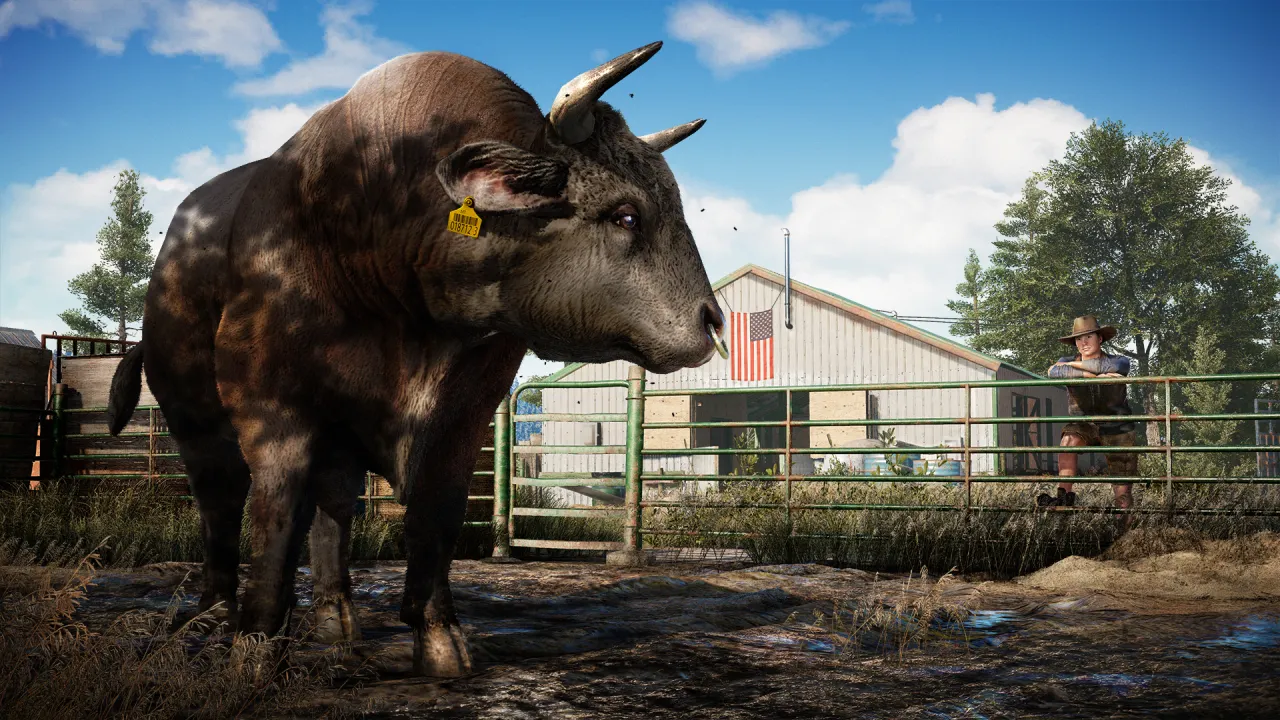
Strip away the cult themes and the everyday audio sits at Ubisoft's reliable standard. The English voice work holds: Joseph's low sermons, John's oily coaxing, Jacob's flat commands all land their characters, and the localized subtitles keep pace. The ambience is dense and lived-in — wind dragging through wheat, distant dogs, church bells, sermons looping on cult radio. Combat feedback serves the sandbox: weapons crack, engines roar, fire crackles through a wooden cabin, and a wild animal bursting out of the brush adds a jolt of presence to every firefight. On console the mix spatializes, so a headset gives you a real read on which direction the cult or the bears are closing from. And the score knows when to shift — slack country tunes drop into low, pressing strings as a herald's confrontation begins, the silence-then-swell priming you for the standoff before a word is spoken. It won't lodge in memory the way "Only You" does, but it does everything a sandbox score is asked to do, and gets out of the way.
Visuals | 9.0/10
Grafik: 9/10Montana with a sense of place
Pull the camera back over Hope County and you'll concede it's the prettiest map the series has built — and it earns that not through spectacle but through a genuine sense of place. The three regions read as distinct landscapes: Holland Valley rolls out gold farmland dotted with barns, gas stations and motels; the Whitetail Mountains darken into pine and rock and snowline; the Henbane River pools into misted meadows. Montana is nicknamed Big Sky Country, and the game honors that wide, lit ceiling — crest a hill at dusk with the wheat going copper and you stop to take the screenshot.
Better still, Ubisoft paints the cult's reach straight into the scenery. White Eden's Gate crosses, sermon slogans sprayed across barn walls, roadside statues of the Father, Faith's drifting Bliss fields — these symbols saturate the county so you never forget the calm has been colonized. Joseph's towering effigy, the veterans' center, the pink-spore hallucination stretches along the river all stick as landmarks. As art direction it clearly outpaces the studio's own Ghost Recon Wildlands from the same window; that South American highland felt like a functional mission backdrop, while Hope County has a personality and a grievance. The variety is doing heavy lifting too: in the space of a short drive you cross from sun-bleached farm flats into shadowed conifer ridges and then down to fog sitting on river water, and each transition reads as a different mood, not just a different texture set. Weather rolls through to sell it further — a storm darkens the valley, a clear dawn gilds the peaks — so the same square mile can feel inviting at one hour and ominous the next. That range is rare in a single contiguous map, and it's a big reason the county never wears out its welcome the way a one-note biome would.
Dunia, subtraction, and a stable mix of platforms
Technically the game rides Ubisoft's in-house Dunia Engine, strong on open sightlines, dynamic weather and day-night cycles, and that signature fire-propagation system. Flame is still a playable verb in Hope County: light a meadow, let the wind carry it, and you can burn straight through an outpost while the glow stains half the night sky — tactic and spectacle at once. The bigger praise, though, is for subtraction. The series' long-mocked "climb a tower to unlock the map" ritual is gone, replaced by exploration, NPC tips and tagging points through binoculars. The HUD sheds clutter. You learn the county by looking rather than by following icons, and the exploration feels cleaner for it — a healthy trim of the Ubisoft formula.
On platforms the game reached PC, PS4 and Xbox One, later Stadia, with 4K and HDR output on the Pro and X machines that flatter those dusk skies and firelight. The PC build offers a friendly spread of options and high frame rates and is the way to play. Be clear about the ceiling, though: this is "solid and handsome," not "technical showcase." There's no cutting-edge ray tracing here, and the faces and materials are upper-mid rather than best-in-class — what moves you is the staging, not any single spec. Optimization stayed steady, with few reports of serious stutter or crashes, and accessibility options for subtitles, aiming assists and a high-contrast HUD widen the door. Across art, engine and interface, this is the dimension that most deserves its top mark. It's worth dwelling on how much the fire system contributes to the look as well as the play: flame is one of the few fully dynamic forces in the world, and watching it crawl across a wheat field at night, throwing flickering light onto barn walls and panicking wildlife, produces images the scripted set pieces never could. That emergent visual drama — fire you started, spreading where you didn't plan — is a signature the series has carried for years, and Hope County's open terrain gives it the room to be at its most cinematic. Add the steady performance and the genuinely usable accessibility suite, and the package holds up as a handsome, welcoming open world rather than a tech demo chasing the latest buzzword. It is, in the end, a master class in atmosphere over arithmetic.
Combat | 8.5/10
Gameplay: 8.5/10The Resistance Meter, for better and worse
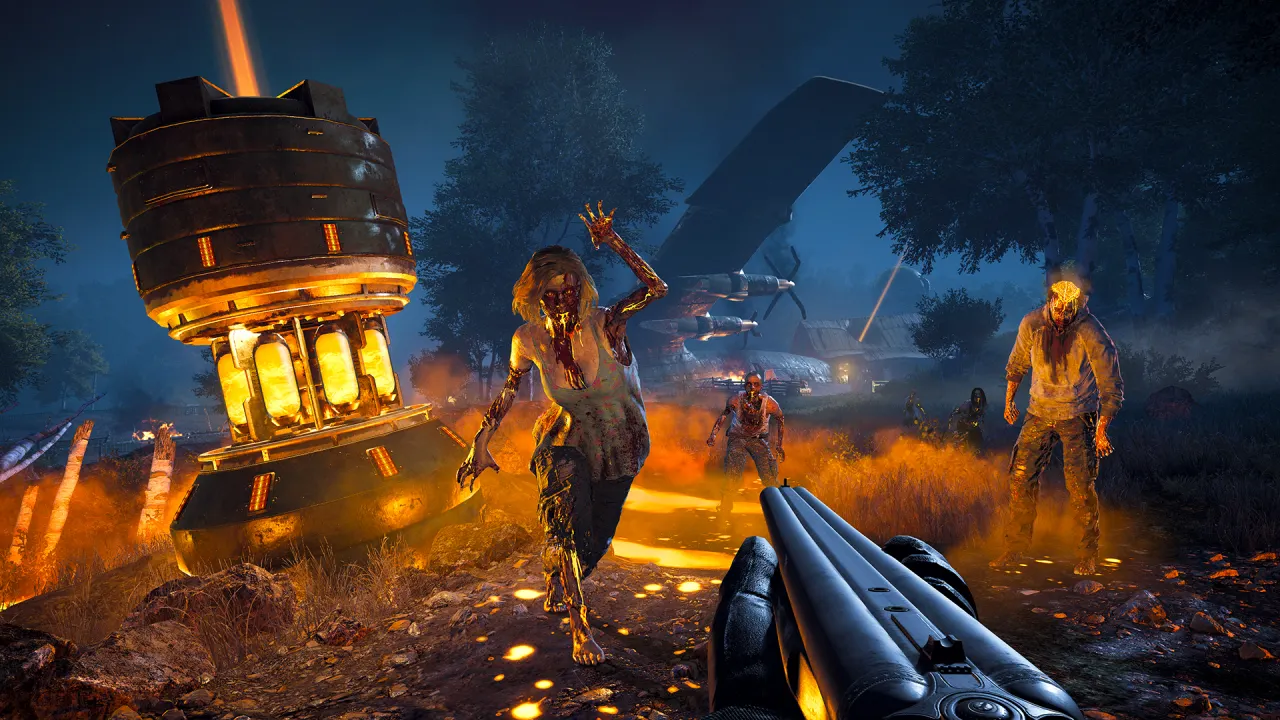
The skeleton of Far Cry 5 is a liberation system called the Resistance Meter. Each of the three regions runs its own bar, and nearly everything you do — clearing cult outposts, freeing captured civilians, wrecking cult supplies, knocking out side jobs — feeds it. Hit the threshold and a scripted confrontation with that region's herald fires. The win here is nonlinearity: no fixed order, three threads you can braid however you like, fresh routes on every replay. For anyone tired of linear corridors, that freedom is real currency. The design also quietly rewards curiosity: because progress accrues from almost any activity, the player who wanders off to investigate a smoking farmhouse or a roadside shrine is still advancing the campaign, never punished for play that strays from the critical path. That blurring of "main mission" and "messing around" is the system's cleanest idea — it makes the open world feel like the content rather than the container for it. Each region also escalates at its own pace, so you can soften up a tough herald's territory in chunks across many sessions instead of committing to one long linear push, which suits the drop-in, drop-out rhythm an open-world shooter lives on.
Where that freedom turns on you
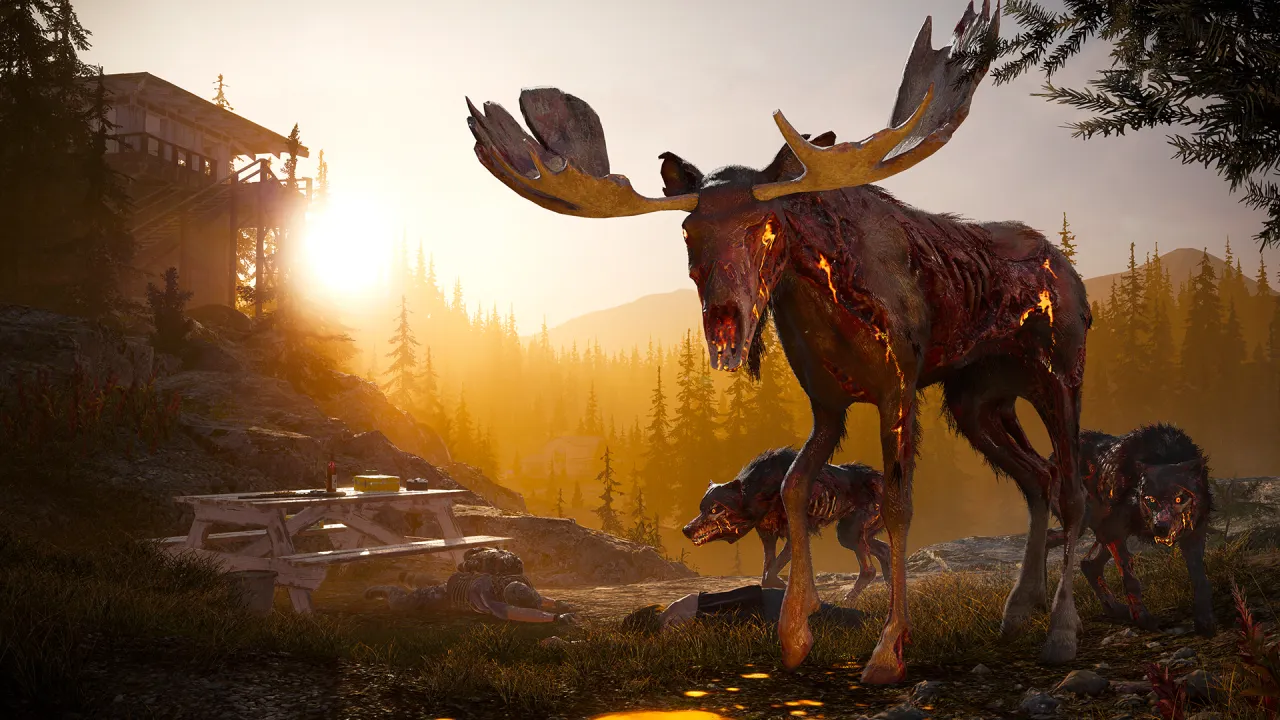
The same system hides the game's loudest complaint. The bar fills automatically, which means even a lazy afternoon of fishing can quietly tip you over the line — and then a forced capture rips you away, stripped of gear, drugged, marched into a near-guaranteed loss you can't outplay. There's no skill answer; you simply absorb it. The intent is thematic, your smallness against the cult. The effect is mechanical: your self-set rhythm keeps getting cut off mid-stride. Ambition in the script, friction in the hands. The sting is sharpest precisely because the rest of the game trusts you with so much freedom — to then snatch control back for a sequence you cannot win feels like a breach of the contract the sandbox just made. Plenty of players learned to game it, deliberately starving a region of progress to delay the next abduction, which is its own quiet indictment: when the optimal play is to avoid the story beats, the story beats are working against the toy. It's the one place where Far Cry 5's thematic reach actively fights the thing players came for, and no amount of intent quite excuses how often it interrupts.
The companion squad is the real engine
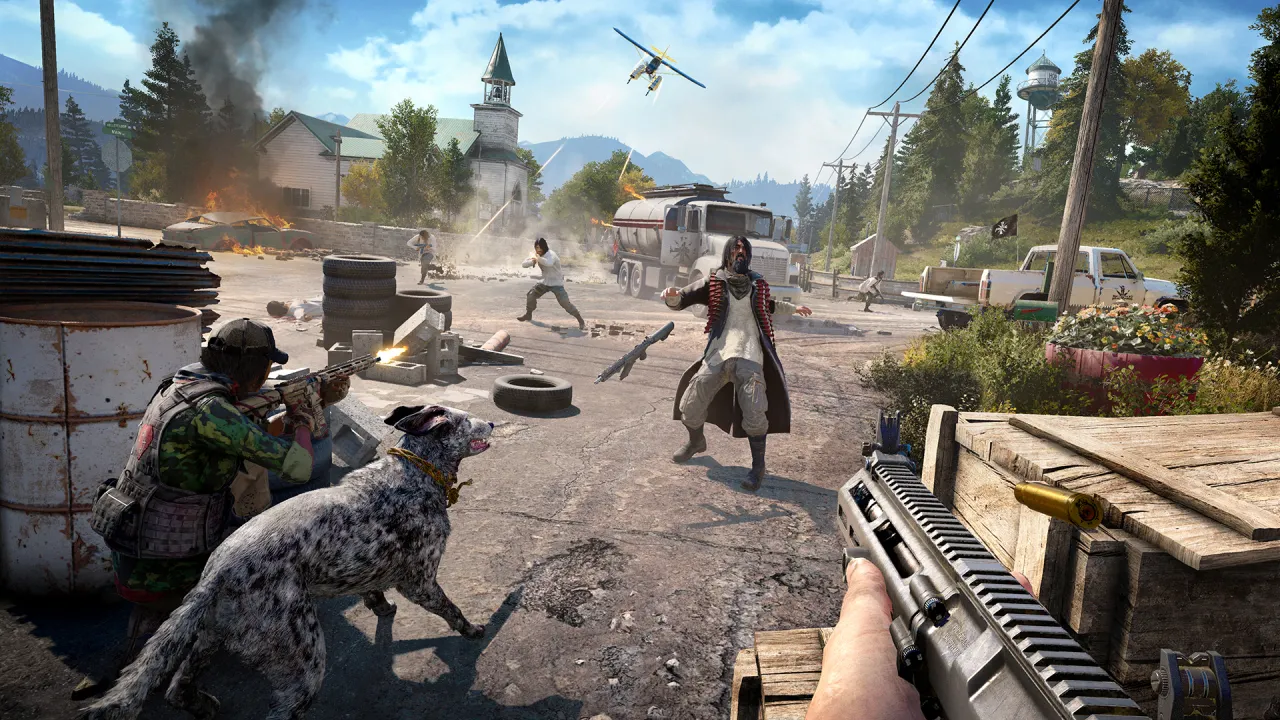
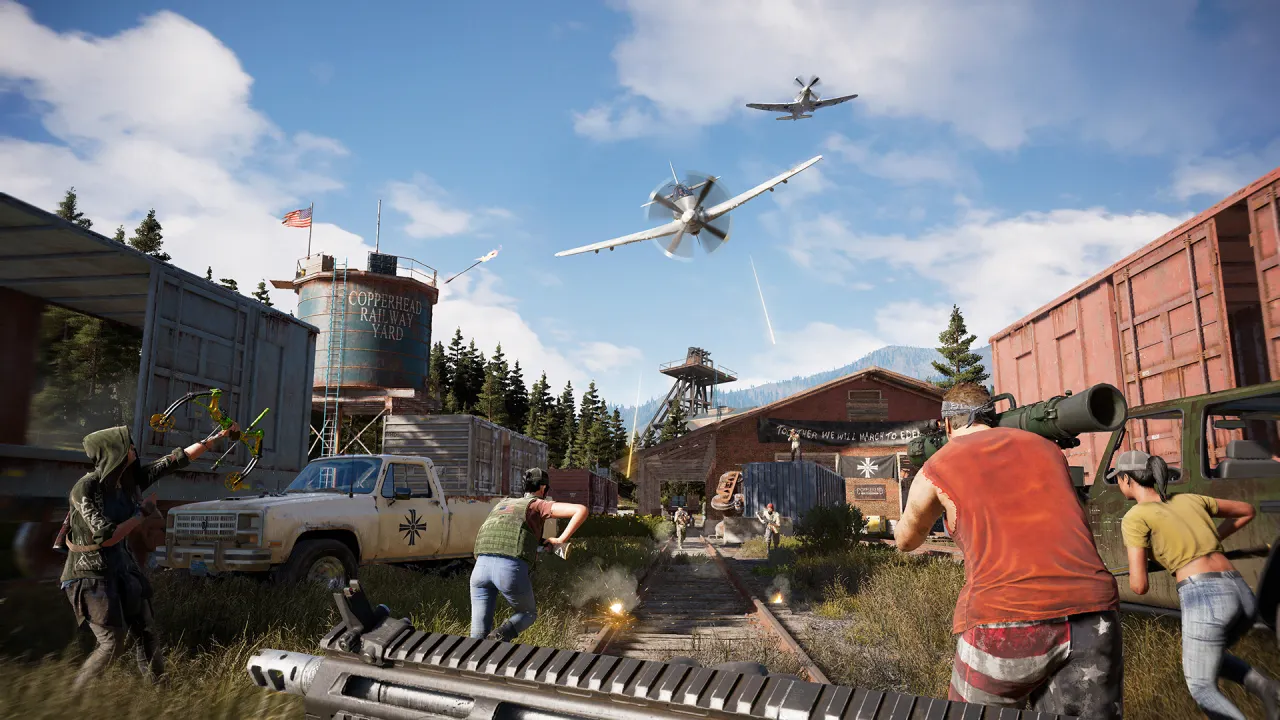
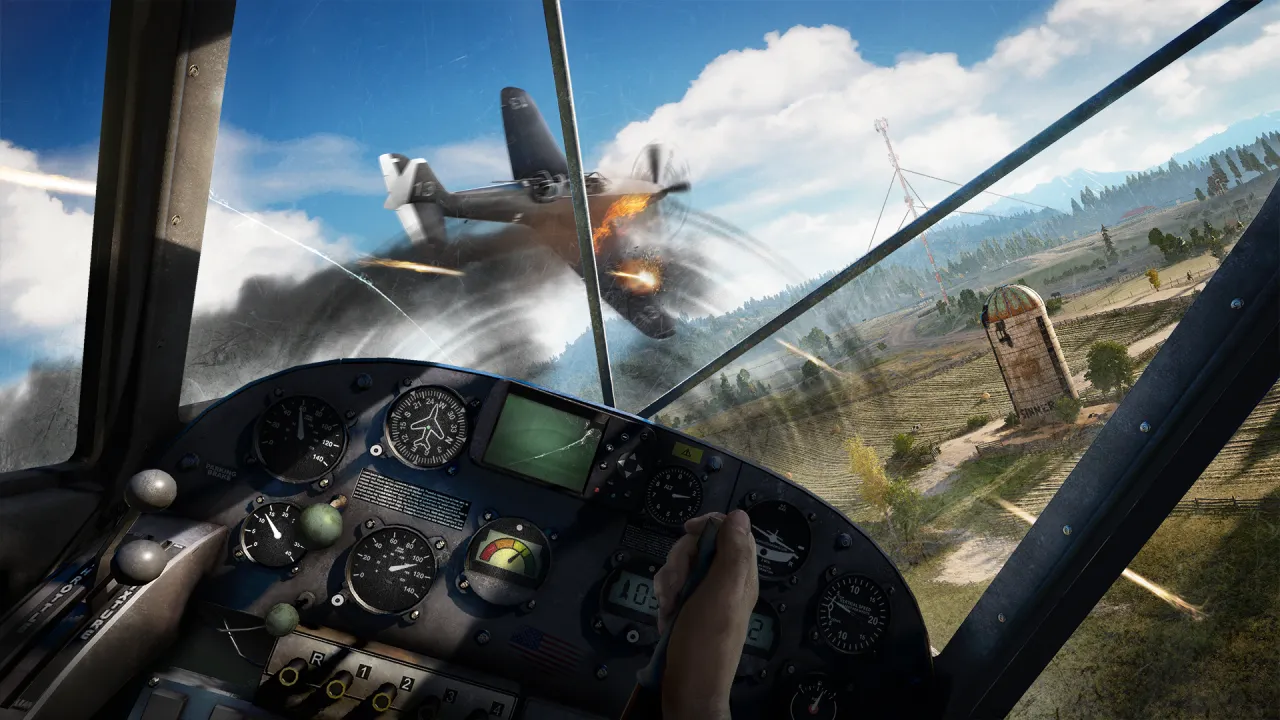
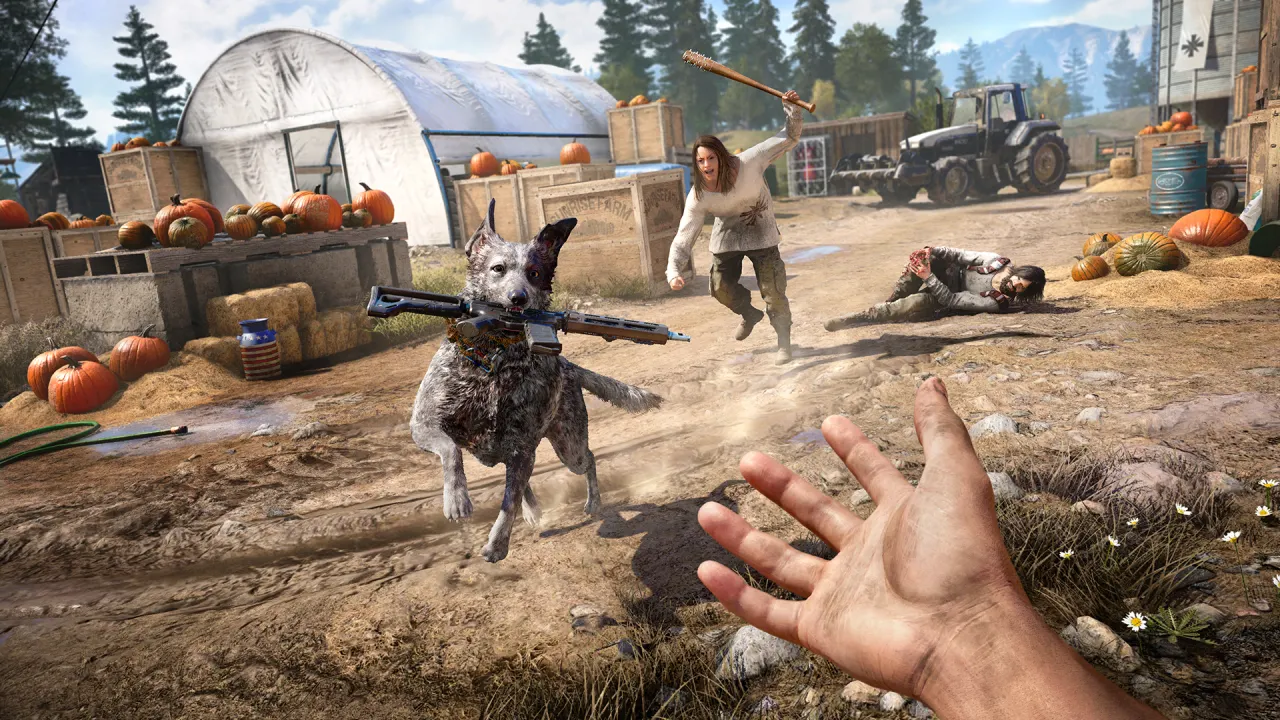
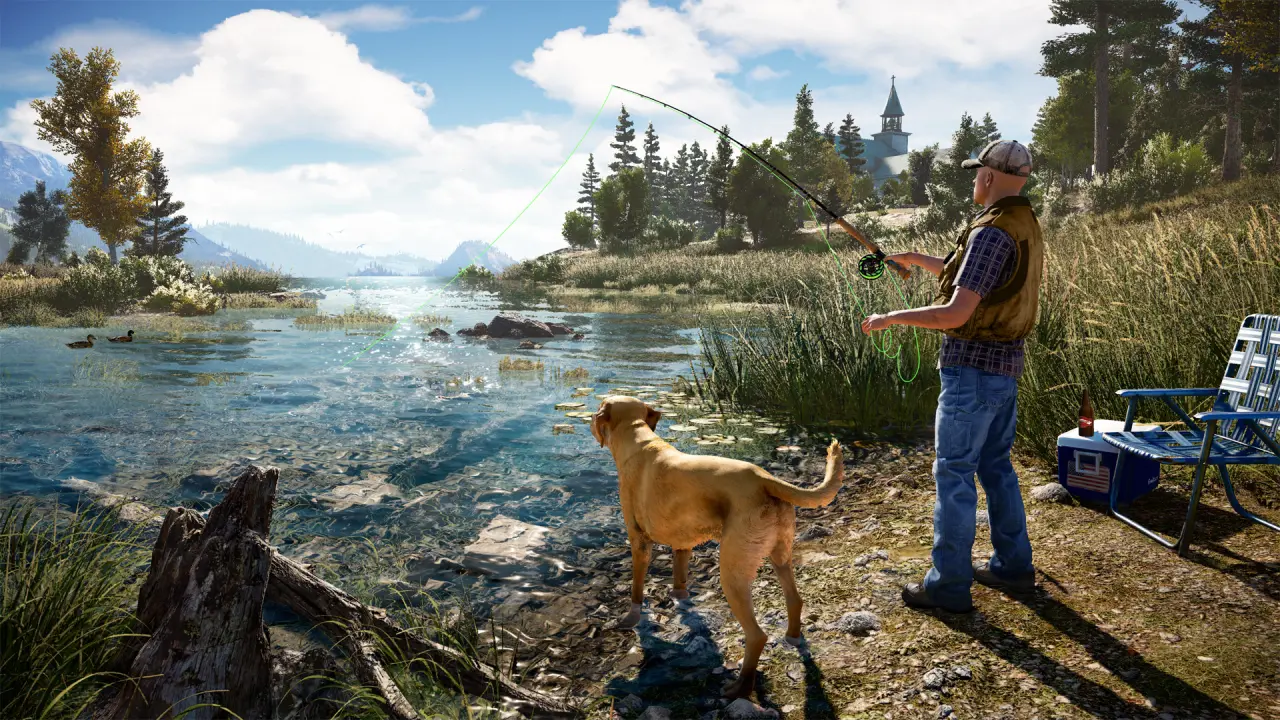
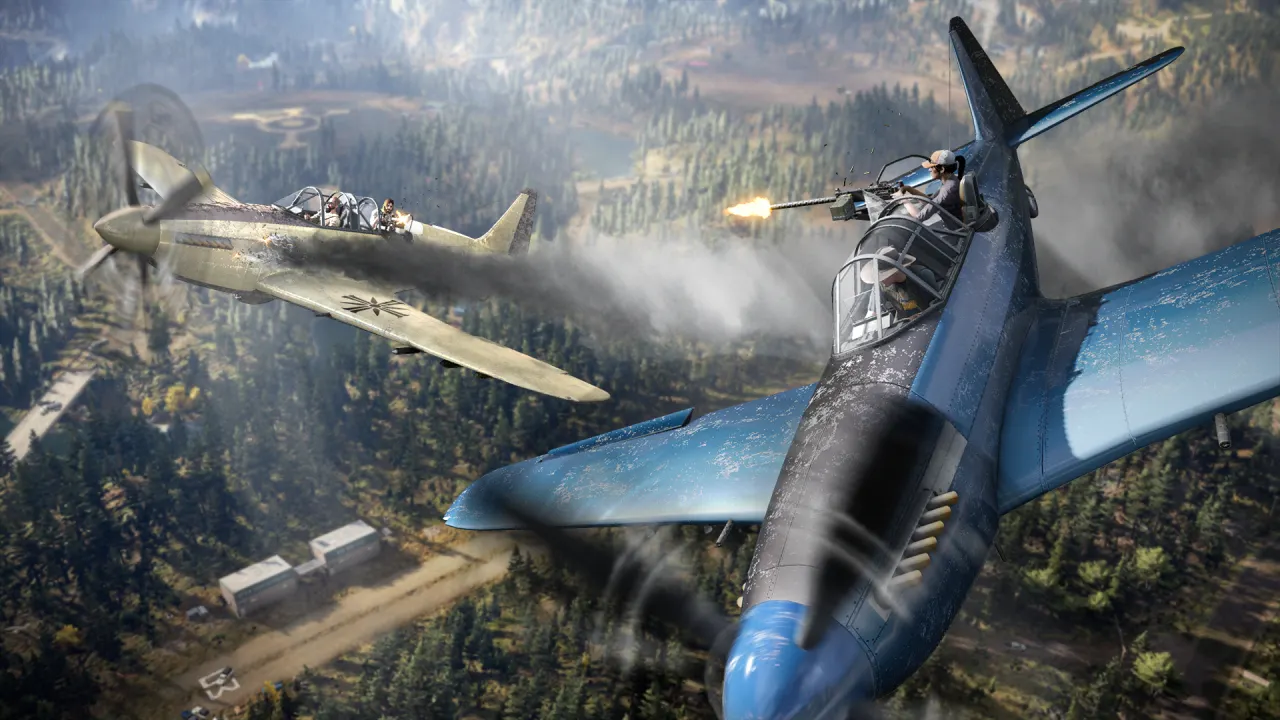
If the meter is the skeleton, the companion system is the muscle that makes it move. Human specialists — the nine hired allies of the Fight for Hire roster, each unlocked through a dedicated side job — come with sharp identities. Nick Rye is a crop-dusting pilot who dives in to drop ordnance from above. Grace Armstrong, a former Olympian turned veteran marksman, snipes from range behind a tell-tale green laser. There's Hurk on the rocket launcher, Jess on the bow, Sharky on the flamethrower, Adelaide in the chopper. The animal Fangs for Hire steal the show: Boomer the dog scouts and tags enemies and sometimes trots back a dropped weapon; Cheeseburger the tamed grizzly barrels into an outpost to soak fire and bowl foes over; Peaches the mountain lion stalks silent for the takedown. Bring one specialist and one Fang, and what hooks you is the emergent slapstick where these AI allies collide with physics and wildlife — a bear launching a cultist, a sniper picking off a ridgeline, a pilot dropping ordnance from nowhere, all stacking into chain reactions you never authored. Hope County's bears, cougars and badgers attack player and cult alike, spinning up three-way brawls. That unpredictable sandbox emergence is the bedrock reason the game topped the series in sales even while its story took its lumps.
Outposts, the arsenal, and the verdict against Far Cry 4
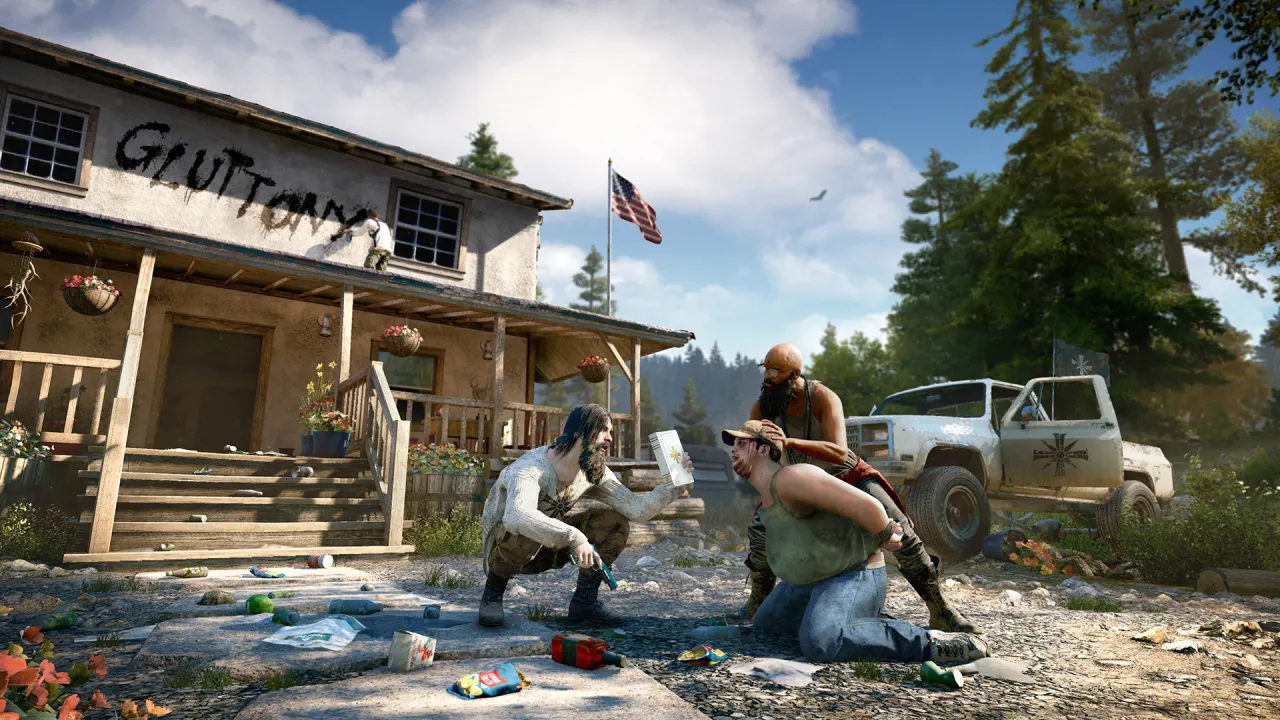
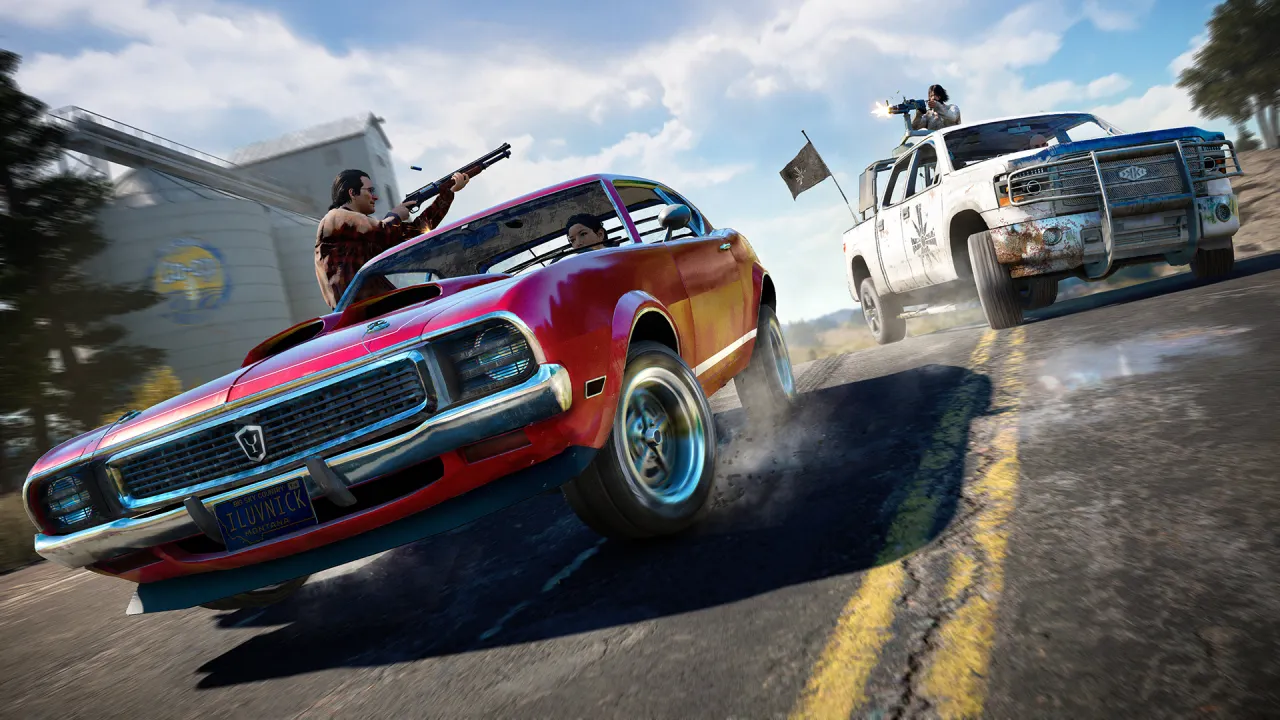
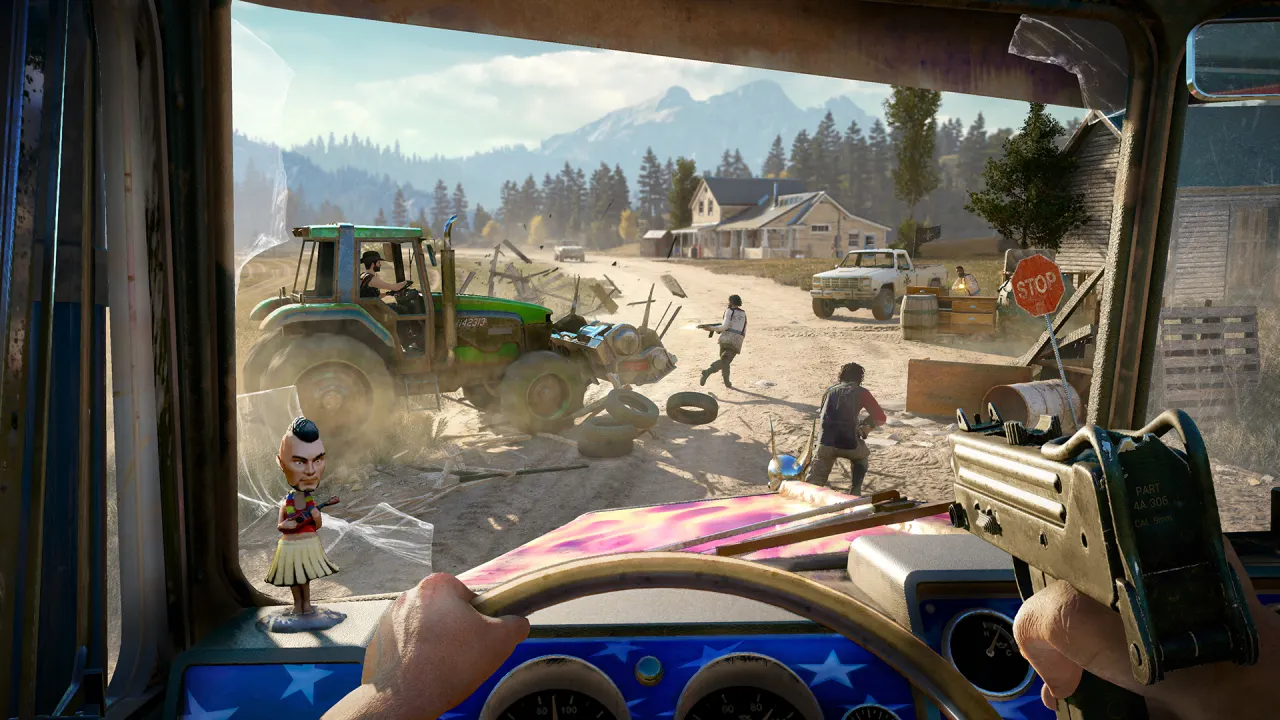
Down at ground level, outpost assaults remain the core loop, and each one offers a choice of approach: loose an animal Fang to pull attention, slip through silent with a suppressed weapon, or just ram the front gate with a vehicle. Clear one and you can reset it so the cult retakes it — a gift to players who'd rather fight than tidy. The arsenal runs from close-range rapid fire to long-range precision tools, with a bow, a flame device and single-soldier heavy support thrown in, plus paint jobs and mods to spare, while crop-dusters, attack choppers, off-roaders and speedboats give the firefights a vertical dimension; the gunplay feels grounded, and the bow's stealth clears are especially satisfying. Hold it up against Far Cry 4 and the progress is all subtraction — towers gone, HUD trimmed, companions amplified, more time spent inside the emergence. Step back, though, and the foundation is still that familiar Ubisoft loop of clearing outposts and topping meters, with no structural reinvention. The fun is genuine; so is the déjà vu. That's exactly why gameplay can't reach the heights graphics does — it sands a proven recipe to a series-best smoothness without handing you one brand-new thing to remember it by.
Content | 8.0/10
Umfang: 8/10A base game that earns its hours
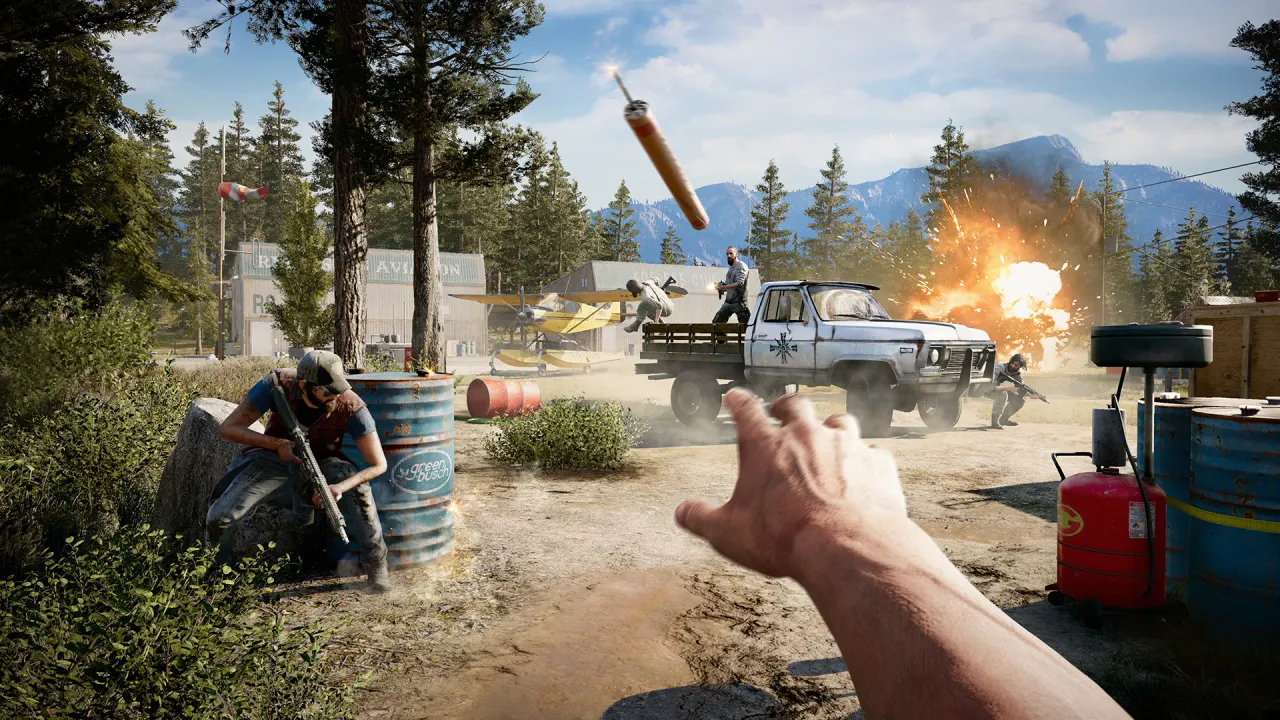
Start with the raw bulk. Far Cry 5's main path runs roughly 25 hours, and if you mop up the side jobs, outposts, collectibles, challenges, fishing and hunting across all three regions, a full clear sails past 40 and brushes 46 for the completionist. For a 2018 open-world shooter that's a sturdy, honest serving — not padded, not bloated, paced with a steady hand, and generous enough that few players will feel short-changed before the credits roll.
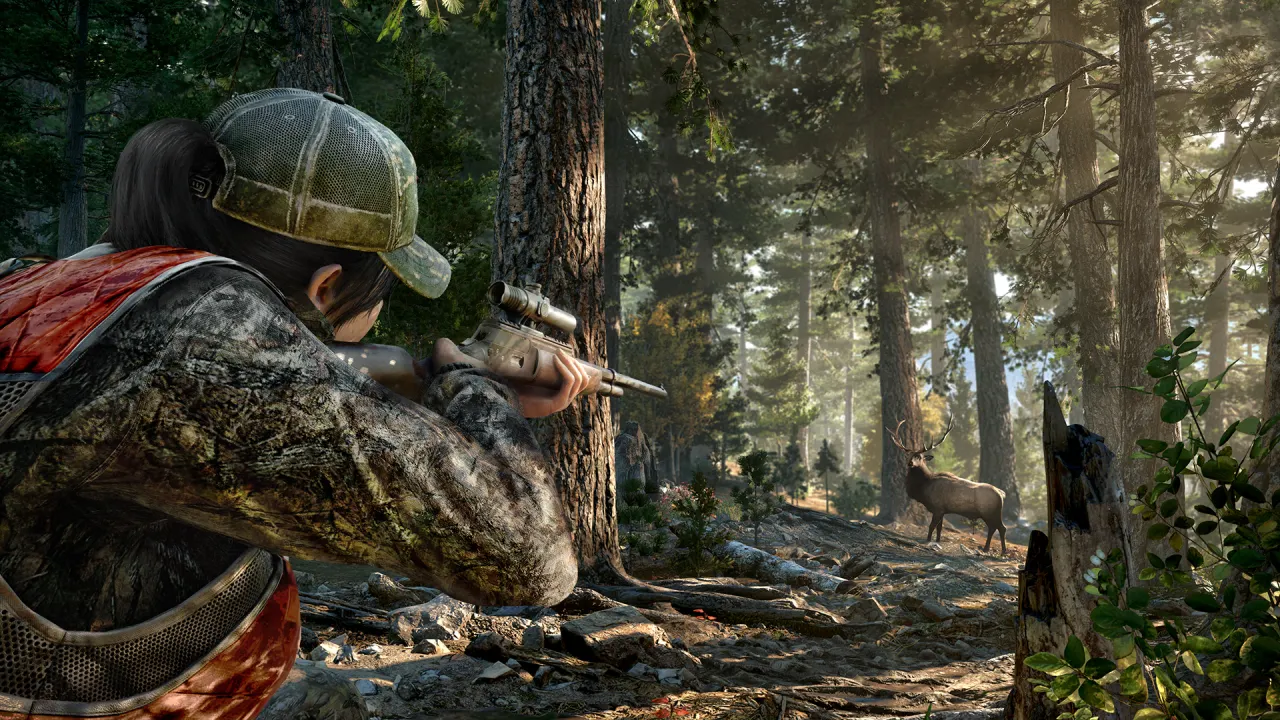
What matters more is the texture of those sides. Hope County's extra content isn't a fetch list; it's threaded with rural life. Enter the fishing derby and chase a record catch. Hunt bears, deer and wolves for pelts to sell. Fly a crop-duster through stunt challenges, or bail out some cranky resident who's gotten himself into trouble. None of it is hardcore in isolation, but stacked together it becomes the slack counterweight to the main story's tension — you can drop between two outpost firefights to fish a riverbank for an afternoon. That elasticity, tense when you want it and loose when you don't, is how an open world keeps you. The fishing in particular became a low-key fan favorite, complete with its own rods, record boards and tucked-away spots that reward exploration, and it works as a palate cleanser between heavier missions. Hunting feeds the economy, letting you turn pelts into cash for new gear, so even the relaxed pursuits loop back into the combat sandbox rather than sitting off to the side as dead filler. The bush-plane challenges, the time trials, the scattered prepper stashes that double as light environmental puzzles — none demands much, but each gives the county another reason to be driven, flown and walked across rather than fast-traveled past.
The season pass is the weak seam, and what actually holds long-term
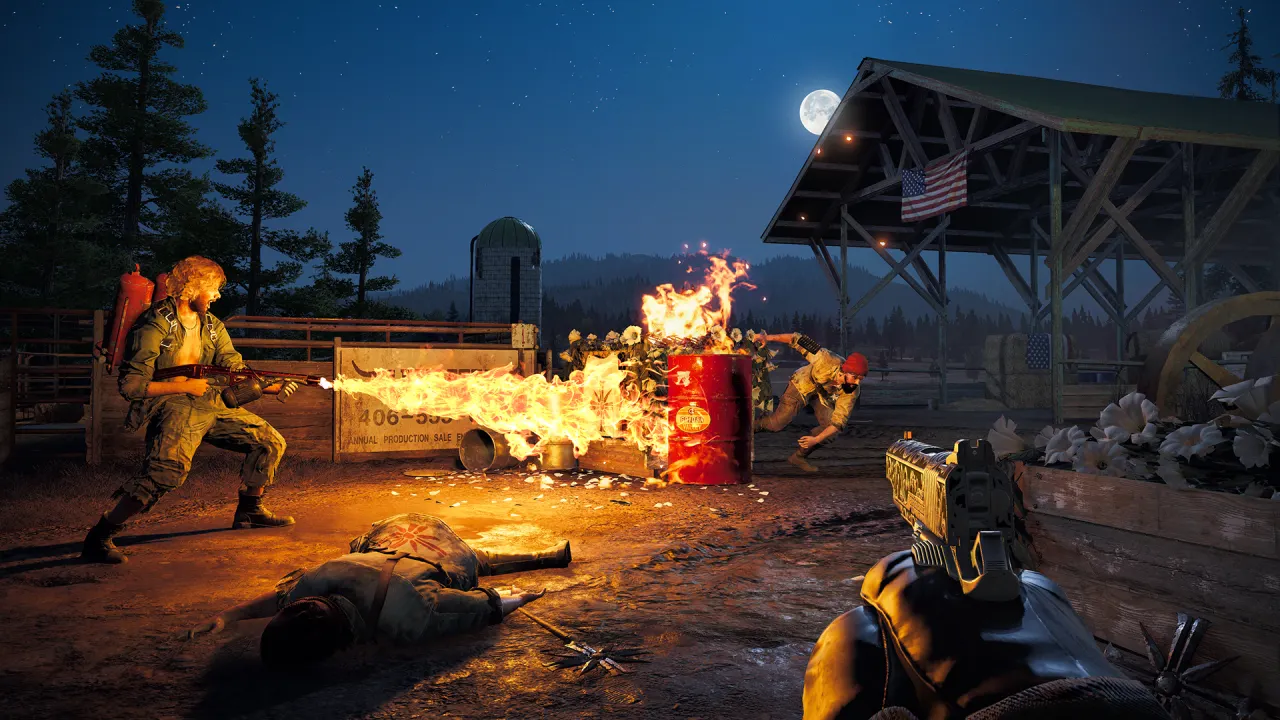
If the base game is sturdy, the season pass is where the cold water goes. The three main expansions ditch the grounded line entirely for B-movie novelty: Hours of Darkness drops you in a Vietnam jungle, Lost on Mars sends you off-planet against alien spiders, Dead Living Zombies runs chaptered zombie waves as horror homage. Splashy on paper, but they're thin and repetitive, and they throw away the very thing the base game does best — Hope County's open world and its companion squad. The numbers don't flatter them: Lost on Mars scrapes a 61 average across 30 critics, rated "Weak," recommended by just 17 percent, while Hours of Darkness lands in OpenCritic's 20th percentile. The pass's real value, ironically, sits in the throw-in: a free Far Cry 3 Classic Edition, roughly ten hours of a series landmark, worth it for veterans and newcomers alike. So: the base game earns the buy; the pass asks for caution.
Then there's the easily missed pool, Far Cry Arcade — a map editor plus multiplayer custom levels where players build from this game's and the series' assets and share the results. In theory it's near-bottomless user content, somewhere to sink endless hours building and beating other people's maps. In practice the UGC scene thinned over the years, and the good custom maps grew hard to dig out. The genuine long tail lands back on the base sandbox itself: three contrasting regions, a nonlinear order of liberation, and the emergent squad chaos that keeps pulling you back to Hope County after the credits. Treat the arcade as garnish and the base game as the meal — that's the honest way to read this game's content. Seen whole, the structure is refreshingly legible: one sturdy, filling open world, one optional sideshow of novelty expansions, and one creator toolkit whose heyday has passed. For the overwhelming majority of players, those 40-odd hours in Hope County stand as a complete and satisfying journey on their own; everything bolted on afterward is an encore for the devoted rather than a load-bearing part of the package. That clarity is actually a strength — you always know where the value is, and you never have to chase fragmented content across a paywall to feel like you've seen the game. Buy the base game, savor every corner of the county, and let all the rest be purely optional seasoning.





Kommentare 0
Wir freuen uns auf deine Meinung
Beteilige dich an der Diskussion und teile deine Bewertung des Spiels.
Noch keine Kommentare — teil uns deine Meinung zu diesem Test mit!