


















Opening
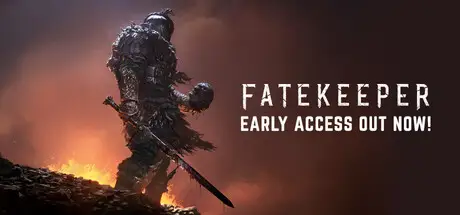
Let me save you the scroll: Fatekeeper is gorgeous, its combat already has a spine, and right now it ships about as much game as a thick demo slice. It hit Steam Early Access on June 2, 2026, built by a studio nobody had heard of, Paraglacial, and published by the very-much-heard-of THQ Nordic. That pairing alone earns a second look.
The thing you'll remember is the hand-in-each-discipline fantasy: a blade in your right hand, a spell waiting in your left, and a telekinetic shove that drags an archer off a ledge and drops him into a fire pit. Turning the room itself into a weapon, in first person, is something almost nobody is doing with a straight face. Steam currently sits at Mostly Positive, 78% across roughly 7,750 reviews. Not a victory parade, but for a two-hour Early Access build, that number says it caught the right crowd.

Across this review I'll take the visuals, the fighting, the story, the sound, and the sheer lack of content one at a time, then tell you flat out whether this price and this size are worth boarding now, or whether you wishlist it and check back at 1.0.
The blunt version first: this is not a finished game, not by a long stretch. What you're buying is an early ticket, and the only honest question worth asking is whether the ride is far enough along for your particular patience.
It's worth a proper writeup precisely because that mix of half-built and ambitious is rare. A small unknown studio cranks its visuals to near-photoreal at Early Access launch and then aims its combat at the hardest, least flattering target there is, physics interaction. That's a posture, not an accident.
Its faults read as "not done yet," not "pointed the wrong way." Those are the games most worth explaining carefully, because a raw number on its own tells you nothing about who should actually press buy today, and that is the gap this whole piece is trying to close.
Story | 6.5/10
Story: 6.5/10A Warden clawing toward Sentinel, and a plot that refuses to waffle
The skeleton is clean. You're a lowly Warden, and the whole arc is the climb: keep your head down, keep surviving, and earn the rank of Sentinel. The backdrop is a feud between the surface world and whatever festers underground, and the grimdark chill never once lets up.
What I respect is the restraint. Too many RPGs unfurl a continent on minute one, scatter three hundred question marks across it, and leave every corner hollow. Fatekeeper does the opposite. The campaign is a tight, linear thread, and it spends all of its narrative budget on the one road you actually walk. Narrow and deep instead of wide and empty is a smart trade for an Early Access build; tell one line well before you promise a map you can't fill. It also happens to be the right call for a studio that can't yet afford a hundred hours of branching, better to land one focused thread cleanly than to spread a thin one across a map nobody finishes.

The bill for that, of course, is that there isn't much story to play yet. The main line is done in roughly two hours. Fuller plotting and deeper faction grudges are 1.0 problems, and the 1.0 content lands free for anyone who buys in now. Treat this as the appetizer; the entrée is still on the pass. The surface-versus-underground split and the Warden ranking system quietly bury a lot of room to grow, and the "new recruit slowly clocks what's really going on" arc writes itself, if the studio is bold enough to lay all those threads out at full release. Right now you get the premise and a taste of the tone, which is enough to make you curious and nowhere near enough to satisfy you, and that is exactly the trade an Early Access story is supposed to be.
The skulls do the talking, not the narrator
The smartest storytelling trick here has nothing to do with dialogue, and everything to do with the rooms. You pick your way across old battlefields heaped with skulls and snapped weapons, through half-collapsed sanctuaries the world forgot, past colossal statues that just stand there in the dark. None of it speaks, and all of it explains more about this place than any loading-screen blurb could.

That knack for "you understand the lore just by looking" is exactly where it brushes closest to the Skyrim lineage and shows real craft. You don't need a voice to recite backstory; standing in the ruins and tilting your head up tells you what catastrophe rolled through. The GamingBolt review says as much, that they'd rather reconstruct the world from those statues and bone piles than sit through the rote text on a loading screen.
The one drag is your companion, a talking rat. It scurries out of your pack and up onto your forearm to lob smart, prickly little asides, and it's a fun idea on paper that adds a pulse to the gloom. Trouble is, critics broadly found its lines forgettable and its motives maddeningly vague, so it reads more like a narration device than a character with blood in it. The rat's screen time and depth are another thing the later builds will have to earn.
Audio | 7.0/10
Sound: 7/10Footsteps in a cold castle hit before the score does
Be clear up front: the audio, like the runtime, is thin in Early Access. Don't expect a full original soundtrack you'd queue up on its own yet; that block waits on 1.0 alongside the story.
For these two hours, though, the environmental work holds. Padding across the flagstones of a desolate castle, ducking into a sanctuary that's caved in on one side, you get the hollow reverb, the far-off drip, the wind worrying at the gaps, and it all sells the grimdark emptiness. Sound here isn't decoration; it's co-writing the "nobody has lived here in a long time" story with the visuals. For a slow, immersion-first first-person game, that sense of place in the audio is precisely what the Dark Messiah lineage always leaned on hardest.

One detail I clocked: a slow game can either feel dead-quiet and dull or noisy and distracting, and this one keeps a restrained hand on the mix. Most of the time it's low ambient hum and your own boots, quiet enough to keep you on edge; the steel and the spells only crash in once a fight starts. That gap between hush and clatter serves the design exactly, tense in exploration, tighter in combat. Whoever cut this sound understood what the game wants, rather than just laying down a backing track.
The shriek of a spell is how your ears read the fight
Worth flagging that the audio is partly a mechanic here, not just mood. The combat is reactive: enemies wind up before they strike, and you have to read that tell to parry or roll. A lot of that reading happens through your ears, the ring of clashing steel, the rising whine of a charging spell, the grunt before a swing. How cleanly the feedback lands feeds straight into whether you nail a perfect parry or eat a full combo.

There's a knock-on benefit worth naming: because so much of the threat reads through audio, a good headset genuinely changes how the game plays. On speakers you can muddle through; with cans on, the directional cues, the off-screen footfalls, the spell building up behind you, all sharpen into actionable information. That's the mark of sound design that's actually load-bearing rather than cosmetic, and it's a quietly impressive thing to get right at this stage of development.
As for voice, the ongoing speech right now comes almost entirely from that talking rat, which carries most of the narration and prompting. As the story section already griped, the rat's writing is the weak link, and no amount of gamely earnest line reading rescues a character drawn this vaguely. It's not that the performance is bad; it's that there isn't enough character on the page yet for the performance to grab onto. Net it out, and the sound is the "good enough, not yet stunning" column of this game. It doesn't grab you by the ear the way the visuals grab your eye, and it doesn't actively drag the way the combat feel does; it sits comfortably in the middle, atmosphere present, feedback solid, voice and music saved for later. For an Early Access build that "lock down the functional stuff, leave the artistry for full release" trade is fair, and once a proper score and richer voice acting arrive, this column should rise with the rest. A middling-to-good expectation is the honest one to set today.
Visuals | 8.5/10
Grafik: 8.5/10Near-photoreal grime: the one column nobody argues with
If anything in this game is beyond dispute, it's the way it looks. Critics handed this category the high marks almost unanimously. COGconnected reached straight for "stunning," called the visuals near-photorealistic, and praised the detail, the lighting, and the spell effects, plus enemies and weapons that feel richly imagined.
My own read is that the lighting is where the real work went. A torch guttering against a slick stone wall, a spell charge blooming into a flash inside a black cavern, daylight spilling through the broken roof of a sanctuary, screenshot any one of those and somebody will ask which AAA game it's from. That polish on an Early Access indie is genuinely rare. And it isn't a slideshow underneath, either: loads are startlingly quick, and the graphics options scale across hardware tiers, so it's not the "pretty but unplayable" trap. Lighting is also doing narrative work, not just looking good. Because so much of the world is lit by a single torch in your hand, the game controls what you see and when, the dark closes in, a shape resolves only as you step toward it, a doorway hints at a room you can't quite read yet. That deliberate management of visibility turns a technical strength into a mood machine, and it's a smarter use of the lighting tech than simply cranking the bloom and calling it a day.

Detail density is the other quiet flex. There's rust and wear on enemy armor, a glint along a blade's edge, firelight caught in a puddle, even the moss and the cracks in the walls hold up. That "stands up to a close look" texture is a resource cost plenty of big studios won't even pay. It didn't hide behind a stylized art pass; it went straight at realism and out-muscled the budget, which is a bold call for a small team. On lighting and texture work alone, this is the most confident thing the game currently owns, and it's the one category where I'd happily put it next to releases costing many times more.
Telling horror through art: the grimdark landmarks
The art direction is unambiguous grimdark, and it nails the "art is narrative" job. The desolate castles, the ruins still breathing past glory, the battlefields carpeted in skulls and broken steel are not just handsome backdrops; they're landmarks you won't forget, and they're the canvas for that "read the lore by looking" trick.

What matters as much is the cohesion. There's no thrown-together clash here, the palette stays pinned between cold gray, dark umber, and blood-rust, the light comes mostly from torches, spells, and seams of sky leaking through, and the whole world hangs together with a "the peak is long gone" decay. You feel, walking through it, that this was once magnificent and is now wreckage. Against peers who paint fantasy as a candy-colored playground, that restrained, dour palette is more memorable and does fuller justice to the heavy story it wants to tell.
Two costs, and both deserve to be said plainly. First, the bar to entry is high, RTX 3070 or RX 6800 XT at the floor, which shuts older rigs out cold, and that's a real gatekeeper for a chunk of the audience that would otherwise love this. Second, and this is the one that stings: as stunning as the picture is, the combat animation still wants polishing. Your eye gets hooked first and your hands can't keep up, and that gap is the game's central tension right now; the higher the visuals score, the more the feel column shows its seams, which is a strange place for a game this pretty to land.
Combat | 7.0/10
Gameplay: 7/10Blade in one hand, spell in the other, archer in the fire pit
This is the soul of Fatekeeper, and the single best reason to spend money on it. The combat frame comes straight down from Dark Messiah: one hand on a melee weapon, the other ready to throw a spell, the two working in concert. What lifts it out of "yet another first-person hack" is physics killing. The headline move is telekinesis, which you can use to trip switches and solve the odd puzzle, but mostly to yank a pesky archer right into your face for a clean cut, or simply hurl him off a cliff, into a fire pit, down onto a bed of spikes. The room is your arsenal, and that kind of inventive first-person combat is something almost nobody in the genre is taking this seriously.

The pacing runs against the grain of mainstream action RPGs, too. It deliberately slows everything down and makes you think about footing, spacing, and timing like a chess match, what PC Gamer described as heavy Dark Messiah energy. The slowness isn't a flaw; it's the design. It wants that weighing-every-blow immersion, and it largely gets it.
Six schools of magic and a skill tree that forces your hand
Magic splits into six schools, telekinesis plus fire, wind, shatter, ice, and life leech, and each one carries a real tactical brief rather than a recolored damage number. Telekinesis anchors the kit and hard-counters ranged foes; shatter leans into armor-breaking burst, life leech keeps you topped up, fire and ice handle elemental control. Sounds rich, right?

Here's the snag. In the current Early Access build, ice and fire are visibly underpowered, wind connects only when it feels like it, and the killer issue is that magic barely staggers anything, you land a spell on an archer's face and he keeps firing. So magic is a supporting act, not a lead, and the studio has openly put that on the balance docket. The skill tree carries its own controversy: it's mutually exclusive, so pouring points into one branch locks you out of the rest, and you can't simultaneously buff melee damage, attack speed, survivability, and magic, with the game never once explaining why. Forced specialization is an interesting idea, but springing the trap on you without stating the rules is a real turn-off.
The feel still isn't all the way there
Time to put the ugly part on the table: the combat feel currently has burrs. This is where the criticism clusters. Wind-up and recovery animations drag, hit windows are narrow, parries and perfect dodges are slippery to time, and one slip in a boss fight bleeds you fast. Attack-speed upgrades can't paper over the stiffness, weapons read longer than their actual reach, and the swings lack impact. The GamingNexus preview headline put it the cruelest way, it looks amazing and plays painful, and several outlets flagged that mouse-and-keyboard suffers worse than a pad.
To get specific, the problem isn't that it's hard, it's that it's tacky. Nobody minds hardcore difficulty; Souls players live on it. The current awkwardness is the deflating kind where you read the timing correctly and still get punished because the animation transitions don't track your input, dashing into a light attack, rolling into a counter. There's lag between the move in your head and the move on screen. That feel-level burr is a different animal from "designed to be hardcore," the former plays like a bug, the latter is intentional challenge. The saving grace is that it sits firmly in the polishable column, not the broken-foundation one, so later builds have every chance to smooth it out. Stacked against the lighter, steadier first-person combat of an Avowed, Fatekeeper wins on the physics-interaction imagination and loses on basic feel, and once the animation and impact get there, the ceiling on this system is very high. That's still a future tense.
Content | 5.0/10
Umfang: 5/10Two hours to the bottom: the hardest knock against it
No dodging this one: content is Fatekeeper's biggest problem right now. The Early Access campaign runs out in roughly two hours. The studio's target for 1.0 is around a 15-hour campaign, which means what you can touch today isn't even the loose change of the full size. The Game8 review went so far as to title its piece "basically a tech demo," a handsome shell over a working core, but content thin as a demo. That stings, and it's also the heart of the 22% sitting inside that 78% positive split: the complaint isn't that it's bad, it's that there's so little of it.
The levels are handcrafted, and the craftsmanship shows, but the structure is a single thread with almost no branching and no freedom to double back and explore. You're funneled down one fixed path, and if you wanted to wander or backtrack to farm, this build won't scratch that itch. That's the flip side of the "narrow and deep" trade, polished, but short, and straight.
It's worth setting expectations against the price, too. At a launch eight dollars rising toward ten, two hours of content isn't the insult it would be at full retail; you're paying indie-trailer money for an indie-trailer's worth of game, with the promise of the rest attached. Whether that math works is personal. If two hours for eight dollars reads as a rip-off to you, no review is going to talk you into it, and you should wait. If it reads as cheap admission to watch something promising take shape, you already know where you stand. The number itself is fair; what matters is which of those two readers you are.
Haven and alchemy: where the real long tail hides
Fix your eyes only on the two-hour campaign, though, and you'll badly underrate it. The real system depth lives in the progression. Your hub is called Haven, and it runs a full crafting, gathering, and alchemy loop. Alchemy in particular is a community fixation, players have already, on their own, assembled a fairly complete wiki and a build planner around recipes, build archetypes, and alchemy categories.
That tells you that even with only two hours of entrée, the build and progression depth is already enough to keep hardcore players tinkering for ages. Put differently, the campaign is short, but the "fuss over your build" loop is the genuine long-tail hook. The fact that players bothered to chart alchemy tables, enemy-weakness notes, and a build planner this early is itself a signal, the systems aren't a facade, there's real stuff to mine, optimize, and trade. Weapons, armor, and relics, layered on top of six spell schools and a mutually exclusive tree, turn "what do I want this run to become" into a question genuinely worth chewing on. For players who love crunching numbers and loadouts, that replay value runs far deeper than two hours of campaign would suggest.
The 18-month wager: are the developers good for it?
Buying Early Access is, at bottom, a bet on whether the studio delivers, so this gets its own paragraph. Fatekeeper plans to stay in Early Access about 18 months with staged updates, and the full 1.0 content arrives free for anyone buying in now. The reassuring part: it shipped patch 0.1.1 inside two weeks of launch, and the developers have been candid about exactly what you're getting today and what's coming. That candor is a big reason it holds Mostly Positive, the crowd walked in with clear "early bet" expectations rather than getting conned into a half-built game. It didn't cosplay as finished, which is more dignified than plenty of its Early Access peers manage.
Eighteen months sounds long, but for a game aiming at a 15-hour campaign while also smoothing combat feel, balancing magic, and rationalizing the skill tree, it isn't outlandish. The real question is never the length of the runway, it's whether the studio keeps cashing the checks. On two weeks of evidence, fast response, honest communication, a clear roadmap, the signal is good. Of course, Early Access is littered with wrecks, and nobody can write a guarantee. So the steadier stance is this: people who buy the direction should jump in and back it now, while the on-the-fence crowd watches the update cadence for a few months before deciding. Both calls are reasonable.






Kommentare 0
Wir freuen uns auf deine Meinung
Beteilige dich an der Diskussion und teile deine Bewertung des Spiels.
Noch keine Kommentare — teil uns deine Meinung zu diesem Test mit!