


















Opening
Some games you play; Ori and the Will of the Wisps is one you fall into. From the first minute — a small spirit and an owlet named Ku taking flight together, only to be torn apart by a storm and dropped into the unknown wilds of Niwen — Moon Studios makes it clear this is a Metroidvania operating at a scale and polish the indie space almost never reaches. It is a 2020 sequel that takes everything its beloved predecessor did and widens it into something close to a 3A production wearing an indie's heart.
The triple-combo at its core is hand-drawn 2D art, a fully orchestral score recorded by the Brandenburg orchestra, and an emotional narrative that earns its tears honestly. Around that emotional spine sits a genuinely deep action game: the Bash mechanic that fuses combat and platforming into one fluid motion, a six-piece Spirit Weapon arsenal, thirty-one Spirit Shards to build around, and a Wellspring Glades village you rebuild as light RPG connective tissue.
It is not flawless. The high-precision chase sequences can wall difficulty-sensitive players, the Switch version strains at its largest scenes, and early patches were needed to smooth launch bugs. But across a 12-to-15-hour main story that climbs to one of the medium's most devastating endings, this review lays out exactly where Will of the Wisps earns its near-perfect marks — and who should brace for its sharper edges.
Story | 9.0/10
Story: 9/10Will of the Wisps tells its story almost entirely without words, and yet it lands harder than most games stuffed with dialogue. It is a fable about love, loss, sacrifice, and the cycle of renewal, delivered through animation, music, and a handful of wordless cutscenes. The narrative is the emotional spine the entire experience is built around, and it is the single biggest reason the game lingers long after the credits.
A Gentle Beginning Torn Apart
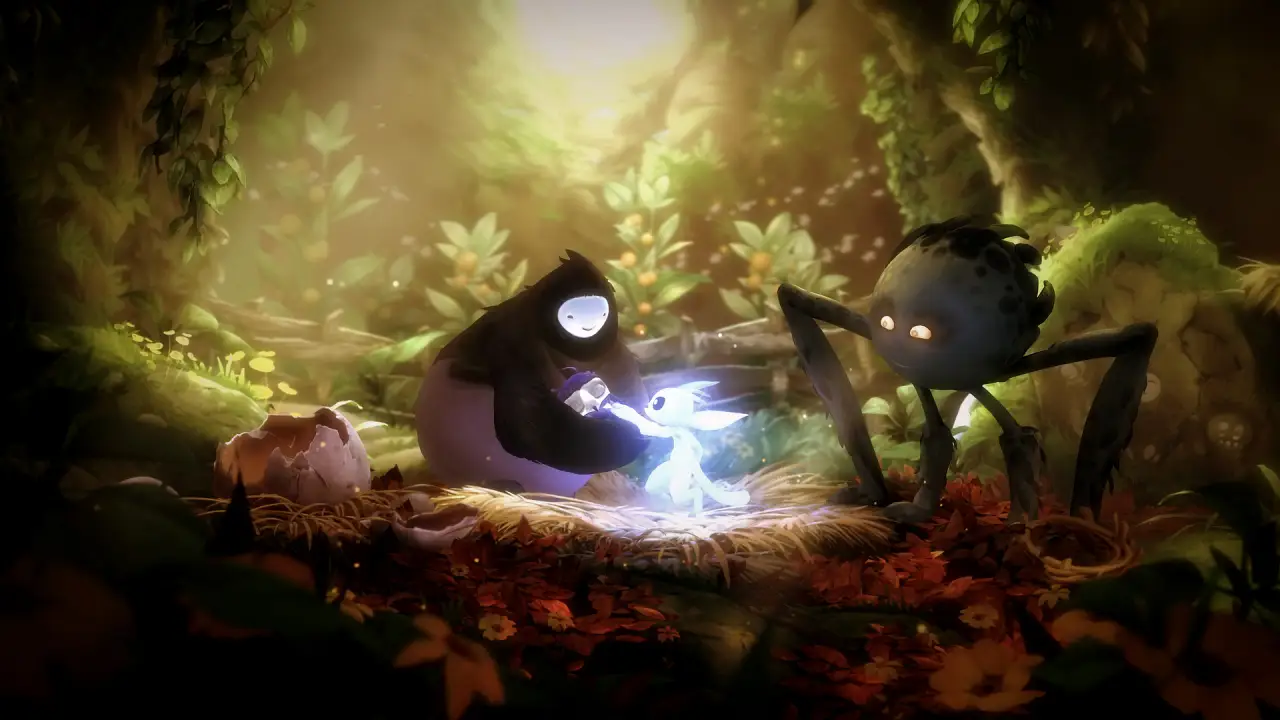
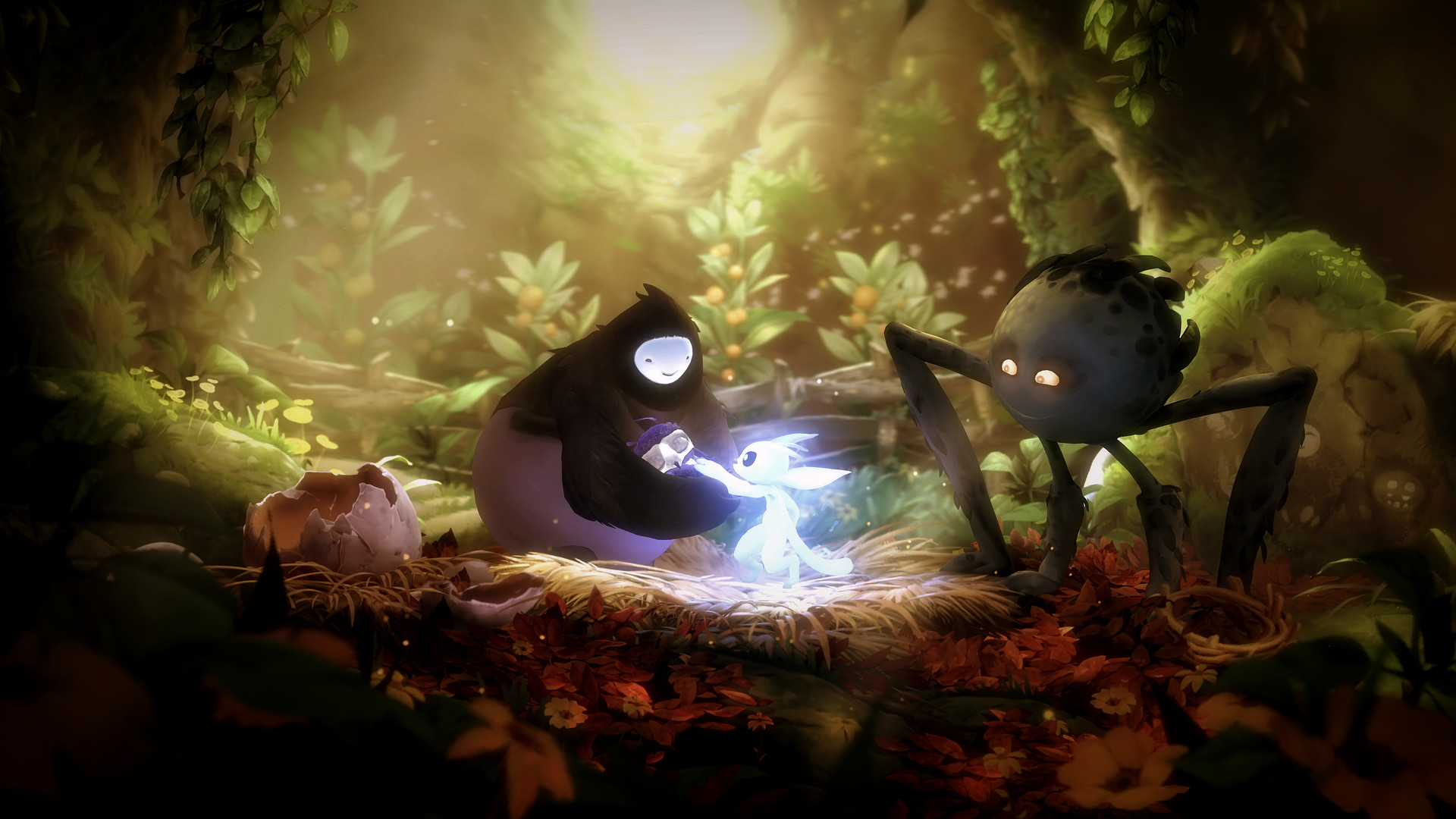
The opening sets an emotional hook with real precision. Ori, the small white guardian spirit, has found a family, and the early moments glow with warmth as Ori and the orphaned owlet Ku learn to fly together. Ku's wing is broken, and the tenderness of Ori helping her into the sky frames the whole game as a story about care. Then a storm rips them apart, dashing Ku from the air and scattering them both across the unknown land of Niwen. In a single sequence the game swings from domestic warmth to desperate separation, and that whiplash is what makes the journey that follows feel urgent: you are not saving the world out of duty, you are searching for someone you love.
That tonal control never lets up. Niwen is established quickly as a land that is itself dying, its own Spirit Tree gone and its light fading, so Ori's personal quest to find Ku is braided together with a larger story about a wilderness in decay. The game trusts you to feel the stakes through atmosphere rather than exposition, and it works because every frame is built to carry emotion.
Kwolok, Shriek, and the Weight of Loss
The middle of the game is where Will of the Wisps reveals it is willing to hurt you. The death of Kwolok, the great frog guardian, is a genuine gut-punch — a quiet, dignified loss that darkens the whole back half and reminds you this fable has teeth. The game refuses to treat its gentle creatures as safe, and that willingness to grieve is exactly what gives the warmth its weight.
The antagonist deepens the theme rather than just opposing it. Shriek, a monstrous abandoned owl, is built as Ori's mirror — where Ori was found, raised, and loved, Shriek was cast out and left alone, and her cruelty is the wound of that abandonment turned outward. She is terrifying in motion, but the writing never lets you forget she is a tragedy as much as a threat. The final confrontation works on both levels at once, mechanically thrilling and thematically devastating, because you understand she is the dark reflection of the love that made Ori who they are. It is villainy written as sorrow, and it is far more affecting for it.
Becoming the Spirit Tree
The ending is the reason people talk about this game years later. Faced with a dying land and a chance to restore it, Ori chooses self-sacrifice, becoming the new Spirit Tree that brings Niwen back to life. It is a meta-narrative full-circle: the small guardian who was found and raised becomes the very thing that will find and raise others, the cycle of light renewing itself through a single act of love. The game stages it with such restraint and such overwhelming musical and visual force that it reaches a level of emotional catharsis the indie space rarely touches.
What makes it land is everything that came before — Ku, Kwolok, Shriek, the slow restoration of a broken world all feed into a finale that recontextualizes the entire journey as a story about giving yourself so that others may live. There is no clumsy monologue to explain it, just images and a swelling orchestra and a quiet, total understanding of what just happened. For a 12-to-15-hour game told almost without language, it is an astonishing feat of storytelling, and it is the clearest justification for this dimension's near-perfect score. What is remarkable is how universal it manages to feel despite its specificity — these are glowing forest spirits and giant frogs, yet the emotions are entirely human: the fear of losing someone, the grief of a death you could not prevent, the quiet dignity of giving everything for the people who come after. Few games of any budget reach that register, and almost none do it without a single spoken line.
Audio | 9.5/10
Sound: 9.5/10If the visuals are the body of Will of the Wisps, the music is its soul. Gareth Coker's score is not background ambience — it is a lead character, and it operates at a scale almost unheard of in an independent game. This is the dimension where Ori reaches genuine perfection, a soundtrack that would be a credit to any cinematic blockbuster and which a sizable audience now listens to entirely outside the game.
A Cinematic Orchestral Production
The production pedigree is the foundation of the score's power. Coker's compositions were recorded with a full live orchestra, the Brandenburg ensemble, giving every theme the breadth, dynamics, and human warmth that synthesized scores can only imitate. The result earned BAFTA recognition and sits comfortably alongside major film soundtracks. Themes swell from delicate solo piano and woodwind into full orchestral catharsis, and the range is enormous — tender lullabies for the quiet moments, soaring strings for discovery, pounding percussion and brass for the chase sequences. Each major character and region carries its own motif, so the music is constantly telling you where you are and how to feel, weaving a leitmotif structure through the whole journey that pays off enormously by the finale.
The signature emotional cues are unforgettable. The themes tied to Ku, to the restoration of Niwen, and to the ending have become beloved pieces in their own right, the kind of music that can reduce a player to tears on replay alone. That a score from an indie Metroidvania has spawned its own listening culture — concert performances, countless covers, OST playlists with millions of plays — is the clearest measure of how far above its weight class this music punches.
Music Fused to Play, and Platform Polish
What elevates the score from beautiful to brilliant is how tightly it is bound to the gameplay. The music is dynamic, shifting with the action so that the orchestra surges exactly as you launch into a frantic escape and settles as you drift into a quiet glade. The chase sequences are the showcase: the score drives them, its relentless momentum syncing to the on-screen danger so that the music is not accompanying the tension but generating it. You are not playing to a soundtrack; you are playing inside one.
The moment-to-moment sound design supports all of this with care. Every Bash, every weapon strike, every environmental flourish is crisp and readable, and the audio cues do real work in communicating combat and platforming feedback. Across platforms the experience holds up well, with the powerful hardware delivering the fullest fidelity and the Switch making only minor compromises in mix density rather than character. Played with headphones, the combination of that live orchestra and the precise effects work turns even ordinary traversal into something cinematic, and it is why so many players describe the audio, not the art, as the thing that finally undid them emotionally. It is, simply, one of the finest scores in the medium.
Visuals | 9.5/10
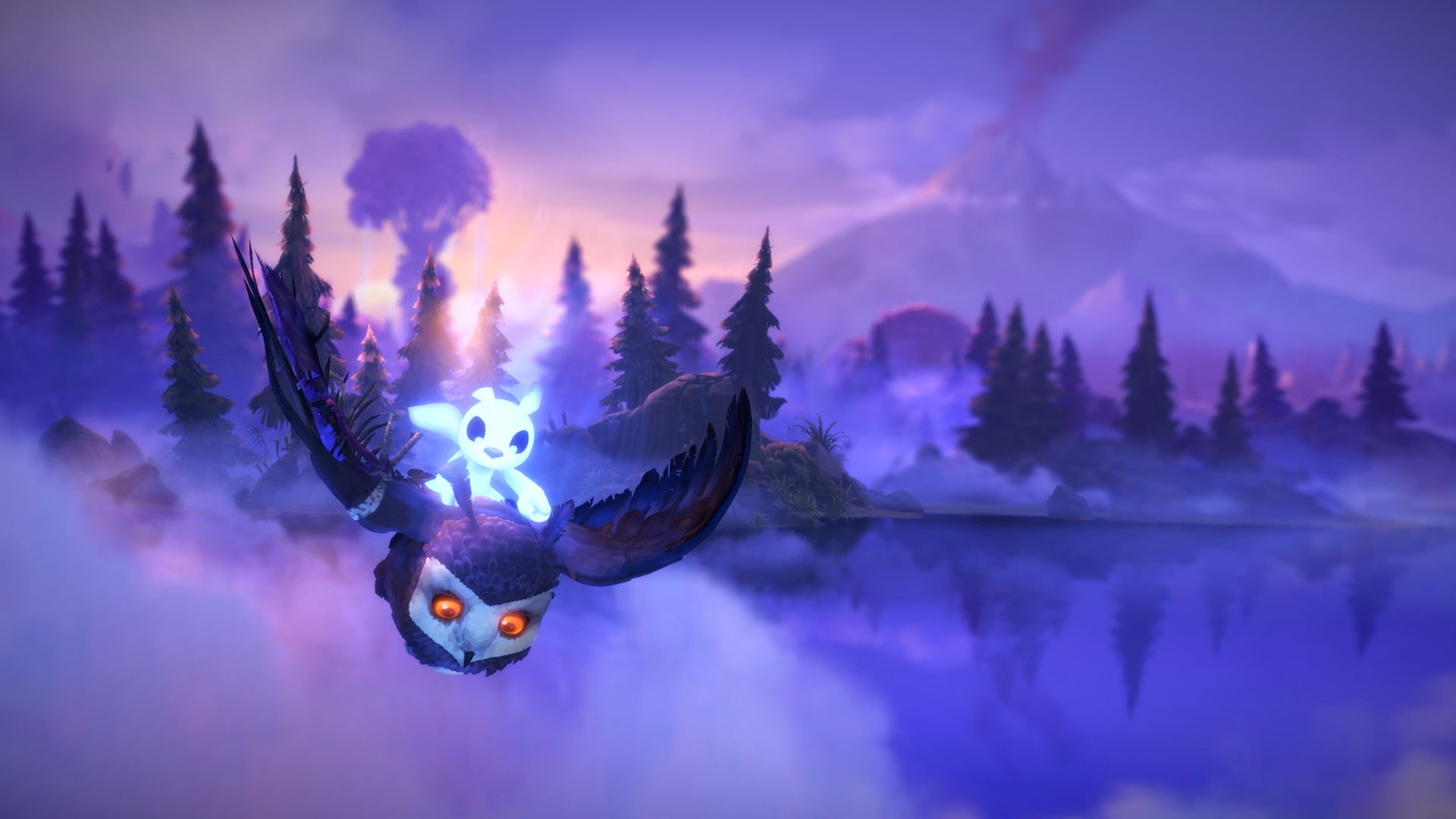
Grafik: 9.5/10Will of the Wisps is one of the most beautiful games ever made in two dimensions, full stop. Moon Studios pursued hand-drawn 2D art with a fanaticism that pushes the entire form to its ceiling, and the result is a game where you will repeatedly stop moving just to look. This is a near-perfect score, and it is earned not by raw technology but by an obsessive marriage of artistry and craft.
Hand-Drawn Art at Its Absolute Limit
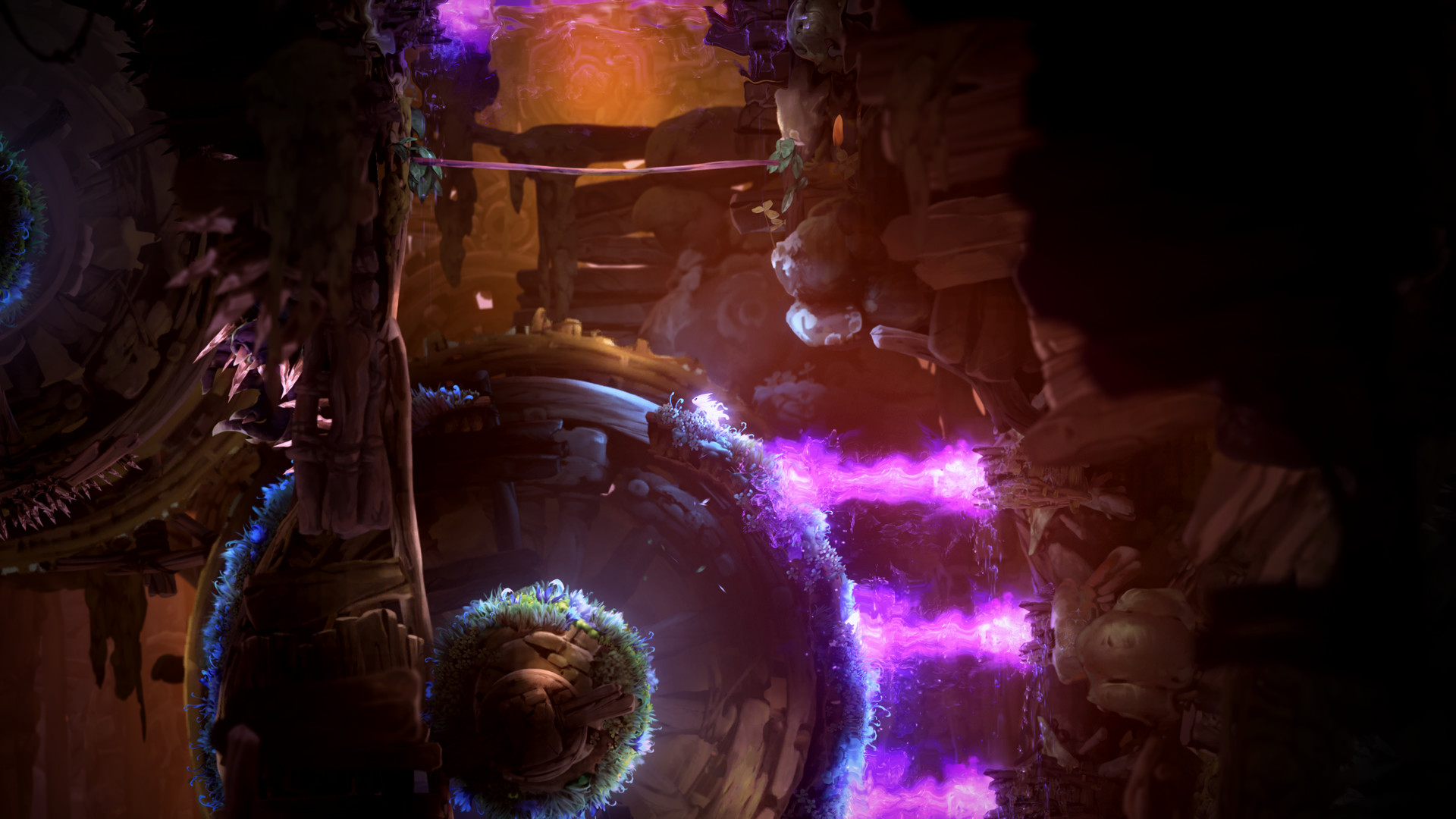
The art direction commits totally to a painterly, storybook aesthetic, but rendered with a density of detail that storybooks never had. Niwen is a living watercolor — bioluminescent forests, drowned ruins, windswept deserts, and frozen peaks, each region a fully realized palette and mood. Nothing looks placed; everything looks grown. Foreground grasses bend, distant canopies sway, light filters through layers of leaves, and the whole frame teems with ambient motion so that even a static screenshot feels alive. The studio's refusal to let any corner of the screen go flat is what separates this from merely pretty games; it is beautiful at every depth at once.
Crucially, the beauty is never just decoration. The art is always legible — Ori reads as a clear white point of light against richly colored backdrops, hazards announce themselves through color and silhouette, and paths reveal themselves through composition. That fusion of overwhelming visual richness with perfect readability is the hardest thing to pull off in a 2D action game, and Will of the Wisps makes it look effortless. The color work alone is worth studying: each region commits to a dominant palette — the warm ambers of the woods, the sickly greens of the drowned depths, the cold blues of the frozen peaks — so that you always know your emotional location as much as your physical one, the art quietly scoring the journey in color the way the music scores it in sound.
Animation, Particles, and Layered Depth
If the environments are the canvas, the animation is the performance. Ori moves with a fluid, weighty grace that makes every dash, wall-jump, and Bash a pleasure to watch as much as to execute, and the character animation carries genuine acting — fear, joy, exhaustion, tenderness all legible in posture and motion without a single line of dialogue. The larger creatures are animated with the same care, so a boss is not just a threat but a spectacle. This is the layer that turns mechanics into emotion; you feel Ori's vulnerability and resolve because the animation never stops communicating them.
The technical flourishes amplify the artistry rather than distract from it. Dynamic lighting bathes scenes in shifting color, particle effects scatter spores, embers, and light through the air, and multi-layered parallax scrolling gives the 2D world a remarkable sense of three-dimensional depth, so foreground, midground, and distant background all move in convincing relation. The effect is a flat plane that reads as a vast, deep world you are traveling through rather than across.
Platform Versions and Interface Clarity
The experience scales sensibly across hardware. The most powerful platforms deliver the art at its highest resolution and smoothest framerate, and the game is a genuine showpiece there, while the Switch version makes the expected compromises — occasional frame dips at the largest, most particle-heavy scenes — without losing the fundamental beauty of the art style, since hand-drawn 2D degrades far more gracefully than realistic 3D ever could. Even at its most strained, this is a gorgeous game on every system it runs on.
The interface matches the restraint of the art. Menus, maps, and HUD elements are clean and unobtrusive, designed to inform without cluttering the screen or breaking the painterly spell, and accessibility options help a wider range of players experience the spectacle. The whole presentation is unified by a single, uncompromising goal — to make a moving painting you can play inside — and the consistency of that vision, sustained across a dozen-plus hours and five distinct biomes, is exactly what holds this dimension at the top of the scale. It is the kind of visual achievement that ages by becoming a benchmark rather than a relic; years from now, "as beautiful as Ori" will still be a meaningful compliment, because the beauty was never tied to a hardware generation but to the timeless craft of drawing by hand.
Combat | 8.5/10
Gameplay: 8.5/10Beneath the beauty, Will of the Wisps is a genuinely excellent action-platformer — and a substantial step up in mechanical ambition from its predecessor. Where the first Ori was primarily a platformer with light combat, the sequel builds a full, satisfying combat system on top of the series' signature movement, then layers in RPG customization without ever bogging down the flow. It is a touch less perfect than the art and music, but only because those reach an almost impossible bar.
Bash and the Fusion of Combat and Platforming
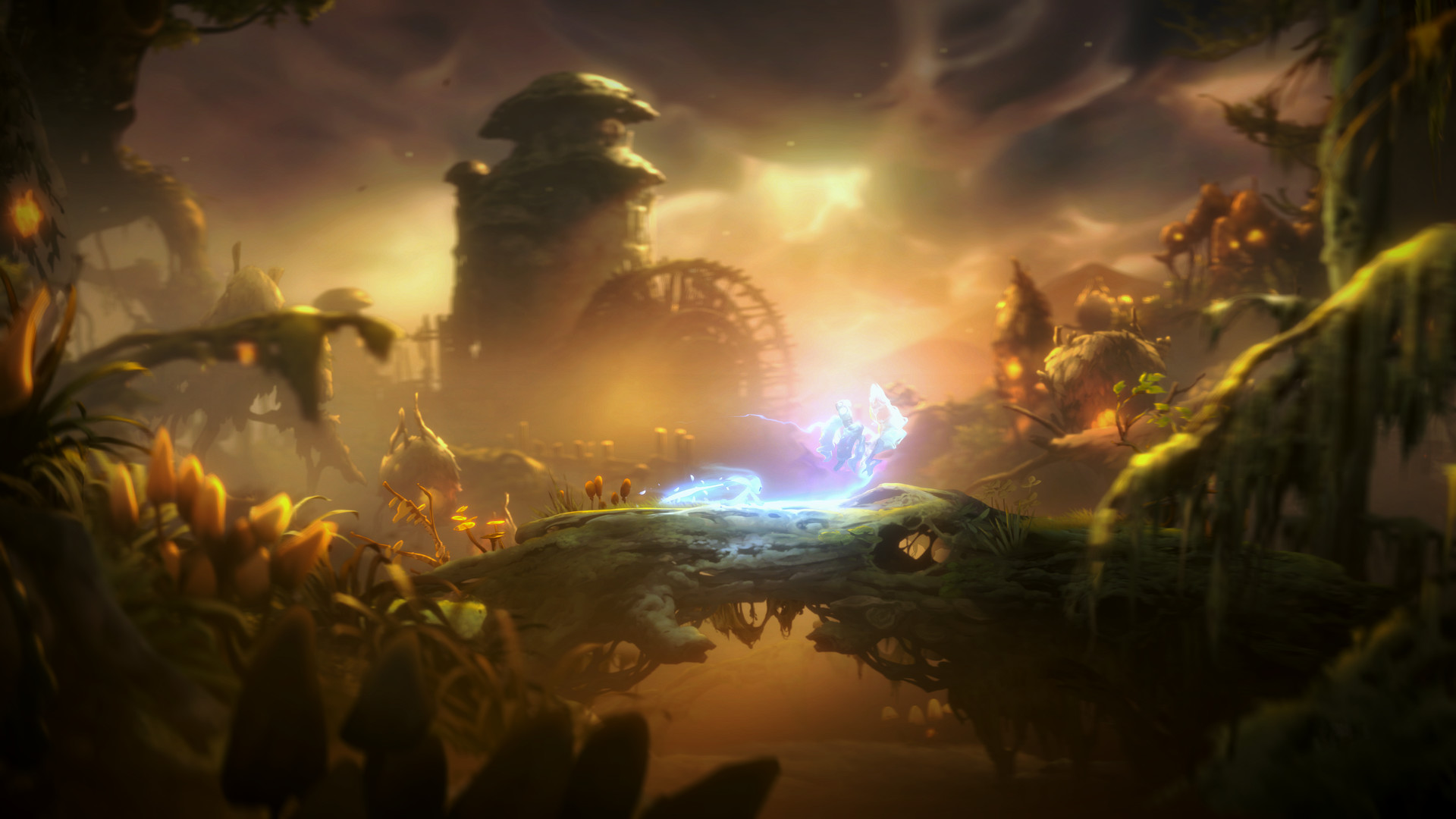
The heart of the moment-to-moment play is the Bash, the mechanic that defines the entire series. By latching onto an enemy, a projectile, or a hazard, Ori can fling off it in any direction, simultaneously redirecting the thing bashed. It is dash, attack, and traversal collapsed into a single fluid input, and mastering it is the key that unlocks the game's most exhilarating moments — chaining bashes across a swarm of enemies and bullets to fly through a room is as expressive as anything in the genre. This fusion of combat and platforming into one continuous motion is what makes Ori feel unlike any other Metroidvania; you are never just fighting or just jumping, you are doing both at once in a single dance.
The movement vocabulary builds steadily on this foundation. Dashes, double-jumps, a grappling hook, the Light Burst, and a deep roster of traversal abilities unlock across the journey, each opening new routes through the interconnected map and new options in a fight. By the late game Ori is staggeringly mobile, and the joy of finally moving through a once-impassable area with total fluency is the classic Metroidvania payoff executed with unusual grace. The controls deserve specific praise here: Ori responds with a tightness and precision that makes even the most demanding platforming feel fair, so when you die — and you will — it almost always reads as your mistake rather than the game's, which is the single most important quality a precision platformer can have.
Weapons, Shards, and a Village to Rebuild
Combat has real depth this time. The Spirit Weapon arsenal spans roughly six tools — a light blade, hammer, bow, spear, and more — each with a distinct feel and role, swappable on the fly so you can tailor your approach to a given enemy or encounter. On top of that sits the Spirit Shard system: thirty-one collectible shards grant passive bonuses and playstyle-altering effects, and choosing which to equip in your limited slots is a satisfying build-craft layer that lets you lean toward aggression, defense, or mobility. It is light by dedicated-RPG standards, but it gives the combat a customization dimension the first game entirely lacked, and experimenting with shard combinations becomes a small game in itself.
The Wellspring Glades village ties the world together. Rebuilding it by gathering resources, unlocking merchants and facilities, and working through NPC quest chains folds gentle RPG progression into the Metroidvania structure. Crucially, it never disrupts the pacing — the village is a hub you return to between expeditions, a place to spend what you have found, rather than a grind that interrupts the flow.
The Chase Sequences and the Difficulty Question
The standout set-pieces are the escape sequences — the flood, the storm, the final chase — where the game strips away combat and demands flawless, high-speed platforming as the world collapses behind you. Scored by the surging orchestra and staged with breathtaking spectacle, they are the most thrilling moments in the game when they click. They are also its most divisive: the precision required is genuinely high, and difficulty-sensitive players will die repeatedly, with the spike in challenge clashing against the otherwise welcoming tone. It is the one place where the design's ambition outruns its accessibility, and whether you find these sequences euphoric or frustrating is the single biggest variable in how you will rate the game's play. For most, the payoff is worth the deaths; for some, they are a wall — and that honest split is exactly why this dimension sits a notch below the flawless art and music. It is worth stressing that everything around those sequences is close to immaculate — the combat is punchy and varied, the movement is sublime, the build options give real expression — so even players who bounce off the chases will find the other twelve hours of play deeply satisfying. The friction is concentrated in a handful of moments rather than spread across the whole game, which makes it far easier to forgive.
Content | 8.0/10
Umfang: 8/10Content is the most measured score on Ori's card, and reasonably so — this is a tightly authored, single-player story rather than a sprawling sandbox. But "measured" should not be mistaken for thin. Will of the Wisps delivers a complete, generous Metroidvania with meaningful collectibles, optional challenges, and a no-paid-DLC model that keeps everything in the box, and it sits comfortably in the upper tier of its genre for what it sets out to do.
A Complete Main Journey Across Five Regions
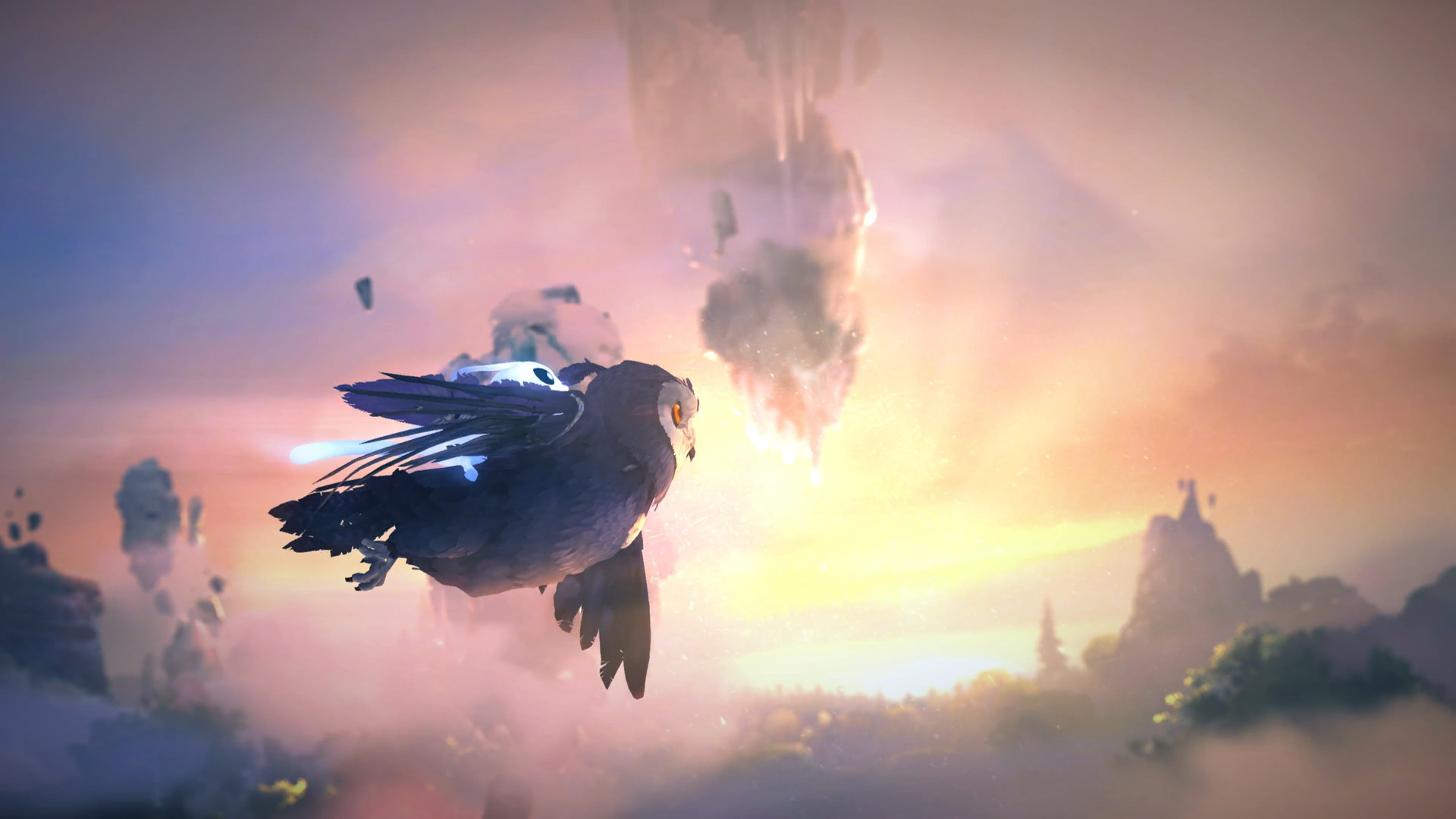
The main story runs a well-judged 12 to 15 hours, expanding to 20-plus for players chasing full completion. That length is ideal for a narrative-driven action game — long enough to develop its world, mechanics, and emotional arc fully, short enough that it never overstays or pads itself with filler. The journey carries you across five distinct regions of Niwen, each a self-contained biome with its own visual identity, enemies, traversal challenges, and secrets, all woven into the interconnected Metroidvania map that gradually opens as Ori gains new abilities.
The pacing of that content is exceptional. New abilities, new areas, and new story beats arrive in a steady, escalating rhythm, so the game is constantly handing you a reason to push forward — a locked path you can now reach, a new region cresting into view, a thread of the story tightening. It is a model of how to structure a Metroidvania so that momentum never sags, and it means the relatively compact runtime feels full rather than slight. Every region also introduces a distinct traversal hook or enemy type, so the game keeps reinventing its own moment-to-moment texture instead of recycling one idea across all five biomes — a discipline that makes the world feel larger than its hour count suggests.
Collectibles, Quests, and Replay Challenges
Around the critical path sits a healthy layer of optional content. The thirty-one Spirit Shards reward thorough exploration and meaningfully change how you play, turning collection into build-craft rather than checklist-filling. The Wellspring Glades quest chains give you NPCs to help and a village to grow, adding light side-content that deepens your investment in the world. Hidden across the map are ability cells, life cells, and secret areas that reward the curious, the classic Metroidvania incentive to comb every corner.
For players who want more after the credits, the game leans on its mechanical strength. The Spirit Trials — time-attack challenges added in free updates — give the speedrunning and mastery-focused community a reason to keep playing, turning Ori's superb movement into a competitive sandbox of its own. A dedicated speedrun scene has grown around exactly that fluidity, and the leaderboards extend the life of the game well past a single playthrough for anyone drawn to optimizing the route. Beyond speedrunning, the sheer pleasure of Ori's movement makes simple replays appealing — many players return just to feel that fluency again, building a fully-powered Ori and tearing through areas that once stopped them cold, which is its own quiet form of long-tail content.
Free Updates, No Paid DLC, and Genre Standing
The business model deserves real credit. Will of the Wisps shipped with no paid DLC and added its extra content — additional challenges, fixes, and a definitive polished state — through free updates, so the version you buy today is the complete, best version with nothing walled off behind a paywall. In an era of season passes and content drip-feeds, a premium single-player game that simply gives you the whole, finished experience is worth highlighting.
Placed against its peers, the content matrix is clear. It does not match the sheer sprawl of a Hollow Knight, which trades some polish for enormous scale, and it is more focused than open-ended; but for a curated, emotionally driven, exquisitely crafted Metroidvania, the volume is exactly right. It improves substantially on its own predecessor in size and systems while keeping the disciplined, no-filler design that makes every hour count. The score reflects a game that chose depth and polish over raw quantity — and executed that choice about as well as the genre allows. For the player who values a tightly crafted, complete journey over an endless one, there is genuinely nothing here to complain about; you finish Will of the Wisps feeling that you experienced exactly as much as it had to give, with no padding and no regret, which is its own kind of generosity.






Kommentare 0
Wir freuen uns auf deine Meinung
Beteilige dich an der Diskussion und teile deine Bewertung des Spiels.
Noch keine Kommentare — teil uns deine Meinung zu diesem Test mit!