























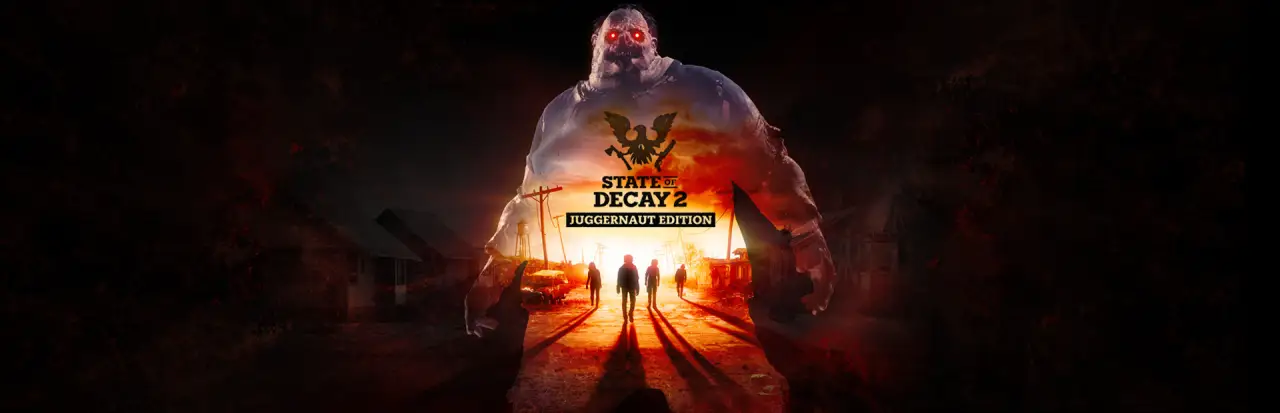
Opening
The moment State of Decay 2: Juggernaut Edition really clicks is not a glamorous one. You are driving down a cracked highway with a quest marker glowing ahead, the engine straining, the fuel gauge sinking, and a stray enemy clinging stubbornly to the hood. It is not the cool, cinematic version of the end of the world. It is messy, slightly undignified, and entirely about one question: did you bring both your people and your supplies home today?
That single question is what separates this game from most others built around the same premise. Clearing a region's threats is the stated goal, and cooperative survival is plenty lively, but what sticks with you is rarely a scripted set-piece. It is the decision to head out one more time even though the medicine cabinet is empty, your survivor is exhausted, and the light is fading. The best part of this game is not fighting the threats. It is staying alive. Simple, and quietly addictive.
Given that it has been on the market for more than five years, the experience carries both a settled, self-driving framework and some rough edges left over from its era. You get a loop that pushes itself forward, alongside the familiar problems of repetition and stiffness. This is not a game that dazzles at first glance. It is more like a pot of apocalyptic stew left simmering on a low flame: plain on the plate, better with every bite.
Story | 6.5/10
Story: 6.5/10The main thread is about clearing the threats tied to the Plague. Functionally, it does its job. As a source of memorable moments, it falls short. You can understand that the game wants to hand players a clear objective, and you can follow that objective from start to finish, but it rarely becomes the kind of narrative you are still thinking about the next morning. It is flat. Not bad, just ordinary.

The world runs on people, not events
What actually lifts the apocalyptic flavor is the community management and the daily life of the survivors. Plenty of critics have noted this, and it rings true: the backgrounds, quirks, and interactions of the randomly generated characters leave a stronger impression than the more conventional main storyline ever does. When you chat with a friendly neighbor at camp and glance over the base status out of habit, you feel that this world is not driven by big events. It is held together by a group of imperfect people getting by.
The benefit of this approach is that it feels natural. It does not chase strong plotting the way a film would. It reads more like the slice-of-life stretches of a long-running drama series, where the central plot may not surge forward but the relationships and everyday friction keep generating little sparks. The downside is just as clear. If you came hoping for a heavily plot-driven end-of-the-world story, this will not provide it. The impact is that you are unlikely to push all the way through for the sake of an ending; you keep going for the sense of the community continuing.
A framework, not an engine
So the right way to judge this game's narrative is not to ask how grand a story it tells. It is better understood as a background framework, one whose job is to string together the systems and the daily life of its characters. That framing matters because it reshapes what counts as success here. A scene is not memorable because of a dramatic reveal; it is memorable because a survivor you had grown fond of finally pulled their weight, or because a recruit you almost turned away ended up holding the line.
This is also why the narrative shortcoming is not fatal. The game never staked its core appeal on storytelling in the first place. It did, however, lower the work's broad, mainstream pull. A player who needs a strong arc to stay invested will bounce off; a player who is happy to author their own small dramas from systemic events will find plenty to hold onto. What you remember, again and again, is not the storyline. It is the people, and the quiet, accumulated history of keeping them alive.
Where a tighter story does emerge
The studio can absolutely do a tighter, more focused narrative when it wants to. The Heartland content, with its fixed characters and a more connected through-line, shows what a deliberately authored arc looks like inside this same framework. It is a useful contrast: it demonstrates that the loose, emergent main campaign is a design choice rather than a failure of capability, and it gives story-hungry players a more conventional alternative to lean into without abandoning the survival systems they came for.
The distinction is worth dwelling on, because it reframes how you should set expectations going in. The base campaign is deliberately thin on authored drama so that the systems have room to generate their own. A fixed-character arc would, in a sense, fight against that openness; every scripted beat is a moment the simulation is not improvising for you. By keeping the main thread spare, the designers preserve the space where your own survivors become the protagonists, where a near-disaster on a routine run turns into the story you retell later. That trade is not for everyone, and players who measure narrative by the strength of its plotting will reasonably find it lacking. But the more story-forward Heartland content sits right beside the open campaign as proof that the framework can flex when it wants to, which makes the looseness feel intentional rather than like a corner that was cut. Judged on those terms, the narrative is doing exactly what it set out to do.
Audio | 6.5/10
Sound: 6.5/10The sound design in State of Decay 2: Juggernaut Edition has one very practical virtue: it never steals the spotlight, yet it is always doing useful work. There is a healthy amount of character voice acting and background chatter, and within the random survivor system in particular, that sense of someone always talking keeps your people from being mere names on a stat sheet. Radio voice lines matter too, carrying quest feedback while casually filling in bits of world information. None of it is flashy, but all of it is functional.

Sound wired into survival
The more important point is that the audio is tightly bound to the play. Loud noise draws more threats your way, and this is not a flavor note buried in a tooltip. It directly changes how you behave. When you make a sudden racket, the thought in your head is not only "did that connect," but also "will this call more trouble over here." That single rule turns every loud action into a cost-benefit calculation, which is exactly the kind of constant, low-grade tension the rest of the game is built around.
It is a bit like switching on a kitchen exhaust fan while still worrying it might trip the smoke alarm. The action itself is not wrong, but the consequences have to be priced in alongside it. The effect is short and effective. It means the soundscape is not decorative; it is a live input into your decision-making, nudging you toward stealth, toward patience, toward routes that keep the noise down. Few systems in the game tie sensation to consequence so cleanly, and it is one of the more elegant bits of design here.
Functional, not a showpiece
The weakness is that the audio is, on the whole, more functional than the sort you would single out and praise at length. The impact is that you can clearly feel how much it contributes to survival pressure, yet you may not walk away remembering a particular musical cue or a truly iconic sonic moment. Is that a serious problem? Not really. The center of gravity for this game was never a musical performance. It was getting you to make more careful judgments while exploring, defending, and extracting.
It does the job, but it sits some distance from "dazzling." There is no sweeping main theme that defines the experience, no leitmotif you hum afterward. What you get instead is a competent, atmospheric mix that earns its keep moment to moment.
Part of this comes down to where the budget of attention was clearly spent. The voice acting and the systemic noise rules absorbed the design energy, and the score was left to do quiet, supporting duty rather than to define a mood on its own. That is a defensible call for a game whose tension is meant to come from your choices rather than from a swelling cue telling you how to feel. But it does leave a gap. In titles where audio is a headline feature, you can close your eyes and still recognize the game from a few bars. Here you cannot, and that absence is the clearest evidence that the sound design was built to serve rather than to star. The mix is reliable, legible, and well-tuned to the act of survival, but it is not the thing you will be quoting to a friend when you try to explain why the game stuck with you.
A period-appropriate philosophy
Viewed today, this is a fairly era-appropriate design philosophy: serve the systems first, then talk about style. Less flash, more utility. That ordering is consistent with everything else about the package, and it fits a title that always prioritized the texture of survival over presentation polish. The audio knows its role, plays it without complaint, and leaves the limelight to the choices it quietly shapes. For a survival sandbox of this vintage, that restraint reads less like a shortcoming and more like a coherent point of view, even if it costs the game a memorable signature sound.
There is also a practical payoff to that restraint worth naming. Because the audio never tries to dominate, it ages gracefully. A heavily stylized score can date a game badly, tying it to the production fashions of its release year, while a functional mix that mostly reinforces tension and feeds information stays serviceable for far longer. Five-plus years on, the sound is one of the parts of the package that still does its job without apology. You notice the dated visuals immediately; you rarely notice the audio, and in this context not noticing is a quiet compliment. It means the system did its work of shaping your decisions without ever calling attention to itself, which is precisely what a survival soundscape should do.
Visuals | 5.0/10
Grafik: 5/10The visual presentation in State of Decay 2: Juggernaut Edition is adequate, and the character of its post-apocalyptic American small towns, countryside, and wilderness holds up. It is just hard to call the visuals the first reason you would recommend it. Standing beside an abandoned highway billboard and a roadside diner at sunset, you do get that distinct "the world has stopped, but the scenery remains" feeling. There is a quiet melancholy to those wide, empty vistas that the art direction earns honestly.

Mood over technical muscle
Night is a different matter. It is darker and more oppressive, and the discomfort of exploring climbs noticeably, which helps the atmosphere a great deal. Pressed up against the settlement walls after dark, the tension during a close encounter lands far more directly than it does in daylight. The game uses lighting and time of day as an atmospheric pressure dial rather than a showcase for fidelity, and that is a sensible priority for a survival title. The darkness is not there to look pretty; it is there to make you hesitate, to make the walk back from a far facility feel longer than the map says it is.
The flip side is just as plain. Most reviews do not treat the technical side of the visuals as a core selling point, which basically tells you where the ceiling sits. The impact is that the atmosphere can carry you, but the imagery itself rarely stops you in your tracks to stare. There is no "I absolutely have to capture this" moment waiting around the corner. The art is competent and consistent, but it does not reach for the kind of vista that becomes a wallpaper.
It helps to be precise about what "atmosphere over fidelity" buys you in practice. The environments are layered with enough specific detail to read as a lived-in, abandoned America: overgrown lots, faded signage, the small domestic wreckage of places people fled in a hurry. That environmental detailing does more for immersion than raw polygon counts would, and it is the reason the world feels coherent even when individual textures are plain. The art direction understands that a believable mood is largely a matter of consistency and place, not of technical peaks. Where the game stumbles is in the moments that would benefit from spectacle and never get it; there is no signature view, no skyline, no single composition that the camera lingers on. The look is honest and functional, and it supports the survival fantasy capably, but it is firmly a backdrop rather than a draw.
The weight of five-plus years
Given that the game has been on the market for more than five years, this impression only sharpens. What counted as an acceptable bar back then reads as fairly plain today. The textures, the draw distances, and the character models all sit comfortably in their release window and not much past it. The Juggernaut Edition's integrated improvements tidy some of this up, but they do not transform the underlying look into something modern, and you will feel that gap most in direct comparison with newer open-world survival titles across the same platforms.
The honest reading is that the visuals were a release-window "good enough" rather than a strength, and time has only widened the distance. On current hardware the game runs cleanly and holds a stable frame, which counts for something in a genre where performance dips can ruin tense moments, but stability is not the same as beauty. The lighting model, the foliage, and the character animation all reveal their age once you look closely, and the Juggernaut Edition's tidy-ups are improvements at the margins rather than a visual overhaul. If you are coming from a recent, lavish open-world title, the drop in fidelity will register within minutes. None of that breaks the experience, but it does mean the presentation is something you accept and move past rather than something that sells you on the game.
A practical kind of look
This is not a fatal weakness, because from start to finish this was never a game that ate at the table of technical spectacle. But if you hold higher visual expectations for the open-world apocalypse genre, this will most likely give you "immersive" rather than "genuinely stunning." Put differently, the visuals are like a pair of hard-wearing work boots: they get dirty and still walk, and they walk a long way, but you should not expect them to look pretty doing it. For a game whose strengths live in systems and community rather than pixels, that is a fair and honest trade, and it is one the design clearly made on purpose.
It is also the right trade for what this game is trying to do. A more lavish renderer would have demanded resources and attention that the survival systems needed more, and it would not have made the core loop one bit more compelling. The look you get is purpose-built to keep you legible to yourself in the dark, to make the settlement feel like a place worth defending, and to sell the quiet desolation of a country that has stopped. Measured against those goals rather than against a fidelity chart, the visuals succeed. They are not the reason to play, and they were never meant to be, but they hold the world together steadily enough that the systems can shine, and in a game like this that is the only job the art truly has to do.
Combat | 8.0/10
Gameplay: 8/10The core appeal of State of Decay 2: Juggernaut Edition does not live inside any single system. It lives in the pressure that builds once several systems begin to interlock. You head out to scavenge, you clear a path through the threats, you haul resources back to base, and then the community keeps running, personnel states shift, and facility needs quietly push you back out the door. The loop feels a lot like minding three pots on a stove at once. None of them is especially fancy on its own, but once you start tending them, it becomes very hard to stop.

Why the loop keeps its grip
The most effective design decision is the way survivor swapping, fatigue and injury, and permanent loss all operate together. None of these mechanics is novel in isolation, yet stacked on top of one another they give every outing a low, persistent hum of "don't let this go wrong." It is never melodramatic, but it is always there, sitting just behind your decisions.
The community management screen lays this pressure out plainly. People, resources, and leadership choices are not abstractions; they are concrete problems that shape your very next move. The inventory screen works the same way. Supplies and close-quarters tools stop being mere numbers and start feeling like the margin that decides whether you can push through one more run tomorrow. That framing is what keeps the moment-to-moment management compelling even when the individual actions are ordinary. You are not optimizing a spreadsheet for its own sake; you are budgeting for the survival of a group you have grown attached to, and the game never lets you forget the stakes of getting that budget wrong.
Where the friction shows
The problems are just as clear. Repetitive missions and lingering bugs drag on the experience, and the close-range combat feel is frequently described as stiff. The impact is direct: once you are already doing similar scavenging, inventory checks, and route-clearing, animation feedback that is not quite crisp lets a sense of fatigue arrive earlier than it should. It is genuinely irritating in the moment, and it is the kind of friction that compounds the longer a session runs.
That said, it is not fatal. The loop itself is strong enough to carry the rough patches. This matters most because the friction is concentrated in the parts that repeat, and repetition is exactly where the systemic pressure is thinnest. When the variables are interesting, the stiffness fades into the background; when the variables flatten out in the late game, the same stiffness becomes the thing you notice. The Juggernaut Edition smooths some of this with its integrated improvements, but it does not fully erase the dated underpinnings, and you should set expectations accordingly before committing to a long run. The smart way to read this is that the friction is a tax on the parts that repeat, not on the parts that surprise. If you find the systemic decision-making engaging, you will happily pay that tax; if you do not, the stiffness will be the first thing you notice and the last thing you forgive.
Co-op as a pressure valve
Where the single-player loop can feel like a grind, four-player cooperative play and cross-platform support change the math considerably. Bring three friends into the same apocalyptic county, and the repetition that wears on a solo run gets diluted by the simple fact that you survived it together. The systems do not change, but the social layer reframes them. A routine supply run becomes a shared logistics problem; a risky push into a contested zone becomes a coordinated effort rather than a chore.
Compared with a one-and-done cooperative shooter, this clearly is not a quick-thrill, round-after-round experience. It leans toward open-world survival and base-building. Taking down threats is just an action; sustaining the community is the main course. Because of that, its ceiling does not rest on twitch-feel highlights but on systemic pressure that ferments slowly over hours. You may never feel that every single encounter plays well, yet you will very easily notice, several hours in, that you have quietly headed out the door one more time. That pull, more than any individual mechanic, is the real measure of why the loop works.
Content | 7.0/10
Umfang: 7/10The content in State of Decay 2: Juggernaut Edition is not the "here is one very long main quest" kind. It is the "here are a few regions, a stack of resource demands, and an ever-changing cast of people" kind. Multiple open areas to explore, scavenge, and build settlements in, paired with randomly generated survivors, character progression, and permanent loss, genuinely prop up the replay value. It does not win on a one-time spectacle. It wins on variables, and there are a lot of them. It is surprisingly sticky.

Objectives that hold the loop together
The most interesting design here is how the Plague hearts and similar clear objectives keep the whole exploration loop from drifting apart. You are not just aimlessly picking up scrap; you always know which threat you are clearing on the community's behalf. That sense of purpose is doing a lot of quiet work. It turns scavenging from busywork into a chain of decisions that all point back to keeping your settlement viable.
Driving along a highway with a quest marker glowing ahead while a stray enemy still clings to the hood is a scene that neatly summarizes the content structure: the goal is clear, the process is messy, and the surprises never stop. On the other side of the ledger, the base facility layout and community resource states spread out in front of you, so the "amount" of content is not just map area. It is how many ongoing survival problems you have to manage at any given moment. The breadth is measured in obligations, not just acreage, and that is a deliberate and effective choice. It also means the content scales with your attention rather than with a fixed quest list, since every survivor you recruit and every facility you raise adds another thread you are responsible for keeping alive.
When variety hardens into a checklist
The problem is not that there is too little content. It is precisely that the content slips too easily into a to-do list. Late-game mission structure repeats, and the impact is obvious: you begin mechanically checking resources, accepting quests, driving out, taking inventory, and returning to base, like filling in an apocalyptic shift schedule. It is addictive, but it does wear down the novelty over time.
This shortcoming is not fatal, because the systemic variables are still in play and the cooperative fun is still there. But if you are expecting the whole game to feel as fresh as it did in its first ten hours, you should lower that expectation in advance. The honest framing is that the early-game discovery curve is steeper and more rewarding than the long tail, and the game asks you to find your motivation in continuity rather than constant novelty once the structure becomes familiar. That shift is the real test of whether the content is for you: players who enjoy the steady upkeep of a place will keep finding small reasons to head out, while players who need a fresh hook every hour will feel the loop tighten into routine sooner than they would like.
Extra modes and long-term shape
Beyond the core survival sandbox, integrated extras add variety. A wave-based defensive mode like Daybreak gives you a tighter, more arcade-flavored objective when the open-world routine starts to feel too much like a routine, and the more story-driven Heartland content offers fixed characters and a more connected through-line for players who want a defined arc.
Compared with its predecessor, the system evolution points in the right direction. It is more complete and better suited to long-term investment. But that "long-term" does not equal "exciting every hour." It is more like a sandbox community you can move into than a theme park that crams a peak into every minute. If you treat the content as a place to live rather than a sequence of highlights to consume, the volume holds up remarkably well; if you treat it as a campaign to clear, the seams show sooner than you might like. The difference is entirely a matter of framing, and it is the single most important expectation to get right before you start: this is a place to inhabit and tend, not a list of objectives to exhaust, and the players who understand that going in are the ones who end up logging the longest, most satisfied hours with it.





Kommentare 0
Wir freuen uns auf deine Meinung
Beteilige dich an der Diskussion und teile deine Bewertung des Spiels.
Noch keine Kommentare — teil uns deine Meinung zu diesem Test mit!