

























Opening
Dropped onto a dead world under an orange sky of toxic fog, your job reads like a cruel joke: take this cracked red wasteland and make it somewhere a human could breathe.
What The Planet Crafter understands, and most survival games never do, is that you do not need something to fight or a hunger meter draining toward death to feel something. It takes the absurdly grand idea of terraforming and quietly converts it into a number that only ever climbs. Every machine you plant keeps working while you wander off to mine ore or crawl through a cave; the planet keeps healing behind your back. Then one day you look up and a cloud drifts across a sky that was empty an hour ago, and the truth of the thing lands: you made this. All of it.
It is not the prettiest game of 2024, and it does not pretend to be. The story is wafer-thin, the audio threadbare, and the flaws sit right on the surface. Yet more than 65,000 Steam reviews, a 96% positive rating, and over a million copies sold all point at one stubbornly un-copyable feeling — the quiet pride of bringing a dead planet back to life. This review is about where it soars, where it cuts corners, and whether you are the particular kind of player it was quietly built for in the first place. The answer, as it turns out, depends almost entirely on what you want a survival game to make you feel.
Story | 6.0/10
Story: 6/10The plot of The Planet Crafter fits on a fortune cookie: you are a convict, exiled to a nameless world, ordered to make it livable. Everything else, you have to dig out of the dirt yourself.
A story told almost entirely in negative space
There is no cutscene to explain your crime, no narrator to hand you the planet's history. You blink awake in the fog with a few battered tools and a cold mission prompt, and that is the whole briefing. No backstory, no motive, no companion voice in your ear — just you and a hostile rock. The blankness is deliberate rather than lazy. Miju Games has shifted nearly the entire weight of storytelling off the written script and onto the environment itself, so that you are not sitting back and listening to a story so much as actively authoring one. The planet's real history does not begin in some prologue you skipped; it begins the moment you plant your first patch of grass and decide this place is worth saving.
Push deeper and you start pulling fragments from wrecked ships and ruined outposts: scattered logs, tower recordings, a few lines left by people who came before. Stitched together they sketch a grim outline — humans were here once, and they failed, and you are walking through the wreckage of their ambition. It gives the wasteland a melancholy undertone, a sense that your triumph is built on someone else's disaster, and there are players who will genuinely adore that restraint.
But the fragments are light, and the silence dwarfs them. There is no character you will remember, no twist, no line of dialogue worth screenshotting. You are scattering a few grains of seasoning across an empty plate, not serving a meal. For some that minimalism reads as elegant confidence; for others it simply reads as a corner cut, and both readings are fair. Anyone who arrives hungry for proper narrative will leave that way, no matter how long they stay.
A trilogy of endings, and why the criticism is fair
The 1.0 release finally added something the early-access years lacked: a conclusion. Once the Terraformation Index hits its ceiling and the planet has fully come back to life, the game hands you three choices — stay and tend the home you built, board a ship and leave, or keep pushing the world toward an even more extreme state.

None of these is a wrenching moral dilemma, and none of them rewrites the dozens of hours behind you; pick any one and the world you built stays exactly as you left it. Their real job is closure. They cap a long, patient grind with a deliberate goodbye instead of leaving you standing on a finished world with nothing left to push toward, unsure whether you have technically won. For a game that is fundamentally an endless sandbox, simply having a finish line is an act of kindness — it acknowledges that the effort you poured in deserves a ceremonial full stop, even if that full stop is modest rather than grand.
That kindness cannot patch the central weakness, though, and it would be dishonest to pretend otherwise. Screen Rant and PC Gamer landed on the same complaint from opposite directions — the late-game depth and the backstory both run thin. When the novelty of transformation finally wears off and you reach for some narrative to carry the experience, you find your pockets empty. Set it beside its closest rival, Subnautica, and the gap is stark: that game has a mystery that genuinely pulls, a need to know what happened in these waters and what the leviathan in the dark really is. The Planet Crafter's tension comes almost wholly from the changing environment, not from any plot machinery, and that is a deliberate bet with real costs as well as charm. Its story is not in the text, and never tries to be. It is in the moment the sky turns blue for the very first time — and you have to be willing to feel that on your own, in your own quiet way, because the game flatly refuses to do the emoting for you. For the right player that is a feature; for many others it will read as a hole where a story should be.
Audio | 6.0/10
Sound: 6/10Sound is the part of The Planet Crafter nobody brings up, and that absence is exactly the problem. It is not bad. It is barely there.
A score so quiet you forget it exists
The music runs minimal and ambient — for long stretches your ears get nothing but wind, the low hum of machinery, and the occasional environmental cue. PC Gamer's Jonathan Bolding called it out directly: both the sound and the score are basic and forgettable.
He is not wrong, and the framing matters. The issue is not that any of it actively grates on you; it is that none of it sticks to you afterward. You can sink fifty hours into this planet and walk away unable to hum a single bar of it, which is a genuine waste for a game whose entire emotional arc is built on slow, patient accumulation over those exact fifty hours. The score had every opportunity to become a quiet companion to the work, and it never quite reaches for the role.
Picture what a sharper score could have done. The transformation begs for music that climbs through the stages — dead and oppressive over the barren wastes, a thin thread of hope when the first water pools, then warm and open as life finally carpets the ground. That swelling theme would have doubled the payoff of the visuals, turning each unlocked stage into an emotional beat rather than a quiet numerical tick. Games half this clever have ridden a single recurring motif to lasting affection; this one had the perfect canvas for it and left the brush in the box.
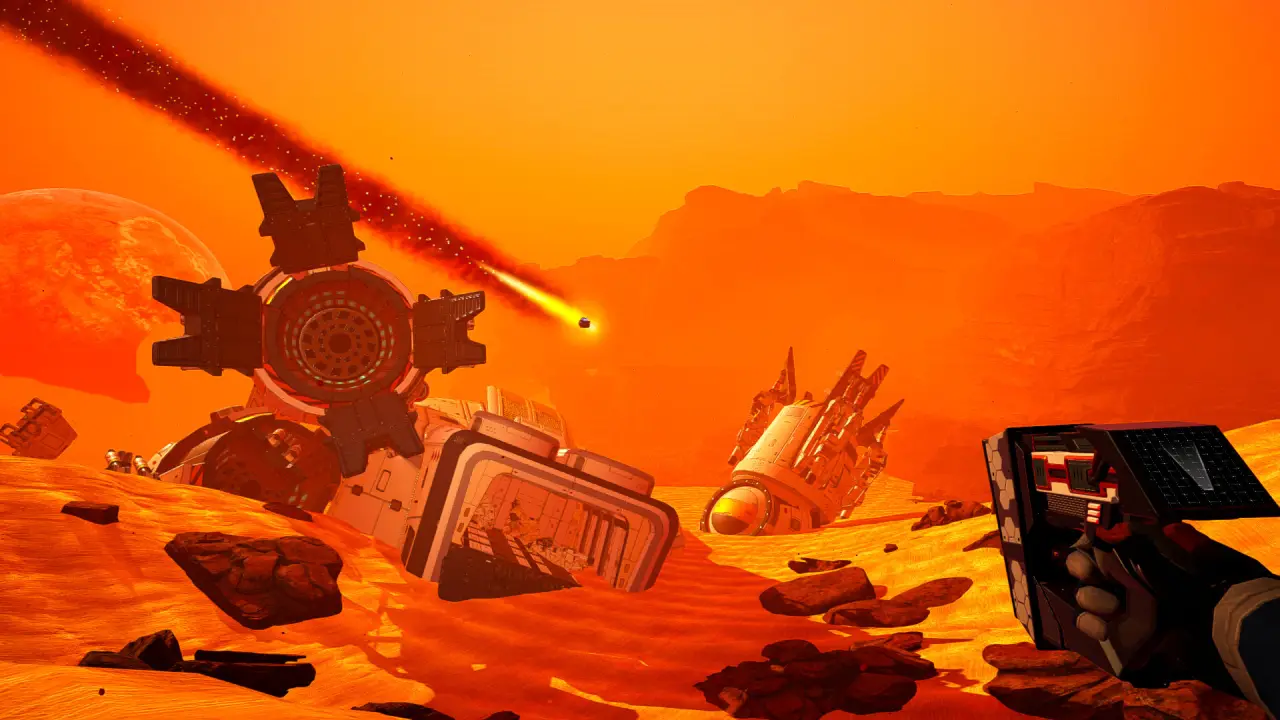
Instead the soundtrack stays flat the whole way through, the same ambient wash whether you are scraping for your first lungful of breathable air or standing in a meadow you grew from nothing. The most quietly moving thing the game does — reviving a dead world — never gets the push from your ears that your eyes are constantly getting. You feel the sea change in the picture; your ears are left waiting at the door the entire time, and that mismatch is the single most avoidable miss in the whole package.
Effects that hold the line, and nothing more
Pull focus onto the sound effects and the verdict softens a little. Sand lashing against your visor, machines humming, rain finally tapping the ground, a rocket lighting up and climbing — these do their honest job of selling the fantasy that you are reshaping a planet. The first real downpour, with the audio shift that comes with it, lands a small, satisfying jolt of physicality.
But competent is the ceiling here, and the reason is plain rather than damning: Miju Games is a tiny independent studio. Polishing the core loop into something this addictive was already a genuine achievement, and audio was never going to be where the limited budget went. This is a scale problem, not an attitude problem — understanding that, however, does not close the gap you feel while playing. The ambition simply outran the resources in this one department, and it shows.
Hold it up against Subnautica and the difference snaps into focus. That game weaponizes sound into pure deep-sea dread: the muffled low end underwater, the cry of something unseen in the distance, all of it doing narrative and atmospheric work, sometimes scaring you out of swimming any deeper. In The Planet Crafter, sound stays firmly in the background, dutifully present, never carrying a scene and never reaching for your nerves. It is enough to hold the immersion together, and on a moment-to-moment basis you will not actively notice it lacking. But it will never be the thing you blurt out when you recommend the game to a friend — and for a fifty-hour experience, that silence speaks.
Visuals | 8.0/10
Grafik: 8/10The Planet Crafter does not win on tech. It wins on a single idea no rival can easily steal: it lets you watch a planet drag itself out of hell and into something close to paradise.
The real spectacle is the change, not the frame
You start in a choking orange wasteland, visibility crushed by toxic haze, the ground a dead red crust that stretches in every direction with nothing alive on it. Forty hours later that exact same spot is blue sky, drifting cloud, standing water, and grass running unbroken to the horizon. The visual heart of the game is not any single gorgeous frame you could pause on — it is that before-and-after gulf, the genuine shock of standing on the precise patch of dirt where you once gasped for your last bar of oxygen and finding a living, breathing world there instead. No still image conveys it; you have to have lived the gap to feel it.
Crucially, the picture answers to the systems. Raise oxygen and the sky thins toward clarity; raise heat and the distant glaciers crack and weep into pools; push biomass and the bare crust pushes up shoots until it greens over entirely. Every number you nudge cashes out as something you can stand in front of and see. The art here is never decoration — it is a receipt for the dozens of hours of labour you poured in, proof made of cloud and grass rather than a line on a stats screen.
That two-way design, where play rewrites the visuals and the visuals advertise your play, is the smartest call the game makes. It did not blow its modest budget chasing the perfect frame; it spent it on making change itself visible, legible, and worth bragging about. Snap a screenshot of the opening hellscape next to one of the green world you grew, send the pair to a friend, and the impact dwarfs anything a higher-resolution texture could ever deliver. Few games let you photograph your own progress this literally.
Planetary scale, memorable landmarks, identical suits
Technically it runs on Unity, and as raw fidelity goes it is firmly current-gen-adjacent rather than cutting-edge; the materials and lighting are merely sufficient, and a close eye will spot the seams. The cleverness is entirely in where the limited resources land — the world is built at genuine planetary scale. You can hike from open desert into deep canyons, tangled caves, and frozen wastes, crossing wildly different terrain types, and the map is large enough that exploring actually means something rather than walking five steps and bumping into an invisible wall. That sheer sense of space is itself a cheap but effective form of awe, and the game leans on it well.
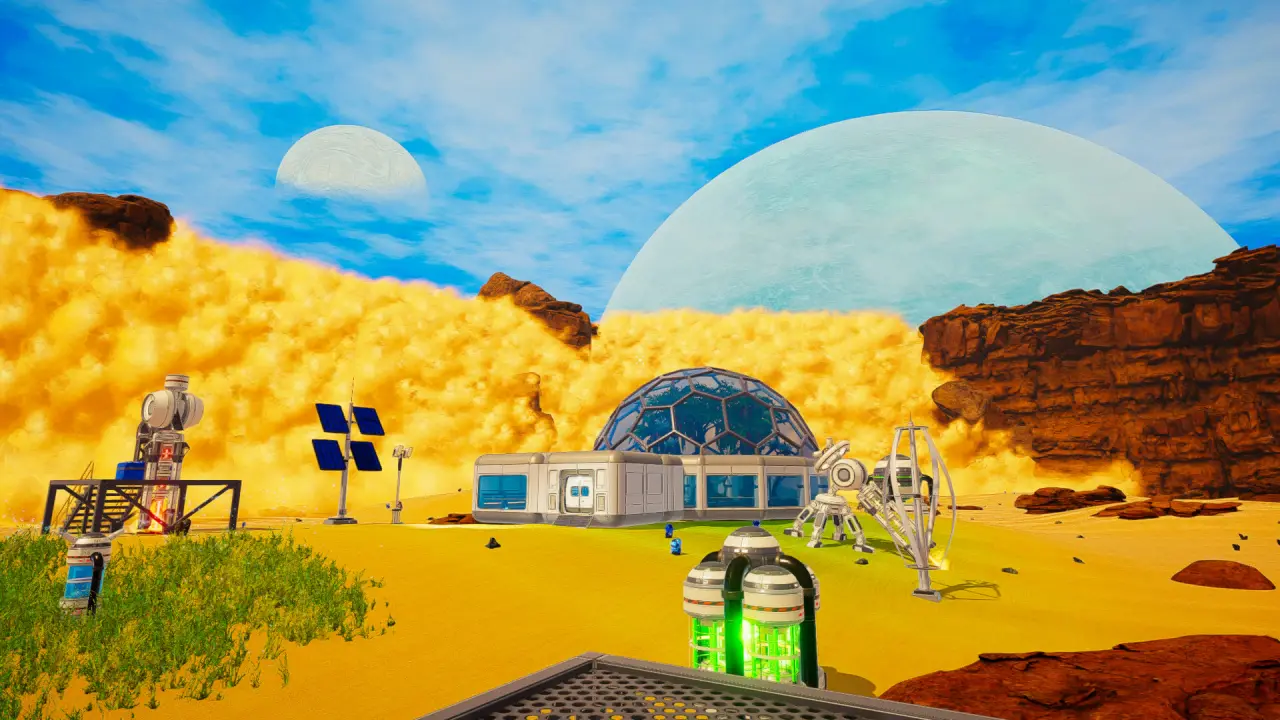
Some of it is properly memorable. Screen Rant singled out caves "partially hidden by sandy waterfalls that expand into deep labyrinths," and those buried landmarks double as both exploration rewards and visual highlights worth stopping to admire before you press on. PC Gamer praised the weather and environmental hazards — sandstorms that roll in without warning, fog pooling thick in the low ground — effects that look good and genuinely bite back, forcing you to read the sky and the terrain before deciding whether to push deeper or run for base. The picture becomes information you have to parse, a survival signal rather than wallpaper you can safely ignore, and that turns even the rougher-looking stretches into something you actively watch.
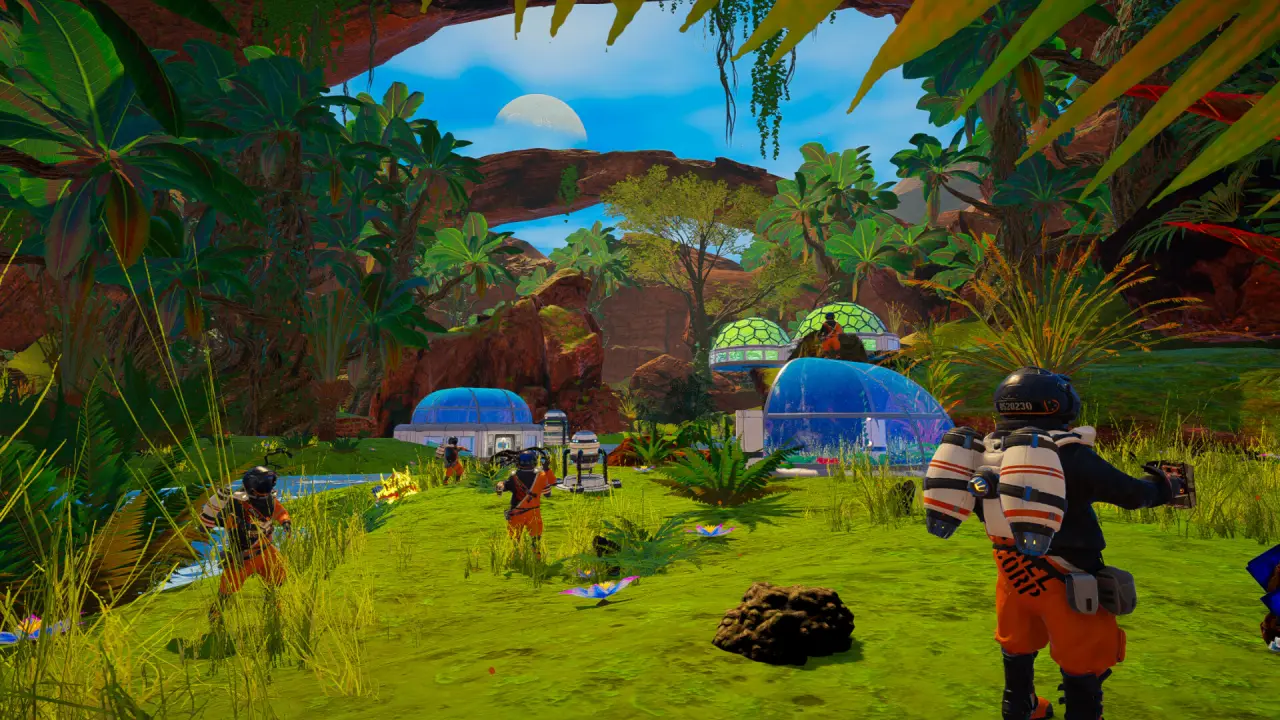
The one concrete eyesore, flagged sharply by Screen Rant, is the total lack of character customization. Solo you may not care, but the moment you enter ten-player co-op the screen fills with identical figures in the same orange-and-black suit, indistinguishable from one another. It is a small thing that quietly drains the identity out of multiplayer. Against No Man's Sky and its procedurally generated breadth, The Planet Crafter takes the opposite road — not a thousand throwaway vistas, but one world you invest in deeply. Neither philosophy is wrong, and both have their devoted crowds. It is just that on the simple, solvable matter of letting players look like themselves, this one plainly cut a corner — and it is the rare visual misstep in an otherwise smartly spent budget.
Combat | 9.0/10
Gameplay: 9/10Gameplay is the soul of The Planet Crafter and the only reason it earns a 9. It takes something that sounds like a chore — grinding a progress bar — and turns it into the kind of loop you cannot put down.
One number that never stops rising
Everything orbits a single yardstick: the Terraformation Index. It folds oxygen, heat, and pressure into one running total, and almost everything you do — build a machine, gather materials, push the ecosystem along — feeds that climbing figure. The brilliance is in the layering. Early on you only sweat oxygen, just trying to last a little longer outside before you have to scramble back. Then comes heat, thawing the frozen glaciers until liquid water gathers again. Then pressure, which has to creep high enough before the sky will finally knit clouds and drop rain.
Clear those three atmospheric gates and the higher tier of biomass unlocks, itself split into plants, insects, and animals, each stage gating the next so the world greens in a believable order. Cross any threshold and the planet visibly shifts under you, and your next goal surfaces on its own — you never have to open a menu wondering what to do with yourself. You always know the next step, yet you always feel one small nudge short of it, perpetually on the cusp of the next visible payoff. That "clear target, never quite finished" tension is the quiet engine that keeps you whispering "one more rocket" at one in the morning. It is a simple loop, but it is tuned with the kind of care that makes simplicity feel like genius rather than thinness.
The masterstroke: machines that never idle
If one design choice separates The Planet Crafter from the pack, it is offline production. Every machine you build keeps running when you leave base. Wander off to spelunk a cavern or haul back a cart of ore, and the Index has crept up by the time you return.
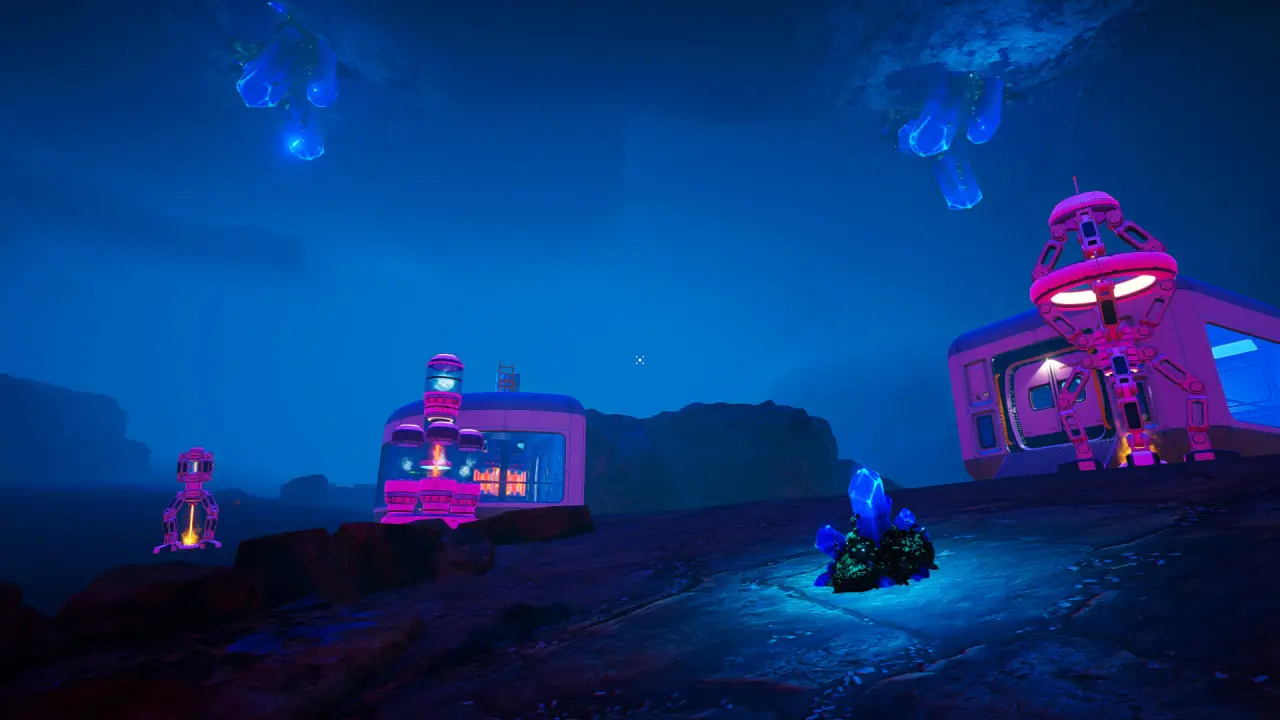
Chuapp nailed the feeling in three words: every second is constructive. It is essentially the idle-game notion of earning while you are away, grafted cleanly onto a first-person survival shell — your exploration and your growth run in parallel and never once interrupt each other. You are never forced to choose between adventuring and advancing. That design quietly kills the nagging "I'm losing ground by stepping away from the line" anxiety that haunts most crafting games, where leaving the factory always feels like paying a tax on your own curiosity. Here you can wander off to do whatever you like and come home to a higher number and a clear conscience, every single time. It is a smooth, almost absurdly generous feedback loop, and it is the single hardest thing in the whole design for a competitor to clone.
Stripped-back friction and a near-perfect tempo
Plenty of crafting games scare newcomers off with tangled power grids and conveyor logistics — the hardcore planning of Satisfactory is not for everyone. The Planet Crafter makes a bold subtraction: it scraps resource transport and power lines entirely. Chuapp argues that this lightweight choice is exactly what lets players who hate logistics drop straight in and enjoy themselves.

By the late game the growth engine swaps to rockets. Each terraforming type has its own, and a single launch grants a massive 1000% multiplier; you will usually fire five or more per type, then stand back and watch the Index leap as you graduate from hand-cranking individual points to industrial-scale acceleration. It is a deliberate gear change that keeps the back half from stalling into tedium. Screen Rant called the overall pacing "nearly perfect," and the phrase fits — it never strands you waiting on a timer, never rushes the transformation into weightlessness, and lands nearly every step squarely on the "one more session" sweet spot. That command of tempo, knowing exactly when to speed you up and when to make you earn it, is something far bigger and better-funded productions routinely fumble badly. Here a tiny studio got the single hardest variable in the genre — pacing — almost dead right, and the entire experience quietly rests on that one achievement holding firm from the first hour to the last.
Content | 8.0/10
Umfang: 8/10For an indie, The Planet Crafter is genuinely generous with content — the catch is that the generosity is front-loaded. The bulk of the good stuff sits in the early and middle game, and the back end thins out noticeably the closer you get to a finished world.
A fair runtime and a studio that keeps showing up
Terraform a single planet to completion and HowLongToBeat clocks the main path at roughly 25 hours; chase every stage, biome, and hidden corner toward full completion and you are looking at around 50. For a modestly priced indie that is squarely worth the ticket, and arguably a bargain, because crucially it does not pad the clock with filler busywork or fetch-quest dead weight. Those hours go almost entirely into things you genuinely want to be doing — building, exploring, watching the index climb — rather than chores the designers bolted on to inflate a number on the store page. Quality of time, not just quantity, is where it quietly wins.
More impressive is the long-term commitment from such a small studio. Miju Games did not collect the launch money and walk away. The free Moons update in May 2025 handed every existing player two separately terraformable moons, stretching what had been a single-planet game out toward a system-wide scale at no extra cost whatsoever. That habit of pouring free content into an already-finished, already-sold product is genuinely rare in today's market, where the reflex is to chop everything into paid drips. It is a big part of why the reputation has held so firmly at Overwhelmingly Positive long after release. People who buy it understand they are not buying a one-and-done — they are buying into a world the developers are still quietly tending alongside them.
The paid planet, the late-game lull, and the lifeline of co-op
If the base planet leaves you wanting more, the paid Planet Humble DLC drops you onto an entirely new world with different conditions — a fresh climate, terrain, and resource spread to relearn, effectively another full terraforming run for anyone who loved the first. It also adds an Ore Crusher mechanic that layers new planning into the early-to-mid resource game rather than just reskinning it.
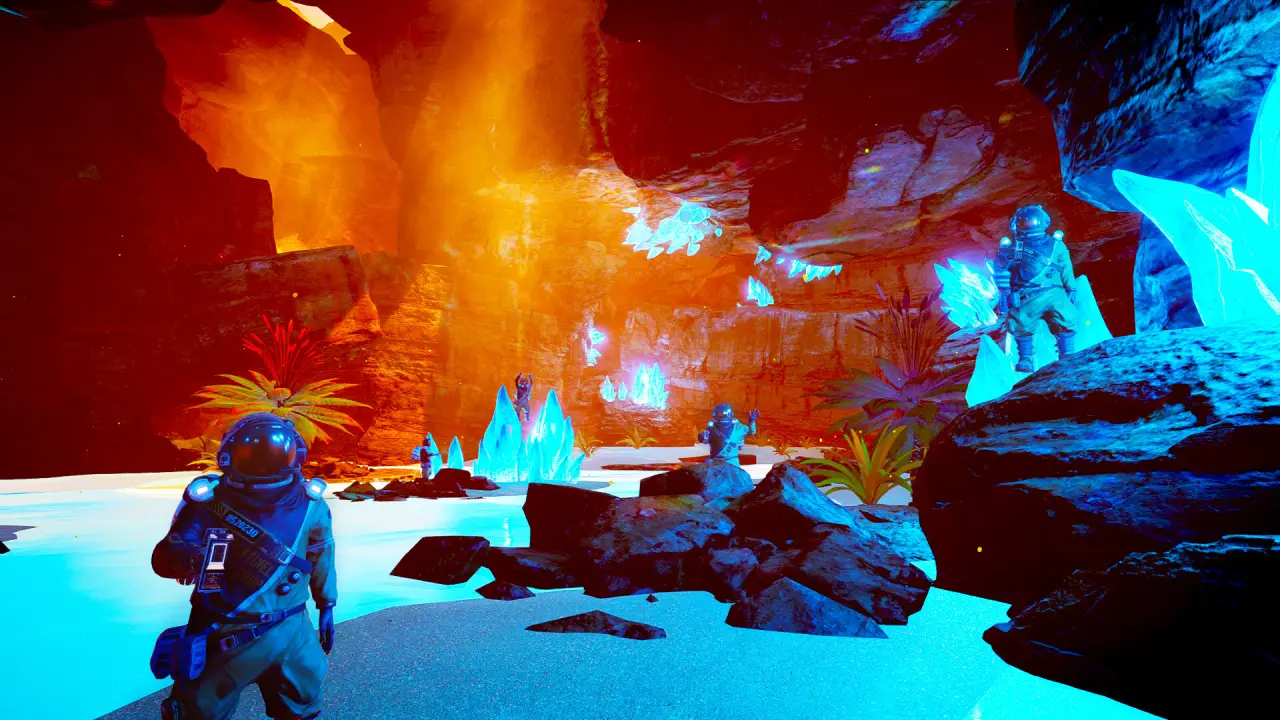
Reception is more divided here. On Steam it sits at Mostly Positive, around 74%, well under the base game's commanding 96%. Players like the new world's look and the freshness of the mechanic, but they grumble — loudly, in places — about a map roughly half the size, some performance hiccups, and the same threadbare backstory that dogs the entire series. It is a second helping for the still-hungry rather than a must-buy, and the distinction matters: skip it and the base experience loses nothing, because it was complete on its own. Add it and you get more of a good thing, no more and no less.
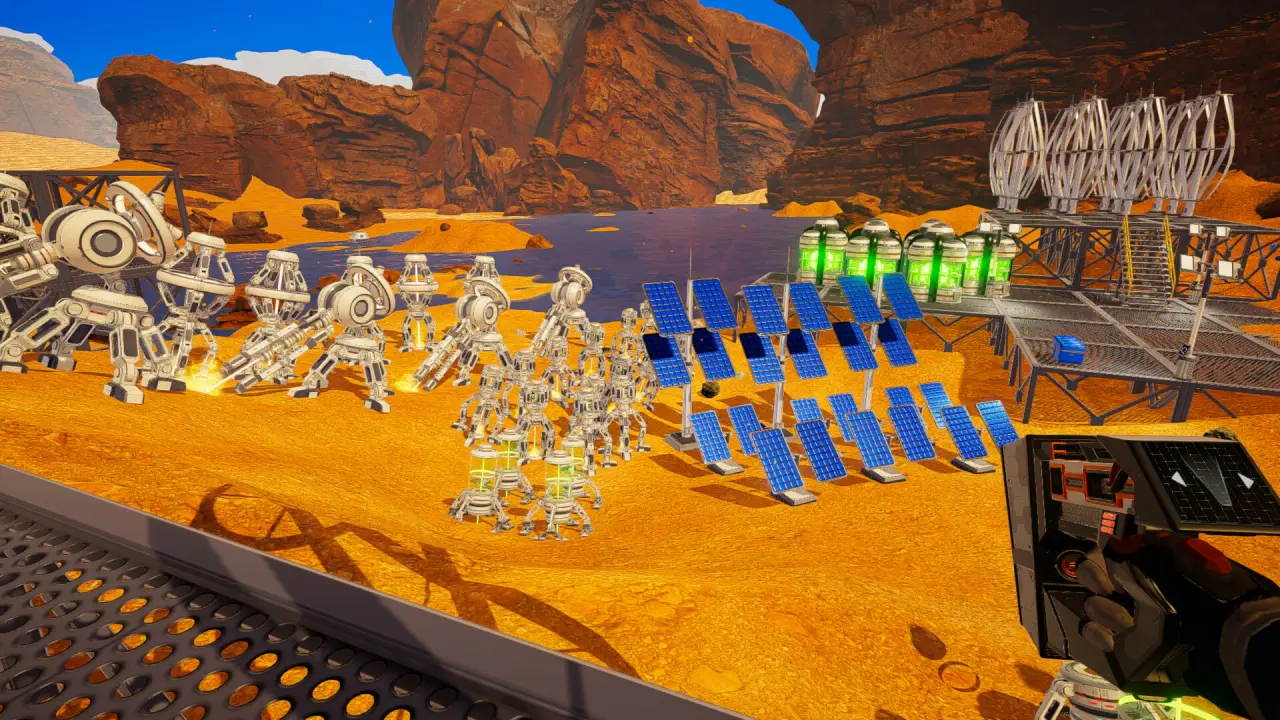
The most realistic content problem is the one almost every sandbox eventually runs into: a late-game lull. Chuapp admits the obvious — once the atmosphere maxes out and the planet goes fully green, there is suddenly far less pulling you forward. The progress goal that hooked you for thirty hours simply evaporates, and what remains is open-ended, self-directed building for its own sake, which scratches a very different itch and not everyone's. What truly extends the game's life is the ten-player co-op. Play solo and savour the quiet, or pull in friends and split the work — one on oxygen, one spelunking for resources, one firing rockets — turning a lonely planetary project into a loud shared enterprise. The 1.07 million copies sold and the 96% rating across 65,755 reviews confirm the stickiness at market scale; this is not a game people bounce off, but one they sink long evenings into and then come back to. Co-op in particular tends to revive lapsed saves — a friend picks it up, you spin up a shared world, and suddenly a project you considered finished has a fresh reason to exist, divided cleanly into roles nobody fights over. It is just worth repeating, because it shapes who should buy in: that pull comes from the journey of building, not the destination of a finished planet. Buy it for the doing, never simply for the done, and you will get your money's worth several times over.




Kommentare 0
Wir freuen uns auf deine Meinung
Willkommen! Teile deine Meinung zu diesem Spiel – wer zuerst schreibt, wird vielleicht überrascht.
Noch keine Kommentare — teil uns deine Meinung zu diesem Test mit!