

















Opening
Few strategy games have fallen this far and climbed back this high.
When Rome II arrived in 2013 it carried the largest ambition the series had ever attempted, and it immediately face-planted into the deepest hole the series had ever dug. Critics handed it a respectable 76 on Metacritic; players knifed the user score down to 4.5 and never looked back — crashes, a campaign map crawling at twenty frames, a battle AI that drove its own war elephants to their deaths. The fastest-selling Total War to date became, within a week, its most public embarrassment.
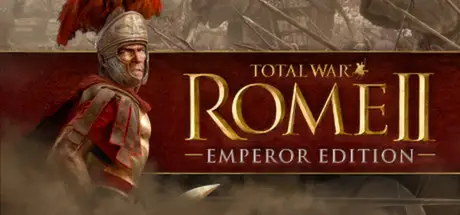
The story did not end in that crater. A year later Creative Assembly bundled a full overhaul into a free relaunch — the Emperor Edition — and posted it to every existing owner: rewritten politics and civil war, rebuilt building chains, a new battle AI, sharpened visuals, and a free civil-war campaign on top. The version you buy today sits at a steady 87 percent positive across roughly 54,000 Steam reviews, a long tail that quietly buries the launch-week rage.
So this review is not about that first ruinous week. It is about what this ancient epic actually puts in front of you once the dust settles: a strategic chessboard sprawled across the entire Mediterranean, and a single battle large enough to command by land and sea at once. It had a low point, and it climbed out of it for real — and the game on your hard drive today is the one that climbed, not the one that fell. That distinction is the whole story, and it is the lens this review keeps coming back to.
Story | 6.0/10
Story: 6/10The plot is one you conquer, not one you are handed

Let us settle this up front: Rome II has no protagonist, no script, no closing cinematic. The main story is a single sentence — pick a faction, paint the Mediterranean your colour — and everything after that is history you write yourself across dozens or hundreds of turns. In the Grand Campaign you might play Rome grinding outward city by city, or Carthage carrying Hannibal's grudge back toward the gates, or some barbarian tribe scraping out a guerrilla existence in the gaps between empires. Each opening is a different chapter of antiquity, and not one of them was authored for you in advance.
That is precisely why the storytelling dimension lands at 6.0. The game hands narrative to systemic emergence rather than to a writer's pen. Players who love that feel the highest romance grand strategy can offer; the rise and fall of your own empire becomes the only story worth telling, and every broken treaty, every pyrrhic victory, every general you raise to a throne and then tear back down is a plot beat that belongs to this campaign and no other. Players who do not will find it cold — no character whose name they remember, no line of dialogue that lands, not even a cutscene to bookend the thing. Both reactions are honest, and which one you have depends entirely on whether you came here to read a story someone wrote, or to write a history of your own. It is not good at telling stories; it is very good at handing you a pen and a map the size of the Mediterranean and stepping out of your way.
Real wars as a stage, family knives as the drama

If the base game runs thin on plot, the campaign packs and the politics layer are its two routes back toward narrative. Each pack picks a slab of real history for a stage: Hannibal at the Gates fixes on the Second Punic War and the Rome-Carthage knife fight; Caesar in Gaul restages Caesar's iron march into Gaul; Wrath of Sparta drags you back to 432 BC and the Peloponnesian War, where Athens, Corinth, Sparta and Boiotia all claw at one another. You already know how these wars are supposed to end — the drama is in rewriting them by hand.
The politics-and-civil-war system is the drama engine buried deepest in the design. You do not only rule rival nations; you rule the ambitious families inside your own house, and they will scheme, faction up, and bait you into civil war. The free Imperator Augustus campaign simply takes the post-assassination split between the heirs of Caesar and bakes the whole thing into a scenario. Honestly, at launch this system was a muddle — civil wars triggered for no readable reason and players roasted it. Only after the Emperor Edition rebuilt it from the ground up did the family knife-fight turn from noise into a layer with real strategic weight.
Where it sits next to its peers
A quick comparison clarifies the trade. The original Rome: Total War leaned on the same thing — not authored character drama but the visceral sense that you are re-running Roman history with your own hands. The later Total War: Three Kingdoms went the other way entirely, writing its generals, oaths and betrayals with real colour and a far higher narrative density, practically dropping a historical romance into a strategy engine. Rome II sits between the two: its scale outstrips the original while its authored storytelling never reaches the heights of Three Kingdoms. Understand that trade and you walk in with the right expectations — this is an epic for you to direct by hand, not a script you sit back and watch unfold. The drama you remember will be the night your closest ally declared war the turn before your capital fell, or the civil war you triggered by promoting the wrong cousin; the game supplies the machinery and the historical weight, and trusts you to supply the meaning. Grasp that, and a 6.0 story score will never disappoint you, because the game was never trying to out-write anyone in the first place. It was trying to let you out-live them.
Audio | 7.0/10
Sound: 7/10A score that holds the scene but never writes the hook

Rome II scores itself like a textbook classical epic: heavy strings underneath, a marching drum keeping time, brass climbing as a battle pushes toward its decisive moment, and over the campaign map a wide, far-off orchestral wash that props up the gravity of running an empire stretched across the Mediterranean. It does the job well. When two lines lock together and you give the order for the final charge, the music genuinely lifts your pulse, and the epic register lands where it should.
The gap is between competent and memorable, and it is a real one. Play forty hours and you will struggle to hum a single theme that belongs to Rome II. There is no signature melody you would recognise from a bar, nothing that follows you out of the session the way the best game scores do. That is the core reason audio caps at 7.0 — a serviceable, sturdy, no-mistakes functional score that holds every scene up but never becomes the kind of work a player pulls out to listen to on its own, the way the series has managed elsewhere. It supports the spectacle dutifully; it just never authors a moment of its own that you would call back to.
The battlefield mix is the real craft

The genuinely strong work is the battlefield soundstage. In a combined land-and-sea engagement the dull thud of ramming hulls, the groan of siege engines rolling forward, the crash of a gate going down, and the white noise of ten thousand boots and clashing blades stack into something thick; pull the camera from a high overview down into the cut-and-thrust of a single duel and the mix scales with it. This layer serves the game's core mechanic directly — strip it out and a battle fought on two fronts at once would deflate by half on the ear alone. These are the details that make the fantasy of commanding a real army stand up.
Voice work, by contrast, stays firmly functional. Units bark orders in the language of their culture — Latin, Greek, a spread of barbarian tongues all mingling across one field — and the immersion is real, but it is atmosphere rather than performance density. Your general's pre-battle speech does its job of setting the stakes, yet it is a register, not a character; you will not quote it later. This is a game of moving armies, not a narrative RPG, and you should not expect a single soldier to deliver a line you carry home with you. The sound design is doing crowd work, and at that it excels. Set beside the sharper themes and stronger emotional hooks of Three Kingdoms or Attila, Rome II's music does its job and helps enormously on the big set-pieces, yet never tips into being a bonus — and on balance 7.0 is the fair number for it.
Visuals | 8.0/10
Grafik: 8/10The Warscape engine sells one thing, and sells it big

Rome II runs on the series' in-house Warscape engine, and it really does only one trick supremely well: it turns "a lot" into "spectacle." A single pitched battle can hold thousands of units in one frame, and the camera glides from a high overview of two human walls grinding toward each other all the way down to the face of one legionary as a spear finds him. That sense of commanding a genuine army rather than a handful of tokens is the most immediate, and the least replaceable, visual hook this game has. The campaign map matches it: the whole Mediterranean is laid out as a living board of mountains, rivers, coastlines and city-states, with seasons, day and night, and dust kicked up along marching routes all reminding you the world is alive. Watching your borders bleed outward one tile at a time, watching a once-hostile city raise your banner, carries a real flush of imperial satisfaction. The macro map and the micro battle stack into the strongest first impression Rome II makes.
From a launch disaster to an Emperor Edition polish

But graphics is the one dimension Rome II cannot discuss without an asterisk. At launch in 2013 it was one of the series' most notorious optimisation disasters: 3DM called out the top settings by name as poorly optimised, and a PC Gamer test rig — comfortably above the official minimum spec — could only scrape around twenty frames on the campaign map at low settings. For a stretch, the guide sections of Gamersky and 3DM filled with "boost your frame rate" and "fix the stutter" threads; no amount of spectacle survives a game that will not run.
The turn came, as it always does here, with the Emperor Edition. That free overhaul fixed a heap of technical problems and, while it was at it, upgraded a slice of the visuals so the campaign map and battle scenes both looked cleaner and easier on the eye than at launch. Lighting reads warmer, unit textures hold up closer to the camera, and the worst of the launch stutter is gone. Pair that with years of hardware progress and, today, on a sensibly specced machine — Windows or macOS alike — this 2013 game runs its scale out cleanly and at a stable frame rate, and players no longer have to pay the bill for launch hell. The asterisk is historical now, not a live complaint, and that distinction matters when you weigh the score.
What actually lodges in memory are the big set-pieces: defenders and attackers grinding along a wall section by section while ladders and siege towers turn into life-or-death scrambles, oil and arrows pouring from the battlements; an amphibious assault where the fleet beaching its troops and the army folding in from the flank play out in the same frame, a galley's prow slamming into the shore as the ramp drops. That kind of multi-line staging was genuinely pioneering in 2013, and even by today's standards the sight of armies in the thousands sharing one frame still hits. There is a particular thrill in pausing the camera over a breached wall, the attackers pouring through a gap while a relief column lands behind them from the sea, and realising the engine is rendering all of it at once without flinching. Few strategy games before or since have framed a battle as theatre on this scale, and the Warscape engine's whole reason to exist is to let you sit in the director's chair for it. Set Rome II beside the same-engine Total War: Attila and the contrast is telling — Attila reaches for the oppressive, end-of-days gloom of Rome's twilight, while Rome II paints the bright, sweeping grandeur of an age of classical expansion. Weigh that hard-to-replace scale, the post-Emperor stability, and the indelible launch stain together, and 8.0 is a number that admits the flaw without shortchanging the real strength. Worth noting: even now, holding thousands of units on screen without the picture collapsing is itself a scarce technical feat, and one almost no rival has bettered at this exact scale in the years since.
Combat | 9.0/10
Gameplay: 9/10Land and sea on one field — a series first that still stands alone

Rome II's trump card is the combined land-and-sea battle it pulled off for the first time in the series. Earlier Total War games settled naval and land fights as two separate ledgers; here they are stitched into a single engagement. You can drive landing troops up a beach under a hail of arrows while your warships hold a line offshore and lay down covering fire, and in a siege the attackers and defenders can press from land and water at once. The complexity and scale of worrying about your fleet's positioning and your infantry's depth in the same battle was genuinely pioneering in 2013, and few peers have matched that on-screen choreography since. You are not playing a naval fight and then a land fight; you are weighing two fronts of resource and timing on one field, deciding whether the ships break the harbour chain before the ladders reach the wall. On that alone, Rome II plants a banner the genre still struggles to pull up, and it is the single feature that, years on, keeps the game on shortlists no remaster has yet displaced.
The campaign layer is a second game, and the AI's long road back

Pull the camera back to the strategic map and the depth is just as startling — the campaign layer is, frankly, a whole second game. The province-and-edict system bundles several regions into one administrative unit sharing a single tax rate and edict, forcing you to keep weighing "pour everything into the capital" against "develop the province evenly." Diplomacy is its own contained game of leverage: a single treaty can serve as a shield against a stronger neighbour's aggression, or open a second front at the back of a rival while you have your hands full elsewhere, and a well-timed bribe or marriage can defuse a war you could not afford to fight. The AI remembers slights, weighs the balance of power, and will abandon you the moment the maths turns — so the map is never just a military problem. The depth runs further still. The tech tree splits into civil and military lines, deciding whether this run snowballs on economy or grinds forward on military superiority; layer on population, public order, agents working sabotage and intrigue across the map, and slums sprouting on empty plots, and the sheer decision density inside a single turn sits at the very top of the genre. None of it is busywork — neglect public order and a prosperous province revolts behind your lines just as the main army marches away, and suddenly you are fighting a war on two fronts you created yourself. That "the campaign is another game" thickness, plus the design bones that survived the launch wreck and proved they could take the years, is what holds up a 9.0 for gameplay, and it is the reason a single Grand Campaign can swallow a weekend without you noticing.
No dodging the wound, though: at launch the battle AI was famously inert. 3DM described severe unit blobbing, with many soldiers simply standing and holding their weapons, and an AI that "stands there meekly, creeps forward, with no instinct to seize an opening" — it would not strike even when your line broke, and the tactical duel a big battle should be was gutted. The Emperor Edition's battle-AI rework changed that visibly: enemies now use siege equipment more effectively, coordinate multiple unit types, optimise their tactics against walls, and the farce of an AI elephant killing itself the instant it rampaged was patched out. It is not a flawless opponent, but it is finally one worth taking seriously. The cleanest yardstick for Rome II's value is the contemporaneous Roman grand-strategy title Imperator: Rome, which runs an exquisitely precise abacus of internal management, population, trade and diplomacy — and gives you no real-time battle to command by hand. One sentence draws the line: Imperator hands you a precision abacus but no battlefield, while Rome II lets you both scheme over the map and personally win the battle that decides where the empire goes. That fusion of planning and command is its hardest-earned strength — the campaign sets the stakes and the real-time battle lets you cash them in yourself, and no spreadsheet, however elegant, delivers the same payoff as breaking a line you spent ten turns marching toward.
Content | 8.5/10
Umfang: 8.5/10The base game alone is top-tier bulk

Set every piece of DLC aside and the Emperor Edition base game is already daunting in volume: a Mediterranean board of fifty-odd provinces and over a hundred regions, plus a hundred-plus playable or visible factions and several hundred distinct unit types. A full Grand Campaign runs dozens to hundreds of turns; HowLongToBeat puts the main path near thirty-three hours, and truly mastering a whole map — completing it, clearing every corner's objectives, seeing how each culture's endgame plays out — will not stop short of a hundred or two. As a measure of sheer content, the starting line sits very high. This is the kind of game where you know on first launch you will not be finishing it any time soon, and where the campaign you abandon at turn eighty is still only a fraction of what the map holds. The breadth is not padding either; each faction's roster, victory conditions and political quirks are distinct enough that the bulk reads as variety rather than repetition.
Replay value is where the bulk starts eating your weeks
The more valuable thing is the replay value. Rome, Carthage, the Greek city-states, Macedon, the eastern powers, the various barbarian tribes — every major culture comes with a different unit tree, political structure, diplomatic situation and opening position. Driving a dominant Rome all the way to a unified Mediterranean and scraping out a guerrilla survival as a weak barbarian tribe wedged between great powers are simply two different games. That "swap a faction and you have all but swapped games" design hurls its longevity far past the average strategy title; every restart is a fresh campaign with new neighbours, new threats, new usable units, new development paths. Beat the Romans into the ground by frontal weight, then try a steppe faction that can only win by horse-archery and mobility, and the forced demolition of every habit you had built — the scramble to relearn survival from scratch, to win without a heavy infantry line to hide behind — is exactly what keeps you restarting long after a single victory would have ended a lesser game.
DLC and a modding scene that carry it to 2026

On top of that thick base, the campaign-pack lineup is just as solid. Caesar in Gaul and Hannibal at the Gates each fill in a real historical war end to end, while Wrath of Sparta builds an entire 432 BC Peloponnesian War map of its own — 22 provinces across 78 regions, with Athens, Corinth, Sparta and Boiotia all playable; later, Empire Divided, Rise of the Republic and Desert Kingdoms widen the canvas to the Third-Century Crisis, the early Republic and more surrounding cultures. Each pack is dozens of hours of extra content with its own map, factions, mechanics and backdrop — not a few-hours-and-done throwaway. They amount to several standalone campaigns built outside an already-vast base, letting you dig into whichever slice of ancient history you like — the desperate defence of Carthage, the chess of the Greek poleis, the slow collapse of the Third-Century empire. Each ships its own victory conditions and faction mechanics, so they read as fresh games rather than map reskins, and a player who exhausts the base campaign has a half-dozen more historical theatres waiting. What truly keeps this 2013 game alive into 2026 is its unusually active modding scene: pace mods like Twelve Turns a Year, AI overhauls that sharpen the computer's behaviour, countless unit and historical-accuracy packs, and a community localisation patch kept current — the playable content barely has an edge. Add the base bulk, the cross-cultural replay value, the solid DLC campaigns and the long-running mod ecosystem together, and an 8.5 for content is earned outright. This is a game you install once and play for several hundred hours without feeling cheated; for a player who genuinely lives on this kind of grand strategy, its sheer mass stands at the very top of the field. Years after release, the active workshop and the steady drip of new mods mean a returning player rarely finds the same game twice — there is always one more faction, one more overhaul, one more historical theatre left to crack open.



Kommentare 0
Wir freuen uns auf deine Meinung
Beteilige dich an der Diskussion und teile deine Bewertung des Spiels.
Noch keine Kommentare — teil uns deine Meinung zu diesem Test mit!