
News
Bunny Garden 2 Adds Twin-Tail Lolita Roro in New Update
Bunny Garden 2's new 10-second trailer shows a twin-tailed lolita character in a sweet-yet-cutting promo. With six heroi
















History Simulator: Chongzhen opened on Steam on June 25 as a free base game, and the developer paired that switch with a clear compensation plan: both new and existing users can log in to claim 1,500 Free Mode points, while players who bought the earlier 48 yuan version before the shutdown can also receive 4,800 points as a return gift.
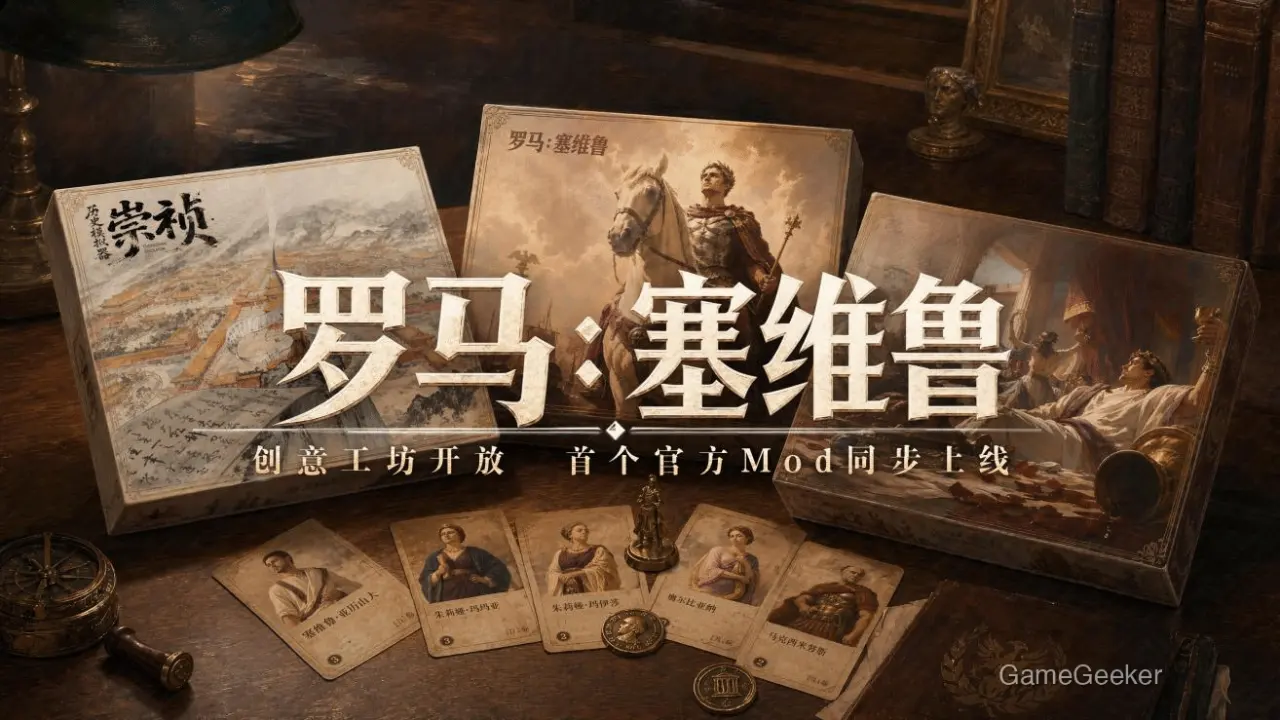
With the free switch now official, the real question is not the entry fee. It is how the game keeps paying for itself. What makes History Simulator: Chongzhen unusual is not just its late-Ming premise, but the fact that every AI simulation consumes tokens. When a player selects a policy, the system is not simply pulling fixed text. The model has to understand the situation, remember the state of play, and keep simulating variables including the state treasury, Liaodong military pay, roving rebels, factional conflict, public welfare, and border garrisons. Every step carries a real model cost.
That is where the controversy has centered. Players are already used to paying for a base game, DLC, and skins, because those are one-time purchases with a clear spending limit. Once the model becomes "paying again for each simulation," the psychological expectation changes immediately. Some community discussions have even produced the phrase "token scalpers." It is a harsh label, but it gets at the most practical issue in AI games: people are not unwilling to spend money, they just do not want to keep paying when the upper limit is unclear.
Step back, and this is not a problem unique to History Simulator: Chongzhen. Public reporting says the Doubao large model has already reached 120 trillion token calls per day. Reporting cited by LatePost adds another grim set of numbers: Doubao has more than 200 million daily users, but brings in less than 1 million yuan per day, while computing costs sit at the level of tens of millions of yuan. Even a company like ByteDance is still trying to figure out how heavy AI usage turns into revenue. Against that backdrop, it is not hard to understand why a small team building an AI simulation game has to be even more careful about costs.
That is why this plan looks less like a retreat than a pragmatic rebalance. The 48 yuan ticket is gone, so anyone can try it first. The 1,500 points give players room to test whether the system works for them. Anyone who already bought the 48 yuan version gets another 4,800 points, which at least addresses the obvious fairness issue for existing players. More importantly, the developer has not locked everyone into one payment path. Players can keep using the official hosted service, or connect their own API and take more direct control of costs.
Just as important was how the studio handled the early listing incident before June 25. Because of a Steam platform issue, the free version briefly went live ahead of schedule, some players entered early and claimed their points, and the game was then taken down for emergency maintenance. After the official launch on June 25, the developer said clearly that the early release was a platform-side accident, not the players' fault. Any points already claimed would not be taken back, and those affected players could still receive the return gift as well. From a player perspective, that at least avoids penalizing players after the fact and makes the rules feel like rules rather than a temporary reversal.





Kommentare 0
Wir freuen uns auf deine Meinung
Beteilige dich an der Diskussion und teile deine Bewertung des Spiels.
Noch keine Kommentare. Teile deine Bewertung.