News
Halo Remake Screenshots Leak, Player Reactions Split
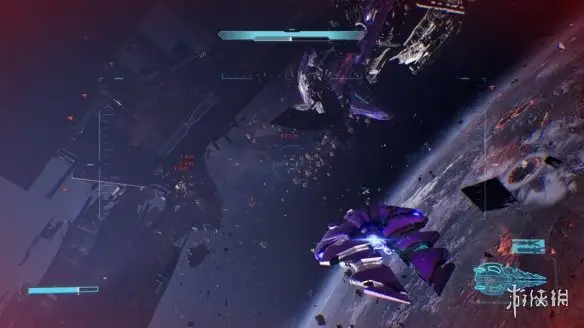
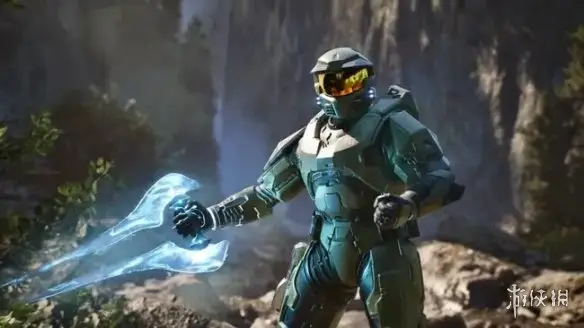
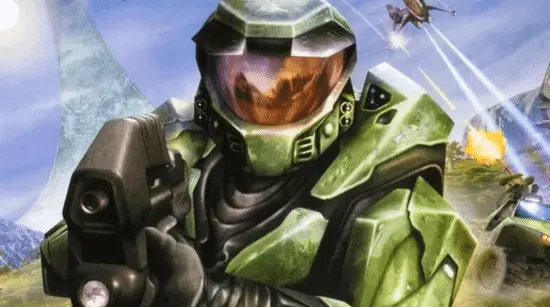
Halo: Combat Evolved remaster screenshots leaked on Microsoft's store ahead of schedule, revealing c
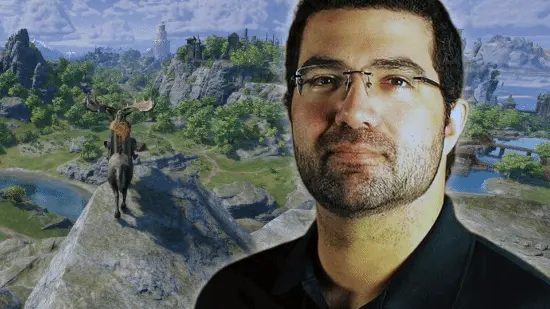
As an old player who has been playing from the first Halo to Halo Infinite, seeing the news in the past two days that Halo Studios has been publicly accused by a former employee leaves me with pretty mixed feelings. On one side is a sci‑fi epic that has accompanied me for twenty years; on the other is veteran employee Glenn Israel, who served for 17 years and pointed out “multiple unethical and even illegal practices” among upper management. Put these two pieces of the puzzle together, and only one question remains: how did this once‑flagship team end up here?

Let’s sort out the core facts first. Glenn Israel worked on the Halo series for 17 years. He says that between January 2024 and June 2025, he personally saw or experienced blacklisting, fraud, serious nepotism, and harassment targeting “unwanted” employees. In his account, these behaviors were packaged as a kind of management tactic to “force voluntary resignations,” rather than a process of directly resolving team conflicts. For a development team that should function like a co‑op puzzle‑platformer—where rhythm and coordination matter—this internal atmosphere feels more like deliberately kicking away the ladder.
Even harsher are his accusations against Microsoft HR. According to his recollection, after he filed multiple complaints with Microsoft’s human resources department in June 2025, an employee relations lead signaled retaliation in their very first interaction, even explicitly stating they intended to block any further investigation. He was then subjected to four consecutive days of nitpicking “gotcha‑style” harassment from upper management, as if they were hunting for hidden switches, rummaging through everything that could possibly be used as grounds for dismissal, while HR took almost no effective action in the entire matter. Under conditions like that, who would still dare to honestly raise issues internally?

Things get subtler when it comes to the management of Halo: Combat Evolved’s campaign. Glenn describes chaotic project management, with upper management taking the opportunity to reassign his team members one by one, and eventually simply labeling his position as “redundant.” If you imagine a project team as several switches in a puzzle‑platformer level that have to be activated cooperatively, then this combination of “dismantling the team + redundancy” is hard not to read as retaliation for his complaints. He later publicly voiced his concern that future waves of layoffs might be used as a kind of universal eraser to wipe out the names of employees who dared to file formal complaints.
From a player’s perspective, these accusations aren’t just workplace news—they directly affect the quality of the games in our hands. In recent years, the content cadence, long‑term support, and sense of direction of Halo Infinite have all been repeatedly questioned by players, and looking back now, it’s hard not to connect these issues with the “level design” of internal management: when the team is forced to play a psychological game called “who’s getting cleaned out next” in the office, how much energy do they really have left to polish enemy AI, level pacing, and the long‑term loop of multiplayer modes? Creativity itself is a kind of platforming that depends on trust and a sense of safety—once the floor starts collapsing, the design naturally warps.
For players, this wave of events will also influence whether to keep “voting with your wallet” in the future. If you’re already a veteran Halo Infinite player, you might want to watch how Microsoft and Halo Studios respond next, and see whether the team is actually fixing systems and culture rather than just issuing a PR statement. If you were planning to jump in, my personal suggestion is that there’s no need to immediately “boycott” just because of this, but you can treat your wallet like a moving platform: wait to see how the aftermath is handled, how the quality of future updates looks, and how stable the dev team appears before deciding whether to jump over. What’s truly worrying is whether the entire AAA industry will start treating layoffs as a cure‑all, while keeping the key to solving structural problems forever hidden in corners players can’t see.

Kommentare 0
Wir freuen uns auf deine Meinung
Willkommen! Teile deine Meinung zu diesem Spiel – wer zuerst schreibt, wird vielleicht überrascht.
Noch keine Kommentare. Sei der Erste!