
News
007 First Light Drops to $24.69 in Its First-Ever Sale, Beating the Previous Low
007 First Light gets its first discount, with Green Man Gaming stacking an extra 18% off the 20% official price cut plus






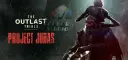







IGN recently gave Mousetrap Detective Jack a 6/10. The reason this quickly set the community on fire wasn’t just because the score was low, but because many players felt it was “judged by the wrong standards.” In my view, this game was never trying to be a serious narrative experience from the start. It is obviously a work inspired by the spirit of 1930s Mickey Mouse cartoons, then mixed with the high-speed thrill and irreverent tone of a boomer shooter. You may not like that style, but if your main reason for docking points is “why isn’t it noir enough, why isn’t it serious enough,” then the issue is no longer just a matter of taste—the entire frame of evaluation has already gone off course.

Judging from the points of controversy currently circulating, IGN’s reasons included too many cheese jokes, too many old-movie homages, arena-style levels that require clearing enemies to advance, and a story that is not serious enough to support its so-called noir setting. But the public image of Mousetrap Detective Jack has always been very clear: it is centered on a nonsensical, exaggerated, retro shooting experience with a touch of parody, not a straight-faced, hard-boiled noir detective story meant to deliver heavy drama. In other words, criticizing it for “not being serious enough” is like using the yardstick for a stealth game to measure an arcade action game—the conclusion may technically hold, but its value as a reference is very limited.
That is also why the backlash from both players and industry figures has been so concentrated. Writer Mikhail J. Clive directly mocked the review as “something like a parody written by a game journalist,” and even compared it to the 7/10 given to Black Ops 7, questioning whether there was a double standard at play. An even harsher response came from a game developer with 24 years of experience, who went so far as to call game journalists “the lowest point of the industry.” These remarks are certainly emotional, but beneath that emotion they reflect the increasingly obvious gap in perception between traditional games media and players.
I think the most interesting thing about this controversy is not whether Mousetrap Detective Jack deserves a 6, a 7, or an 8, but how much persuasive power media review scores still have today. More and more players no longer treat a single outlet’s score as the basis for a purchase. Instead, they are more willing to look at Steam reviews, gameplay demonstrations from UP creators, or genuine impressions from people in the community after a few hours of play. This shift is very real, because games with a stronger indie spirit and more distinctive stylistic expression naturally depend more on whether you accept their design language than on a seemingly objective aggregate score.
If you already enjoy retro shooters, like cartoon art with a parody edge, and can accept old-school progression through arena enemy-clearing, then Mousetrap Detective Jack may actually be worth keeping on your wishlist and watching. On the other hand, if what you want is serious storytelling and an immersive noir atmosphere, then this game may simply not be your thing from the outset. There are already quite a few voices in the community saying, “This score actually makes me want to buy it.” That sounds like a joke, but to some extent it also shows that when an evaluation system becomes disconnected from a game’s actual positioning, a low score may not truly discourage its target audience—instead, it can turn controversy into an alternative form of publicity.
At the end of the day, what Mousetrap Detective Jack has stirred up this time is not just another argument over review scores, but something more like a public test of “how games should be evaluated.” For works that emphasize style, pacing, and attitude, first identifying what they are trying to be, and then judging how well they achieve it, may be more important than applying a seemingly standardized template. IGN’s 6/10 may not change the game itself, but it once again reminds everyone that today’s player communities are increasingly unwilling to pay for the misjudgments of traditional media.



Kommentare 0
Wir freuen uns auf deine Meinung
Willkommen! Teile deine Meinung zu diesem Spiel – wer zuerst schreibt, wird vielleicht überrascht.
Noch keine Kommentare. Sei der Erste!