
News
Grab two free PC games before Epic's clock runs out, while Undertale and Divinity: Original Sin 2 are 75% off
Astral Ascent and LUFTRAUSERS are free to keep today, while two of PC gaming's most celebrated RPGs cost less than $14 c
















As someone who’s spent years speccing rigs for characters in “PC Building Simulator” and acting as the “build consultant” for friends in real life, seeing the news about yet another round of Intel price hikes over the past two days, my first reaction was: how am I supposed to recreate my real-life build in the game from now on? According to reports, after raising CPU prices in February and March this year, Intel is planning another wave in May, aiming to make this year’s prices about 30% higher than in 2025. This is way beyond the level of casually bumping the price by a hundred or two and hoping nobody notices.
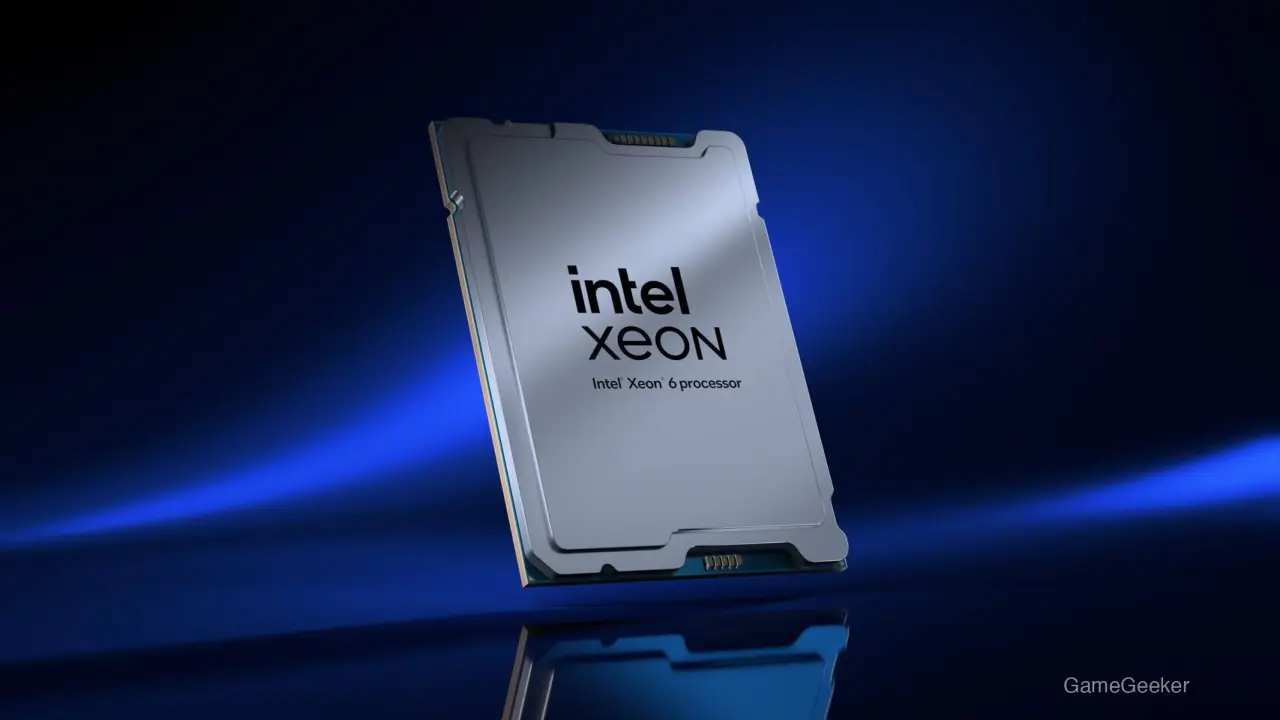
If we picture this as a puzzle-platformer, we’re now standing at level one of the “PC building journey”: the platform under our feet is the budget, and above our heads is a series of price-hike traps. In February, Intel first pushed through a roughly 10%–15% increase, then in March came another ~15%, and now in May there will be a few more percentage points on top. It’s like the level designer stacking moving platforms, spikes, and timed traps all in one stage, forcing the player to constantly recalculate every jump and landing spot. For players planning to buy a new CPU this year, every line item on the budget sheet has turned into a logic puzzle that needs careful reasoning, instead of just “buy the most expensive one and be done with it.”
Looking at the reasons, the logic behind this price hike is like a multi-layer trap combination: none of the individual mechanisms is that complex, but together they make the whole situation tricky. The report mentions that Intel is currently facing tight CPU supply. Although most capacity comes from its own fabs, some products still rely on TSMC, and under multi-chip packaging schemes, different dies are manufactured separately by Intel and TSMC. Only when all components arrive can packaging and shipment be completed. This means that if just one “puzzle piece” shows up late, the whole “board” can’t be delivered. For us players, the result is straightforward: less stock and higher prices, especially for popular models, which become harder to find and more expensive when you do.
What really cranks the difficulty up to max is that the hidden “AI data center demand” level suddenly got unlocked. The report notes that as AI compute demand grows, the CPU-to-GPU ratio in servers has shifted from about 1:12 to around 1:8, and could move further to 1:4. That’s essentially doubling the number of “enemies that require CPUs” on the same map. CPU demand is being pulled up simultaneously by AMD, Intel, and vendors in the Arm camp, so naturally the entire supply chain starts to feel the squeeze. In a “supply can’t meet demand” situation like this, vendors raising prices and gradually expanding capacity becomes a very realistic, and frankly realist, choice.
From a player’s point of view, the question turns into a very concrete puzzle: is it still worth going with Intel this year? If you mainly play single-player platformers and indie puzzle games that don’t hammer the CPU, and you already have a last-gen mid-to-high-end chip, you can absolutely go for the “camp and wait” strategy. Treat this level as one of those rooms where you first observe the enemy patterns before making your move: keep using your current platform for one to two more years, and allocate more of your budget to a GPU or storage upgrade. If you’re planning to build a machine this year that can handle both AAA titles and local AI inference, or you also want to stream and edit video, then focus first on mid-range models that are less sensitive to price spikes. Don’t blindly chase top-of-the-line flagships, only to be scared off by this cumulative ~30% increase.
From a long-term perspective, Intel’s chain of price hikes looks more like a full redesign of the game’s progression path than a momentary bit of number tweaking. AI is pushing up CPU demand in servers, and vendors are tying together capacity from different fabs via multi-chip packaging. These structural changes are very likely to keep influencing pricing logic for high-end and even some mainstream desktop processors going forward. For players who love “PC Building Simulator” and also enjoy assembling their own rigs in real life, we may have to get used to doing a few extra calculations in this “budget platformer,” keeping a close eye on options from different camps at the same price points. Treat the buying process as a long-term puzzle that requires repeated experimentation, rather than a linear level you clear in one go.





Kommentare 0
Wir freuen uns auf deine Meinung
Beteilige dich an der Diskussion und teile deine Bewertung des Spiels.
Noch keine Kommentare. Teile deine Bewertung.