
News
Xbox Shifts Strategy After $100B Spending Spree, Now Targets Smaller Studios
Xbox CEO confirms the company will keep pursuing acquisitions to strengthen its business, but rules
















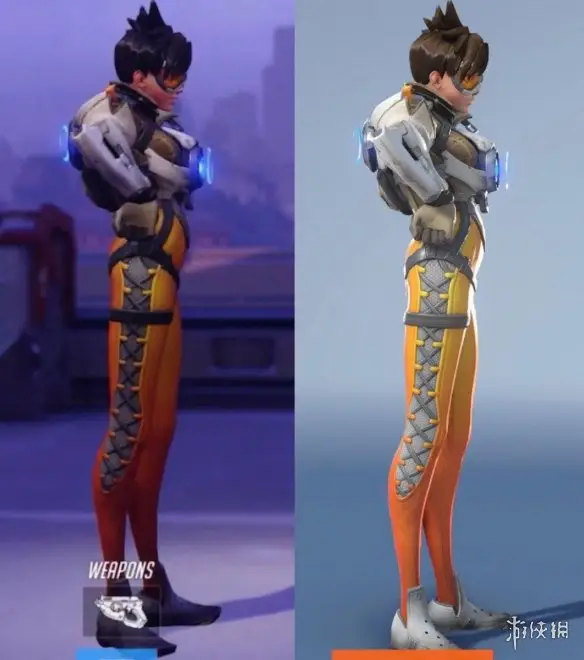
A livestream chat message pulled an old case that had been circling the player community for nearly a decade back out of the corners of memory. Someone directly asked Jeff Kaplan why he had “nerfed Tracer’s butt” back then, and the former Overwatch game director, while promoting his new personal project California Legends, gave an unusually blunt answer: “We actually never nerfed Tracer’s butt at all. We really didn’t—it never changed.” The remark felt like a cool, definitive period suddenly added to an urban legend that had been retold and embellished time and again.

The reason this issue managed to linger for so long is not simply that one character model mattered that much, but that Overwatch has been viewed under a kind of cultural microscope ever since its launch. As the original text notes, after the “victory pose controversy” first emerged, debates over whether female characters’ bodies had been “toned down,” and whether such changes were made in the name of so-called “political correctness,” never truly died down. Tracer thus became a symbol onto which people constantly projected their emotions—like that character in a film who has little screen time, yet is endlessly misread by the audience.

Seen from another angle, what is truly interesting about this debunking is not whether “the butt was changed or not” in itself, but how the player community gradually processed a single controversy into an accepted fact. As long as a claim resonates strongly enough with collective sentiment—especially when it can be folded into the broader narrative of “developers narrowing their aesthetic choices”—it starts to resemble a documentary distorted in the editing room: the more it spreads, the more real it seems. Now that Jeff has personally denied it as a founder, it does, to some extent, feel like an attempt to bring this discussion, which has lasted around ten years, to a close.
But the deeper issue is that what players care about has never been just whether a character’s curves changed; what they really fear is that, over the course of a live service’s long lifespan, a character may lose the vivid outline that first made them distinctive. On a narrative level, Tracer is remembered not because of one specific part of her model, but because of the completeness of her character—light, bright, and tinged with a bit of British comedic charm. If the character works, then visual controversy is ultimately just noise attached to her. If the character is hollow, then even the most refined model is nothing more than a pretty but shallow poster.
Judging from the community response, this latest statement once again sparked discussion on social media, which also shows that the historical narrative of older games is often not controlled by the official side, but by a grassroots version formed through memory, screenshots, secondhand retellings, and emotion all mixed together. Unfortunately, by the time many arguments reach the end, people are no longer asking about the facts—they are fighting over the right to interpret them. For a work like Overwatch, this may also serve as a reminder: once a character becomes a symbol of an era, the discussion surrounding them will no longer remain confined to gameplay, but will keep drifting toward the boundary where cultural imagination and collective psychology meet.



Kommentare 0
Wir freuen uns auf deine Meinung
Willkommen! Teile deine Meinung zu diesem Spiel – wer zuerst schreibt, wird vielleicht überrascht.
Noch keine Kommentare. Sei der Erste!