News
2nm Is Here! Will the Flagship Phones in the “Mobile Wars” Hit 10,000 Yuan in the Second Half of the Year?
2nm chips and rising memory prices may lead to a sharp increase in flagship phone prices.
















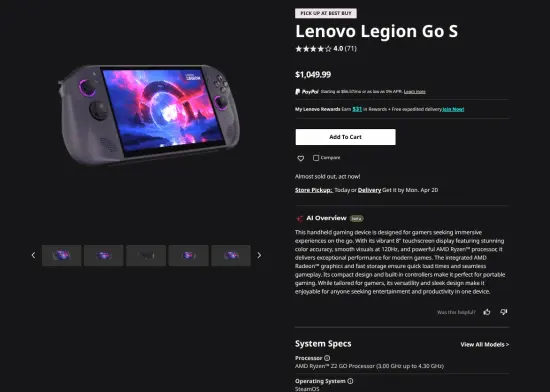
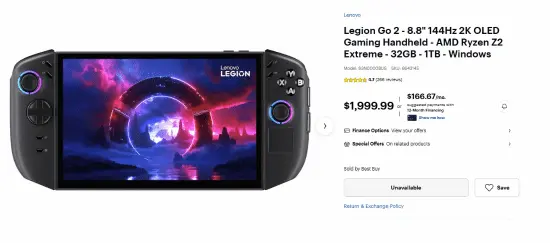
By Saturday afternoon I finally powered on my device. I was originally planning to check out what new developments had been happening in the handheld gaming scene lately, but Lenovo’s Legion Go 2 price shocked me awake first. The high-end version comes in at $2849.99, which, according to the article, is roughly RMB 20,000. For someone like me, who usually only dares to scroll through reviews on the subway and only really has time to game on weekends, this is no longer a question of “should I buy it or not” — it feels more like when that rent reminder text suddenly pops up at the end of the month.

Let’s start with the hardware. This machine is powered by an AMD Ryzen Z2 Extreme processor, paired with a Radeon 890M GPU and a 2TB SSD. Its positioning is very clear: it wants to deliver a top-tier portable AAA gaming experience. On paper, the specs are undeniably impressive, and even among handhelds, it’s firmly on the high-end track. But the problem is that no matter how much hardware you cram into a handheld, its core selling points are still “portability” and “play anytime,” not flexing muscles against a desktop PC.
That said, a price tag of nearly $2850 is already pushing into the range of top-tier gaming consoles and high-performance gaming laptops. With that kind of money, you could have been considering a much more complete gaming setup. The report also mentions that some players bluntly said that at the same price, you could easily buy a mainstream gaming PC and peripherals, and if you budget carefully, you could even build a PC with a 5070Ti graphics card. For office workers, it’s like wanting to order a weekday dinner, only to realize the price has already reached weekend group-meal territory.

The feedback on social platforms has also been very direct. It’s basically not “I can accept it being a bit expensive,” but a widespread feeling that the price is absurd. Some people joked, “I’ve already lined up and am fully prepared not to buy it!” It sounds sarcastic, but it’s very real. People don’t hate high-end products — they hate it when the price is obviously out of balance with the actual usage scenario. If you say portability is worth money, I agree; but if the portability premium gets so high that it feels like paying for nostalgia as a subscription, then most people won’t go along for the ride.
How should I put it? This time, Lenovo feels more like it’s testing the patience of core gamers. The report mentions that many voices have attributed this price hike to corporate “greed,” and some even suspect the manufacturer is probing user loyalty. From the perspective of an ordinary gamer, I think the issue is actually simpler: it’s not that handhelds can’t be expensive, but they have to make people feel that they save time, save hassle, and are worth it the moment you pick them up. But when the price gets close to $3000, consumers will naturally start doing the math again and see whether switching to a PC, console, or gaming laptop would be a better deal.
If you truly have a flexible budget and care deeply about a portable AAA gaming experience, then a maxed-out route like the Legion Go 2 will of course have its appeal. But if you’re like me, squeezing gaming time out of commutes and weekends, then my advice is simple: don’t rush to buy it yet. Wait for the price to come down later, or compare the overall value of similarly priced PCs, consoles, and gaming laptops before making a decision. After all, for people with limited time, cost-effectiveness isn’t just a line on a spec sheet — it’s whether the money you spend can actually be exchanged for more real moments of gaming joy.


Kommentare 0
Wir freuen uns auf deine Meinung
Willkommen! Teile deine Meinung zu diesem Spiel – wer zuerst schreibt, wird vielleicht überrascht.
Noch keine Kommentare. Sei der Erste!