
News
Bunny Garden 2 Adds Twin-Tail Lolita Roro in New Update
Bunny Garden 2's new 10-second trailer shows a twin-tailed lolita character in a sweet-yet-cutting promo. With six heroi















The core of this controversy is actually not whether a review is enjoyable to read, but what a media outlet ultimately values within its evaluation system. Mouse: P.I. For Hire officially lifted its review embargo today: IGN gave it a 6, while its current average critic score on Metacritic has reached 81. This gap is no longer just a matter of differing tastes, but of completely different weighting of criteria. For players, when they see this kind of cliff-like divide, their first instinct is naturally not to debate the details, but to question whether the scoring system itself is stable.

From a design perspective, the clearest selling point of Mouse: P.I. For Hire is its recreation of 1930s rubber-hose animation style and its integration of that visual language into an FPS framework. A project like this makes a very clear tradeoff from the moment it is conceived: first use a strong stylistic identity to establish recognizability, then rely on relatively traditional shooting gameplay to support the overall experience. In other words, it may not be aiming for maximum systemic complexity, but it will depend heavily on art direction, pacing control, and consistency of atmosphere. That in itself is a professional and expensive development path, not something that can work by simply swapping in a new visual skin.
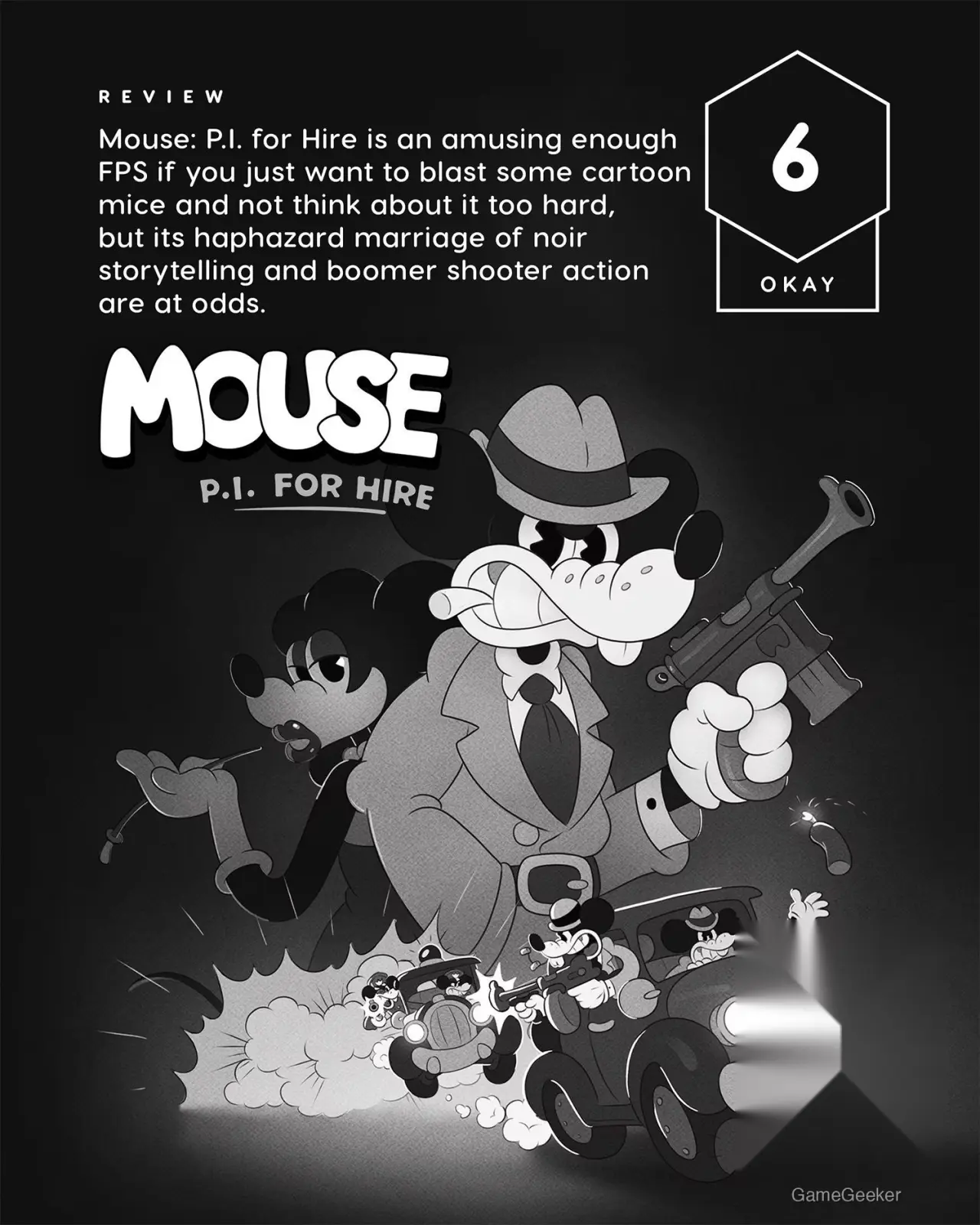
IGN’s main criticisms this time focus on gameplay depth and certain design choices. It also specifically complained that, despite being a detective-themed FPS, the game lacks a so-called “detective mode,” and argued that there are too many puns in the game. The issue is that part of this criticism is valid feedback, while another part feels more like directly equating thematic setting with a checklist of expected features, carrying a somewhat formulaic review-template mentality. A work called “detective” does not necessarily have to include the textbook system of scanning, highlighting, and clue reconstruction; if the developers defined it from the outset as a stylized shooter, then the absence of a “detective mode” may not be a flaw at all, but rather a deliberate restraint to keep the systems from drifting off course.
Technically speaking, the real challenge is making sure the style and gameplay feedback do not work against each other. Black-and-white cartoons, exaggerated presentation, and rubber-hose animation naturally compress the space for visual clarity. If enemy-friend distinction, bullet feedback, and environmental readability are not handled well, the FPS feel falls apart. Precisely because of this, when most outlets are scoring it around 81, that at least suggests it has very likely cleared the bar in terms of basic playability and execution of style—and not just barely.

From a business logic standpoint, the reason players reacted so strongly to this 6 is not simply because they are defending the game, but because they have become increasingly sensitive to “controversial reviews.” On social media and in comment sections, many people directly described the score as absurd, and some even suspected it was using the contrast to generate discussion; other players also brought up IGN’s previous 6 for Crimson Desert to further question the consistency of its standards. Put plainly, when media scores repeatedly drift away from collective intuition, users start shifting from content judgment to traffic judgment, and that causes a slow erosion of media credibility.
If you already enjoy the kind of FPS that Mouse: P.I. For Hire represents—strong visual style, old-cartoon aesthetics, and a somewhat arcade-like feel—then this controversy should not make you back off just because of a 6. The safer buying advice is to prioritize gameplay footage and detailed feedback from player communities, especially by looking at three dimensions: level repetition, shooting feel, and the pacing of boss fights, because those are the underlying indicators that determine whether it is worth picking up. As for the review split itself, my judgment is straightforward: IGN is free not to like it, but when it pushes a game with an 81 average critic score down to a 6, and its argument is not strong enough to convince people, then it is hardly surprising that players feel there are signs of rushed work here, or at the very least a lack of basic understanding of the project’s intended positioning.



Kommentare 0
Wir freuen uns auf deine Meinung
Beteilige dich an der Diskussion und teile deine Bewertung des Spiels.
Noch keine Kommentare. Teile deine Bewertung.