 Im AngebotDOOM
Beliebte TippsAlle ansehen
123456789101112
12 Best Mystery Games on PC (2026)
12 Best Space Sim Games on Steam (2026)
12 Best Story-Rich Games to Play (2026)
12 Best Turn-Based Tactics Games on Steam (2026)
12 Best Puzzle Games on Steam (2026)
12 Best Games to Play with Friends on PC (2026)
12 Best JRPGs on Steam (2026)
12 Best City Builder Games on Steam (2026)
12 Best Zombie Games on Steam (2026)
12 Best Free Indie Games on Steam (2026)
12 Best Short Indie Games to Try (2026) — Done in One Evening
12 Best Cozy Games on Steam (2026)
Beliebte ähnliche SpieleAlle ansehen
Games Like PowerWash Simulator - 12 Best Relaxing Cleaning and Restoration PicksGames Like ARC Raiders - 12 Best Extraction and Co-op Survival ShootersGames Like PEAK - 12 Best Co-op Climbing and Survival PicksGames Like R.E.P.O. - 12 Best Co-op Horror PicksGames Like Clair Obscur: Expedition 33 - 12 Best Turn-Based RPG PicksGames Like Path of Exile 2 - 12 Best Action RPG and Loot PicksGames Like Road to Vostok - 12 Best Hardcore Survival Shooter PicksGames Like Mina the Hollower - 12 Best Top-Down Action and Zelda-Like PicksGames Like Slay the Spire 2 - 12 Best Roguelike Deckbuilders to Play NextGames Like Resident Evil Requiem - 12 Best Survival Horror PicksGames Like Baldur's Gate 3 - 12 Best CRPGs and Turn-Based RPGsGames Like Monster Hunter Wilds - 12 Best Co-op Hunting and Action RPG PicksGames Like Hollow Knight: Silksong - 12 Best Metroidvania Picks (2026)Games Like Dead by Daylight - 12 Best Asymmetric & Co-op Horror PicksGames Like Final Fantasy VII Rebirth - 12 Best Action RPG & JRPG PicksGames Like Forza Horizon 6 - 12 Best Open-World Racing & Driving Picks (2026)Games Like Solarpunk - 12 Best Cozy Survival and Crafting GamesGames Like 007 First Light - 12 Best Stealth and Spy GamesGames Like Subnautica 2 - 12 Best Underwater and Alien-World Survival GamesGames Like Hell Let Loose - 12 Best Tactical Milsim Shooters
Beliebte TestsAlle ansehen

Hades II — Test

Clair Obscur: Expedition 33 — Test

Katana ZERO — Test

The Long Dark — Test

Shift At Midnight — Test

Middle-earth™: Shadow of Mordor™ — Test

The Mermaid Mask — Test

Killing Floor 2 — Test

The Outlast Trials — Test

American Truck Simulator — Test

Voidling Bound — Test

Go-Go Town! — Test

Desktop Explorer — Test

Dead as Disco — Test

Crushed In Time — Test

Beastro — Test
DOOM Battery Life Cut by 25%! Is This Move by the Switch 2 Worth It?
Whether it’s worth trading a quarter of your battery life for better handheld image quality is, in essence, a very classic strategic question—like voluntarily sacrificing a piece in an endgame to seize the initiative. The benefit is clear, and so is the cost.
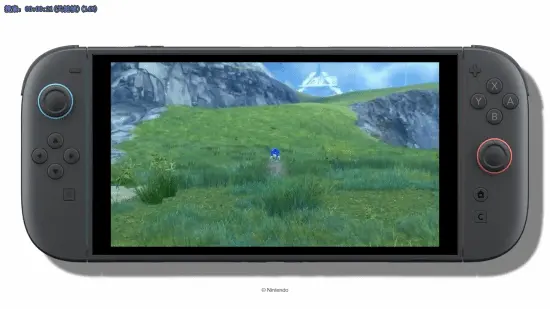
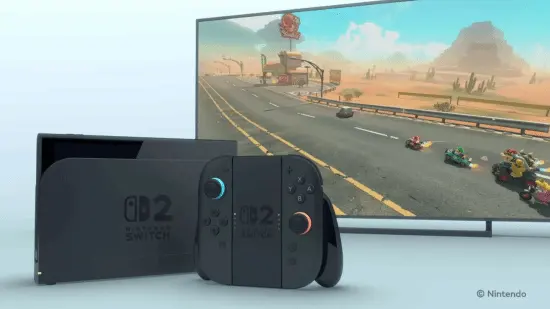
Recently, Nintendo pushed the v22.0.0 system update for the Switch 2, adding a new “Handheld Mode Boost” feature. The core idea is straightforward: allow compatible original Switch games running in handheld mode on the Switch 2 to get as close as possible to their TV mode performance, thereby delivering better visuals and higher resolution.

From a system design perspective, this feature is not some free performance bonus. Nintendo has already made it clear that enabling it will increase power consumption, and the actual improvement will vary from game to game. More importantly, it does not make native Switch 2 software perform better—it only works for compatible original Switch games. In other words, this is not a full-scale upgrade, but rather a tactical card that can only be played under certain conditions.
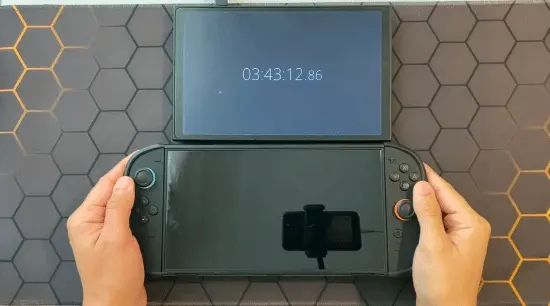
There is now also a fairly intuitive reference point for the battery-life tradeoff. According to estimates from Reddit users, enabling it reduces battery life by about 25%. Taking DOOM (2019) as an example, battery life drops from 5 hours and 5 minutes to 3 hours and 43 minutes. That’s no longer a case of “slight impact”—it will genuinely change how you plan your play sessions.

In terms of strategic depth, I actually appreciate Nintendo for leaving the choice to players. After all, the optimal solution naturally differs depending on the situation: if you’re at home, have a short commute, or are playing a game where observing fine details matters, boosting the resolution is a smart move. But if you’re traveling long-distance without access to charging, forcing this option on feels a lot like sacrificing your overall tempo for a local advantage—somewhat wasteful.
But the issue is that this feature also comes with quite a few side effects. Once enabled, the console simulates TV mode operation, which may affect certain software instructions and functions. The touchscreen will be disabled, Joy-Con 2 controllers will be recognized as a Pro Controller when connected, and before connecting other controllers, you must first detach the Joy-Con 2. All of this shows that it is not a universal option meant to stay on by default, but rather more like a temporary enhancement button meant for specific games and specific scenarios.

If I were to offer purchase and usage advice, my conclusion is very clear: players who prioritize handheld portability should not treat it as a must-have for now. But if you already spend a lot of time playing older original Switch games and are especially sensitive to handheld visual quality, then it at least offers a controllable trade-off. Current community discussions are also largely centered on this point—some feel that exchanging 25% battery life for sharper visuals is acceptable, while others believe the greatest value of handheld gaming lies in stable battery endurance.
In my view, the most interesting part of this Switch 2 update is not simply that “the graphics got better,” but that it puts the trade-off right on the table. A good strategy system never gives you only one answer; it makes you understand that every move comes at a cost. As for whether to enable the boost for DOOM, that depends on whether you’d rather win on visual experience or on playtime.
Im AngebotDOOM Im AngebotDOOM Eternal: The Ancient Gods - Part Two
 Im AngebotDOOM Eternal: The Ancient Gods - Part One
 Im AngebotHand of Doom
 Doom & Destiny Advanced
Kommentare 0
Wir freuen uns auf deine Meinung
Willkommen! Teile deine Meinung zu diesem Spiel – wer zuerst schreibt, wird vielleicht überrascht.
Noch keine Kommentare. Sei der Erste!