News
The Witcher 3's New DLC Faces Early Backlash From International Media
Jeuxvideo reports The Witcher 3's 2027 DLC faces a narrative tightrope: it must honor the 2016 DLC's
















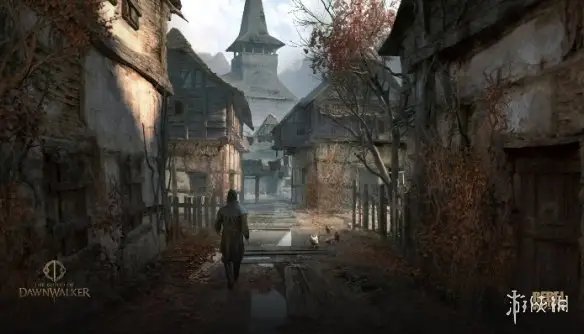
At a Rebel Wolves livestream, the studio unveiled the third gameplay showcase for The Blood of Dawnwalker and confirmed a September 3 launch. Two weeks earlier, media attended a warm-up event in Warsaw, Poland, where Creative Director Mateusz Tomaszkiewic gave further details on the “30-day” progression model and the game’s narrative-sandbox structure.

The central strategic decision is whether short-term gain is worth sacrificing key NPCs. The tradeoff resembles a deliberate piece sacrifice in an endgame: you gain room, but you inherit later consequences. The team explicitly allows the protagonist to kill NPCs through vampire traits; even if a key character dies, the game does not collapse. You can still progress and reach an ending, but related quests may fail or shift to different routes. I’d rate this design as “ingenious” because it turns failure from a reload punishment into world feedback, giving every decision real strategic weight.

On system design, the feared “30-day countdown pressure” is not a hard fail state. The developers stated this clearly: when time runs out, there is no forced Game Over. You can keep exploring, while bearing the narrative consequences already set in motion. The team estimates most players can access about 80% of the content before the limit expires, and that ratio itself signals replay value. In rhythm, it is closer to Fallout 1: pressured, but still manageable through planning, rather than a pure race against the clock.

In terms of strategic depth, full world openness after the prologue is another strong point. The game intentionally blurs “main” and “side” boundaries, and daily segmented actions effectively become a resource-allocation puzzle: time, route, relationships, and combat risk must be calculated together. If you investigate Black Death clues in a mountain village today, you may miss a one-time contact opportunity in town. When these exchange relationships are done well, it feels like turn-based planning extended into an open world. If the system eventually degrades into repetitive checklist clearing and errands, that would waste the framework, but current information points in the right direction.

On narrative setup, the team said in interviews that this vampire concept is not a traditional Dracula-style template or spirit-override model, but a custom worldview. That matters for RPG branching: once rules are rewritten, conflict logic can move beyond old patterns. The early Black Death setting in the medieval Carpathians supports that direction, with a vampire-centered fantasy core. Main-story completion is roughly estimated at 40 hours, though actual length can vary significantly by playstyle. Combined with a “fail yet continue” structure, it naturally supports second runs for reverse-decision testing. The team also said it values the Chinese community and responded directly that the time limit is not harsh. The buying advice is clear: if you prefer strict quest-arrow guidance and near-zero-loss clears, this game may create anxiety; if you enjoy weighing consequences and accepting imperfect progression, it has the potential to be one of this year’s more promising narrative-strategy RPGs.

Kommentare 0
Wir freuen uns auf deine Meinung
Willkommen! Teile deine Meinung zu diesem Spiel – wer zuerst schreibt, wird vielleicht überrascht.
Noch keine Kommentare. Sei der Erste!