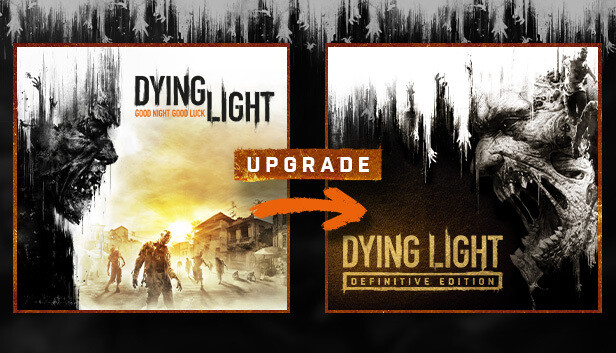
DLCDying Light - Standard To Definitive Upgrade~ ¥2,890~ ¥578-80%→via Steam
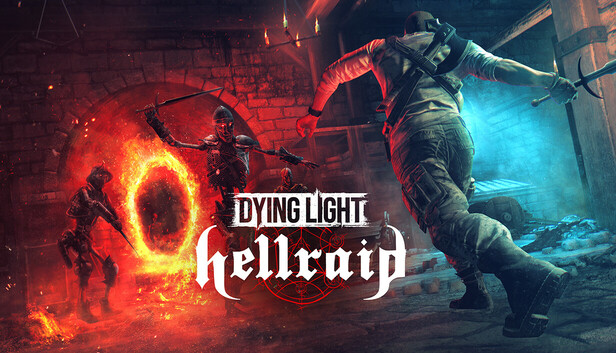
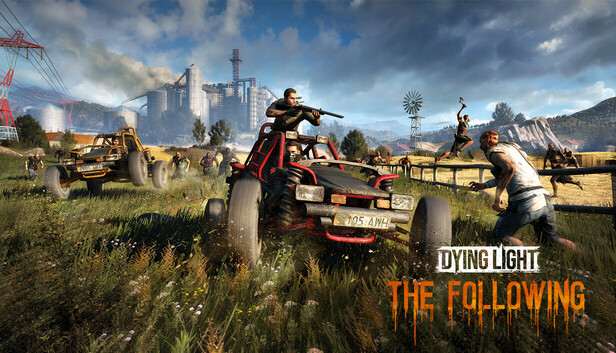



“The open-world benchmark that welded first-person parkour onto zombie survival, with night-time escapes as its still-uncopied signature mechanic”
Put every dimension together and Dying Light is the classic case where the score lies but the experience does not — a middling aggregate, an astonishingly high retention.
To grasp the game's place in history, rewind to 2015.
Before it, the viral-apocalypse template ran on "hide" and "hold" — the player pinned to the ground, working the infected with tools and cover. What Dying Light did was weld first-person parkour onto that template and make the player run. Movement went from a function to the spine of combat and escape. That seemingly small pivot redefined the genre's tempo, and it explains how the game broke out of a tired subject: twenty million copies for the single title, over thirty million across the series — a market verdict bought with one mechanical idea.
Stretch the timeline and the influence is still running. The game proved that "movement feel" can be a core selling point rather than a garnish, and it nudged later open worlds to take verticality and dynamic environments seriously again. A title that launched in the mid-seventies and still gets brought up years later, still pulls in fresh players generation after generation, owes all of it to that one refusal to follow the crowd.
The game's positioning is dead clear, and whether it fits you turns on what you actually want from one.
If you crave top-tier movement feel and an adrenaline escape every single night, and you will grind through a bitter opening to get there, this hands you a high nothing else replicates — it was built for exactly your kind of open-world player. That player walks away still haunted by those rooftop sprints and dives straight into the expansion and multiplayer to keep going.
Flip it around. If you want a finely polished main narrative, cannot stand fragile weapons and a steep teaching curve, and have no appetite for farming materials to progress, you will likely reach for the door inside the first few hours. This is not a question of quality but of fit — the game never tries to please everyone. It bets the house on one core mechanic, so you either love it enough to beat it four times or set the controller down early, with little middle ground.
That polarisation is not a flaw to be patched out; it is the direct consequence of a design with a strong point of view. Games engineered to offend no one rarely inspire anyone either. Dying Light accepts that it will lose a slice of players at the door in exchange for owning the ones who stay completely, and the twenty-million sales figure suggests it made the right bet.
Understand the positioning and you can read the game's most fascinating data point. On OpenCritic it is merely a 74-average, Fair-rated game; on Steam it holds a ninety-five percent approval rating. That chasm between critic and player says it cleanly: the game's value is not in covering every base but in pushing its single core — day-night parkour — to the extreme, and the pull of that for players dwarfs the narrative shortfalls that dragged the score down.
Critic scores tend to demand balance across narrative, visuals and play, where any obvious weak slab pulls the total down; players voting with their feet care most about the core that hooks them. This game is the textbook lopsided student — its play strength runs long enough to bury its story weakness, and the players who fell for that strength simply do not weigh the plot the way a review rubric does.
For getting in, the pick is the Definitive Edition bundling the base game and The Following, because only with both in hand do you experience the complete day-night loop. The base campaign alone is a strong game; the campaign plus the expansion is the version that earned the devotion. That bundle is the best entry point for understanding why a 74-rated title commands a ninety-five percent player score years on.
We circle back to the opening verdict. What no peer has replaced is not the story but that day-night role reversal — daytime hunter vaulting rooftops in control, night-time prey hunted by Volatiles, surviving on parkour reflex alone between the roofs. Even now, games that render this mechanic so purely, so heart-in-throat, can be counted on one hand.
It even outgrew Techland's own Dead Island — that game pinned you to the ground with tools to hold a line, while this one made movement itself the spine of survival, a leap that turned the studio from a competent zombie hand into a mechanics innovator. Taken whole, this is a flawed yet irreplaceable game: the eight in its overall verdict holds both the salute to its gameplay ceiling and the honest deduction for its narrative and its barrier to entry. You may not remember what happened in Harran, but you will never forget one specific night, sprinting across the city's rooftops with something fast and furious at your back. A game that leaves a moment that vivid and scalding inside you has already won. That is enough.
Comments 0
Share your game review
Join the discussion and share your review of this game.
No comments yet. Share your review.