
Casual games aren't mindless time-killers. From Garry's Mod's physics sandbox to Factorio's automated industrial empire, from Brotato's bullet-hell roguelike to Rhythm Doctor's single-button precision—these titles leverage minimalist rules to unlock complex systems, wrapping high skill ceilings in accessible entry points. They don't filter players through grind or difficulty spikes; instead, they earn millions of Steam positive reviews through pure gameplay mechanics and scalability. This ranking orders by overall impact, featuring genre-defining pioneers and recent breakout hits.
1. Garry's Mod #

 GAMIVO$4.63Steam $4.63View price →
Garry's Mod is a physics engine pushed to its absolute limits. Source engine's rigid body collisions, joint constraints, and material interactions are fully exposed—you can weld and rope together any mechanical structure, from crude catapults to intricate automated contraptions. The real value lies in community ecosystems: TTT werewolf hunts, DarkRP roleplay servers, Prop Hunt disguise modes. Players use Lua scripting and Workshop mods to spawn hundreds of derivative game modes. It's not a game—it's a meta-tool for games. Still charting on Steam's casual rankings since 2006, powered by this infinitely moddable physics foundation.
2. Factorio #
 GOG$19.38Steam $19.38View price →
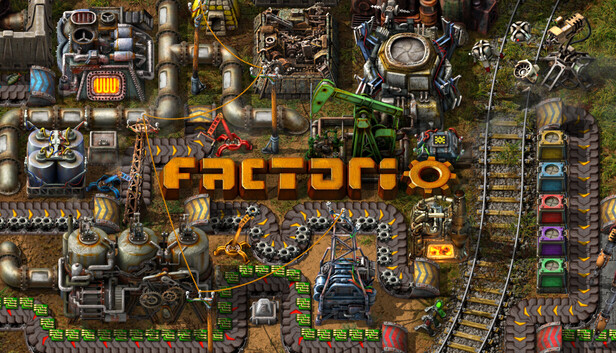
Factorio represents automation design's final form. From hand-placing conveyor belts to blueprint planning, from single assembly lines to cross-map logistics networks, the core loop involves building infinite production chains from finite modules. Circuit systems enable conditional logic, railway scheduling tests global planning skills, and late-game rocket launches merely begin the optimization cycle. No forced combat pressure, yet players sink dozens of hours chasing 0.1% efficiency gains. This is an engineer's playground and one of Steam's highest-rated indie games ever.
3. 人类一败涂地 / Human Fall Flat #

 Kinguin$1.21-93%Steam $1.21View price →
Human Fall Flat is a physics-driven puzzle sandbox that reverse-engineers level logic through clumsy controls. Characters move like drunken dough people—grabbing, climbing, throwing all require wrestling with gravity. The same puzzle can be solved by swinging across with grappling hooks or brute-forcing with stacked boxes. Eight-player co-op transforms cooperation into disaster footage—players get stuck in walls, friendly-fire each other, or straight-up throw teammates off cliffs. The Workshop continuously injects new levels, from recreating Sekiro's Ashina Castle to custom parkour tracks, keeping this 2016 release relevant today.
4. 土豆兄弟(Brotato) #
 GameBillet$2.45-51%Steam $2.45View price →
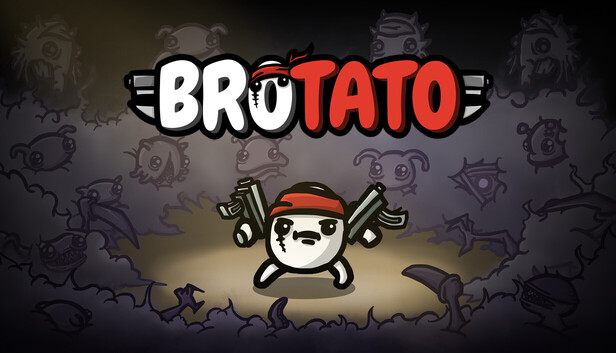
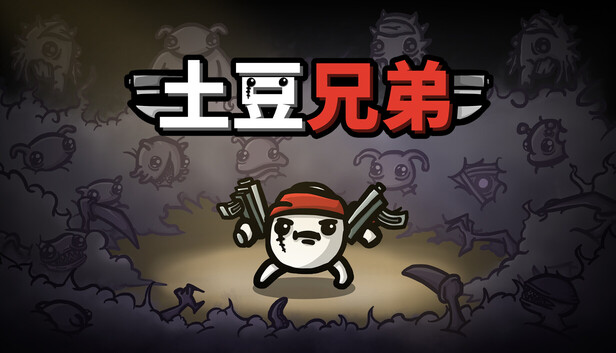
Brotato is a potato gunner wielding six weapons simultaneously, deconstructing roguelike deckbuilding through sheer violence. Twenty-second waves force snap decisions at the shop, while six weapon slots shift build philosophy from "specialized single-core" to "multi-core synergy"—melee lifesteal paired with ranged DPS, or stacking six SMGs to max fire rate caps. Character traits fundamentally alter gameplay logic: One-Eyed Potato restricts to one-handed weapons but doubles crits; Ghost Potato trades dodge for damage. No lengthy narrative or complex maps—pure numerical gambling and build experimentation, with 15-minute runs validating absurd loadouts.
5. Stacklands #
 Humble Bundle$7.99Steam $7.99View price →
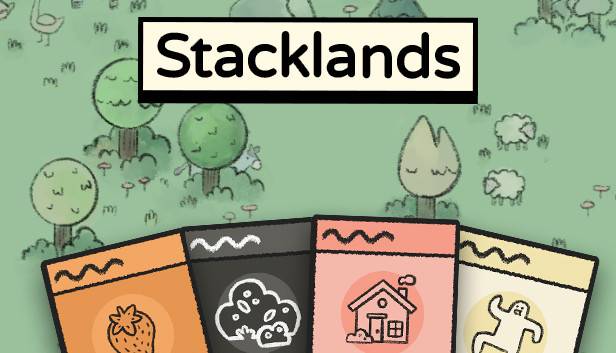
Stacklands welds card game drafting with village management resource loops—the core mechanic is literally "stacking." Drag villagers onto trees for wood, swords onto monsters to fight, two wood cards to craft planks. Physical space becomes game rules; the tabletop is your production line. The Moon Pack's roguelike mode pushes this system to extremes: randomized card pools + time pressure + combo chains force you to find order in chaos. It uses the most basic drag-and-drop interaction to deliver automation game instant feedback.
6. 冲就完事模拟器 #
 Microsoft Store$24.99Steam $24.99View price →
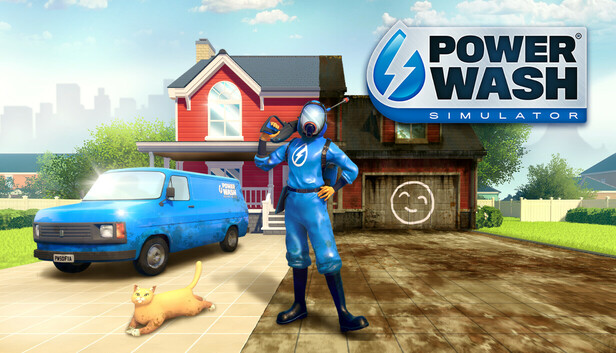
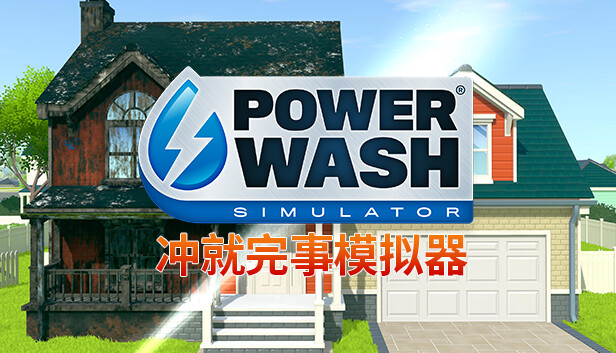
PowerWash Simulator turns industrial cleaning equipment into a decompression artifact through bizarre design. The game uses realistic physics feedback and progressive grime removal mechanics to transform tedious cleaning work into OCD paradise—every water streak's disappearance delivers instant visual feedback. Multi-scenario level design from rusted trucks to space capsules makes the single action of "washing clean" sustain dozens of hours. The core abstracts real-world manual labor into pure progress bar filling pleasure, combined with environmental audio's ASMR properties, creating Steam's rare "active meditation" game template.
7. Muse Dash #

 Steam$2.99View price →
Muse Dash is a minimalist rhythm game template using dual buttons. Left jumps, right attacks—minimal input cost carries three-lane judgment, aerial combos, and boss battles. The key innovation: introducing parkour elements completely transforms traditional rhythm games' static experience. You're not waiting for notes to fall—you're actively charging toward obstacles for hit feedback. Song pack quality varies but covers diverse genres from EDM to rock. Anime-style character art and UI lower hardcore rhythm game psychological barriers, while Steam's buy-to-own model makes it one of the best rhythm game entry points.
8. 东方夜雀食堂 - Touhou Mystia's Izakaya #
 Steam$5.99View price →
Touhou Mystia's Izakaya hides hardcore management mechanics under anime aesthetics. Ingredient procurement, recipe R&D, customer flow routing, and reputation systems interlock—each night's service is a resource allocation gamble. You must satisfy Touhou Project characters' picky tastes while balancing costs and profits. The depth lies in recipe combinations: the same ingredient spawns dozens of dishes, with unlocks requiring repeated trial-and-error. Unlike traditional management games' number stacking, this plays more like puzzle-solving—using limited ingredients to craft optimal solutions, surviving Gensokyo's 365 days. Fan game achieving commercial-grade system design.
9. Game Dev Tycoon #
 Kinguin$4.87-58%Steam $4.87View price →
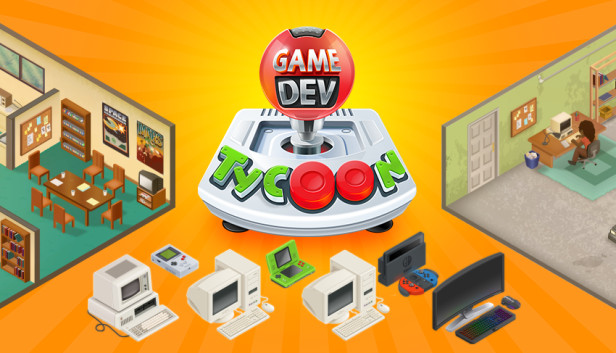
Game Dev Tycoon simulates the complete chain from garage startup to AAA studio. The core is a three-dimensional "theme × genre × platform" combination system—you must judge whether RPGs suit consoles or PC, whether action games need 2D or 3D engines. Development phase slider allocation directly impacts review scores; late-game adds engine licensing, expo marketing, and sequel balancing. The brilliance: using real gaming history events as Easter eggs. Developing VR at the wrong time bleeds money; timing console generation shifts captures dividends. Harder than management sims, more strategic than number-crunching.
10. There Is No Game: Wrong Dimension #
 GOG$6.41Steam $6.41View price →
There Is No Game: Wrong Dimension is a textbook anti-game design case. The game itself is a meta-narrative maze constantly exposing its own fiction—you fight a narrator trying to stop you from playing, crack puzzles disguised as system crashes, and seamlessly switch between RPG/point-and-click/platformer genres. Core gameplay is "breaking the fourth wall" itself: UI buttons flee, progress bars require physical dragging, even uninstalling becomes a puzzle mechanic. The 97% positive rating isn't because it's casual—it's because it uses interaction to redefine "play" itself. When rules become destructible objects, every click challenges your perception of game boundaries.
11. Gorogoa #

 Eneba$2.73Steam $2.73View price →
Gorogoa reconstructs puzzle logic using comic panel format—four frames can be dragged, stacked, and zoomed freely, with the same scene presenting radically different interaction possibilities across spacetime dimensions. You must find visual cues in hand-drawn illustrations, reorganizing frames to align doorknobs, connect staircases, and let fruit ripen across timelines. No text tutorials—progression relies purely on spatial imagination and observation. This design completely fuses puzzle mechanics with narrative medium, making each successful arrangement feel like flipping through an animated picture book.
12. Dorfromantik #
 GOG$7.01Steam $7.01View price →
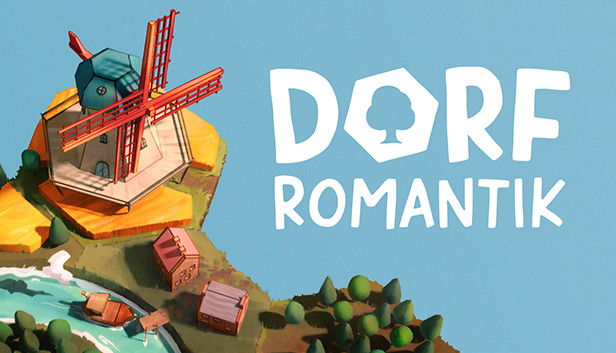
Dorfromantik merges hexagonal tile-laying with procedurally generated maps—each tile placement gambles between "completing quests" and "preserving expandability." Connection rules for forests, villages, rivers, and railways are straightforward, but high-score strategies require pre-planning branch quest triggers and long-chain reward layout priorities. No failure penalties, no time pressure, yet OCD players repeatedly theorize optimal solutions to break regional records—this is Catan's tile-laying abstracted into single-player puzzle purity.
13. Tiny Glade #
 GAMIVO$14.57Steam $14.57View price →
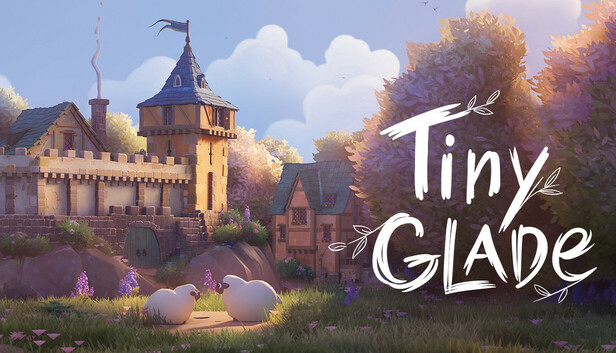
Tiny Glade is a grid-free building sandbox with a core procedural smart-completion system—casually draw a path and stone slabs, wooden fences, and vines auto-adapt to terrain; pull a wall and window frames, brick joints, and ivy grow following architectural logic. No resource limits or mission objectives—purely serving improvisational creation flow states. The 97% positive rating stems from perfectly balancing "doodle-level low input cost + photorealistic rendering output," making it the purest digital landscaping tool in recent years.
14. Rhythm Doctor 节奏医生 #
 Steam$19.99View price →
Rhythm Doctor achieves variation complexity through single-button input. The core mechanic is hitting the seventh beat to treat patients, but level design systematically deconstructs "rhythm" itself: visual interference hides beat lines, tempo changes disrupt muscle memory, multi-track simultaneous inputs test auditory separation. The 98% positive rating comes from compressing rhythm game technical barriers to minimum while maximizing expressiveness through narrative and level choreography—you're not chasing scores, you're using heartbeat sounds to save lives. More focused than Rhythm Heaven, more humanized than traditional rhythm games.






Comments 0
Share your game review
Join the discussion and share your review of this game.
No comments yet. Share your review.