

The Top 3 in 30 Seconds: Start with Human Resource Machine for focused command logic built around one worker. Choose Star Stuff if you would rather program visual bots while helping solve the puzzles yourself. Pick Opus Magnum for open-ended visual machine construction and optimization.
Why These Made the List #
These games turn instructions, sequencing, automation, and systems thinking into puzzles. Some use textual or assembly-style instructions, while others rely on bots, flowcharts, circuits, factories, or programmable machine components.
The ranking considers how clearly each game presents its central idea, how approachable it is, and how much variety it adds. The list starts with focused command logic, moves through visual automation and engineering systems, and ends with demanding text-based programming puzzles.
These are puzzle games rather than programming courses. They exercise logic, sequencing, and optimization, but they do not certify job readiness or replace formal programming education.
Top Picks #
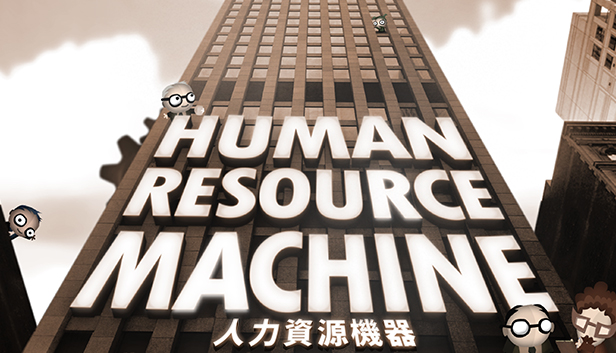
1. Human Resource Machine #
 KinguinHK$39.05-56%Steam HK$39.05Ver precio →
Each level gives an office worker a new job to automate. Its assembly-inspired command system keeps the focus on instructions controlling one worker, which makes the underlying logic easier to follow than systems involving several simultaneous actors. Optional extra challenges give experienced players additional goals after they solve a level.
| Aspect | Explanation |
|---|---|
| Why It's Ranked Here | The focused single-worker format offers the clearest introduction to command-based logic in this list. It establishes instructions, data handling, and control flow before the ranking moves into larger systems. |
| Who It's For | Beginners get a direct first programming-puzzle experience, while experienced solvers can pursue the extra challenges. |
| Key Selling Points | It provides single-worker automation, an office-themed presentation, and optional extra challenges. |
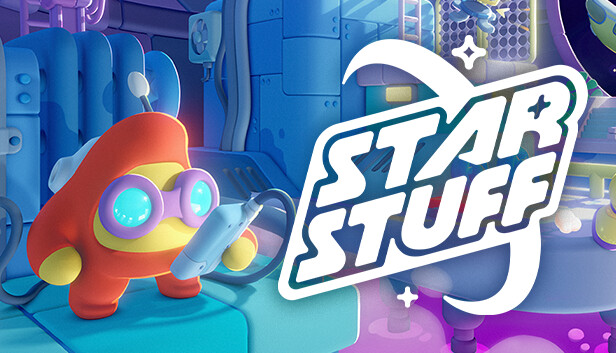
2. Star Stuff #

 SteamHK$ 61.75HK$ 95.00-35%Ver precio →
Star Stuff takes place in a star factory where bots have different capabilities. Programming them is only part of each solution because the player must sometimes act in sync with the bots. Across more than 150 factory puzzles, the game combines automated behavior with direct participation.
| Aspect | Explanation |
|---|---|
| Why It's Ranked Here | Controlling bots while acting alongside them gives this game an unusual and approachable take on programming puzzles. The player remains part of the solution instead of simply preparing instructions and watching them run. |
| Who It's For | Choose this entry for visual bot puzzles that combine programmed behavior with hands-on actions. |
| Key Selling Points | It features cooperating bots, manual player actions, and reset and undo options. |
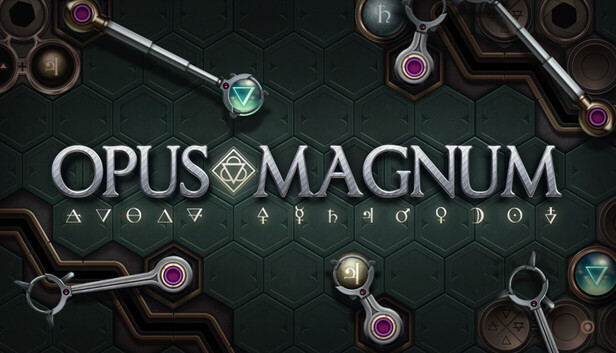
3. Opus Magnum #

 GOGHK$89.12Steam HK$89.12Ver precio →
In Opus Magnum, a solution is a visual alchemical machine assembled from programmable arms, tracks, and other components. Each system transforms materials step by step, while the open-ended challenges let players compare solutions for simplicity, speed, and compactness. A puzzle editor and Steam Workshop integration extend the machine-design possibilities beyond the main challenges.
| Aspect | Explanation |
|---|---|
| Why It's Ranked Here | This is the strongest choice for open-ended visual machine sequencing. Solutions are built as physical systems rather than written as conventional text code. |
| Who It's For | Players drawn to mechanical layouts and open-ended optimization can refine each design according to several different measures. |
| Key Selling Points | It offers programmable arms and tracks, open-ended machine construction, and optimization metrics. |
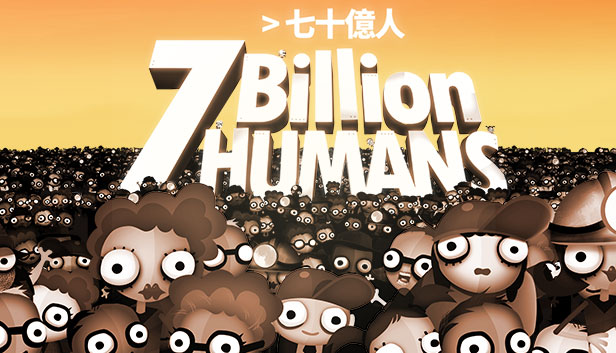
4. 7 Billion Humans #

 EnebaHK$34.29Steam HK$34.29Ver precio →
7 Billion Humans replaces the single office worker with a swarm operating as a parallel computer made of people. Multiple workers execute the game's programming language at the same time, so each solution must account for simultaneous actions. The campaign contains more than 60 programming-puzzle levels, with hint and skip systems available for difficult problems.
| Aspect | Explanation |
|---|---|
| Why It's Ranked Here | Parallel worker execution expands command logic into a broader coordination problem. It is a clear next step for players ready to reason about many workers acting at once. |
| Who It's For | This entry suits players who understand basic instructions and want to manage simultaneous behavior across multiple workers. |
| Key Selling Points | It includes parallel worker execution, hint and skip systems, and an office-computer theme. |
5. while True: learn() #
 EnebaHK$23.46Steam HK$23.46Ver precio →
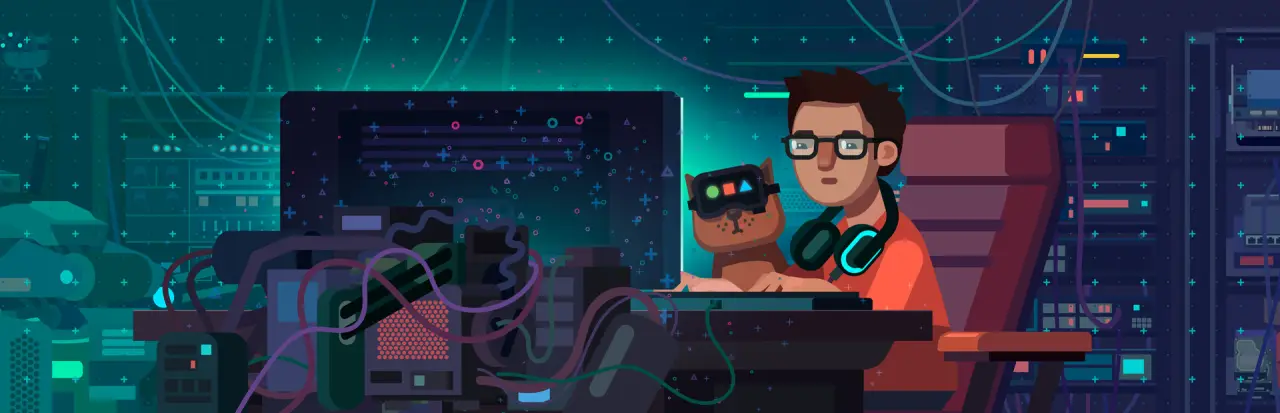
while True: learn() uses prepared blocks rather than typed code. Players connect those blocks into flowcharts while encountering ideas such as expert systems, decision trees, perceptrons, and neural networks. Its jobs introduce tradeoffs among accuracy, speed, and cost, shifting the emphasis from issuing commands to arranging and tuning data-flow systems.
| Aspect | Explanation |
|---|---|
| Why It's Ranked Here | The flowchart format offers a different branch of visual logic, centered on machine-learning concepts and prepared components. It broadens the subject matter without becoming a textual programming game. |
| Who It's For | This game suits curious players who want to explore machine-learning ideas through visual data-sorting puzzles. |
| Key Selling Points | It uses block-based flowcharts, data sorting challenges, technique notes, and further-reading links. |
6. Infinifactory #
 KinguinHK$61.47-71%Steam HK$61.47Ver precio →
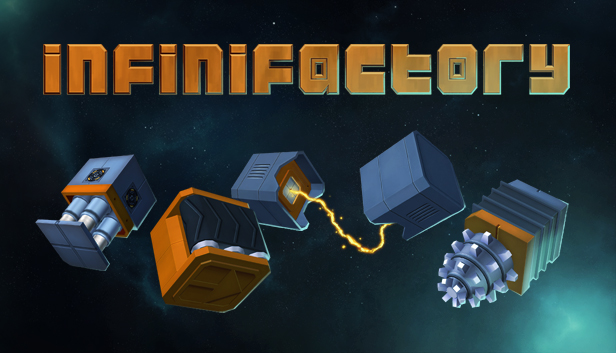
Infinifactory presents factory construction in a first-person 3D environment. Players arrange production lines that assemble the required products, making spatial layout central to every solution. The campaign has more than 50 puzzles, and the sandbox and Steam Workshop support further custom construction.
| Aspect | Explanation |
|---|---|
| Why It's Ranked Here | Three-dimensional placement separates this engineering challenge from textual programming and two-dimensional machine sequencing. The main task is to design and run a working production line in space. |
| Who It's For | Pick this entry when spatial construction and production-line layouts are more appealing than writing instructions. |
| Key Selling Points | It provides first-person 3D factories, a campaign and sandbox, and solution optimization. |
7. SpaceChem #
 KinguinHK$43.00-51%Steam HK$43.00Ver precio →
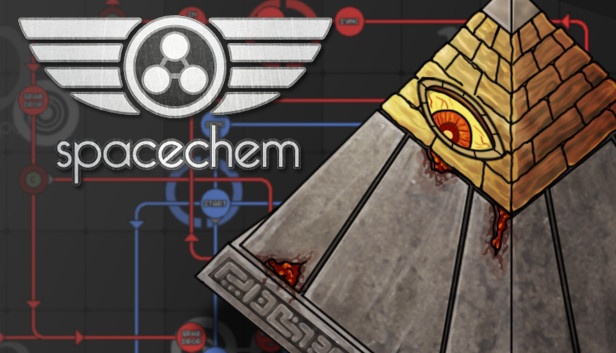
SpaceChem casts the player as a Reactor Engineer responsible for transforming raw materials into chemical products. Its compact systems must sequence those transformations while meeting production requirements. With more than 50 puzzles, the campaign concentrates on reactor and factory design rather than general-purpose textual code.
| Aspect | Explanation |
|---|---|
| Why It's Ranked Here | Chemical transformation rules give this engineering-sequencing game a dense and specialized focus. Its production systems reward careful arrangement and continued refinement. |
| Who It's For | Players who enjoy compact systems, transformation rules, and production quotas are the intended audience. |
| Key Selling Points | It centers on chemical-production puzzles, factory and reactor design, and production quotas. |
8. EXAPUNKS #
 KinguinHK$6.16-96%Steam HK$6.16Ver precio →
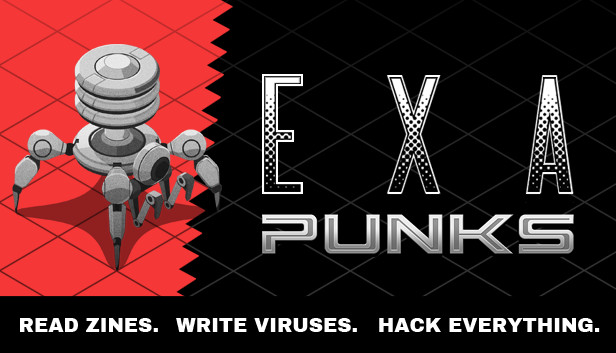
EXAPUNKS moves the list firmly into text-oriented programming. Players write compact programs for EXAs, or EXecution Agents, that operate across networks in a fictional 1997 hacking setting. Tutorial material appears through the in-game TRASH WORLD NEWS magazine, and the game also supports puzzle creation and Steam Workshop sharing.
| Aspect | Explanation |
|---|---|
| Why It's Ranked Here | Writing agent programs for network scenarios makes this a more demanding option than the visual automation games above it. The challenge comes from code-like instructions rather than connected blocks or constructed machinery. |
| Who It's For | This is a suitable choice for players seeking textual instructions, network problems, and a stylized hacking-fiction setting. |
| Key Selling Points | It features programmable EXAs, network-based puzzles, and custom puzzle creation. |
9. SHENZHEN I/O #

 GAMIVOHK$28.32Steam HK$28.32Ver precio →
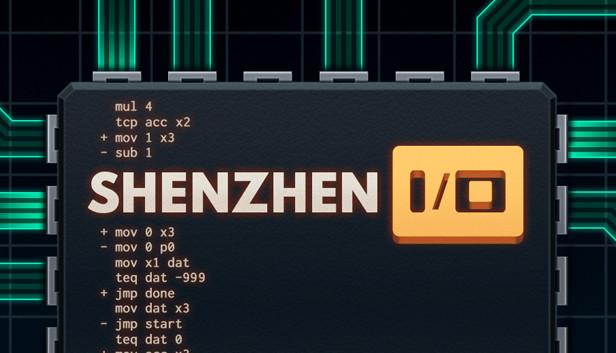
SHENZHEN I/O combines circuit construction with compact assembly-style programming. Players build devices from components including microcontrollers, memory, logic gates, and LCD screens, then write instructions that support conditional execution. The included manual contains datasheets, reference guides, and technical diagrams, making documentation part of each assignment.
| Aspect | Explanation |
|---|---|
| Why It's Ranked Here | Circuit constraints, technical documentation, and textual instructions must all be handled together. That combination makes it an advanced choice rather than an easy introduction to programming puzzles. |
| Who It's For | Experienced puzzle players who specifically want circuit design alongside assembly-style code are best prepared for these assignments. |
| Key Selling Points | It includes circuit components, assembly-style instructions, and a technical reference manual. |
10. TIS-100 #
 KinguinHK$6.16-90%Steam HK$6.16Ver precio →
TIS-100 asks players to repair corrupted code segments in a fictional computer built from interconnected nodes. Its massively parallel architecture requires several parts of a solution to operate together. Cycle, instruction, and node counts can all be optimized across more than 45 repair puzzles, while three sandbox modes provide additional challenges.
| Aspect | Explanation |
|---|---|
| Why It's Ranked Here | The austere assembly-style interface and parallel-node constraints make this the most specialized and demanding entry. Solving its puzzles requires players to track several nodes running at once while optimizing multiple performance measures. |
| Who It's For | Advanced players seeking difficult assembly-style programming and parallel optimization are the clear audience. |
| Key Selling Points | It offers a parallel-node architecture, assembly-style programming, and three sandbox modes. |
Comparison Table #
| Game | Genre | Core Focus | Play Structure |
|---|---|---|---|
| Human Resource Machine | Command-logic programming puzzle. | It uses assembly-inspired commands to control a single worker. | It provides a level-based campaign with optional challenge goals. |
| Star Stuff | Bot-programming puzzle. | Programmed bots and player actions must work together. | It includes more than 150 star-factory puzzles. |
| Opus Magnum | Open-ended visual engineering sequencing puzzle. | Programmable components form alchemical machines. | Its story-led puzzles support flexible solutions, optimization, and custom creations. |
| 7 Billion Humans | Parallel programming puzzle. | Multiple office workers execute instructions simultaneously. | It offers more than 60 levels with hint and skip systems. |
| while True: learn() | Visual machine-learning puzzle. | Prepared blocks create data-flow systems based on machine-learning concepts. | Contract puzzles and reusable schemes structure progression. |
| Infinifactory | 3D factory engineering puzzle. | First-person construction makes production-line layout a spatial challenge. | It has a story-driven campaign followed by sandbox work and custom creations. |
| SpaceChem | Engineering sequencing puzzle. | Reactor systems transform raw materials into chemical products. | It contains more than 50 campaign puzzles about chemical transformation and production design. |
| EXAPUNKS | Text-based programming puzzle. | Compact agent programs operate across fictional networks. | It combines narrative scenarios, magazine-led tutorials, and custom networks. |
| SHENZHEN I/O | Circuit engineering and assembly puzzle. | Circuit construction works with documentation and assembly-style instructions. | It includes electronics assignments, a technical manual, and a sandbox. |
| TIS-100 | Advanced assembly programming puzzle. | Interconnected nodes run code in parallel under several optimization constraints. | It provides more than 45 repair puzzles, a reference manual, and three sandbox modes. |
How to Pick the Right One #
| Preference | Recommended Games |
|---|---|
| If you want simple command logic, choose this option. → | Choose Human Resource Machine for one-worker commands or Star Stuff for visual bots and direct participation. |
| If you prefer visual engineering and machine sequencing, choose this option. → | Build alchemical systems in Opus Magnum, 3D production lines in Infinifactory, or chemical systems in SpaceChem. |
| If you want broader automation or data-flow systems, choose this option. → | Manage parallel workers in 7 Billion Humans or connect prepared blocks in while True: learn(). |
| If you want advanced text-based programming puzzles, choose this option. → | Program agents in EXAPUNKS, combine circuits and assembly-style code in SHENZHEN I/O, or tackle parallel nodes in TIS-100. |
FAQ #
Which programming puzzle game should a beginner start with? #
Start with Human Resource Machine for focused command logic involving one worker. Choose Star Stuff if visual bots and direct participation sound more appealing. Both are approachable puzzle games, but neither is a substitute for a programming course.
Which games are visual engineering puzzles rather than textual programming games? #
Opus Magnum uses visual alchemical machines assembled from programmable components. Infinifactory centers on first-person 3D factory construction, while SpaceChem focuses on sequencing chemical production systems. Their challenges concern engineering layouts and processes rather than conventional textual programming.
Are SHENZHEN I/O and TIS-100 good easy beginner games? #
No. Both belong among the advanced options. SHENZHEN I/O combines circuit construction, technical documentation, and assembly-style code. TIS-100 instead concentrates on interconnected parallel nodes and assembly-style optimization.
Do these games teach real coding or prepare players for programming jobs? #
These puzzle games use logic, instructions, sequencing, and systems thinking. Some feature assembly-inspired or fictional programming languages, while others express related ideas through bots, machines, flowcharts, circuits, or factories. They do not certify job readiness or replace formal programming education.






Comentarios 0
Nos interesa tu opinión
Participa en la conversación y comparte tu opinión sobre este juego.
Aún no hay comentarios. Comparte tu opinión.