






















Opening
A round little lamb in a blood-red crown swings a blade through a dungeon one minute, then hands out dinner and shovels manure for its congregation the next. That single image is the whole pitch for Cult of the Lamb, and it explains why the game is so hard to put down. It welds two things that have no business sitting in the same loop: a brisk, hack-and-slash roguelike crawl, and a slow, tender little homestead sim about running a flock.
Then it coats the whole thing in candy. The art is sweet, the followers are adorable, the menus are cozy — and underneath that sugar is a story about sacrifice, indoctrination, resurrection and seven-deadly-sins doctrine. Critics reached for the same phrase again and again: a moving picture book. They also kept calling it a base-management wolf wearing the wool of an approachable action-roguelike.
That clash is the part nobody has copied since. You will struggle to name a second game where cute and creepy share a room this comfortably. Four years of free updates, more than 4.5 million copies sold, and a remarkably consistent critical reception across every platform all point to one thing: this odd little combination works. The six sections below pull the lamb apart piece by piece, system by system, to see exactly how it built a dark little fairy tale you simply cannot bring yourself to quit.
Story | 7.0/10
Historia: 7/10Boil the plot down to a logline and it fits on a napkin. A sacrificial lamb is killed on an altar by four bishops, gets dragged back from the brink by an imprisoned old god, takes up a red crown, and swears revenge. That's it. The story here was never about twists. It is about tone.
A skeleton plot that runs on mood, not incident
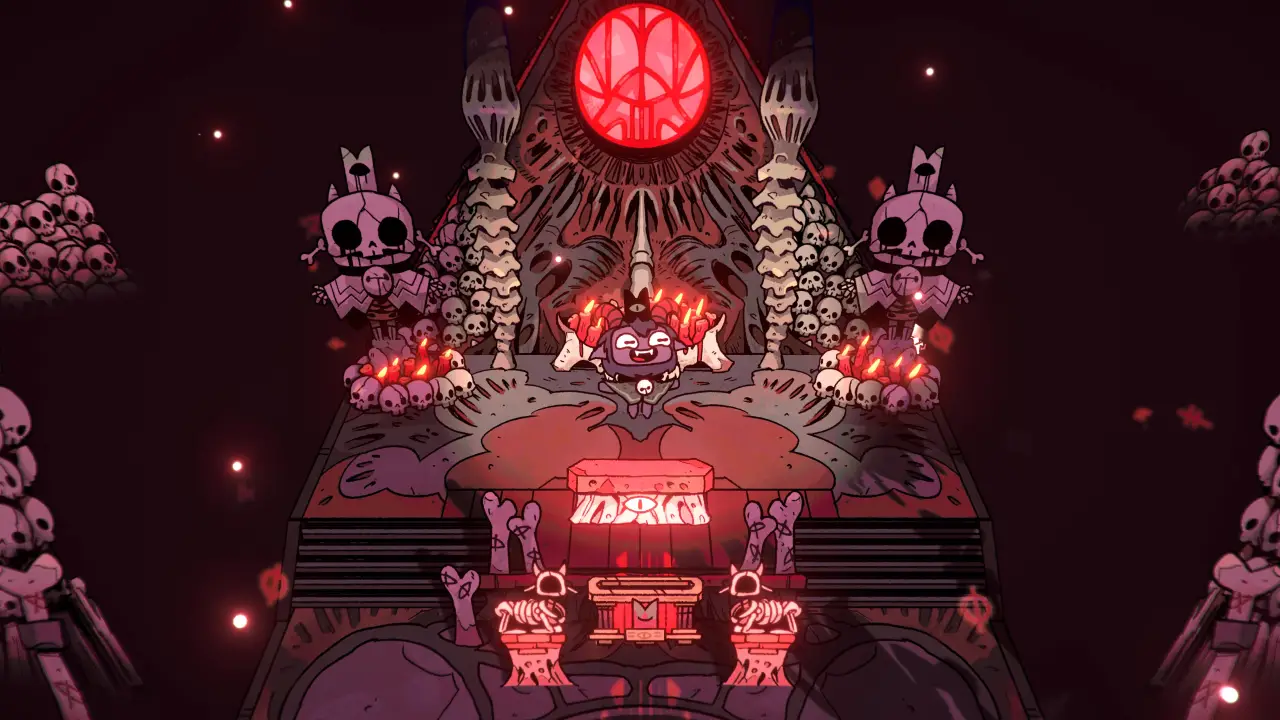
The spine is deliberately thin: four regions, four bishops, one vendetta. There is no sprawling epic to untangle, no cutscene that overstays its welcome. The whole thing reads like a brisk dark-fairy-tale picture book — every page turn shoves you forward on the strength of atmosphere rather than exposition.
Minimalism is a double-edged blade, and Cult of the Lamb knows it. The upside is that nothing ever drags; your attention stays glued to the loop. The cost is that anyone hunting for narrative heft might find it slight.
The studio quietly patched that gap later. A free update, Relics of the Old Faith, bolted on a proper endgame storyline so that "what happens after the four bishops fall" finally had an answer instead of a shrug, and it did so without bloating the lean shape that made the opening hours sing.
What actually carries the writing is the gallows humour. Sacrifice, penance, sermons, crushing dissent — heavy words, all played for absurd laughs. You will run a perfectly solemn ritual to sacrifice an elder while the rest of the flock cheers it on with big wet doe eyes, and that mismatch between the solemn and the ridiculous is the game's signature flavour.
Put another way, it tells its story by making you do the awful things rather than watching them. You are not observing a cult leader; you are the cult leader. Every sermon, every rite, every verdict on a heretic is a call you personally make. That participatory streak lands harder than any cutscene, smuggling the lure of power and the haze of moral compromise straight into your daily chores.
There is a sly intelligence to that, too. Because the game never lectures you about what a cult is, it lets the systems do the implicating. You raise a follower's devotion, you decide who eats and who starves, you stage a public punishment to keep the rest in line — and somewhere along the way you stop questioning any of it. The story isn't a warning you read; it's a slow drift you participate in, and that is far more unnerving than a villain monologue ever manages to be.
Characters drawn, not narrated
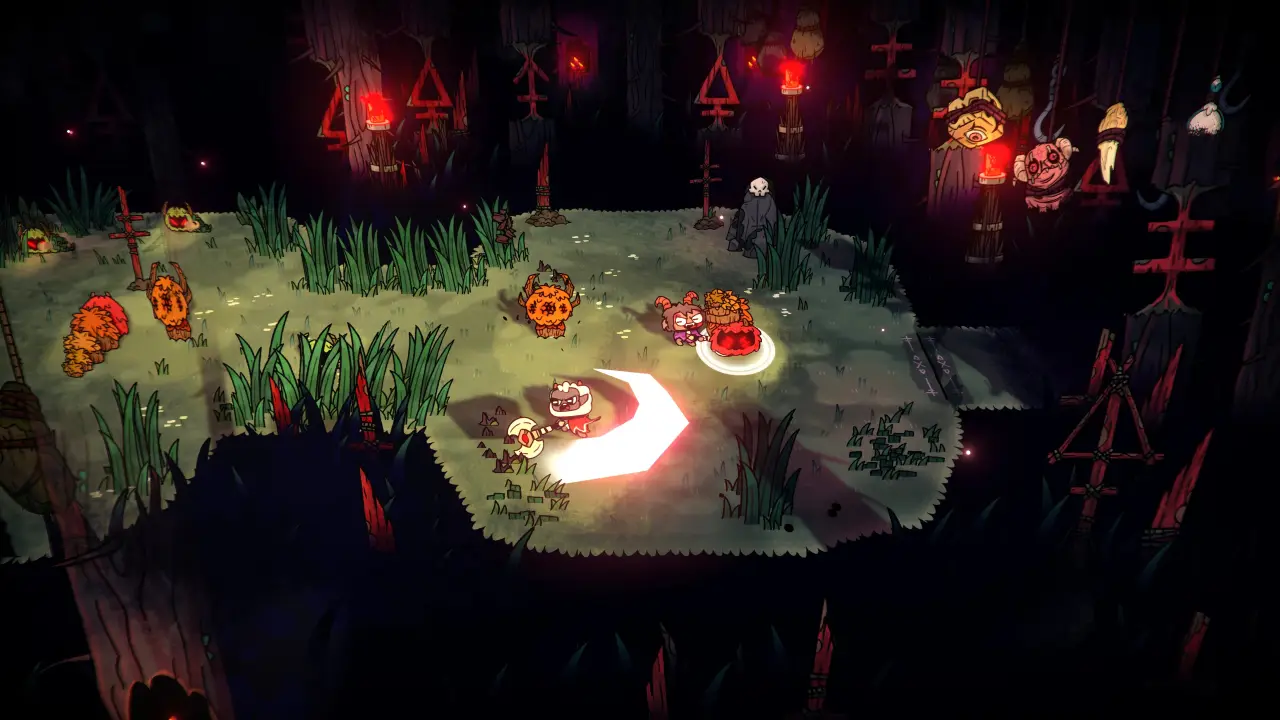
If the plot is the skeleton, the woodland followers are the flesh. Every animal you rescue from a dungeon arrives with a name, a species, a temperament. Some are touchingly devout, some quietly sow dissent, some are old and frail and one bad day from collapsing. The game almost never spells out their histories in long speeches. Instead it leans on storybook design, random vignettes and scraps of dialogue, and lets you fill in the blanks yourself.
Critics latched onto this. Polygon singled out the dungeon characters as genuinely interesting, their backstories mostly obfuscated and enhanced by their charming picture-book designs. It is a shrewd trade. Rather than bury dozens of unread lore dumps in a codex, the game pours all its expressive budget into visual design and systemic interaction, so you bond with these creatures simply by managing them. When you finally have to sacrifice an elder who has been with you for most of the run, the pang of it says more than any monologue could.
Set it beside a narrative benchmark of its generation and the lane becomes obvious. Hades floods you with reactive, fully voiced barks, turning every death into another beat of plot. Cult of the Lamb sprints the other way — it barely competes on word count, choosing instead to twist atmosphere, design and dark comedy into one tight cord. Neither approach is superior; they are simply different philosophies. One drowns you in density, the other hooks you on tone, and the score reflects that. Judged on conventional story heft this is a 7.0, no higher. Accept its "the loop is the narrative" premise, though, and what you remember is not a line of dialogue but a whole mood — cute and sinister, funny and faintly unsettling — that proves stickier than any scripted reversal.
Audio | 8.5/10
Sonido: 8.5/10If the art is the first face Cult of the Lamb shows you, the music is its underlying mood. Sound and vision here are inseparable: you cannot peel that eerie, gleeful cult-ritual feeling off the visuals without it falling apart in your hands.
A score where dread and glee share the same melody
River Boy handles the soundtrack, and the overall register is dim and low, yet it keeps surfacing an almost innocent cheer — a perfect match for a game built on a cute shell wrapped around a dark core. The themes don't win you over with lavish orchestration. They work through looping motifs that slowly pull you into the world of the cult.
The sermon and ritual cues are the standout. Gather the whole flock for a rite and the percussion thickens into something oppressive while choral chanting rises in the background, and that uncanny sense of a congregation worshipping in unison lands instantly. This is not wallpaper music; it is sound design pulling directly for the cult-management half of the experience.
Outlet after outlet flagged the soundtrack by name in their reviews, and the aggregated praise on OpenCritic keeps listing music among the game's strengths — its 84 Top Critic average leans on that work more than the number suggests. The OST has become, in its own right, one of the game's calling cards, the kind of score people loop on their own time long after the controller is down.
Effects and ambience: weighty combat, a homestead that breathes
Set the score aside and the fundamentals still hold. Inside the dungeons, every swing, hit and crit fires off a crisp, satisfying cue, and paired with the screen shake and impact effects it lifts an already snappy combat feel another notch. The four weapon classes are easy to tell apart by ear; the difference between a heavy slam and a quick jab reads through the speakers alone, so you can feel how hard a blow landed without watching the numbers.
The way ambience shifts is handled just as gracefully. Step out of a grim forest dungeon and back into your own base, and the backdrop slides from tense and clenched to something softer, layered with the chatter of followers and the clatter of gathering work. The base sounds alive — it breathes. That tension-and-release in the audio mirrors the loop itself: the soundscape tightens when you crusade and loosens when you come home to tend the flock.
Hold it up against Don't Starve, another studio fluent in dark-cartoon dread, and the contrast sharpens. Both wield sound to unsettle, but they aim it differently. The survival classic tilts toward the loneliness and pressure of the wilderness, while Cult of the Lamb stacks its weight on ritualistic, communal eeriness. The latter is the louder, busier mix, and that suits a game whose management revolves around a crowd of followers rather than a lone wanderer. That tight coupling of music to mechanics is the single most commendable thing about the audio here.
Visuals | 9.5/10
Gráficos: 9.5/10Visuals are where Cult of the Lamb posts its highest mark on this card, and they are the part people remember in a glance and screenshot to a friend a beat later. The look works not because of any technical heavy lifting, but because the stylised expression is pitched exactly right.
A moving picture book built on contrast
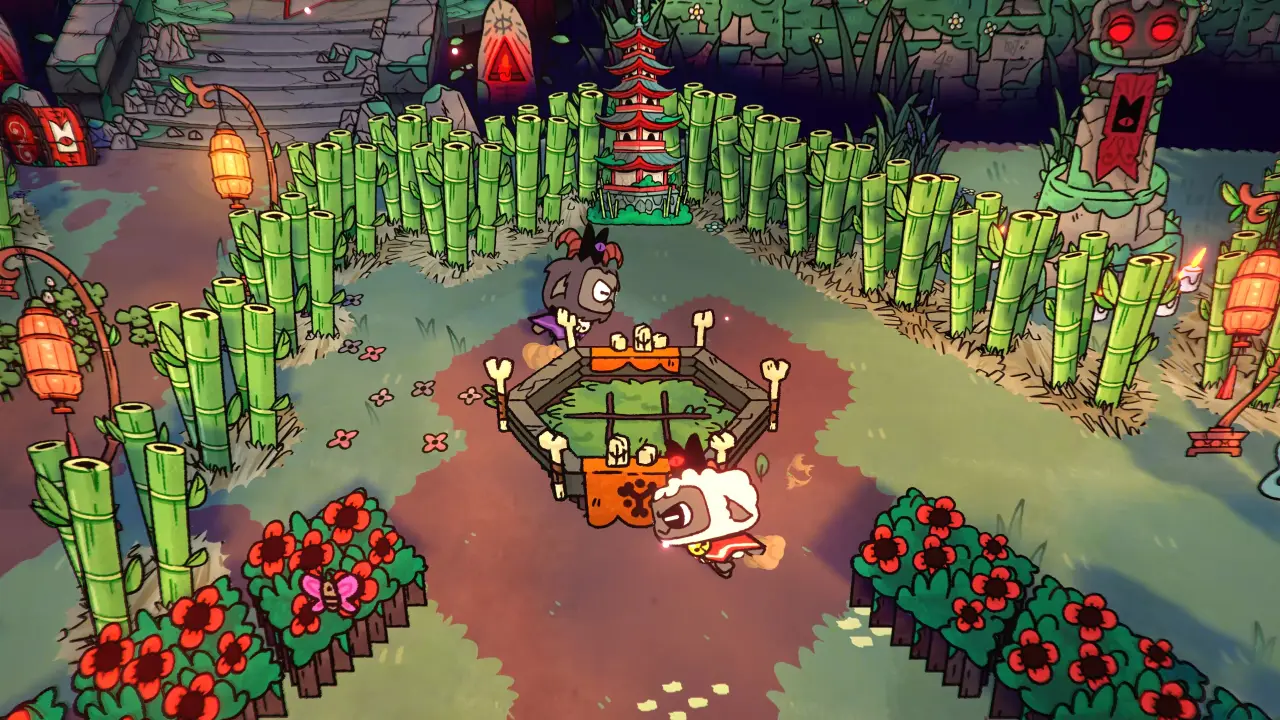
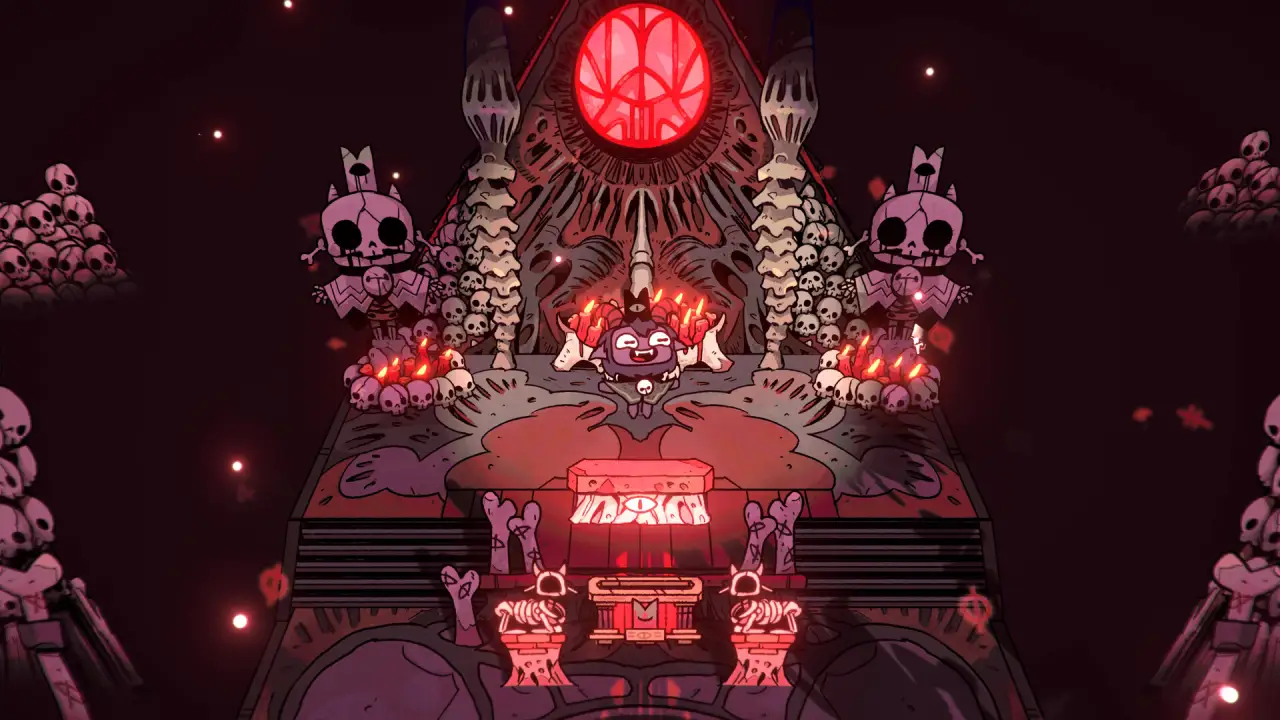
The whole game rides a flat, illustrated cartoon style: rounded shapes, clean silhouettes, and faces that are exaggerated yet endlessly expressive. The lamb wears a blood-red crown as a badge of authority while a flock of woodland animals fans out in their own species and colour schemes, and together they look like a storybook somebody set in motion. Eurogamer flat-out compared the art to the finest New Yorker cartoon — spare lines, perfect expressions, dark wit folded into every face.
The thing that pushes this art over the top, though, is the contrast running underneath all of it. Below the bright, lovable surface sits a payload of sacrifice, cults, resurrection and seven-deadly-sins doctrine. Followers blink up at you with innocent saucer eyes while attending a grim rite; the base juggles flower beds and cosy huts against bone piles, candle smoke and altars. That "the cuter it is, the creepier it reads" tension is its strongest and least repeatable signature. It never reaches for gore to manufacture darkness — it reaches for contrast, which is a far classier move than mere shock.
That contrast pays a bonus dividend: shareability. A pudgy lamb wearing an unsettling little smile is born to go viral. The character expressions, the ritual tableaus, the follower designs — any random capture is a frame that earns a grin or a shiver. Plenty of players were lured in by those images long before they touched the game. The art doesn't just look good; it carries its own talking points, a genuinely scarce edge in the indie space, and it wins the first glance before a single button is pressed.
It helps that the animation has real character. The lamb's idle bounce, the follower's exaggerated worship poses, the little gross-out flourishes during a ritual — none of it is technically demanding, but all of it is full of personality. Stylised art lives or dies on its motion, and here every creature moves with a springy, hand-animated charm that keeps the world feeling warm even as the subject matter turns ghoulish.
Level design and tech: four lands, four faces
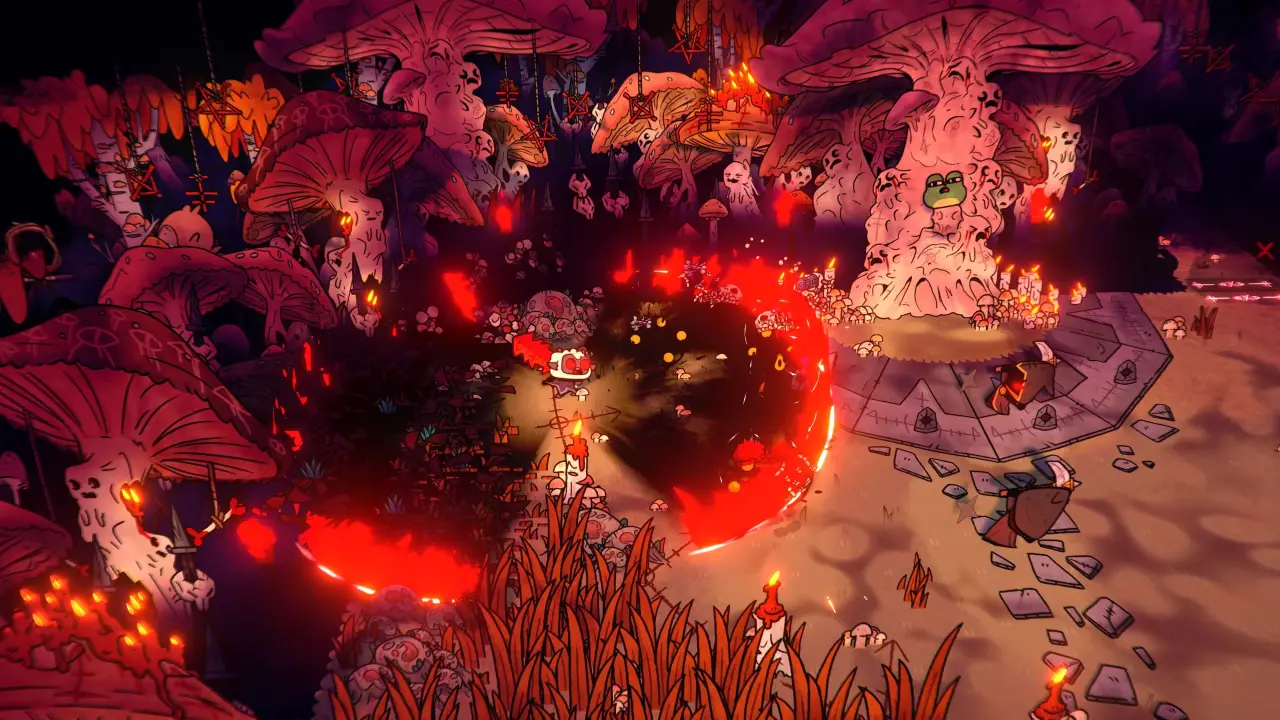
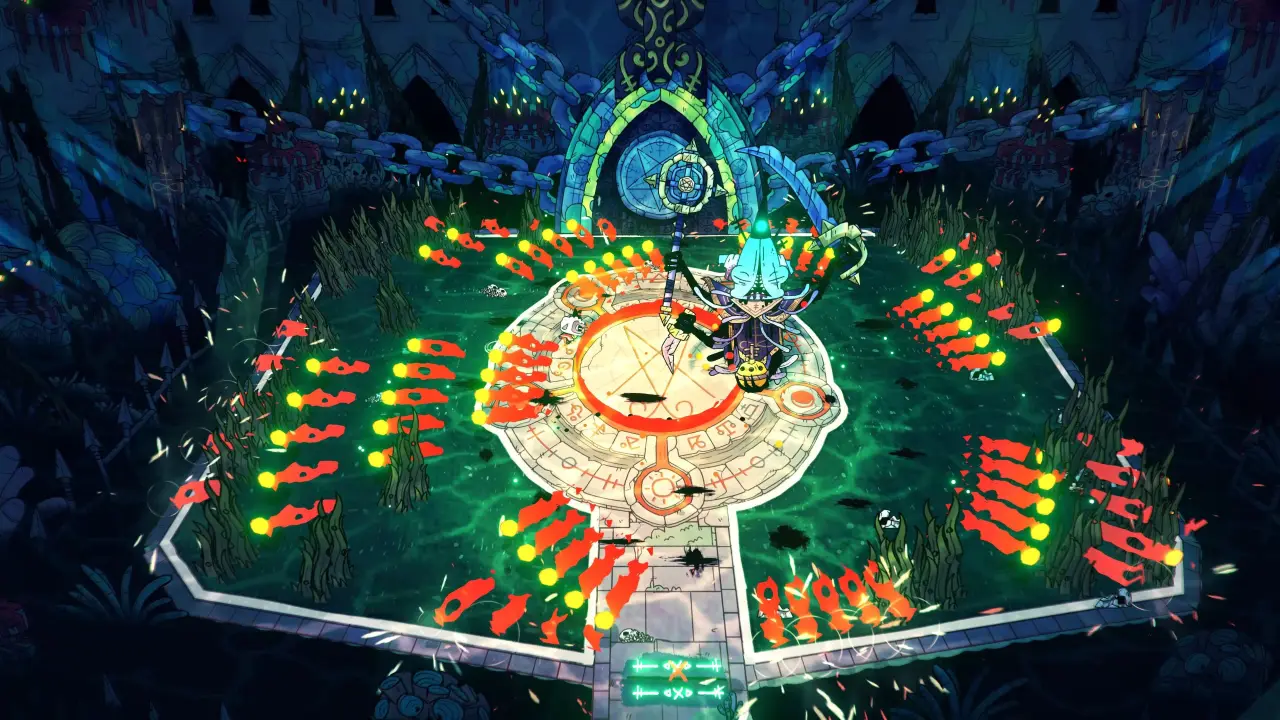
Roguelike dungeons fear one thing above all: visual fatigue. Run the same tileset forty times and even gorgeous art curdles. Cult of the Lamb sidesteps that with four stylistically distinct crusade regions, each with its own palette, creatures and foliage, from murky green thickets to pale fields of bone, so every sortie keeps a fresh visual jolt. The four bishops each anchor an uncanny theme, and the boss set-pieces crank the twisted imagination to the ceiling.
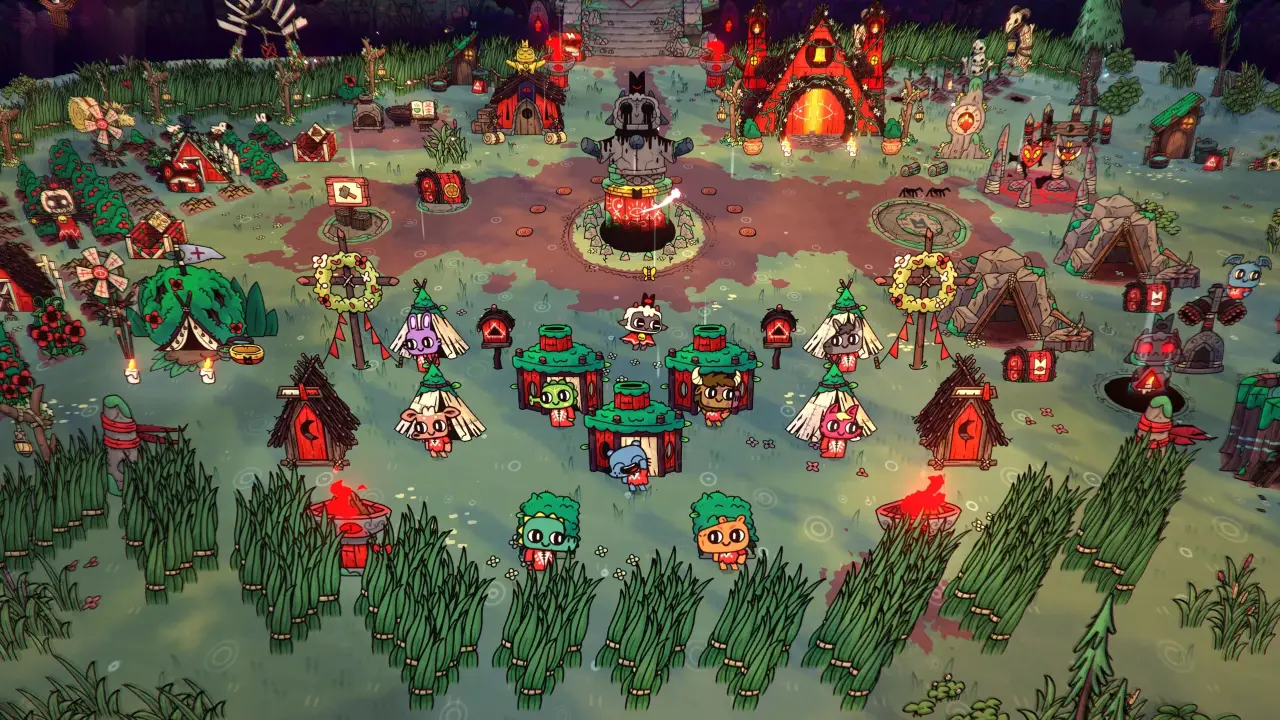
The visual growth on the base side is just as rewarding. As followers multiply and buildings unlock, your cult creeps from a scrap of wasteland into a village of real scale, every flourish placed by your own hand, and the freedom to skin buildings, recolour followers and pave the ground means no two settlements look alike.
The UI and icons carry the same hand-drawn signature, the information hierarchy is clean, and newcomers parse the rituals, doctrines and resource panels fast — accessibility is handled with care, leaning on intuitive icons over walls of text so multiple stat tracks never overwhelm even when a dozen numbers are in play at once.
On the technical front the game runs on Unity, and because the art chases style rather than photoreal detail, it holds a smooth, stable line everywhere from Switch to PS5 and PC with no steep hardware bar. That is the gift of heavily stylised art: it keeps its full charm without a top-tier card. Stack it against Hollow Knight, another ceiling for indie visuals, and the routes diverge — one is hand-painted gothic gloom, the other flat cartoon contrast — but they arrive at the same proof. Style alone can let an indie stand tall on looks, no spec-sheet arms race with the big studios required.
Combat | 9.0/10
Jugabilidad: 9/10Gameplay is the soul of Cult of the Lamb and the part nobody has managed to imitate. Its cleverness isn't in maxing out any single system. It's in locking two utterly different loops into one thing you can't quit.
Two loops, one hook: a dungeon in one hand, a cult in the other
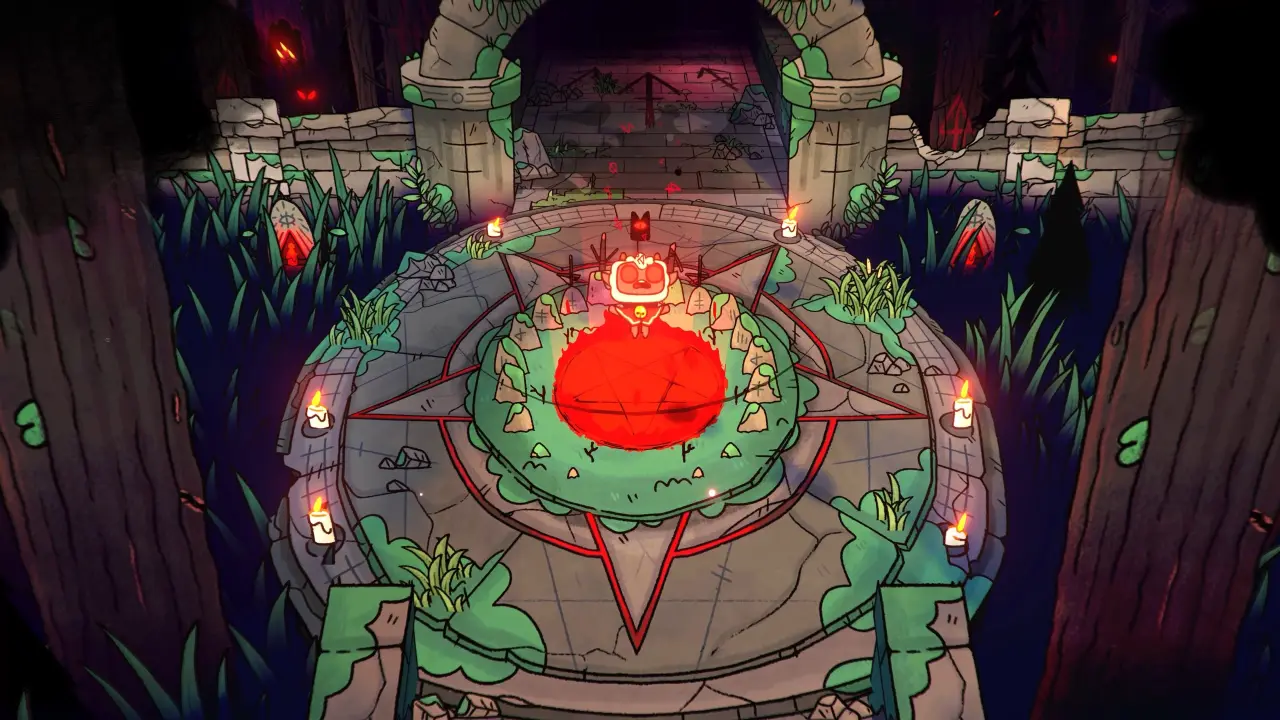
The game splits cleanly down the middle. On one side sit the Crusades — action-first roguelike runs where you steer the little lamb into procedurally built stages, hack a path through, and finally topple the bishop squatting at the end. On the other side is cult management — back at the base, you run the daily life of an entire congregation.
The trick is that these two loops don't run in parallel; they bite into each other. Resources earned and followers freed in the dungeon feed the base's growth directly, and the blessings, doctrines and upgrades unlocked at the base loop back to make your next crusade stronger. Fight a while, tend a while, resources flowing between both ends, and every "one more run" comes with a clear goal tugging you on. Players keep saying it's that back-and-forth rhythm that strands them in their chairs — and it's exactly what sets the game apart from pure roguelikes and pure management sims.
The smartest thing about this design is the way it cancels each genre's fatigue point. Pure roguelikes wear thin when the runs blur together, but here you head out already itching to see what the base will unlock next, and you come home to a stack of chores pulling at your attention, so a fresh goal is always dragging you forward. Pure management sims drift into busywork, yet the moment the daily grind starts to flatten, the dungeon's combat snaps you back into quick-twitch fun. The two loops are each other's antidote; neither lets the other go stale, and that mutual rescue is the real source of the stickiness.
A friendly combat ceiling with room to tinker
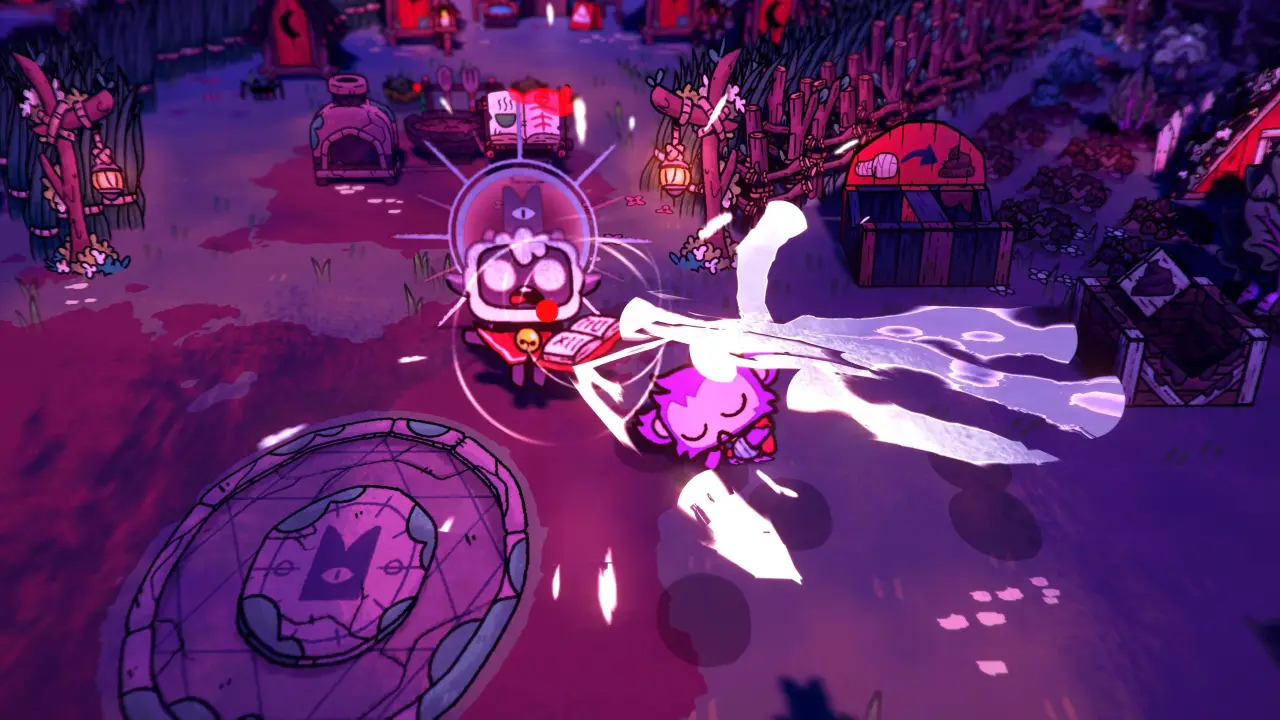
The combat side isn't the deepest in the genre, but it nails "easy to start, plenty to play with." Each dungeon dive, a tarot reader named Clauneck offers two cards to pick between, buffing your stats for that run; pair that with punchy Relic actives, the heavy attacks of four weapon classes — dagger, hammer, spear, ranged — and dozens of pickups, and no two builds come out the same. That randomised stacking lends real build variety and replay pull.
Difficulty stays generous: combat is simple, fast and challenging without ever feeling unfair, death penalties are light, and a failed run never costs you base progress, which makes it a soft landing for roguelike newcomers wary of getting walled.
At the same time, tarot synergies, the feel gap between weapons, and a Penitence hard mode leave the hardcore crowd something to chew on. The ceiling sits higher than the breezy first hour suggests, and players chasing efficient clears will find plenty of fine margins to optimise.
The weapons carry distinct hands, too — the dagger fast and nimble, the hammer slow and bullish, the spear trading on reach and arc, ranged living and dying on positioning and kiting. Bolt on different relics and cards and you spin out wholly separate styles: one player chases crit bursts, another stacks poison ticks, a third sustains through lifesteal. That elasticity — one foundation, many ways to fight — keeps the combat playable and worth poking at, a long way from mindless mashing even if it never reaches for the genre's deepest end.
Cult management: running a faith as a resource system
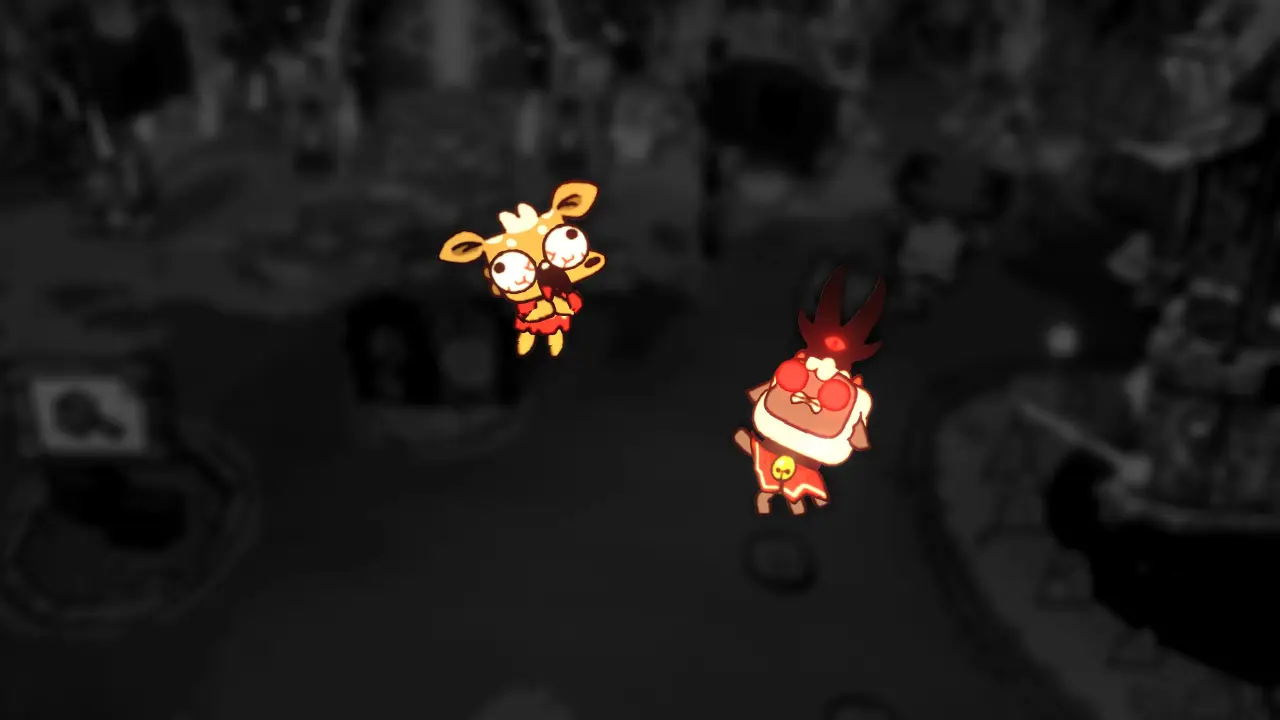
The management half stacks up plenty of systems of its own. You nurse every follower's faith, hunger, sickness and loyalty, deliver sermons to rally morale, host rituals for buffs, decree doctrines to shape the cult's character, and even choose between sacrifice and a gentle retirement when a follower grows old and frail. Farming, cooking, gathering, cleaning — the loop dices "run a cult" into a string of hands-on resource tasks.
Place it next to Hades, the pure-combat roguelike benchmark of its generation, and the difference in stance is plain. On combat purity and depth — move polish, weapon forms, build systems — Hades has the edge, but it stands on a single leg. Cult of the Lamb's combat is shallower than its rival's, yet it grows a second leg in homestead nurturing and a real emotional stake in the flock. It doesn't win on any single point of depth; it wins on the overall pull of two loops fused together — precisely the thing a single-loop game like Hades can never hand you.
Content | 6.5/10
Contenido: 6.5/10Content is the lowest-scoring line on this card, but don't read that as thin. The opposite, really — the sheer volume and the long-haul support are both rock solid. The points come off chiefly for how repetitive the management loop turns late on.
Volume and replay: a filling base game, a loop that wears well
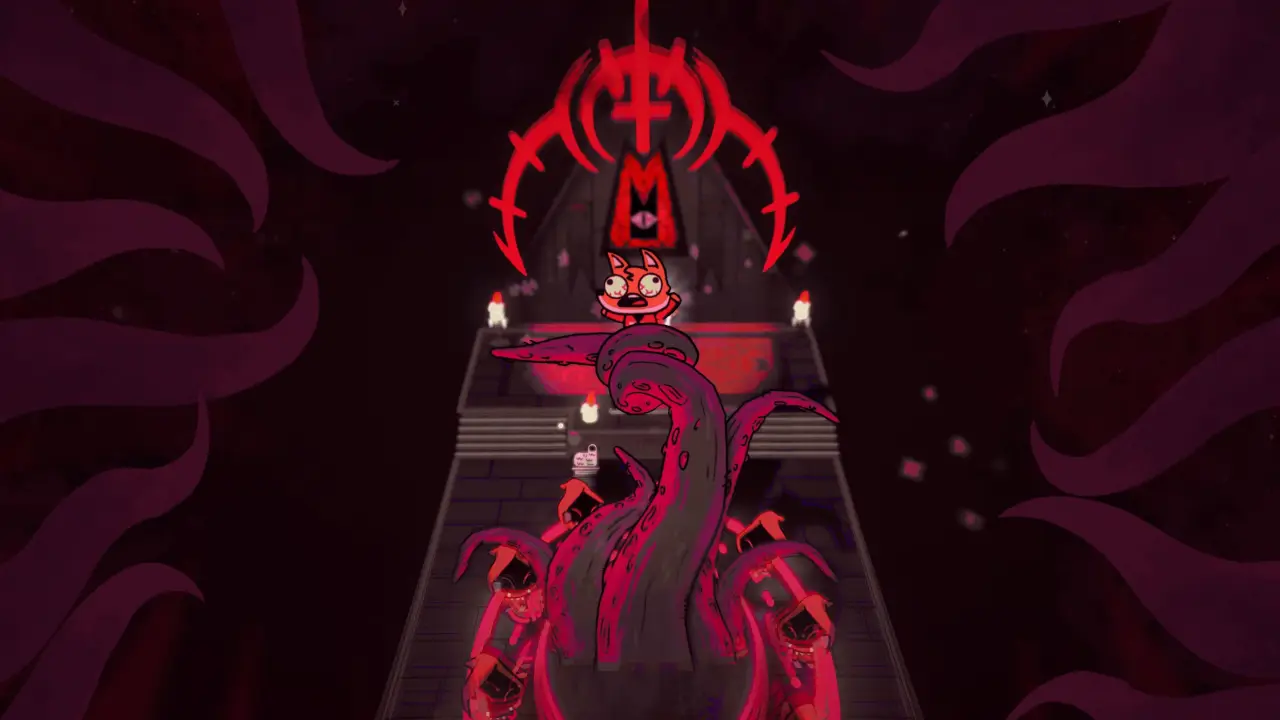
On bulk alone, the base game fills you up. A main run lands around 14 hours, and if you want to unlock every doctrine, building, follower form, weapon and tarot card, then close out the endgame story, the clock stretches comfortably to 32 hours or beyond. Four stylistically distinct crusade regions and four bishop bosses form the spine, and procedurally generated dungeon layouts plus a different tarot-and-relic mix every run keep the freshness alive for a long stretch.
For an indie at a friendly price, that density is a genuine show of good faith. It doesn't pad the clock with a bloated side-quest checklist; it leans on roguelike randomness and the interlocking loops to make you reopen the game of your own accord, again and again. That "not enormous, but every minute earns its keep" design ends up more comfortable than plenty of hundred-hour open worlds stuffed with repeat fetch errands.
Beyond the main path and the dungeons, the game scatters a heap of unlockables: dozens of follower forms and skins, full doctrine branches, all manner of buildings and decorations, hidden vignettes and Easter eggs. None of it is forced on you, but for completionists it supplies a reason to keep pouring in hours after the credits.
Add the procedurally generated stages and the fresh deck each run, and the base game alone holds far more staying power than its modest price tag would imply. Few games at this tier reward a return visit so willingly, and fewer still make that return feel like a treat rather than a chore.
Long-haul updates: four years of free drops that held the line
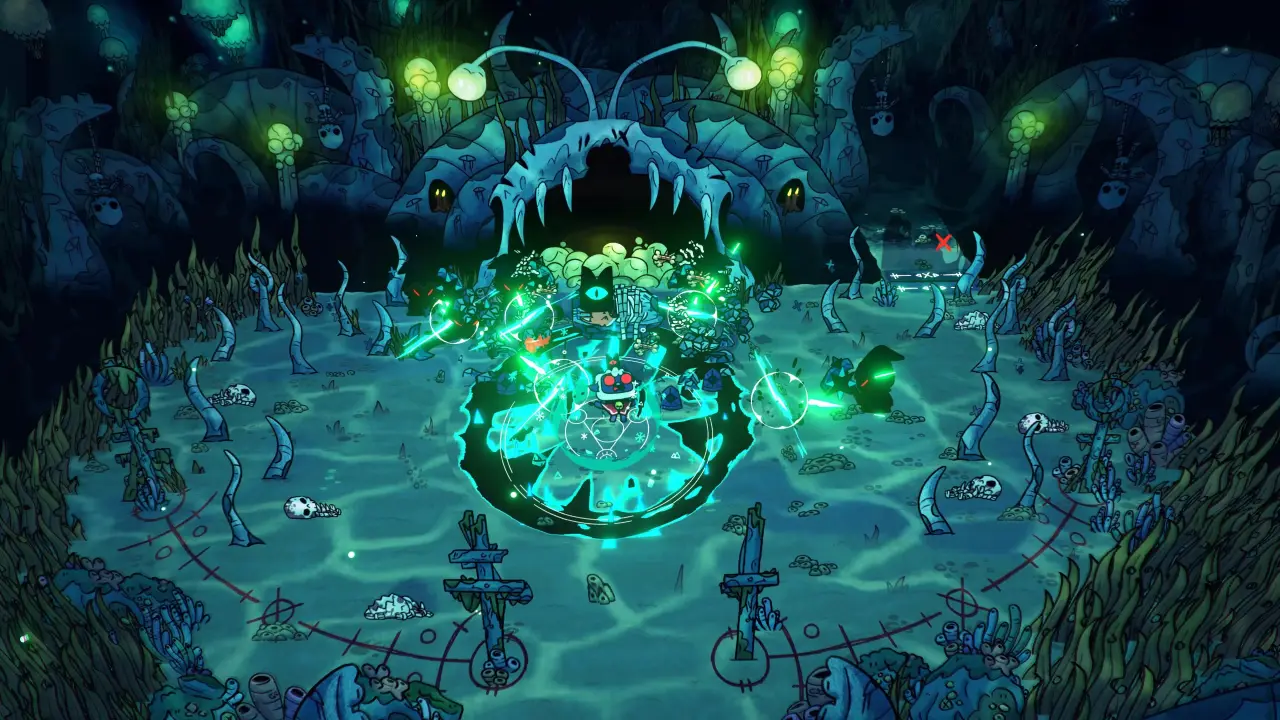
What really keeps the content reputation standing is the studio's years-long run of free major updates. In 2023, Relics of the Old Faith bolted on a fresh endgame storyline and overhauled both combat and management; early 2024's Sins of the Flesh added a sin mechanic, more doctrines, a new ranged blunderbuss and a follower breeding system; that same year, Unholy Alliance went so far as to drop in two-player local co-op, putting a second player in the Goat's hooves to crusade beside the Lamb. Nearly every major drop arrived alongside a sales milestone, and each one yanked lapsed players right back to their base.
It wasn't until Woolhaven that the studio finally shipped a paid expansion reaching beyond cosmetics, adding new story, two fresh dungeons, weather effects and animal breeding. Before that, the overwhelming majority of DLC packs — like the Cultist Pack that launched with the game at 4.99 USD, and the later Pilgrim Pack — were cosmetic affairs, so players could ride the base game alone to a complete experience. That "substance for free, charge only for frills" cadence is a big reason it ran from a million in week one to north of 4.5 million sold.
That approach — handing the real content to existing players for free, then charging only years later for an expansion with genuine weight — looks remarkably decent in an era that bolts a season pass onto launch day. It bought the game a deep well of goodwill and lasting trust. Players keep coming back, the studio earns a fair return through a paid expansion like Woolhaven, and the whole arrangement runs as a healthy virtuous circle.
So where do the marks come off? Chiefly the late-game repetition on the management side. As noted, farming, cleaning, feeding and harvesting Devotion all demand your hands; novel and fun early, but once the base balloons and the unlocks dry up, those daily chores curdle into routine busywork. Multiple outlets flagged it — the management depth can't sustain endless long-term study, and the joy clusters in the "building from nothing" phase rather than the "maintaining a mature base" one. That is this section's most honest shortcoming, and the single clearest reason the content score sits where it does rather than a notch higher.






Comentarios 0
Nos interesa tu opinión
Participa en la conversación y comparte tu opinión sobre este juego.
Aún no hay comentarios. Cuéntanos qué te parece este análisis.