






















Opening
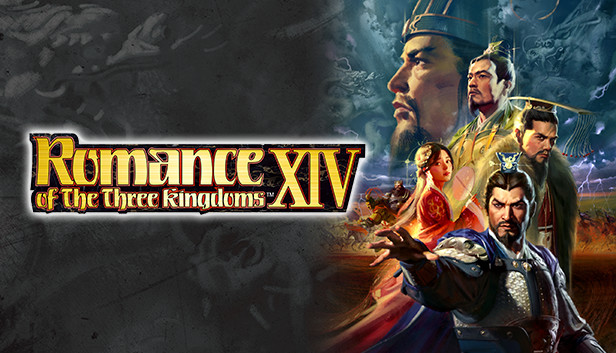
The first time my fledgling faction crawled out of the mountains and the camera finally pulled back, I stopped looking for a hero. There wasn't one. What filled the screen instead was the land itself, stained edge to edge in faction colors, and it dawned on me that the real protagonist of this entry is not any famous general at all. It is that single, unbroken grand map. The frontline supply routes run like veins, threading out from rear cities all the way to the spot where soldiers actually clash. Every march order I issued, every stronghold I linked, left a visible mark on this board.
This is not the old-school split where you click into a battle scene and then cut back to a separate overview. It is one continuous act of expansion, and somewhere between zoom levels you can watch a policy turn into an army, and an army turn into a shifting border. The pace is slow, almost plodding, yet when you sit there staring at a fragile supply line, terrified someone will sever it in the middle, the tension feels more like a real campaign than any single skirmish ever could.
Finishing one scenario is barely the beginning. The thing that actually gets under your skin is the pull to open another save, to start again and grind a whole campaign from a scattered uprising up to three powers locked in a standoff. This is a game about drawing your own version of a familiar history, one cautious territory at a time, and the question it keeps asking is simply: how far can your network of provinces really spread before someone cuts the thread?
Story | 8.0/10
Historia: 8/10There is no single story here in the way an action title hands you one. As a grand strategy sandbox, the game refuses to put a protagonist's arc in front of you and instead hands you a stage, a roster, and a clock, then steps back. The narrative you end up with is the one you author yourself, scenario by scenario, save by save. That design choice is the most important thing to understand before you judge the writing, because the game is not trying to tell you a tale. It is trying to let you re-run one.

Scenarios As History Reset Buttons
The backbone of the experience is its set of scenarios, each one a snapshot of the era at a different moment, from a chaotic peasant uprising through a period of warlords carving up the land and on to the final standoff of three settled powers. Pressing into a new scenario feels like hitting a reset button on history itself. The factions in play, their relative strength, and the survival logic you have to adopt all shift depending on where you drop in. Start as a dominant power and the campaign is about consolidation and efficient crushing; start as a tiny faction wedged between giants and every turn becomes a negotiation with extinction.
That variety is the engine that turns "play it again" into something more than a difficulty toggle. You are not replaying the same world on hard mode. You are stepping into a different starting point on the same historical timeline, and because the surrounding board is genuinely different, your opening moves, alliances, and expansion order have to be rethought from scratch. The story you generate from the uprising scenario simply cannot happen from the three-powers scenario, and that gap is where the replay value lives.
Events That Put A Face On The Numbers
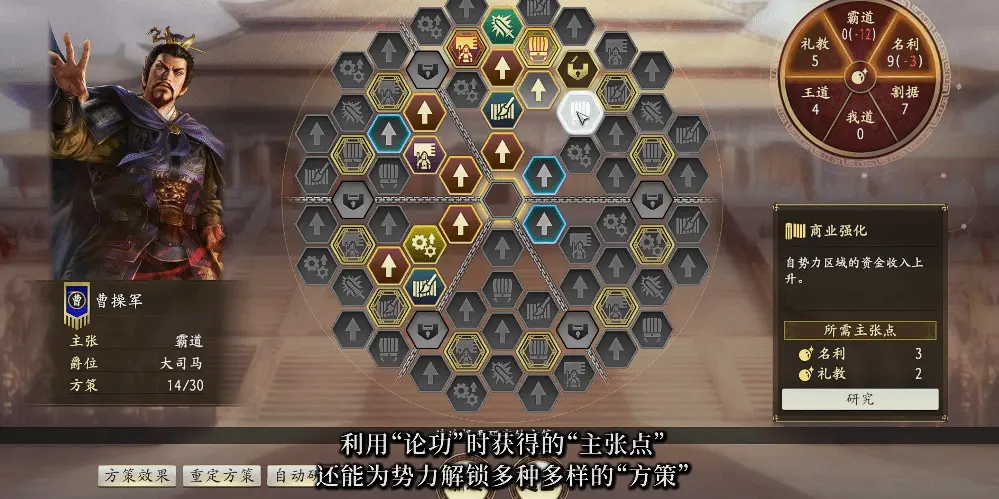
What actually makes you look up from your supply spreadsheet is the event system. Through triggered events and the bond system between generals, a great many well-known set pieces from the source material get re-staged: the friction between a lord and his retainer, the unspoken understanding between sworn brothers, the grudging mutual respect between rivals. These are broken into small, triggerable scenes that interrupt your macro management for a moment and pull you back from the cold abstraction of the map to something with a pulse.
The pacing trick this performs is subtle but effective. You might be deep in the weeds worrying about whether a frontier route can survive another season when an interaction between two of your officers fires, and for a beat the game stops being a logistics problem and becomes a human one. Then it hands control back. These side historical events appear in different combinations across different scenarios and factions, so sometimes you simply pass through a year and a familiar story beat pops up like a footnote you spotted while flipping through a history book. It does not bend the main thrust of your campaign, but it gives the background real texture and layering.
A Program Sheet, Not A Fresh Tale
The honest limitation is that none of this is new storytelling. If you already know this era inside and out, the re-enactments land more like review questions than revelations. You know how the reckless tyrant dooms himself; you know roughly who gets burned at the great river battle. The game does not offer some wild reinterpretation. It offers the chance to be there at the key moment and test whether you can change a detail or two.
So the narrative is best understood as a program sheet for a historical stage. The script and the skeleton of each beat are mostly fixed; what you control is who steps on stage and when. The pleasure is in the directing, in the scheduling of these characters across your campaign, rather than in being surprised by a brand-new plot. Treated as a player-authored history rather than a scripted drama, the writing does exactly what a sandbox of this kind needs it to do, and treated as conventional storytelling, it will leave a story-first player cold. Which camp you fall into decides almost everything about how this dimension reads.
Audio | 7.5/10
Sonido: 7.5/10The sound design here belongs to a particular category: the kind you stop noticing until you mute it, at which point the whole experience suddenly feels hollow. It is functional and atmospheric rather than showy, and for a game you are expected to live inside for dozens of hours, that turns out to be the right priority more often than not.

A Steady Backdrop For Long Sessions
In the domestic management screens, the score leans on a traditional regional palette. The melodies are not especially catchy, but they carry a stable, reliable pulse, like a small speaker left playing in an office. It never steals the scene, yet it keeps you from fatiguing during the long stretches of dispatching and assigning officers that make up so much of the early and mid game. When you are doing the unglamorous work of slotting people into posts and balancing your interior, that low, consistent rhythm is exactly what a soundtrack should be doing, and the game understands that restraint is a feature, not a shortfall.
When you move into combat and marching scenes, the music tightens its tempo appropriately. The percussion gets more pronounced, the strings pull taut. It does not try to detonate into a cinematic, full-orchestra spectacle. Instead it performs a kind of mode switch, a reminder that you have crossed from peacetime building into wartime. That self-control suits the cool, rational core of the design. The game is not trying to blow your emotions wide open; it just wants to help you feel the difference between "I am farming provinces right now" and "I am on campaign right now," and the audio draws that line cleanly.
Sound Effects That Give The Map A Voice
If anything, the sound effects carry more weight than the music. The orderly tramp of a marching column, the dull thud of a wall taking a hit during a siege, the clatter of blades meeting on an open field: all of it tells you that this giant map is not just a set of colored borders but a place with a voice. The effects do real informational work, not just decorative work.
That payoff is sharpest during multi-army standoffs, when several columns are tugging at each other's supply routes at once. The overlapping rise and fall of those noises makes you instinctively zoom in to confirm what is happening, like reading battle reports in a noisy command tent. The audio becomes part of how you parse the board, prompting you to check a contested corner you might otherwise have missed. It is a subtle form of feedback, but a genuinely useful one, because in a game this dense with simultaneous activity the ear can flag a developing situation before your eye has finished sweeping the map. Over time you learn to trust those cues, and the soundscape starts to function almost like a secondary minimap, one you listen to rather than watch.
Reliable, Not Remarkable
The shortfall is real but mild. The overall audio design plays it safe. There is no standout track you would hunt down to add to a playlist, nothing that climbs to that "you have to hear this" tier. Over a long campaign the combat music can blur into sameness, and you will struggle to remember which cue went with which battle. But for a strategy title built to be played for the long haul, pleasant, durable, and unobtrusive matters more than a single explosive showpiece, and on that test this entry comfortably passes. It will not win an awards ceremony, yet it will never grate across a hundred hours, which is the more useful achievement. The right way to frame it is that the audio is a tool, not a trophy. It is tuned to support marathon sessions, to keep you oriented between peacetime and active campaigning, and to give the map a sense of physical presence, and it does all three of those jobs without ever demanding that you notice it. A flashier score might have impressed you on day one and exhausted you by day ten; this one was clearly built to be lived with, and that priority is exactly right for the genre it serves.
Visuals | 6.5/10
Gráficos: 6.5/10The visuals here feel like the developer set its own ceiling and decided "good enough" was the goal. The top-down grand map and the officer portraits carry forward the series' traditional look, and your first reaction on opening it is neither awe nor disgust. It is recognition: ah, this is what this series looks like. For a long-running franchise that is partly the point, but it also means the presentation rarely surprises you.

Information Design That Serves Strategy
Where the art genuinely earns its keep is in legibility. The grand map's information design is clean. Different faction colors split the territory crisply, and terrain, strongholds, and roads all read at a glance. For a strategy game that hangs everything on supply routes and connectivity, that clarity matters more than any flashy lighting effect could. When the whole campaign depends on whether you can trace a route from a rear city to a frontier post, a map you can actually read is not a cosmetic nicety. It is load-bearing.
Zoom the map and the view slides from the entire realm down to some narrow valley pass, and you can quickly grasp where the choke points are and where it makes sense to mass troops. That "easy to read" quality is, in a real sense, part of the strategy experience itself. The game is asking you to think in terms of geography and logistics, and the visual language is tuned so that the geography speaks plainly. It is a quiet kind of good design, the sort you only appreciate when you realize how rarely you are confused about what you are looking at.
Where The Presentation Falls Short
The trouble shows up in battlefield presentation and effects. The combat visuals are simple. The feedback when units collide or a tactic fires off is conservative, and it lacks the kind of on-screen drama that makes your pulse jump. You know you won because the numbers and the bars moved, not because the screen staged a clash you could not look away from. A fire tactic catching a forest and the blaze spreading does communicate intent, but it never reaches the "whoa, let me screenshot that" threshold. The system tells you the outcome; it rarely sells you the spectacle.
The portrait work is stable but light on surprises, leaning toward a safe house style. For longtime fans that immediate familiarity is a kind of comfort, the visual equivalent of a worn-in chair. For newcomers, especially anyone used to the more textured models and lighting of a peer like the real-time tactical take on this same era, it will read as old-fashioned. The animation budget shows its limits too. Units shuffle rather than surge, and the camera rarely frames a moment in a way that makes you want to stop and stare. None of this breaks anything, but it does mean the screen is constantly telling you that this is a systems game first and a visual one a distant second, and players who came for a feast for the eyes will feel that gap immediately.
A Visual System That Does Its Job
The reason the presentation does not lose more ground is that this visual system, dated as it is, at least serves the gameplay's needs. It does not chase prettiness it cannot deliver, and it never gets in the way of reading the board. What it lacks is a generational upgrade, a leap forward in fidelity that would let it stand next to its peers on looks rather than just on function. As it stands, the graphics are competent and purposeful, which keeps the score respectable, but they are clearly the dimension most in need of a refresh. You play this game in spite of how it looks, not because of it, and that gap is the honest summary. It is worth being precise about why that still works out. Because the strategy layer leans so heavily on reading geography, the legibility of the map ends up doing more for the experience than fidelity ever could. A prettier game that buried its choke points under effects would actually play worse. So the visuals land in an odd place: unremarkable to look at, yet genuinely well suited to the thinking the game asks of you. If the next entry can keep that clarity while finally modernizing the battle presentation and the portrait fidelity, this dimension could jump considerably. For now it is the part of the package you forgive rather than the part you praise, and the score reflects exactly that balance.
Combat | 8.0/10
Jugabilidad: 8/10The integrated grand map is the design worth savoring most in this entry, and it is the thing that makes the whole package cohere. You are no longer hopping between menus and disconnected screens. You do everything on one continuous geographic board: laying roads, taking points, linking cities, and cutting supply. That single-surface approach is not a small convenience. It changes the texture of every decision, because nothing happens in an abstract elsewhere. It all happens on the same map you are looking at.

Logistics As The Real Frontline
The standout idea is that the supply line, the route dragged from a rear city out to a frontier stronghold, is itself a vulnerability. Let an opponent sever it in the middle and an entire campaign can flip in an instant. That "logistics is the frontline" concept feels far closer to a real campaign than a simple contest of troop counts. You stop thinking purely about how many soldiers you have and start thinking about whether you can keep them fed and connected, which is a much more interesting question.
Taking points feeds directly into this. Capturing a stronghold immediately colors it in your faction's hue, so the expansion of your territory control reads as a visible spread across the board. You can see power becoming geography in real time. Combine that with the connectivity rules and you get a game where holding a line is about the network, not just the numbers, and where a clever cut behind enemy positions can be worth more than a head-on push. The board is always telling you a story about reach and fragility if you know how to read it. The best moments come when you spot that a single contested junction quietly props up your opponent's entire forward position, and you realize that taking it does not just gain ground, it collapses a whole section of their map without a direct confrontation. That kind of leverage, where geography does the work for you, is the heart of what makes the system sing.
A Staff Officer's Campaign, Not A Soldier's
Combat itself sits at the level of numbers and orders rather than mechanical thrill. You are more a staff officer holding a pointer than a general charging in person. When several columns meet on an open plain, what you watch is how the arrows and routes intersect: who is swinging around the flank, who is pinning, who is cutting the other side's supply. The satisfaction of "I calculated that correctly" replaces the hand-feel rush of a traditional action game, and for the right player that trade is deeply rewarding.
The slow pace is the cost of admission. A lot of the time you are not watching a battle play out, you are staring at numbers, ordering paths, and counting turns, a bit like playing an extremely slow game of chess. People who love long-horizon management settle in happily, treating the board several turns out as a math problem to solve, then enjoying the smug payoff of "I knew you would move there." People who do not will find it dry, and a few hours in they can feel buried under march orders and supply management.
High Patience, High Reward
The honest catch is the steep demand on patience. Early on you are still assembling the skeleton of your faction; it is only mid-campaign that strategic results start to surface; and the late game can slide into a monotonous snowball where you simply crush. The game never juices you with high-intensity combat presentation. It hides the win in a setup you made dozens of turns earlier, which is genuinely clever and genuinely selective about who it is for.
Set against a peer like the real-time tactical take on this same era, the contrast is clear. That rival leans on the immediate thrill of battles and unit modeling, while this entry leans on the density of long-line strategy, the supply math, and the slow accretion of a network. Neither is wrong, but if what you want is a board you can puzzle over for a hundred hours rather than a battle you can feel in your hands, this is the one that delivers, and it does so with a confidence in its own slow rhythm that is rare.
Content | 8.5/10
Contenido: 8.5/10The most easily overlooked strength of this game is sheer volume. It is not just that the map is large. It is that the content stretches from a peasant uprising through a period of fragmented warlords all the way to three settled powers, with a handful of classic scenarios acting like repeated history-reset buttons. Press one and the balance of factions you face is different every time. That breadth is the foundation everything else stands on, and it is the reason a single purchase can occupy a hard drive for months.

Scenarios And Starting Points
You can play a dominant power, or you can try to survive in the cracks as a minor faction, and the survival logic of each opening is genuinely distinct. This is what makes "one more run" mean something beyond bumping the difficulty. It means changing the starting point of your whole world. A run begun from the uprising scenario asks completely different questions than one begun from the late standoff, because the map around you, the threats nearest you, and the alliances available to you are all reshuffled.
That structural variety is what keeps the sandbox from collapsing into a single optimal path. Because each scenario hands you a different board state, the opening dozen turns demand fresh planning, and the campaign that unspools from there carries its own shape. The game is effectively a library of historical what-ifs, and you are invited to test your own theory of how this era could have gone, over and over, from angles the source material never explored. That library framing is not marketing fluff. The sheer number of valid entry points means two players can describe wildly different campaigns from the same box, and a single player can keep finding starting positions they have not yet wrung dry. It is breadth that converts directly into hours.
A Roster You Can Scroll Until Your Hand Aches
The officer count is the kind of number that makes your hand ache from scrolling the list. The famous names are all present and accounted for, but the more important point is that a huge cast of minor figures earn a place too. Even characters who were bit players in the histories can become a critical link on a supply chain here. You start arranging them in your head: this one is suited to campaigning, that one belongs buried in an interior administrative post. Over time, every name stops being a card and becomes a gear in your faction's machine.
That depth feeds the strategy directly. Because so many officers carry usable stat profiles, the act of staffing your faction is itself a puzzle, and the wealth of bodies means you are rarely starved for options even when you spread thin. It is content that does real mechanical work rather than padding a roster screen for show, and it rewards players who enjoy optimizing a deep bench of specialists. The roster also deepens the attachment you form to a campaign, because over dozens of turns these names accumulate history with you, and a minor officer you happened to station on a vital route can end up feeling more important to your run than any marquee figure on the list.
A Sandbox Platform, With A Catch
The DLC and free updates keep stuffing more into the machine: more scenarios, more officers, new elements. They push the game toward being a strategy sandbox platform rather than a one-and-done purchase, and as a thirtieth-anniversary mainline entry in the series, that sense of accumulated heft feels earned. The breadth is part of the franchise's identity, not a bolt-on.
The catch is that quantity does not always equal variety. Not every change produces a meaningfully different experience, and by the mid-to-late game you can hit a "same configuration, just a different starting point" sense of deja vu. The repetition is not fatal, but it does make you pickier about which scenario to load. If you already enjoy taking the same system apart repeatedly, this can sustain a very long play cycle; if you crave a fresh experience every session, this pile-it-on approach can wear a little thin. Knowing which of those players you are tells you exactly how much mileage the content will give you. The fairest way to put it is that the volume is real and the depth is real, but neither guarantees novelty on its own, and the player who thrives here is the one who treats mastery of a familiar system as the reward rather than waiting for the system itself to keep surprising them.

Comentarios 0
Nos interesa tu opinión
¡Bienvenido! Cuéntanos qué te parece este juego: ser el primero puede tener premio.
Aún no hay comentarios. Cuéntanos qué te parece este análisis.