

























Opening
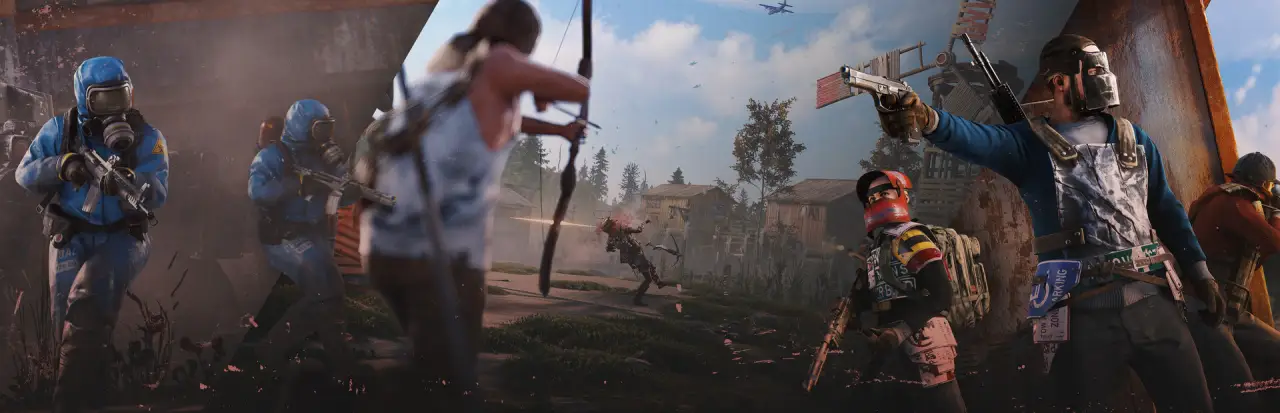
Rust hands you a rock, strips you naked, and walks away. There is no cutscene, no quest log, no NPC jogging over to tell you the world needs saving. You are standing on a stranger's beach, and so is everyone else — equally broke, equally desperate, and entirely capable of caving your skull in with the same rock you just picked up. That is the whole briefing. Survive, or don't.
The critics were never sold. Across 29 reviews, OpenCritic parks it in the "Fair" tier with a top-critic average of 66.8; Metacritic lands at 69. And yet this supposedly middling game has piled up 1.14 million Steam reviews at 87% positive, crossed 20 million copies sold, and — eleven full years after its early-access launch — set an all-time concurrent peak of 262,284 players in January 2025, on its way past two billion dollars in lifetime revenue.
That gap is the whole story. The press scored a snapshot of a rough, hostile, cheater-ridden launch build. Twenty million players are voting on something else entirely: a decade of relentless evolution, and the unrepeatable human drama every single server grows on its own. The question this review answers is simple — how does a game with no story keep this many people hooked for this long.
Story | 7.5/10
Historia: 7.5/10Rust has no story. Rust is nothing but story. Both sentences are true, and the contradiction is the most interesting thing about it. There is no writer's room, no scripted arc, not a single line of pre-written dialogue — and yet the tales that come out of this game stick harder than most linear narratives, because nobody wrote them. A room full of strangers performed them, live, while you watched and bled.

Emergent drama: every server authors its own double-crosses
The narrative engine here is pure emergence. Facepunch handed you a ruleset and a map, dropped a hundred strangers onto one server, and stepped back to see what grew. Alliances, double-crosses, negotiations, ambushes, revenge — none of it sits in a quest list. Each beat is a real person making a real choice based on real self-interest, and that is exactly why each one lands with weight a designer could never script.
The most retold Rust stories are almost always the same shape: a partnership that held for days, gutted by a single double-cross on the richest night of the wipe. You trusted a stranger, you built a fortress together, and on the evening your vault was fattest he cleaned it out and walked into the dark without looking back. No screenwriter can manufacture that particular flavor of being had — and no scripted game can match the suspense of never knowing whether the next person at the crossroads wants to team up or wants your kidneys. That dread runs under every minute you spend online. It also means trust in Rust is a currency with a real exchange rate: extend it too freely and you get robbed, hoard it too tightly and you never build anything bigger than a one-tile shack. The game quietly turns you into a reader of people, weighing tone of voice and body language and the small tells of intent, because your survival depends on guessing right about a stranger. That is a kind of gameplay no dialogue tree has ever simulated.
The underdog flip is the genre's best scene, and you wrote it
What gets the blood up in Rust is rarely the big clan steamrolling everyone. It is the reversal. A lone wolf scouts a dominant group for days — learns their base layout, clocks when they log off, maps their patrols — and then, at the one moment they relax, kicks the whole tyranny over. That story plays out on a different server every month, and it works because the "protagonist halo" belongs to the player, not the script.
The flip only moves you because it costs you. To topple a clan you might lurk for days, eat a dozen failures, gamble everything you scraped together. When it finally lands, the high is something no scripted victory delivers, because the price was real. And the clan you humbled remembers your name — next wipe, that's a fresh grudge, a new chapter. The fiction keeps braiding itself between players, link after link, and never repeats. There is no save file to reload, no checkpoint to soften the loss, which is precisely what gives every gamble its teeth. You commit, and the world commits back, with interest.
Against ARK, Rust pushes player-versus-player to its sharpest edge
Drop Rust into the survival-sandbox lane and its narrative identity sharpens. ARK: Survival Evolved fills its hours with tamed dinosaurs and a sprawling prehistoric ecosystem — its pleasures lean on man-versus-environment, the rush of breaking a T. rex. But for the raw intensity of one human deceiving another, ARK is nowhere near Rust.

Rust cuts almost all of the man-versus-environment romance and shoves every chip onto the man-versus-man square. That bet makes its social warfare the sharpest, cruelest, most addictive in the genre, and it is the exact trade a tamer game would never dare to make. The cost is worth stating plainly, because it is real: if you came to Rust for a written, beginning-middle-end story, for crafted cutscenes and character arcs, you will find an empty field and a crowd of strangers also trying to live. There is no narrator here, no quest marker pointing at the next emotional beat — only the beats you and the people around you happen to author. Rust's story is not something you sit and watch. It is something you walk out and perform.
Audio | 6.5/10
Sonido: 6.5/10Rust's audio takes the opposite road from every prestige narrative game on the shelf. There is no orchestral swell cued to a tearjerker beat, because there is no beat to cue. The sound here is not built to move you; it is built to keep you alive. In a game where information is survival, your ears are the deadliest tool you own.

A score that whispers, because the wasteland is supposed to feel lonely
Rust does have an official soundtrack — 29 tracks, over an hour of ambient music, written by Alex Rehberg for Facepunch and sold as a standalone DLC on Steam. Go in expecting cinematic peaks and valleys and you have misread the assignment entirely. The album is deliberately spare: long stretches of wind, a distant drone, melody so thin you half-miss it. It does not perform. It just sits underneath, holding up that specific feeling of standing naked on an unfamiliar shore with a rock in your fist. Trudging a snow biome alone, unsure whether the next ridge hides an ambush, that emptiness fits the moment better than any rousing theme could.
There is a kind of self-awareness in the restraint. Rust knows most of its players are on voice with squadmates or straining to hear footsteps, and that a busy backing track would only smother the sounds that actually matter. So it steps back, hands the soundstage to you and the environment, and offers a melody only in the quiet, solitary moments when nobody is hunting you. That deference is its own form of respect for the experience.
Functional sound is where life and death are actually decided
If the music is the least important part of Rust's audio, the sound effects are the most. Reading the soundscape is a core combat skill here — one that often calls the winner before a single bullet is aimed.
A shot cracking across a valley tells you a fight is happening over there, and whether to flank it or skim the loot. The dull thud of an explosive against stone means someone is raiding, and your base might be on tonight's list. The string of footfalls circling behind you might be the last warning you get before you're cleaned out. In Rust, sound is pure intelligence; every effect maps to a piece of battlefield information.
It goes deeper. The ping of a tool cupboard being chewed through, a door swinging open, the rotor wash of a patrol aircraft growing from a distant hum into a roar overhead — together they weave an auditory intel network. Veterans play headphones-on and rebuild the world in their heads from sound alone: who is near, from which bearing, carrying what. That sound-first information layer is a load-bearing pillar of Rust's hardcore depth, not a garnish.
And so the score earns a modest mark, not because it is bad but because it offers little in the way of melody or sonic spectacle — no theme you'll loop on its own, no goosebump crescendo. There is something almost honest about a world that refuses to score your defeats; the cruelty here is cold and unsentimental, and music that stayed silent through your worst nights only sharpens how real it feels. The sound is a survival tool, not an artifact to admire — correct for the game, but never the stuff of an award-winning soundtrack.
Visuals | 6.0/10
Gráficos: 6/10If you came for the visuals, Rust will let you down — and that is, oddly, by design. This is not a card to show off your GPU. Its picture serves a different hierarchy: readability, performance, and that grime-caked sense of a world gone to ruin. Confuse "low graphics score" with "ugly," though, and you have missed the point.

Rust aesthetics, where decay is welded into every panel
Rust runs on Unity in a grounded, semi-realistic style, and its maps are procedurally generated — every server seed mixes forest, desert, snow, swamp and coastline into a new land, so each post-wipe morning greets you with a slightly different world. What truly stamps its visual identity is the rust itself, the very thing the game is named after: corroded metal, scavenged rags, weapons hammered out of scrap. The whole place reeks of survivors scratching out a living in the wreckage of a collapsed industrial age. It isn't lavish, but it is ruthlessly consistent and deeply convincing, and from the first glance it sells you on a harsh, unfair place to stay alive.
That filth is a choice, not laziness. The patchwork shirt on your back and the pipe-and-wood contraption in your hands keep reminding you that you are bootstrapping on a barren wasteland where nothing is clean or pre-made. The day you finally gather enough to trade rags for a full set of metal armor, that visual upgrade is a tangible reward in itself.
Landmarks you can name from the skyline
For all its coarseness, Rust's landmark design is genuinely sharp, and every one of them is instantly legible. The rust-red Oil Rig out at sea, the heavily guarded Launch Site, the no-fire safety of the Outpost — most players can ID them from the horizon. They are not just scenery; they are the navigation coordinates and mental anchors of a map with no quest arrows. "Going to Oil for the good loot," "meeting at Outpost to trade" — that shared shorthand rests on each landmark's distinct visual personality. Better still, a monument's visual intensity usually scales with its danger: the more imposing the structure, the richer the loot and the bloodier the firefight, so a glance at the silhouette already tells you whether the trip is worth it. Here the art is quietly doing the work of game design. A first-timer who has never read a wiki can still infer the rules of the world just by looking at it — the safe places look orderly, the deadly places look fortified and grim. That kind of legible visual language is harder to pull off than a pretty skybox, and Rust nails it.
No spectacle, because clarity beats fidelity in a PvP game
To understand Rust's visual trade-offs, remember it is a fiercely competitive PvP game. Spotting the tiny silhouette in the grass three hundred meters out — friend or foe — matters far more than how gorgeous the subsurface scattering on that grass is. So Rust spends its budget on legibility: clean player shapes, lighting that doesn't sabotage your read, stable distance rendering. It declined the effects-stacking route on purpose, because for a game built on reaction and intel, a flashy picture is a liability. A competitive game's visuals exist to serve fairness and clarity; if piling on effects let some rigs see what others can't, that breaks the contest. Rust gets this — it keeps things plain so everyone fights under the same conditions, which is exactly right for the people who actually care about the duel. The screenshots may never win a beauty contest, but the game they belong to was never trying to enter one. It is competing for your reflexes and your read of a battlefield, and on that scoreboard the restraint is a feature, not a failure.
Optimization is a chronic wound, and console is its own story
Honesty time: Rust's visuals carry real shortfalls, optimization chief among them. It is not kind to hardware, and by mid-wipe — when servers sprout mega-bases bristling with two hundred turrets — the frame rate can be dragged down to a brutal 15 FPS. That instability is a long-running complaint, tied directly to base scale and server population, and it is partly the price of Rust's own freedom: because it lets players stack near-limitless structures and circuitry, the rendering load spirals as their creativity runs wild. On platforms, the 2021 PS4 and Xbox One ports handled by Double Eleven are a leaner, separately-run build that trails the PC version on updates. They let console players taste the core, but for the most complete, current and optimized picture, PC remains the only real answer. None of this means the engine is incapable — a fresh-wiped server on capable hardware looks perfectly serviceable, even atmospheric at dusk. The trouble is that Rust's own freedom is its worst performance enemy, and there is no patch that fully tames a sandbox players are determined to overbuild. You are watching the cost of unbounded creativity rendered, frame-droppingly, in real time.
Combat | 9.0/10
Jugabilidad: 9/10Gameplay is where Rust earns its halo, and the 9 on the board. Building, raiding, the tech tree, the electricity system — these mechanics mesh into the purest, most hardcore multiplayer PvP survival sandbox on the market. The barrier to entry is brutal, but clear it and you find a bottomless vault of strategy waiting underneath.

Building and raiding: half engineering, half gambling
Plenty of people assume building in Rust means slapping together a house to live in. That sells it short. In skilled hands, building is the deepest hidden system in the game, and it chases two virtues — raid resistance and theft resistance — not good looks. You honeycomb your walls in layers to waste an attacker's rockets, you snake corridors and traps to bleed their time, you lock your turf with a tool cupboard. On the other side stands the raid: C4, rockets and satchels peeling your walls open one by one, aimed straight at the vault. A well-engineered veteran base can demand dozens of rockets or a dozen-plus C4 to crack, and behind that wall is a near-mathematical calculation by both sides — is this base worth blowing, will the loot inside clear the cost? That push and pull lifts Rust's building far past "make a house"; it becomes a discipline of engineering crossed with a discipline of betting. Whole communities have grown up around base design, trading blueprints for layouts that maximize wasted explosives per loot defended. It is a metagame within the game, and at the top end it looks less like decorating and more like fortification architecture, complete with its own jargon, schools of thought, and rivalries between designers.
A scrap tech tree that pays you back for a fortnight straight
Holding all that conflict up is a long, steep growth curve. Players joke that Rust's tech tree runs "from the stone age to modern warfare." You start with a stone hatchet and pick, knock together a one-tile shack, and as the scrap piles up you research or buy higher-tier blueprints — bows, then basic ranged tools, automatic gear, and finally top-tier ranged kit and the air superiority of an armed aircraft. The magic is in the pacing: it slices a fortnight-long wipe into countless micro-goals, and every scrap milestone, every new piece of kit, is a concrete jolt of reward. There is always a next thing to build, a next rung to climb, and that unbroken pull is a core reason a single Rust wipe is so hard to put down. The curve also keeps power relative rather than absolute: because everyone is climbing the same ladder from the same rock, a loadout that felt godlike on day two is just standard kit by day six. That constant re-leveling keeps the arms race tense from the first hour to the last, and stops any single milestone from feeling like the end of progression.
Electricity turns walls into a thinking defense

Late game, Rust pulls out an electricity system that makes engineering-minded players light up. Wind turbines, solar panels, batteries, a pile of logic gates and switches — and suddenly you are wiring auto-turret nests, automatic doors, timed lighting, even crude logic circuits. It shoves base defense out of the primitive "stack more walls" era and into smart defense: a top base no longer just eats explosives, it shoots back, alarms, and locks itself down on its own. Crucially, this is where the high-skill world visibly stratifies. A casual might wire up a couple of lights forever; a hardcore player builds sensor traps, timed turret volleys, even automated sorting lines. That "the water is as deep as you care to dig" design is the mark of a great sandbox — it never forces you to learn, but the moment you choose to, the payoff is always waiting, and a base armed to the teeth with electricity can make attackers pay dearly. Some players treat the wiring as a puzzle game bolted onto the survival game, spending whole evenings on a circuit nobody asked for, just because the system is expressive enough to reward the obsession. It is the kind of optional depth that quietly separates the people who play Rust from the people who live in it.
A vicious onboarding curve, and the sharpest player-versus-player blade around
The flip side of all that depth, said plainly, is an onboarding curve that is merciless to newcomers. You spawn naked, a passing veteran can club you dead at any second, and watching a night of grinding get raided to zero is just Tuesday. Community wisdom is blunt: don't dive straight into high-intensity official servers — roll with friends, join a group, or warm up on PvE servers, low-pop servers, or a streamer's peace event before going in raw. Set against the field, the identity gets even clearer. ARK: Survival Evolved spreads its fun across taming and a huge PvE ecosystem; DayZ runs slower and bleaker on simulationist zombie dread; Rust shoves nearly all its chips onto player-versus-player building and warfare — faster, nastier, purer. It is not the friendliest survival game alive, but for the intensity and depth of human-versus-human conflict, it is the sharpest blade in the lane. The cruelty of the curve and the depth of the systems are not two separate facts; they are the same fact viewed from opposite ends. A game this punishing to start is exactly the game that can reward mastery this richly, because the stakes are never artificially softened. You earn everything, and that is the entire point.
Content | 8.5/10
Contenido: 8.5/10Measuring Rust's content with a single-player ruler is a category error. There is no thirty-hour campaign, no checklist of side quests to tick off. Its content is a different animal — a content perpetual-motion machine that never stops, resets monthly, and is refueled forever by real people.

Season-based supply, so there is always a fresh start
At its core, Rust's content is an endless season cycle. On the first Thursday of every month, Facepunch force-wipes every official server and ships that month's update in the same stroke — the wipe clears everyone's structures and blueprints and declares a new season open. You never "finish" Rust, because every month hands you a brand-new, level-for-everyone game.
That supply model is fundamentally unlike a traditional title. Buy a single-player blockbuster and you consume a fixed lump of content; play Rust and you consume a continuously regenerating experience. Its "content volume" isn't a static number but a timeline that runs as long as the servers stay lit. It is why Rust players routinely sink thousands of hours into one game: those hours don't buy repetition, they buy season after season of fresh opponents, fresh power balances, fresh drama. Facepunch's own figures bear it out — 5.5 million unique players in 2024 alone, with the community logging over 40 million hours. Crucially, the wipe is not just a reset button; it is a narrative device. It guarantees that the strongest clan's reign has an expiry date, that the new player has a real window, and that nobody's lead becomes permanent. That enforced impermanence is what keeps the content feeling generous instead of grindy — you are never preserving a stale empire, you are always writing the next one.
A decade of monthly updates is the engine of longevity
Propping up the season cycle is Facepunch's metronomic update cadence. The studio has updated Rust for over a decade, averaging more than one update a month since the early-access days, locked in step with each monthly force-wipe. The recent Primitive update is a clean example: it added a whole kit of cold-steel siege gear — siege tower, catapults, ballistae, battering ram — plus new weapons and vehicles, giving raids a medieval new wrinkle.

What makes it rare is that these updates routinely touch the core, not just the trim. From introducing electricity, vehicles and helicopters, to rebalancing the whole cost of raiding, to this round's siege weapons, every major patch can shift the strategy and meta of an entire build. Players always have a reason to study the new version rather than drifting off because they've "solved it." Pulling off updates that are both frequent and substantial is an enormous live-ops feat, and Rust turns in an industry-best answer. Plenty of live-service games ship updates that amount to a new skin and a balance tweak; Rust ships updates that can invalidate a base design or rewrite a raiding economy overnight. That willingness to disturb its own settled meta, again and again, is rare and a little reckless — and it is precisely why the game has never calcified into a solved problem after more than a decade on the market.
Monuments, server ecosystems, and a tiny DLC footprint
Updates give content its vertical depth; the map's monuments and the server ecosystem give it horizontal breadth. The Oil Rig, Launch Site, Outpost, Bandit Camp and Military Tunnels each host a different kind of scenario — some are no-fire trading and social zones, others are high-value PvP killboxes — offering goals well beyond "build a house." At the server layer, Rust splits into PvP and PvE, Vanilla and Modded, official and community shards. Hardcore brawlers hit official PvP; dedicated builders go PvE; the time-pressed pick modded servers with doubled gather rates and teleports. Community servers and their plugin scene push that malleability to its limit — shops, kits, teleports, land claim, story events, fully overhauled modes — carving countless side-branches outside the official frame. For a chunk of the playerbase, Rust's real content motherlode lives in those community servers, a breadth of player-grown content no single studio could ever match alone.
Worth noting, paid DLC is a minor garnish in this whole picture. Alex Rehberg's official soundtrack and a handful of cosmetic packs are strictly optional and never the substance. Set against ARK: Survival Evolved, the philosophies diverge cleanly: ARK fills your hours with thick PvE content, mountains of dinosaurs and expansions — the "pre-authored content" route — while Rust barely leans on pre-authored bulk at all, filling wipe after wipe with the never-repeating scheming of real players. One serves you a banquet the designers laid out; the other hands you an open field to grow your own stories on. Neither is strictly better, but Rust's road tastes like no one else's.





Comentarios 0
Nos interesa tu opinión
Participa en la conversación y comparte tu opinión sobre este juego.
Aún no hay comentarios. Cuéntanos qué te parece este análisis.