
























Opening
You are walking down a street in a near-future metropolis when an augmented-reality advertisement flickers across the edge of your vision. It is not a cutscene. It is live, reacting to where you stand, and a heartbeat later a fight erupts and that same hologram simply becomes part of the background noise. That tiny detail is the moment Scarlet Nexus quietly tells you what kind of game it intends to be: a world that is alive, not in the cheap sense of pretty textures, but in the sense of internal logic that holds together while chaos detonates around you.
This is not a title that politely sits you down to explain its rules. It drops you straight into a neon-soaked scramble and trusts you to keep up. The controller hums at a frequency that seems tuned to your own pulse, and the deeper you sink, the less you notice the seams. Most games are terrified you might get tired. This one is not. It assumes you can handle the noise, the speed, and the sheer density of stimulus it throws at you.
Sixty hours later, when you finally set the controller down, it does not feel like beating a game. It feels like clocking out after a long, satisfying shift. You are worn out, but in the grounded way that comes from having actually done something rather than passively watched it. Over the following dimensions I want to unpack why that exhaustion is a compliment, where the seams do eventually show, and who exactly should let this loud, theatrical, oddly sincere action RPG swallow a weekend whole.
Story | 7/10
Historia: 7/10Scarlet Nexus structures its narrative around two protagonists and two parallel storylines, and it asks something unusual of you: to truly see the whole picture, you have to clear both campaigns. On paper this is a risky design choice, the sort of thing that invites padding and repetition. In practice the game exercises more restraint than I expected, and the two threads function less like a chore and more like two halves of a single jigsaw that only resolves when you finally fit them together.

The central hero arc is, to be blunt, merely competent. It is a perfectly watchable story that you will have largely forgotten by the next morning, hitting its expected beats without ever surprising you. What lingers instead are the margins, and that is where the writing quietly earns its keep.
The side stories carry the weight
There is one optional thread in particular, centered on a memory-stricken blacksmith, that I will not spoil beyond urging you to go find it yourself. It is the kind of self-contained little drama that justifies the whole structure, proof that the side content here is not the lazy field of question marks so many open-form games settle for. Each of these detours carries its own miniature arc, its own emotional payoff, and stumbling onto one feels like a reward rather than a tax on your time. More than once I found a throwaway optional quest more memorable than the main beat it sat beside.
That is the crucial argument for tolerating the dual-campaign demand. Play only one route and the story is, plainly, incomplete; the two strands are genuinely complementary, each filling gaps the other leaves open. I understand the players who will bristle at retreading similar ground, and I will not pretend the repetition is invisible. But for the sake of the full narrative, the second pass is worth enduring, because the picture you assemble at the end simply does not exist if you stop halfway.
Loud, theatrical, and oddly sincere
The world-building swings for something grand, and the execution gets a touch overheated in the swinging. This is the classic affliction of the genre: emotional outbursts arrive a little too often, the dial cranked toward melodrama. There are stretches where you would swear the characters are shouting the names of their attacks, and the honest truth is that sometimes they actually are. It is theatrical in a way that will charm some players and grate on others in equal measure.
And yet none of that blunts the impact of the key story moments, which still land with real force when it counts. The voice acting holds to a solid Japanese-RPG standard, emotionally on-point and occasionally over the top, which turns out to match the visual intensity rather than fight it. What I respect most is that the game never tries to please everyone. The people who love it find it rousing; the people it annoys find it noisy. That sincerity extends to the ending, which actually delivers a resolution instead of fumbling the landing. In an era where "not everyone died" passes for a happy ending, Scarlet Nexus gives you a genuine accounting of its story, even if that accounting is a little loud on its way out the door.
Why the dual structure ultimately pays off
When you step back from the individual beats, the architecture of the storytelling is the most interesting thing about it. A lesser game would have used two protagonists as a marketing bullet point and left the routes essentially interchangeable. Scarlet Nexus instead treats the split as a deliberate withholding of information, doling out context on one path that only resolves a mystery you encountered on the other. The first campaign leaves you with questions you do not even realize are questions until the second campaign answers them, and that delayed payoff is genuinely satisfying when it clicks.
That said, I want to be fair to the skeptics. The cost of this design is real time, and not everyone will feel the reward justifies retreading familiar locations and recycled encounters. If your patience for repetition is thin, the structure can read as an obligation rather than an invitation, and no amount of clever cross-referencing fully erases the sensation of doing some of this twice. It is a calculated gamble on the developer's part, and your mileage will depend heavily on how much you value narrative completeness over brevity. For me the gamble paid off, but I understand the players for whom it will not, and I would rather flag that honestly than pretend the second run is pure delight from start to finish.
Audio | 7/10
Sonido: 7/10The soundtrack of Scarlet Nexus does its most important work in lockstep with the combat, rising and falling with the rhythm of a fight rather than just looping in the background. The music understands the pace it is scoring, and that synchronization is a large part of why the action feels as propulsive as it does. When the tempo of an encounter climbs, the score climbs with it, and the effect is the kind of seamless feedback loop most games only gesture at.

Two tracks in particular burrowed deep enough that I added them to my own playlist long after the credits rolled. The first is the dusk theme that plays over the main hub, a piece so contemplative it practically invites you to stand still and stare at the skyline. The second is the final boss theme, which does the exact opposite, sending the tension and your pulse straight through the ceiling.
Two themes that earned a place on my playlist
It is rare for a game score to follow me out of the game, and the fact that two pieces here managed it says a lot. The hub's dusk theme is pure mood, a slow, warm wash that turns the act of standing around into something almost meditative; I caught myself lingering in the main city just to let it play. It is the sonic equivalent of the rooftop view, an invitation to do nothing for a moment in the middle of a frantic game. That a soundtrack built primarily to drive combat can also produce a piece this gentle speaks to a real range in the composition, and it is the sort of quiet, optional pleasure that turns a competent score into a memorable one. I genuinely missed it when I was away from the hub, which is about the highest compliment I can pay a piece of background music.
The final encounter's theme is the polar opposite, and it works precisely because of that contrast. Where the hub track lulls, the boss track agitates, ratcheting the stakes until your hands tighten on the controller of their own accord. One track soothes your nerves and the other spikes them, and having both poles represented so vividly is a sign of a soundtrack that knows exactly what each scene needs from it. The boss theme in particular layers its motifs so that the intensity keeps building rather than plateauing, which is exactly the trick a climactic encounter demands of its music. By the time the final phase hit, I was leaning forward in my seat, and a good chunk of that adrenaline was coming straight out of the speakers rather than the screen.
Voice work that matches the spectacle
The voice acting lands firmly within the established Japanese-RPG tradition, which is to say it is committed, emotive, and now and then dialed a notch past restraint. Performances are on-point where it matters and occasionally tip over the top, but rather than clashing with the presentation, that intensity ends up matching the visual flamboyance beat for beat. A loud, theatrical world deserves a loud, theatrical cast, and this one obliges.
What I appreciate is that the score knows when to step back. The music rarely upstages the moment-to-moment play, content to sit underneath the action until a key beat arrives and it surges forward to give you a push. That discipline, the willingness to support rather than dominate, is the mark of a soundtrack confident enough not to constantly demand your attention. It is there when you need it and invisible when you do not, which is exactly the balance a game this busy requires. Too many scores in this genre mistake constant volume for emotional weight, drowning every scene in bombast until nothing registers. This one shows restraint, trusting the silence between swells to make the swells themselves count for more when they finally arrive.
Visuals | 8/10
Gráficos: 8/10Scarlet Nexus does not look like anything trying to be realistic, and that is precisely its strength. The art direction commits hard to a clean near-future rather than the grime-caked wasteland aesthetic that so many science-fiction games default to. Surfaces gleam, the palette runs saturated and confident, and the whole world carries a deliberate, curated tidiness that makes it instantly recognizable. You could glance at a single still frame years from now and know exactly which game it came from, and in a crowded genre that kind of identity is rare.
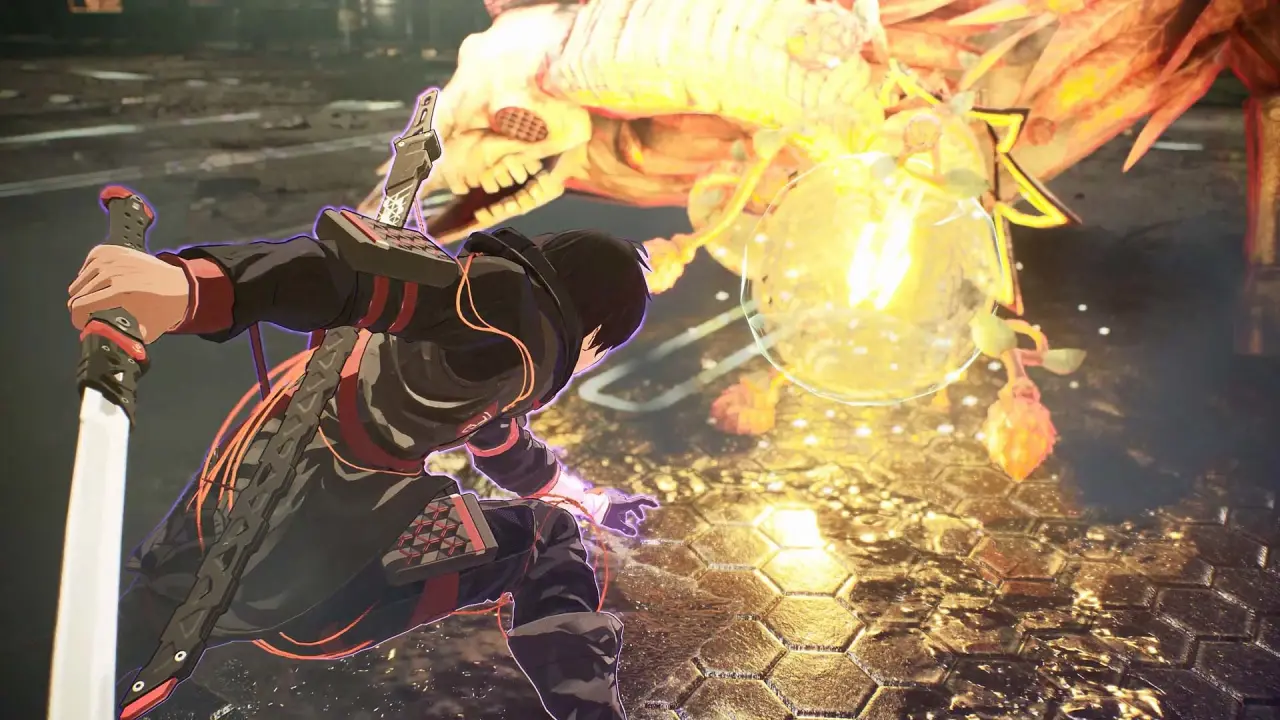
The headline trick, the thing nobody else does quite like this, is the way augmented-reality advertising is woven into nearly every scene. Holograms hang over the streets, sometimes literally obstructing your sightline, and yet you never want to switch them off because they are not decoration, they are the setting. They sell atmosphere over authenticity, and that priority is exactly the right call.
A city built to be photographed
Walk down any boulevard and your field of view fills with holographic projections layered over the architecture. Occasionally they crowd the frame and block what you are looking at, but the remarkable thing is that the obstruction never feels like a bug. It is the texture of the world the designers wanted, and you accept it because the whole place is internally consistent. The anime-flavored effects are gaudy and multicolored without ever tipping into tacky, which is a tightrope a lot of stylized games fall off.
Lighting is where the technical craft quietly shows off. Reflections landing on metal surfaces carry genuine material weight; you can read the difference between a polished panel and a dull one, and the ray-traced sheen feels necessary rather than checkbox decoration. The result is a place that begs to be photographed. I lost a genuinely embarrassing amount of time just standing on rooftops at dusk, letting the city lights do their thing. That kind of artistic discipline, the restraint to make a world worth idling in, is uncommon and worth celebrating.
Character design and the honest blemish
The cast is unapologetically Japanese in its sensibilities. Hairstyles are exaggerated, outfits prioritize silhouette and flair over any pretense of practical function, and the whole roster reads like it stepped out of a stylish anime opening. You go along with it because the world is self-consistent enough to earn that suspension of disbelief; nothing about the character designs clashes with the neon dreamscape they inhabit, so the theatricality reads as intentional rather than careless.
There is one honest blemish worth naming, and it is texture fidelity. From a normal viewing distance everything looks pristine, but lean the camera in close and the edges turn jagged, the resolution wobbling in a way that gives away the budget. It is the single most visible flaw in an otherwise gorgeous package. In practice, though, the caveat is almost academic: during the blistering pace of actual combat, nobody is pressing their nose against a wall to inspect the mip-maps. The nighttime cityscapes in particular feel like cyberpunk with a layer of grime scraped off, brighter and colder at once, and that mood papers over the small technical cracks completely.
Atmosphere over authenticity, and why it works
What ultimately elevates the visual package above its technical limitations is a coherent point of view. This is not a world straining to convince you it is real; it is a world straining to make you feel a specific mood, and the difference in priority shows in every design decision. The augmented-reality clutter, the saturated palette, the impractical-but-striking costumes all pull in the same direction, toward a heightened, stylized near-future that prizes sensation over simulation. Plenty of games chase photorealism and end up looking like everything else. This one chases a feeling and ends up looking like nothing else.
That commitment is what lets you forgive the rough texture work and the occasional overcrowded frame. A game with weaker artistic conviction would see those flaws magnified, but here they are footnotes beneath a confident, unified vision. The dusk-lit streets, the neon reflections rippling across rain-slick metal, the holograms drifting overhead like a second city stacked atop the first, all of it coheres into something you genuinely want to inhabit. Among its direct competitors, the overall visual experience sits comfortably in the upper tier, not because it pushes the most polygons, but because it knows exactly what it wants to be and never wavers from that goal for a single scene.
Combat | 9/10
Jugabilidad: 9/10The single best reason to own Scarlet Nexus lives in its combat, and that combat is built around one deceptively simple idea: psychokinesis. It sounds esoteric, almost pretentious, until you actually press the button and realize the whole pitch reduces to throwing things. A parked car on the roadside. A bundle of rebar from a construction site. Even an enemy's own ally, yanked off the ground and flung as ammunition. Everything in the environment is potential leverage, and the game wants you to treat the entire street as your toy box.

For the first ten hours you will feel like you are mashing buttons at random, hoping something connects. Push past that, and somewhere around the twenty-hour mark a switch flips. Suddenly every input carries weight, every strike feels deliberate, and the precision of "each blow means something" becomes intoxicating. The pace is so fast there is genuinely no time to deliberate over counters; you stop thinking and start reacting, leaning entirely on the muscle memory the game has been quietly drilling into you.
Turning a city block into an arsenal
The telekinesis hook is not a gimmick bolted onto a generic brawler; it is the spine of the entire combat design. When an object leaves your psychic grip and slams into a target, the trajectory obeys physical inertia rather than drifting off in some arbitrary scripted direction. That fidelity matters more than it sounds. It means you start reading the battlefield spatially, calculating angles, deciding whether a thrown girder will skewer the front-line brute or sail harmlessly past him. The crimson lines that trail your attacks are flashy, but they never upstage the readability of what is happening.
What truly opens the system up is the moment you stop relying on raw assault and begin orchestrating the space itself. Learning to dispatch foes with the environment rather than just your fists is when the game properly begins. The sensation lands somewhere close to conducting an orchestra, except your instruments are slabs of concrete and twisted steel. That metaphor is not idle flattery: there is a rhythm to chaining grabs, melee, and throws that rewards composition over button spam, and once you feel it, ordinary action combat starts to seem oddly flat by comparison.
Allies, combos, and the flow state
Solo psychokinesis would carry the game on its own, but the party connection abilities are what give the combos their ceiling. Borrowing a teammate's power mid-fight reshapes your options on the fly. One companion lets you cloak, another accelerates your movement, another wreathes your strikes in fire, and weaving these borrowed gifts into your throws and melee turns a competent fighter into a genuinely expressive one. The depth here is real, but crucially it is not the depth of memorizing a frame-data chart. It is fluid depth, the kind you feel rather than study.
The closest comparison I can offer is playing a jazz drum kit. Once the rhythm clicks, almost anything you hit sounds good, because the underlying groove carries you. Scarlet Nexus rewards that improvisational confidence. You are not executing a rote sequence; you are riffing within a system flexible enough to make your worst flailing still look intentional. Critics lining up to praise this aspect is no surprise at all, and the unanimous applause feels earned rather than generous. The system gives you room to find your own voice inside the noise.
Aggression, stagger, and the one rough edge
The design philosophy underneath all of this is relentlessly pro-offense. Some action games chase difficulty for its own sake, piling on punishment until mastery feels like penance. Scarlet Nexus is difficult in service of exhilaration instead. The penalty for a mistake is stagger, not loss; you get knocked into a hitch of recovery rather than wiped out, which constantly nudges you to keep pressing the attack instead of turtling up. Even a trivial skirmish against minor foes can be made to feel like the climax of a boss encounter purely through how you choose to engage.
It is not flawless, and honesty demands naming the one rough edge. In the heat of high-speed combat the camera occasionally loses the plot, swinging somewhere unhelpful at exactly the wrong instant. Stacked against genre peers like the relentless, melodrama-laden NieR machine-war ruins, that camera wobble is a minor blemish rather than a structural fault. And frankly, when your hands are still locked into the rhythm, who is actually scrutinizing the camera? The completion level of this pillar is extraordinarily high, polished enough that I would tell someone to buy the game for this dimension alone.
Content | 8/10
Contenido: 8/10Scarlet Nexus offers a genuinely substantial amount of game, and the dual-campaign structure is the engine driving that bulk. Clearing the main thread runs you roughly forty hours, but that figure undersells the reality of how the game grips you. I crossed the seventy-hour mark and my completion meter still read a stubborn fifty-eight percent. The "just explore a little more" loop here is quietly addictive, the kind that swallows an evening before you have noticed it happening.
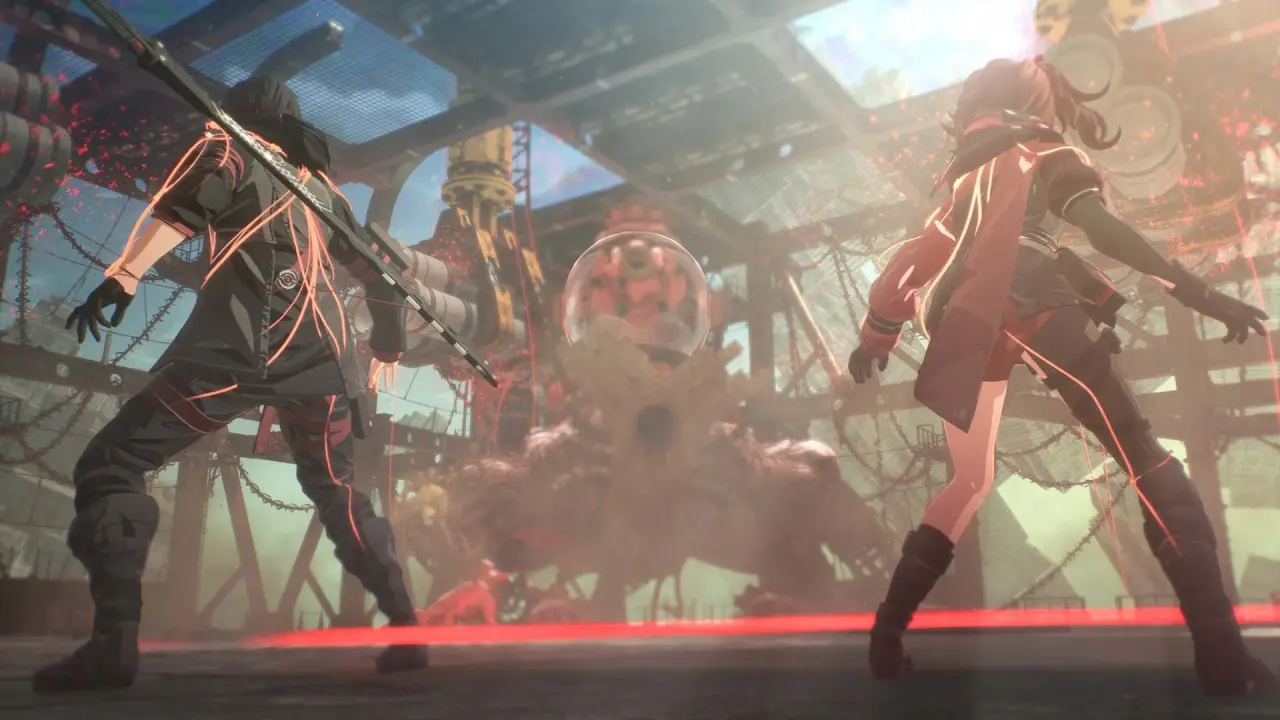
Crucially, the extra content is not filler. The side quests and collectibles are not the hollow checklist of question marks that pad out so many modern releases. Each side thread comes bundled with its own small, self-contained story, which makes the pursuit of one hundred percent feel like exploration rather than obligation.
Generous length that never feels hollow
The information density of the interface is high without ever curdling into chaos. There is a lot to read on any given screen, yet the layout keeps it legible, and that competence matters when you are juggling abilities, party bonds, and an upgrade economy simultaneously. The sheer volume of systems on display could have collapsed into noise, but the presentation mostly holds the line, letting you absorb a dense feed of feedback without feeling overwhelmed by it. It is a balancing act a surprising number of big-budget releases fumble, cramming so much onto the screen that the player simply tunes it all out, and Scarlet Nexus largely avoids that trap through clean hierarchy and consistent iconography.
What keeps the long hours from sagging is variety of perspective. The two-protagonist setup does more than inflate the runtime; it refracts the same events through different eyes, so the second campaign never reads as a straight copy of the first. That structural choice is the antidote to the repetition fatigue you might reasonably fear from a forty-plus-hour commitment. You are not playing the same game twice; you are watching one story from two vantage points, and the freshness holds up further than I expected.
Systems that reward patience but bury themselves
Not everything is frictionless. The crafting and upgrade system is tucked away a little too deeply, nested inside second-level menus that open onto third-level menus in a way that feels dated. I will admit I struggled to fully forgive a modern triple-A release leaning on that kind of menu-within-a-menu architecture. It is the sort of friction a single pass of interface polish should have sanded away, and its persistence is a small but real irritant across the whole campaign.
And yet I tolerated it, because the payoff is concrete. The loot you pull from encounters is actually useful, the upgrades meaningfully reshape your build, so the buried menus are a chore with a reward attached rather than busywork. The drop economy respects your time even when the navigation does not. Stacked against the broad consensus of critics hovering around the eight-out-of-ten mark, that trade-off feels fair: this is a game with no glaring weak spot and no flash of genius either, just a thick, dependable spread of content. It is a hearty buffet. Not every dish dazzles, but you leave full, and for players who dread a game ending too soon, that abundance is exactly the point. Rush it and you may find it sluggish; settle in and it simply wants you to linger in its world a while longer.
A buffet that respects your appetite
The most honest way to frame the content offering is that it is generous to the point of slight excess, and whether that lands as a strength depends entirely on what you want from a game. For players who resent a campaign that wraps up too quickly, the sheer volume here is a gift; there is always one more side thread to chase, one more collectible carrying a sliver of world-building, one more reason to stay in this neon sprawl a little longer. The game is designed to be lingered in, not rushed through, and it telegraphs that intention in how it doles out its rewards.
The flip side is equally honest. If you are the kind of player who wants to mainline the critical path and move on, the abundance can curdle into a feeling of bloat, and the deliberate pacing may register as drag rather than depth. That is not a flaw so much as a difference in positioning, and recognizing which camp you fall into before you start will save you a lot of frustration. The critical scores hovering near eight out of ten reflect this exactly: a dependable, no-weak-spot package that asks for your patience and pays it back in hours, provided you came looking for hours in the first place.





Comentarios 0
Nos interesa tu opinión
Participa en la conversación y comparte tu opinión sobre este juego.
Aún no hay comentarios. Cuéntanos qué te parece este análisis.