























Opening
Two million copies in twelve hours. A Steam concurrent peak of 467,582 — the 29th-highest in the platform's history. A cross-platform peak north of 651,000, roughly nine times what the original Subnautica ever pulled. Subnautica 2 launched into Early Access as an unfinished game with a publisher that had walked out the door, and it still detonated. That tells you something about how badly people wanted to go back under.
The hype is one thing. Sitting down and actually diving is another, and that is where the game gets complicated. The foundation is so good you never want to surface; the content runs so thin you hit an invisible wall in a dozen hours. It is at once one of 2026's biggest survival games and one of the hardest to score, because you are not rating a finished product. You are rating a world that is still growing up. That contradiction is exactly why the sky-high 91% Steam rating and the cooler critic scores can both be honest at once — the people who bought in are grading the promise, while the reviewers are grading the present.
It also carries two identities at the same time: a phenomenon that prints money, and a half-built thing whose loop is still being tuned and whose story stops after the first act. The tension between those two is exactly why a simple "fun" or "not fun" verdict will not do it justice.
This review is about holding both of those truths at once. What works, what doesn't, and the only question that really matters for your wallet: do you jump in now, or watch from the shore until the water rises?
Story | 7.0/10
Historia: 7/10NoA uploads you into a fresh body, then starts nagging

The opening pulls a quiet rug out from under you. You are not a castaway who crashed into an alien ocean — you are a consciousness that an artificial intelligence called NoA, the Noetic Advisor Shell, has uploaded into a brand-new body. It is a sharp hook, because it turns "who are you and why are you here" into the central mystery from second one, and the more politely that voice in your ear speaks, the more certain you become that it does not have your best interests at heart.
NoA keeps pushing you to complete the mission, even though the planet called Zezura is plainly not built for human survival. Veterans of the series will recognize the scent immediately: on the surface it is about staying alive, underneath it is about a cover-up. Compared to the original game's lonely, slow-burn "wake up, piece it together" opening, this one is more aggressive and more talkative. The AI's presence never lets up, and it presses a low hum of "something is watching you" over the entire dive.
The tree on the horizon, and the colonists who came first

If NoA is the voice over your shoulder, the enormous tree visible from the surface is the eye on the horizon. It is too big to be natural, it stands in your sightline from the very start, and it becomes the single largest visual riddle of the run. You know you have to reach it eventually; the closer you get, the less you can explain it. That "you can see it but you can't touch it" pull is the series at its most seductive.
Just as compelling is the fate of the colonists who got here before you. You reconstruct what happened to them piece by piece, through wreckage and logs and the things they left behind, and that thread tangles up with the boldest idea the game throws out: to survive on Zezura, humanity may have to rewrite itself with alien bio-material, and reconsider what it even means to be human. It is the most ambitious science-fiction core the series has ever reached for. The premise alone is enough to make you want to keep digging.
The story stops halfway, and right now that is the real heartbreak

But let me be blunt up front: this story only tells its first act. The Early Access narrative simply stops. You are mid-hook, leaning forward, and then there is nothing — IGN flatly calls the sensation hitting a development "wall." That is not the good kind of open ending. It is the kind where someone tore out the back half of the book.
Set it next to the original and the gap is obvious. Subnautica is a finished product that tells its whole story and seals its mysteries shut, and it is precisely that completeness that made it the genre's benchmark.
What you get here reads more like a generous sample chapter — the opening is gripping, the premise is daring, but the slice you can actually play is a short prelude to a much larger story. The potential is plain to see. So is the shortfall.
There is a structural irony worth naming. The first game told its story almost entirely through environmental discovery — you reconstructed the truth from audio logs, wreckage, and the silent shape of the world, and every revelation felt earned because you dug it out yourself. This sequel leans harder on a talking AI and a more authored, front-loaded mystery, which makes the opening land faster and hit harder. But a louder, more directed narrative also makes the sudden stop hurt more. The original could close an exploration thread gracefully because it never promised you a plot beat around the next reef; this one keeps promising, then runs out of pages. The score here is not low because the writing is weak. It is low because there is so plainly a great story being set up, and you are handed only its first act.
Audio | 8.0/10
Sonido: 8/10The thing that scares you isn't the monster — it's the oxygen alarm

The cleverest trick this series ever learned is that fear does not need teeth. It needs sound. The deeper you dive, the more the soundscape tightens around you: the muffled groan of pressure, the sharp stutter of an alarm when your air runs low, the distant call of something you cannot see. Stacked together, those sounds get under your skin in a way no jump scare ever could, and Subnautica 2 inherits the whole toolkit intact.
The oxygen alarm is the cruelest of them. The moment it sounds, your brain narrows to one calculation: can I make it back to the surface. It is not background ambience — it is the baton that takes over your decision-making, forcing you to choose between grabbing one more resource and the simple instinct to live. Sound here is not decoration; it is part of the design. That is the root of the series' dread, and it is still beating. Strip the audio away and you would be left with a pretty aquarium sim; leave it in, and every dive becomes a negotiation with your own nerve.
What makes it so durable is that almost none of the fear is visual. The scariest moments are the ones where you can see nothing at all and start to hear everything: a far-off groan, a swell of disturbed water creeping closer, the faint scrape of something passing behind you. Your imagination paints the worst version of whatever made that noise, and the terror grows in your head rather than on the screen. That is a far more sophisticated trick than slapping a monster's face into frame, and it is the reason the dread never wears out — you can be scared by the same stretch of dark water a dozen times, because you are never sure there was anything in it.
Diving at night, where beauty and terror are the same thing

After dark, that audiovisual pairing gets pushed to its limit. Bioluminescence scatters pinpricks of light across the seabed, the deep returns its heavy, hollow echoes, and the picture goes gorgeous enough to hold your breath while the sound goes frightening enough to keep you from swimming forward. Outlet after outlet flagged this exact "beautiful and terrifying at once" sensation — you cannot bring yourself to turn it off, and you want to flee the whole time. Headphones make it worse, in the best way: you cannot tell whether that low moan came from your left or from directly behind you, so you spin, you sprint, you hold your breath, and the directionality of the sound becomes genuine psychological pressure.
That said, honesty is owed here. The game holds the line on the series' signature audio, but it has not yet delivered a new musical theme you will remember for life. The original had those rare swells of score that crashed in at a key beat and pushed the loneliness and the awe straight to the ceiling; this build rarely reaches for that yet. The craft of the ambience is flawless. A standalone melody you would hum away from the game is the homework left for the next two or three years of development.
Its strength is ambience and atmosphere — that gift for pressing you down into the deep until even your breathing turns careful. And in co-op, with three other people chatting over voice while you explore, the loneliness that runs through this whole series gets noticeably diluted. It is livelier, sure. But the haunting "just you and the dark" mood that made the deep so magnetic fades a few shades along with it.
Visuals | 8.5/10
Gráficos: 8.5/10Zezura's ocean gets prettier the deeper you go — and scarier

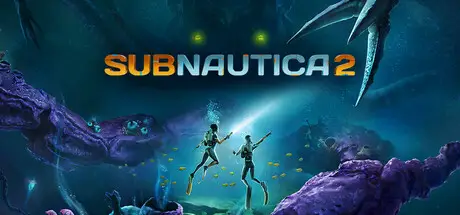
If you want one virtue almost nobody will argue with, it is the way this game looks. Zezura's underwater world is rendered into something that feels too beautiful to be real. By day, sunlight breaks through the surface in shifting, rippling bands. By night, bioluminescent coral throws sheets of colored light across the seabed. The lighting engine is the hero of all of it, giving "underwater" a real weight and a real sense of layers: sunlight is a soft gold in the shallows, and down deep it is reduced to a few struggling shafts. The murk, the suspended particles, the falloff of the light — all of it is handled carefully enough that you can feel yourself leaving the lit world behind.
What makes it sing is that the beauty and the dread are bolted together. The further down you swim, the more spectacular it gets and the harder your heart pounds — you are mesmerized by the spectacle and acutely aware that this pretty darkness is hiding the things you least want to meet.
Each biome carries its own temperament, too: the shallows are bright and clear like a holiday resort, the coral fields are a painter's palette, and the cliffs and dark depths below strip the light away until your view collapses to a tiny ring in front of your face. That swallowed-by-the-deep pressure is built entirely on the precision of the lighting, and it is the rare game where simply looking around is part of the tension rather than a break from it.
The new third-person view feels like a different game
The sequel also adds a third-person camera, which is no small change for this series. One review put it well: switching to third person makes the whole thing feel almost like a different game. You can finally watch your character glide through the deep, and the visual punch of "a tiny human against a vast ocean" is something the first-person view simply cannot give you. For players who love screenshots and love seeing their own avatar drift through a beam of light, it is a very welcome option, and it quietly changes how you read the scale of every space you swim through.
There is a trade-off baked into that camera, though. Pulling back from your own eyes also pulls back the fear — the abyss stops pressing on your face, the unknown stops feeling personal, and what was claustrophobic terror becomes a beautiful diorama you watch from outside. It is the same tension the audio design fights: distance is the enemy of dread. So most players end up treating third person as a screenshot mode and a sense-of-scale tool, then flipping back to first person the second they actually want to be afraid. That the game lets you toggle freely is the smart call. It hands you the cinematic option without making you pay for it in tension.
On platforms, the game entered Early Access simultaneously on PC — across Steam, Epic, and the Windows Store — and on Xbox Series X|S, with a day-one Game Pass arrival.
But since this is a build under construction, the technical rough edges are unavoidable. Several reviewers ran into a progression-halting bug near the end of the current content, plus smaller glitches like being randomly teleported away from the Tadpole submersible. None of it is bad enough to ruin the experience, but it is a steady reminder that what you are playing is still being polished, and that the version on your screen today is not the version the studio is ultimately building toward. Treat the rough edges as the cost of getting in early, not as the finished verdict on how this game runs.
Combat | 8.0/10
Jugabilidad: 8/10Adaptations: this time it's you that levels up, not your gear
The single biggest evolution in the moment-to-moment play is a system called Adaptations. It is a set of permanent upgrades to your body: hold your breath longer, tolerate deeper pressure, shrug off more of the environment's threats. Unlike the original, which locked your capabilities into gear and vehicle modules, the growth now happens to the character itself. You did not buy a better sub — you reshaped yourself into a creature that belongs in the deep.
That permanent track wires a deeply addictive loop into exploration: every layer you descend brings you one step closer to the body that can survive the next one. The "I am getting stronger and the sea is getting deeper" pull runs through the entire run and keeps tempting you into the dark one more time. Reviewers repeatedly singled Adaptations out as the most worthwhile new idea on offer, and it really does give an old recipe a flicker of new soul.
It also quietly reframes the whole survival fantasy. In the original, progress was a wall of gear between you and the ocean — better tanks, better subs, more glass between you and the teeth. Here, progress is the opposite: you stop being a fragile visitor and slowly become something that belongs down there. The horror of the deep does not vanish so much as shift, from "this place will kill me" to "this place is changing me," and that is a far more interesting idea for a sequel to chase. It is the clearest sign that the studio has a real thesis for where this series could go next, even if the rest of the loop has not caught up to it yet.
The core loop is still the loop: gather, breathe, build, expand
Structurally, the heart of the game is the same proven cycle the series has always run on: dive to gather materials, watch your oxygen and your health, sample the deep-sea wildlife with the Biosampler, craft your tools, and slowly expand a seabed base. The sequel sands down a lot of old friction — recipe gates are lower, you get a compass from the very first minute so you stop getting lost, and the rebuilt base building snaps together more comfortably.
That, however, is exactly the sticking point. Reviewers broadly feel the game plays like a remaster of the original. New creatures, quality-of-life tweaks, a handful of new tools — but the underlying loop is barely innovated on. Even the Tadpole submersible continues the franchise rhythm of starting in a tiny craft and upgrading from there. For series fans, that is familiar comfort. For anyone hoping to be surprised, it is a flat note.
Four-player co-op arrives, and so does diluted loneliness
For the first time, the series adds four-player online co-op, one of the largest changes in its history. You can dive with up to three friends, sharing recipes, inventory, vehicles, and bases, and you can convert saves back and forth between solo and multiplayer. The simple promise of "getting chased by a deep-sea leviathan alongside your friends" is enough to sell plenty of people on it, and reviewers are genuinely optimistic about where co-op could go.
But a problem rides in with it. The soul of this series is one person facing the abyss alone, with all the helplessness that implies.
The moment other people show up, it gets livelier — and the "just you and the dark" terror gets noticeably thinner. With three friends paddling beside you and someone cracking jokes over voice, "something huge is hunting me" simply stops landing: the danger is split four ways, the isolation evaporates, and the deep reads more like a theme park than a thing that eats you. Pile on the fact that predators and deep-sea leviathans pose too little threat right now, and that resource gathering turns repetitive in the back half, and the string that ought to stay taut goes slack. Measured against the original, the sequel gains co-op and permanent growth but loses some completeness and that lethal loneliness. How that math shakes out depends entirely on why you came: if you want to build a seabed base with friends and laugh through it, co-op is a genuine gift; if you came to relive the original's drowning, alone-in-the-abyss panic, solo is still the only way to taste it.
Content | 5.5/10
Contenido: 5.5/10A dozen hours in, you hit the wall you cannot see
Talk content, and the headline fact has to come first: in the current Early Access build, you will run through the playable material in roughly 6 to 15 hours, and then you slam into an artificial digital map boundary. The craftable items are limited, the story cuts off mid-breath, and IGN simply calls the whole thing hitting a development "wall." One reviewer nailed the feeling — it is like being confined to an elaborate, beautifully decorated aquarium habitat. Gorgeous, and inescapable.
This is not a pacing problem; the content genuinely is not finished. For a series famous for "an endless ocean that gets scarier the deeper you go," an artificial border stings especially hard. You are being lured toward something deeper and farther out, and the world tells you: this far, no further. It is the most concrete weakness the game has right now, and it is the exact spot where nearly every review taps the brakes.
The subtler damage is what that wall does to the exploration itself. The first game was addictive precisely because you never knew what was below — the unknown was the reward. The moment you realize the map has an edge, that the abyss bottoms out in a piece of invisible programming, the urge to push "just a little deeper" quietly loses its nerve. An exploration game is at its most fragile when the player can calculate where the edges are, and right now this one lets you do exactly that. It is a temporary problem with a permanent kind of sting, because it works against the one instinct the whole genre exists to provoke.
To put the length in sharper terms: most reviewers landed somewhere around the ten-hour mark, with some still feeling like they had barely started after fifteen and others brushing the boundary within a few hours. The variance comes down to playstyle — explore slowly and gather carefully and the clock stretches; beeline for objectives and the wall arrives faster. But either way the destination is the same wall, and the only question is how quickly you reach it. For a game built on exploration, that body of content is genuinely thin for now.
The studio said it plainly: this is a world under construction for years
The saving grace is that the developer led with the uncomfortable truth. Unknown Worlds has stated outright that Early Access will run for roughly two to three years, putting the full release somewhere between 2027 and 2028.
In other words, what you are buying is not a finished product but a ticket onto an active construction site — and the studio is not hiding that. It is laid right out on the table, in plain language, before you spend a cent, which is more honesty than a lot of paid early-access launches bother to offer. That candor does not refill the map, but it does change what a fair verdict looks like: you are not being misled about what you are getting.
The update promises are concrete, too. The roadmap lists free updates spanning proximity voice chat, player emotes, new regions, new vehicles, and fresh chapters of the story, and shortly after launch the studio pushed a resource update that added gathering areas and made a handful of gameplay improvements. Judging by that cadence, the developer genuinely intends to grow this world alongside its players rather than cash the check and walk. Against the original — a finished, complete product — the sequel really is only a skeleton right now. But it is a skeleton on solid foundations, and one that is visibly, explicitly still being built up. Whether you are willing to pay for that "still building" promise comes down to how much you trust the studio, and how badly you want to be in the water on day one.





Comentarios 0
Nos interesa tu opinión
Participa en la conversación y comparte tu opinión sobre este juego.
Aún no hay comentarios. Cuéntanos qué te parece este análisis.