

















Opening
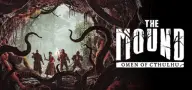
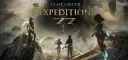
The moment the boot crushed the dead branch, the silhouette of the Gothic castle in the distance flickered in and out of the red mist. I didn't see the familiar Knights of the Round Table, only broken armor twisted by the "Red Death." The best part of this game isn't the shell of the Arthurian IP, but that it dares to tear open a gash in the legend. The Holy Grail from the tales becomes the source of a curse here, and the familiar Merlin transforms into a gravekeeper. Walk two steps forward and you can smell that scent of rust mixed with rotting leaves. It's in no hurry to give answers—it only exists to soak the resplendent myth in the mire. The first time you open this dark fairy tale, you know there's no going back.
Story | 8.5/10
The main story tells a passable hero's tale. Not hard to watch, but you'll forget it the next day. However, there's a setting about the "Red Death"—no spoilers, go find it yourself. It dismantles the Arthurian myth into fragments, sharp enough to cut, but capable of forming a new picture. The Wyrdness mechanic isn't just a suffix—it's a genuine narrative hook.
The humor hides in very tricky places. For instance, an NPC's complaint can make you laugh out loud while rushing through. The narrative pacing is like an old phonograph—slow. But once it gets going, it has flavor. It preserves the core mystery without showing you all its cards. I stopped here for ten minutes, not to admire the scenery, but to see how the text plays old tropes in new ways. Myth shouldn't be monolithic—it needs to allow itself to be defiled.

Graphics | 8.0/10
The first time I stepped from the dark cave into the wasteland, squinting against the backlight, I realized the art direction here isn't about "piling on" but about "negative space." The dark fantasy Arthurian atmosphere doesn't rely on texture resolution—it's about how light and shadow carve through the ruins. When the Gothic castle complex looms overhead, the sense of oppression is visceral. The metallic reflections on armor are restrained, with no cheap white edge bleeding.
The color palette transitions between snowfields and flower meadows are clever. Just as visual fatigue sets in, the palette shifts. The environmental design reads like silent narration—the proportions of crumbling walls always sit half an inch above your sightline. Ray tracing here isn't a spec sheet feature; it's a necessary atmospheric agent. Something lurks in the shadows—you have to walk over and see for yourself.

Content | 7.5/10
The main story takes about forty hours to complete. But I'm at eighty hours and barely past halfway in completion. This game's "one more sweep" has a mild addictiveness to it. The world is densely designed, and every interactive object feels substantial. The ruins in the Misty Forest aren't just textures—they're fully realized three-dimensional mazes.
The positive feedback from exploration comes slowly, but when it accumulates, it hits all at once. You'll circle halfway around a cliff for an inconspicuous treasure chest. There's plenty of content, but the distribution is somewhat capricious. Sometimes you walk for half an hour and only pick up two potions. It's like opening blind boxes—occasionally you get nothing, occasionally you hit the jackpot. Overall it's worth it, but it requires patience.

Audio | 7.0/10
There are two tracks I quietly added to my playlist. One is the low hum during camp rest, the other is the silence before a boss battle. The soundtrack doesn't steal the show—it's there to anchor the emotion. The sound effects and voice acting are solid, fitting the dark fantasy tone. The scrape of blade against armor is handled crisply.
When a magic orb slams into the snow, there's no ear-splitting roar, just a muffled spread. The voice actors aren't belting high notes—they sound like they're reading eulogies. That restraint actually works. The volume balance is well done; you'll never miss an enemy's footsteps because the BGM is too loud. It's not stunning, but it'll carry you through the long night. Competent. And easy on the ears.

Gameplay | 5.5/10
The combat system has a skeleton. But the muscles grew in the wrong places. The first ten hours you'll feel like you're flailing around, but after twenty hours you'll start to enjoy that "every strike lands" sense of impact. The mechanics themselves have highlights, but the difficulty curve is like a roller coaster. Some trash mob fights will have you stuck longer than mainline boss battles.
Poor design choices drag it down. The dodge hitbox feels floaty, the lock-on logic occasionally has a brain fart. Can you accept an action game that pushes you into a monster's embrace at critical moments? I can't. But I tolerated it, because when it hits right, it really hits. The problems are obvious, but not fatal. It just occasionally flips the table, and you have to learn to coexist with its temper.
When I put down the controller, I didn't have that "finally beat it" sense of relief. Instead it felt like I'd just attended a long funeral. Exhausting. But worthwhile. This game steeps Arthurian legend in bitter tea. Astringent on entry. Long aftertaste. It tears open the myth and lets you see what's at the bottom of the mire.
Its strengths are as prominent as its shortcomings. The narrative and environmental design raise expectations, while the rough edges of gameplay keep yanking you back to reality. If you can accept the volatile difficulty curve and the occasional lock-on seizures, it'll give you a very special journey. Eighty hours isn't a burden. It's a slow digestion process.
It's not perfect. But it's unique enough. Compared horizontally to similar dark fantasy titles, it wins half a point on atmosphere, loses half a round on system execution. Is it worth spending these dozens of hours? Yes. But don't treat it as a speedrun toy. Treat it as an illustrated collection of dark poetry. Worth it at full price. It suits those willing to grind through its temperament with it. After you're done, you'll have grown a new piece of gaming memory. Not dazzling. But solid. Better on sale.
Suitable for slow-burn dark fantasy enthusiasts.





Comentarios 0
Nos interesa tu opinión
Participa en la conversación y comparte tu opinión sobre este juego.
Aún no hay comentarios. Cuéntanos qué te parece este análisis.