Noticia
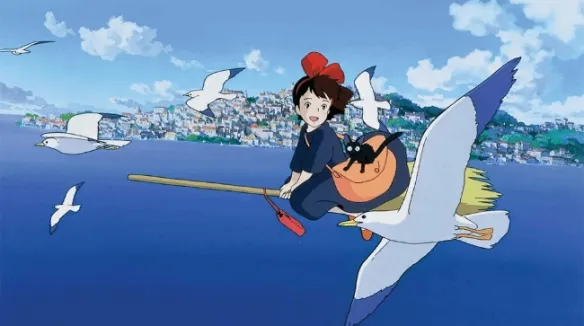
Kiki’s Delivery Service Live-Action Series in the Works at BBC as 10-Episode Adaptation
BBC is developing a live-action Kiki's Delivery Service with a joint British-Japanese team, pointing
















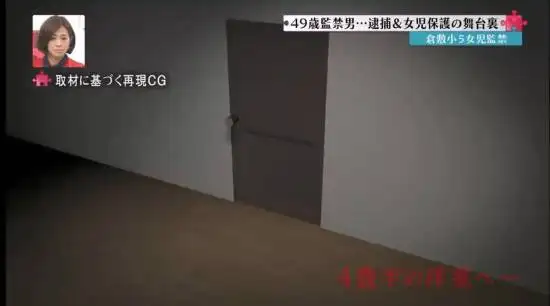
If this public opinion storm were placed into the script of Ace Attorney, it would probably be that kind of crucial piece of evidence suddenly produced halfway through a trial: the person who had been standing at the bench holding high the hammer of morality is, in the blink of an eye, exposed by the spotlight as casting an even darker shadow. Recently, foreign media reported that a BBC producer was found guilty of illegally possessing thousands of indecent images of children. This real criminal case quickly spread across social media and triggered a strong backlash in Japanese public discourse.

The explosive nature of the controversy comes not only from the case itself, but also from the BBC’s past stance on cultural issues. The original article mentions that the BBC has repeatedly harshly criticized Japan’s anime and manga industry over the years, linking some fictional illustrated content to child protection concerns. Now that someone within its own organization has been implicated in a real child pornography crime, many anime fans naturally see this as a massive collapse of that narrative, turning “who has the right to judge whom” into the new focus of discussion.
From the perspective of gaming and ACG communities, this feels very much like the faction reputation systems commonly seen in RPGs: an NPC claims to be lawful good, but after completing the side quests, the player discovers a completely opposite secret hidden in the castle basement. The anger of Japanese netizens is not about defending any illegal content, but about stressing that a clear boundary must be drawn between fictional expression and real-world crime. Treating fictional creations on paper or on screen as equivalent to actual harm has always risked turning discussion into a moral speedrun, and this case has brought backlash against that oversimplified logic.
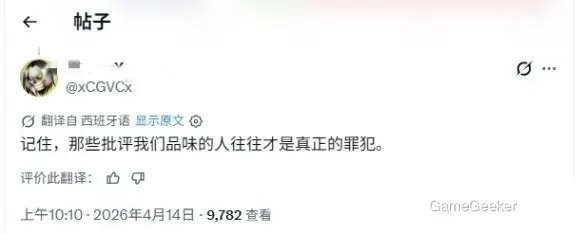
What is even more noteworthy is that this controversy has also struck at a common blind spot in how mainstream Western media evaluates Asian popular culture. Media such as anime, manga, and games exist in Japan within a complete industrial context, established rating practices, and distinct audience segmentation. If outside observers only seize on the most controversial corner, it becomes very easy to compress a complex culture into a convenient target for criticism. One of the most widely circulated views in the community is that while the BBC adopted the posture of a moral judge in criticizing ACG creations, it failed to properly supervise its own system, and that contrast is hard to accept.
Looking at the trend, this incident may cause the discussions around “regulating fictional content” and “governing real-world crime” to split apart once again. For players and anime fans, what truly needs to be guarded against is not criticism itself, but ways of expression that package cultural prejudice as universal justice. Protecting children should of course be directed toward real criminal networks, platform responsibility, and judicial accountability, rather than prioritizing all firepower against fictional works.

My view is simple: this is not some carnival of “ACG has won,” but an interrogation of whether standards are being applied consistently. Any platform, media outlet, or creator that talks about child protection must first place real-world harm at the highest priority. Otherwise, even the most polished moral rhetoric will be like a holy sword in an RPG whose durability has dropped to zero—shattering in front of the player before it can even be swung.


Comentarios 0
Nos interesa tu opinión
¡Bienvenido! Cuéntanos qué te parece este juego: ser el primero puede tener premio.
Todavía no hay comentarios. Sé el primero.