
Noticia
Epic Gives Away Astral Ascent and LUFTRAUSERS | Arma 3 Gold and Hogwarts Legacy Also on Sale
Claim Astral Ascent and LUFTRAUSERS free on Epic, plus Arma 3 Gold at $7.49 and Hogwarts Legacy at a verified $4.80 hist
















Whenever I step onto an unexplored side path in an open world, what I fear most isn’t monsters ahead, but spending ages walking only to find an invisible wall at the end. The recent controversy around Digital Foundry’s DLSS 5 video gave me a similar feeling: you expect a deep technical breakdown, but end up brushing against only a very shallow showcase.

The matter itself isn’t complicated. Digital Foundry got early access to NVIDIA’s DLSS 5 demo and quickly released a hands-on video afterward. But once the video went live, viewers clearly weren’t convinced. The core complaints centered on two points: it wasn’t critical enough, and the analysis didn’t go deep enough. For a media outlet known for technical breakdowns, that kind of feedback is actually pretty damaging, because people click not just to hear “we’ve seen it,” but to get “we’ve seen through it.”
After the controversy grew, Digital Foundry responded in an episode of DF Direct. Founder Richard Leadbetter also directly admitted that the original video had been made too hastily—they started working on it immediately after watching the demo, and as a result, many of the points they had wanted to explain never got properly developed. One line from his statement was especially important: “I want to acknowledge at the outset that we understand the majority of the criticism aimed at that video.” At the very least, that shows they weren’t trying to brazen it out.
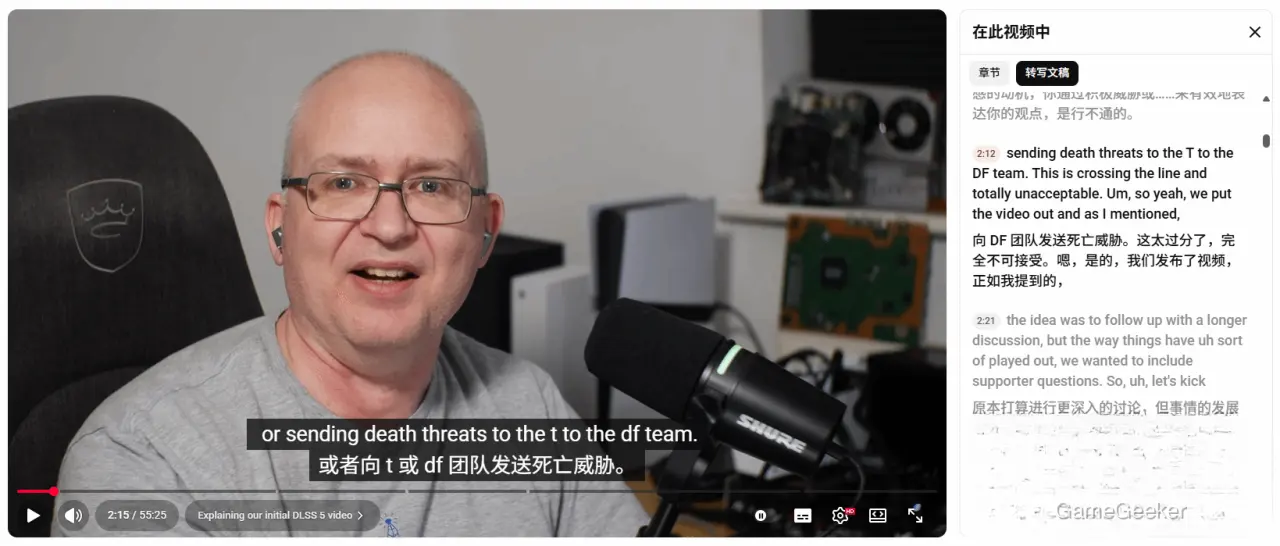
But by this point on the map, something even uglier had surfaced. Digital Foundry said that team members received threats in the aftermath of the incident, including death threats. That changes the nature of things entirely. Criticizing content for being shallow or rushed is absolutely fair—and it should be criticized. But once it escalates into personal threats, it’s like a discussion about map design suddenly turning into someone flipping the table. That’s no longer normal communication. Leadbetter also explicitly condemned this behavior, saying it had crossed a line and was completely unacceptable.
Seen from that angle, this incident actually says a lot about the current tension between player communities and tech media. Players today are increasingly wary of hype around new technologies, especially when topics involve GPU manufacturers, visual demos, or AI frame generation. The margin for error is extremely small. If you rush out coverage and your analysis isn’t solid enough, it becomes very easy for people to feel your stance is off balance. In other words, audiences aren’t incapable of accepting new technologies—they just dislike it when coverage “marks the landmarks on the tourist map without telling you where the traps are.”

Take a step back and you’ll see this is a reminder for anyone making hardware and tech content: speed matters, but trust matters more. That goes double for a media outlet like Digital Foundry, which built its reputation on “digging into the details.” Viewers naturally expect it to mark the terrain, elevation, and hidden paths—not just drive them around the main road once.
My view is simple: owning up to this stumble was the right thing to do; viewers were justified in criticizing it; but threatening people has no excuse. Technical debates should become clearer the more heated they get, not spiral further out of control. For players, what really matters isn’t the apology itself, but whether the next time Digital Foundry faces DLSS 5 or similar technology, it can finally fill in the rest of the map.





Comentarios 0
Nos interesa tu opinión
Participa en la conversación y comparte tu opinión sobre este juego.
Aún no hay comentarios. Comparte tu opinión.