Noticia
007 First Light Drops to $24.69 in Its First-Ever Sale, Beating the Previous Low
007 First Light gets its first discount, with Green Man Gaming stacking an extra 18% off the 20% official price cut plus














The buzz around Far Cry 7 has finally started to feel less like empty rumor lately. According to leads from gamegpu, Ubisoft Montreal has added a production staff member whose responsibilities lean toward the “finalization stage.” While this kind of change is not an official announcement, it looks very much like a common signal that a major sandbox title has entered the final assembly phase. For players who have long followed the development rhythm of Ubisoft’s open-world projects, this is more worth pondering than a vague statement like “the project is progressing smoothly.”

The key point lies in Paul Rouau’s new job title. According to public information, he recently joined Ubisoft Montreal as a “Game Production Finalization Specialist”; roles of this kind usually do not come in when a project is just building its framework, but are more commonly seen when core systems have already taken shape and the content is beginning to undergo overall acceptance checks. In other words, if this position does correspond to the new Far Cry title, then it can at least be inferred that the gameplay framework, technical pipeline, and integration of most systems have likely already passed through the most difficult stages. What comes next is more likely about polishing the experience, fixing critical bugs, and optimizing performance for the final version.

Looking at the nature of the series, Far Cry has always been one of Ubisoft’s most stable “sandbox testbeds.” Unlike some linear shooters that rely solely on explosive moments during a single playthrough, it depends on outpost captures, vehicle traversal, wilderness encounters, and chaotic systems to create a repeatable, unpredictable gameplay loop. So once a project enters the finalization stage, what truly needs to be refined is often not a single story sequence, but the coordination of countless details within the open world: whether enemy respawns are reasonable, whether the driving feel is smooth, whether chain explosions will tank the frame rate, and whether the pacing remains stable in co-op or solo progression. These are precisely the things that determine whether a sandbox game is merely “playable” or genuinely “addictive.”
In February this year, Ubisoft CEO Yves Guillemot already confirmed that two Far Cry projects with “great potential” are in development. Based on external rumors, one is believed to be the mainline sequel Far Cry 7, while the other is an extraction shooter codenamed “Project Maverick.” This combination actually fits current industry thinking quite well: continuing a mature open-world single-player framework on one hand, while experimenting with a new model that places greater emphasis on survival, looting and extraction, and high-pressure loops on the other—essentially creating a “dual-ecosystem layout” under the same IP.
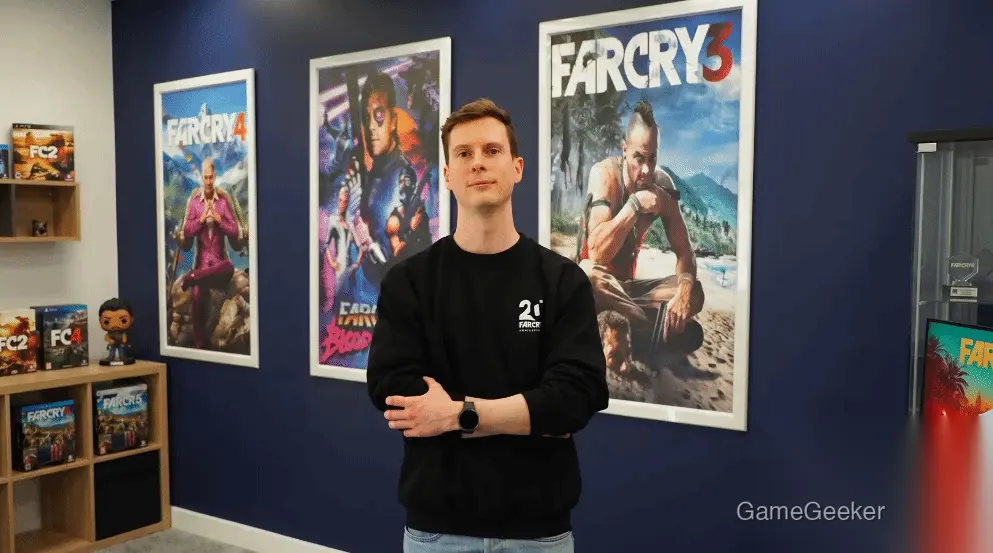
What I personally care about more is the signal sent by the staff expansion at Ubisoft Montreal’s headquarters. If the assessment of the news is accurate, it means the project is not only nearing completion on the development side, but that follow-up marketing resources may also be starting to line up. Ubisoft has not yet officially announced the release date, target platforms, or specific content of Far Cry 7, so the safest attitude at this stage is still to regard it as a “highly credible sign of late-stage development,” rather than a release announcement just around the corner.
For players, the most worthwhile thing to do now is not to get blindly excited, but to adjust expectations. In recent years, the open-world market has shifted from “the bigger the map, the better” to “the more responsive the systems, the better.” If Far Cry 7 wants to make its presence felt, it needs more than just a new villain and a new map; it needs stealth, combat, vehicles, and environmental interaction to form an organic loop again. If Ubisoft can truly push the chaotic sandbox feel that the series does best one step further, then the appeal of this installment will not merely be its return—it may be a recalibration of the series’ direction.


Comentarios 0
Nos interesa tu opinión
¡Bienvenido! Cuéntanos qué te parece este juego: ser el primero puede tener premio.
Todavía no hay comentarios. Sé el primero.