
Noticia
Intel’s New Fix Powers CS2 to 680 FPS, but Did It Finally Get It Right?
Intel’s two new CPUs are aimed at high frame rates and smoother multitasking in games, pitching bett
















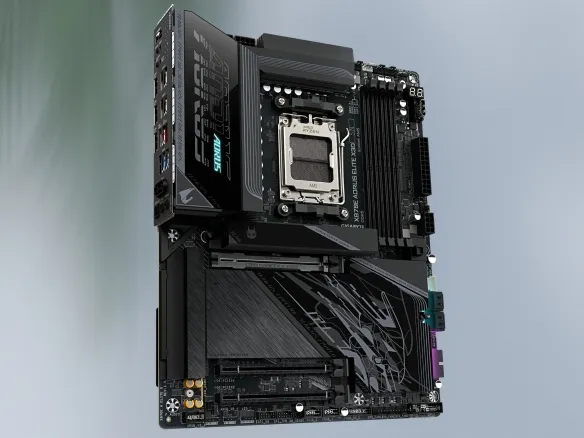
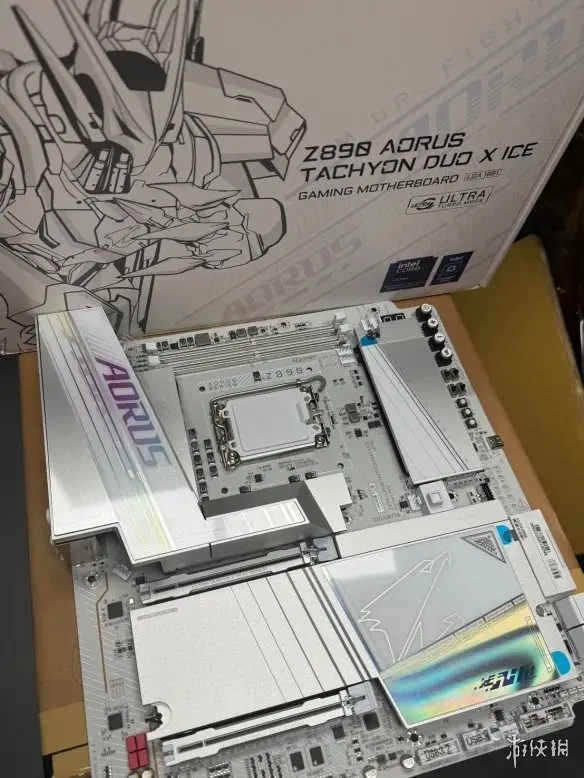
On April 29, 2026, GIGABYTE introduced the Z890 DUO X motherboard series for Intel Core Ultra 200S Plus, based on official hardware information, with the focus on high-frequency, high-capacity dual-slot memory, Ultra Turbo Mode presets, and broad M.2 expansion.
What makes this generation stand out is not simple spec stacking, but how DUO X turns “2-slot memory” from a compromise into a practical advantage. GIGABYTE’s direction is clear: D5 DUO X supports next-generation CQDIMM and XMP, and with only two memory slots, it can still reach the maximum capacity traditionally associated with four-slot layouts. For heavy creators and multitask users, that is not a gimmick; it is a hard spec that can directly change a build plan.

The more notable part is that this approach is not only about capacity; it also pushes memory frequency higher. With Core Ultra 200S Plus and dual CUDIMM DDR5 16G2, it is rated up to 10266+ MT/s (OC). With dual CQDIMM 128G2, it can still reach 8000MT/s (OC). Under D5 DUO X, total system memory capacity on a dual-slot layout can go up to 256GB. The progression is gradual but effective: accept the two-slot layout first, then add high frequency and large capacity together, and the old assumption that “four slots are safer” starts to loosen.
By board model, the Z890 “Xiaodiao” DUO X is ATX, with 16+1+2 phase DrMOS power delivery and five M.2 slots, clearly aimed at high-load platforms. The Z890M “Zhanying” DUO X takes the MATX route, but still includes five M.2 slots, 12+1+2 phase 60A DrMOS power delivery, 5GbE LAN, Wi‑Fi 7, and rear USB 4, priced at 1699 yuan. The target is users who want a compact chassis without sacrificing expansion. This is not a simple “large board vs. small board” split, but performance distribution across different budgets and case sizes.
The bigger concern is that one-click Ultra Turbo Mode L1–L3 BIOS presets may lead many users to overlook tuning boundaries. It does lower the threshold for unlocking CPU performance, but stability still depends on cooling, memory quality, and PSU headroom. For users who want quick, ready-to-run performance, it is very friendly; for people who like tuning overclocking curves, it is better treated as a starting point, not the finish line. The article also notes that after registration, these boards come with personal direct RMA service plus a four-year warranty.
The buying advice is straightforward: if your core workloads are rendering, virtual machines, or local AI inference that heavily consume memory capacity and bandwidth, DUO X’s dual-slot high-frequency, high-capacity direction is worth prioritizing. If you are purely gaming-focused, first confirm whether you will actually use the 256GB ceiling and extreme frequency potential, and do not blindly raise your budget because of intimidating headline specs. I usually dismiss cheap jump-scare-style hardware marketing, but this time GIGABYTE at least provides verifiable data and a clear product position—enough to earn a place on a serious build shortlist for review.


Comentarios 0
Nos interesa tu opinión
¡Bienvenido! Cuéntanos qué te parece este juego: ser el primero puede tener premio.
Todavía no hay comentarios. Sé el primero.