Noticia
SanDisk Q3 Revenue Surges 97% on $42 Billion Contract Win
SanDisk's Q3 revenue hit $5.95 billion, up 97% year-over-year, while long-term supply agreements sec
















The fluctuation in storage prices was originally more like supply chain news, but this time Apple’s sales channels have pushed the discussion directly to the consumer level.
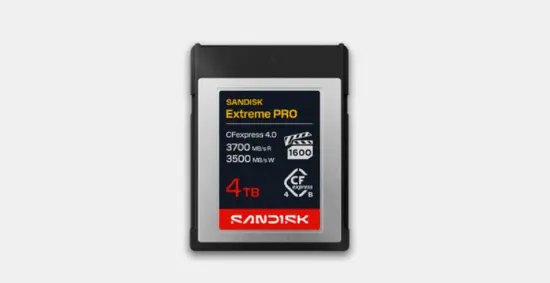
Recently, the SanDisk 2TB portable SSD sold through Apple’s official channels saw its price rise from 1498 yuan to 4798 yuan, an increase of more than three times, and it is currently still out of stock. Looking at the numbers alone, this is no longer a routine reversal of a promotional adjustment, but more like an extreme pricing signal within the retail system.

Objectively speaking, the reason this issue has gained traction is not just because the SSD itself became more expensive, but because it once again magnified the long-standing issue of “storage premium” within Apple’s ecosystem. Wang Teng Thomas, former General Manager of the REDMI brand and now founder of Jinri Yixiu, publicly mentioned that this year, costs across the global storage supply chain have continued to rise, putting widespread pressure on the smartphone industry—something that is hardly surprising. When upstream costs increase, end-product pricing tightens; that is an industry-wide reality.
But the problem is that the relationship between rising costs and end-product pricing is not always linear. Taking the iPhone17Pro mentioned in the original text as an example, the price difference between the 256GB and 512GB versions reaches 2000 yuan; by contrast, domestic smartphones with the same storage specifications generally differ by only 300 yuan. In product analysis terms, this gap suggests that for the same storage upgrade, Apple charges as part of a bundled whole-device experience, while domestic manufacturers are closer to material cost plus a moderate profit.

From a design perspective, Apple has always been adept at turning hardware specifications into a segmentation tool. Lower-capacity versions are used to lower the entry threshold, while higher-capacity versions carry the profit—this strategy is nothing new. But when external storage products also show a jump from 1498 yuan to 4798 yuan, users become more directly aware that what they are buying may not just be capacity, but a combined premium for sales channels, brand, and ecosystem compatibility.
If you look at it in the real-world usage scenarios of gamers and tech users, a 2TB portable SSD is fundamentally a “must-have expansion” item, not a “collectible consumer good.” Especially for users who frequently store game assets, screen recordings, and handheld console resource packs, price sensitivity is usually very high. At 4798 yuan, it has already moved beyond the reasonable purchasing range for most people, and cost-effectiveness is basically nonexistent.
Discussion in the community has also been very direct. Many people do not deny that storage costs are rising, but they find it much harder to accept a retail price jump of more than three times. Because for ordinary users, higher costs can be understood, but distorted pricing is much harder to sympathize with.
The buying advice is also very clear: if you simply need a 2TB portable SSD, there is no need to fixate on placing an order through Apple’s channels right now, especially since chasing a higher price while it is out of stock is even less worthwhile; if you are planning to buy a phone with a large-storage version, you might also do the math and see whether the price difference for the storage upgrade is really paying for convenience, or simply paying for brand-based product segmentation.
The value of this incident does not lie in proving who is more fair-minded, but in once again reminding the market that once storage becomes a profit entry point, what users should focus on is no longer “whether it can be bought,” but “whether this upgrade fee matches the actual benefit.”

Comentarios 0
Nos interesa tu opinión
¡Bienvenido! Cuéntanos qué te parece este juego: ser el primero puede tener premio.
Todavía no hay comentarios. Sé el primero.