 En ofertaMIMESIS
Selecciones popularesVer todo
123456789101112
12 Best Mystery Games on PC (2026)
12 Best Space Sim Games on Steam (2026)
12 Best Story-Rich Games to Play (2026)
12 Best Turn-Based Tactics Games on Steam (2026)
12 Best Puzzle Games on Steam (2026)
12 Best Games to Play with Friends on PC (2026)
12 Best JRPGs on Steam (2026)
12 Best City Builder Games on Steam (2026)
12 Best Zombie Games on Steam (2026)
12 Best Free Indie Games on Steam (2026)
12 Best Short Indie Games to Try (2026) — Done in One Evening
12 Best Cozy Games on Steam (2026)
Juegos similares popularesVer todo
Games Like PowerWash Simulator - 12 Best Relaxing Cleaning and Restoration PicksGames Like ARC Raiders - 12 Best Extraction and Co-op Survival ShootersGames Like PEAK - 12 Best Co-op Climbing and Survival PicksGames Like R.E.P.O. - 12 Best Co-op Horror PicksGames Like Clair Obscur: Expedition 33 - 12 Best Turn-Based RPG PicksGames Like Path of Exile 2 - 12 Best Action RPG and Loot PicksGames Like Road to Vostok - 12 Best Hardcore Survival Shooter PicksGames Like Mina the Hollower - 12 Best Top-Down Action and Zelda-Like PicksGames Like Slay the Spire 2 - 12 Best Roguelike Deckbuilders to Play NextGames Like Resident Evil Requiem - 12 Best Survival Horror PicksGames Like Baldur's Gate 3 - 12 Best CRPGs and Turn-Based RPGsGames Like Monster Hunter Wilds - 12 Best Co-op Hunting and Action RPG PicksGames Like Hollow Knight: Silksong - 12 Best Metroidvania Picks (2026)Games Like Dead by Daylight - 12 Best Asymmetric & Co-op Horror PicksGames Like Final Fantasy VII Rebirth - 12 Best Action RPG & JRPG PicksGames Like Forza Horizon 6 - 12 Best Open-World Racing & Driving Picks (2026)Games Like Solarpunk - 12 Best Cozy Survival and Crafting GamesGames Like 007 First Light - 12 Best Stealth and Spy GamesGames Like Subnautica 2 - 12 Best Underwater and Alien-World Survival GamesGames Like Hell Let Loose - 12 Best Tactical Milsim Shooters
Análisis popularesVer todo

Hades II — Análisis

Clair Obscur: Expedition 33 — Análisis

Katana ZERO — Análisis

The Long Dark — Análisis

Shift At Midnight — Análisis

Middle-earth™: Shadow of Mordor™ — Análisis

The Mermaid Mask — Análisis

Killing Floor 2 — Análisis

The Outlast Trials — Análisis

American Truck Simulator — Análisis

Voidling Bound — Análisis

Go-Go Town! — Análisis

Desktop Explorer — Análisis

Dead as Disco — Análisis

Crushed In Time — Análisis

Beastro — Análisis
Mimic Hunter’s First Major Update Is Live, and Players Are Split
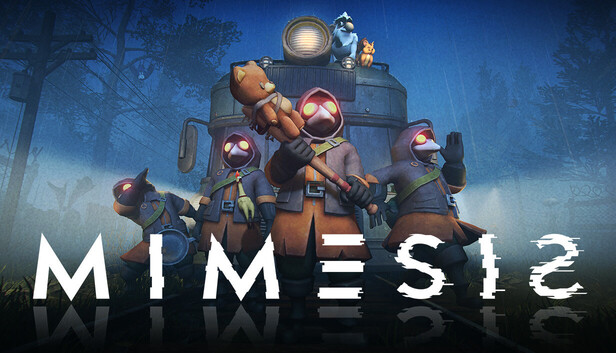
MIMESIS has released its first major update. Developed by ReLU Games, KRAFTON’s creative studio, the four-player co-op horror game sold 1 million copies worldwide in 50 days after entering Steam Early Access last October, and this patch focuses on stronger AI-driven NPCs, a reworked progression structure, and expanded maps, monsters, and gear. More than that, it sharpens the idea that defines the game in the first place: an AI Native Game built around mistrust as a core mechanic rather than a marketing label.

At the center of MIMESIS is the monster Mimesis, which can mimic player movements and voices in real time before blending into the team. That has always been the game’s strongest idea. The real tension does not come from a sudden jump scare, but from hearing a familiar voice and no longer feeling sure it belongs to your teammate. This update seems to improve exactly that. ReLU Games says it was built from player feedback gathered during Early Access, and one of the clearest changes is how Mimesis now approaches players in more natural and varied ways. The team has also given different AI entities distinct personalities, so they behave with clearer individual traits instead of repeating the same behavioral logic.
That matters because MIMESIS only works if its AI does more than sell the premise. The monster can learn players’ voice exchanges and behavior patterns during a match, then make real-time judgments and reactions based on its surroundings. That is why the game is worth describing as an AI Native Game: the technology is embedded in the structure of play itself, turning suspicion inside a co-op team into a sustained source of pressure.
The bigger change may be the progression overhaul. The original structure advanced in a three-day cycle, which made the rhythm easier to read once players became familiar with it. Horror games lose force quickly when their pacing becomes routine, and co-op horror is especially fragile once enemy behavior starts feeling memorized. ReLU Games has now rebuilt that framework into a more flexible form and rebalanced the overall difficulty curve. The goal is clear: help new players adjust to the systems more naturally, then raise the tension step by step in later phases. It is the right direction, because the biggest threat to this kind of game is not difficulty, but predictability. Once fear becomes a solved pattern, it collapses into process.
The added content pushes in the same direction. The factory, subway station, and mansion dungeon have all gained new interior areas, while outdoor routes and resource placement have been redesigned to push players toward more varied planning and exploration. New monsters and interactive environmental devices have been added, major equipment now supports upgrades, and players can now throw resources for additional tactical options. The point is not simply to add more content, but to widen the space for risk-reward decisions. Whether that translates into lasting appeal will depend on whether the update’s increased randomness and stronger character expression can keep generating memorable stories during play, because co-op horror lives or dies on those moments when a team almost mistakes the wrong thing for a friend.
The spectator update is also smart. After being eliminated, players can now possess the monster that once threatened them and continue talking with surviving teammates. That gives death a role beyond passive waiting, and it fits MIMESIS unusually well. A game built on imitation, mistaken identity, and disguise benefits when even elimination becomes another form of performance. For streamers and groups of friends, that should create extra drama almost by default.
ReLU Games is clearly aiming beyond a one-note gimmick. The studio plans to build MIMESIS into a large IP with long-term value, and CEO Min-jung Kim says the team believes AI has already begun changing the rules of co-op horror as a genre. That claim is not proven yet, but the direction is clear. If you care most about mechanical novelty and the kind of social drama that only appears in multiplayer sessions with friends, this update gives the game a real reason to stay on your radar. If you would rather wait for a more stable and complete version, keeping an eye on future Steam-page updates and post-patch player feedback still makes sense.
The game’s sales help explain the attention. Since launching in Early Access last October, MIMESIS cleared 1 million global sales in 50 days, and it also became the first Korean game to receive the CEDEC Awards 2026 Excellence Award in the game design division. The award, presented by CEDEC, Japan’s largest game developers conference, recognized its design concept and technical execution in bringing AI into game design. Still, awards and sales only prove that the project has been noticed. What decides whether MIMESIS can actually grow into a lasting IP is both more straightforward and more difficult: whether its AI-driven systems can keep creating those fragile moments of unease, hesitation, and mutual suspicion between players.
More details on the update are available on the MIMESIS official website, the Steam store page, and the official trailer.
En ofertaMIMESIS

Comentarios 0
Nos interesa tu opinión
¡Bienvenido! Cuéntanos qué te parece este juego: ser el primero puede tener premio.
Todavía no hay comentarios. Sé el primero.