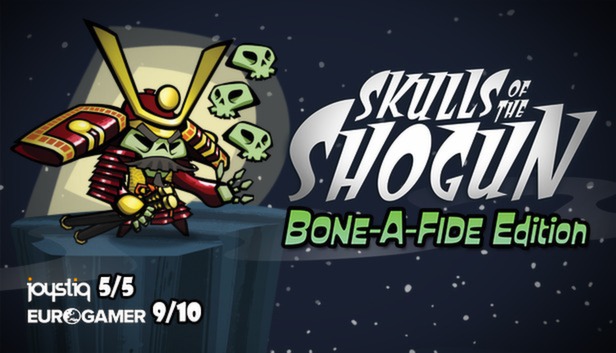
 Skulls of the ShogunFetching price~ $9.99
Selecciones popularesVer todo
123456789101112
12 Best Mystery Games on PC (2026)
12 Best Space Sim Games on Steam (2026)
12 Best Story-Rich Games to Play (2026)
12 Best Turn-Based Tactics Games on Steam (2026)
12 Best Puzzle Games on Steam (2026)
12 Best Games to Play with Friends on PC (2026)
12 Best JRPGs on Steam (2026)
12 Best City Builder Games on Steam (2026)
12 Best Zombie Games on Steam (2026)
12 Best Free Indie Games on Steam (2026)
12 Best Short Indie Games to Try (2026) — Done in One Evening
12 Best Cozy Games on Steam (2026)
Juegos similares popularesVer todo
Games Like PowerWash Simulator - 12 Best Relaxing Cleaning and Restoration PicksGames Like ARC Raiders - 12 Best Extraction and Co-op Survival ShootersGames Like PEAK - 12 Best Co-op Climbing and Survival PicksGames Like R.E.P.O. - 12 Best Co-op Horror PicksGames Like Clair Obscur: Expedition 33 - 12 Best Turn-Based RPG PicksGames Like Path of Exile 2 - 12 Best Action RPG and Loot PicksGames Like Road to Vostok - 12 Best Hardcore Survival Shooter PicksGames Like Mina the Hollower - 12 Best Top-Down Action and Zelda-Like PicksGames Like Slay the Spire 2 - 12 Best Roguelike Deckbuilders to Play NextGames Like Resident Evil Requiem - 12 Best Survival Horror PicksGames Like Baldur's Gate 3 - 12 Best CRPGs and Turn-Based RPGsGames Like Monster Hunter Wilds - 12 Best Co-op Hunting and Action RPG PicksGames Like Hollow Knight: Silksong - 12 Best Metroidvania Picks (2026)Games Like Dead by Daylight - 12 Best Asymmetric & Co-op Horror PicksGames Like Final Fantasy VII Rebirth - 12 Best Action RPG & JRPG PicksGames Like Forza Horizon 6 - 12 Best Open-World Racing & Driving Picks (2026)Games Like Solarpunk - 12 Best Cozy Survival and Crafting GamesGames Like 007 First Light - 12 Best Stealth and Spy GamesGames Like Subnautica 2 - 12 Best Underwater and Alien-World Survival GamesGames Like Hell Let Loose - 12 Best Tactical Milsim Shooters
Análisis popularesVer todo

Hades II — Análisis

Clair Obscur: Expedition 33 — Análisis

Katana ZERO — Análisis

The Long Dark — Análisis

Shift At Midnight — Análisis

Middle-earth™: Shadow of Mordor™ — Análisis

The Mermaid Mask — Análisis

Killing Floor 2 — Análisis

The Outlast Trials — Análisis

American Truck Simulator — Análisis

Voidling Bound — Análisis

Go-Go Town! — Análisis

Desktop Explorer — Análisis

Dead as Disco — Análisis

Crushed In Time — Análisis

Beastro — Análisis
Galak-Z Developer Says Rumor Has It Nintendo Sidelined Staff at 50
According to a report relayed by the @kiwitalkz blog, developer Jake Kazdal says Nintendo has an unwritten internal practice in which staff leave frontline development roles at 50, move into support and mentorship positions, and fully retire at around 65. Kazdal, who worked at Nintendo, Sega, and Square Enix and contributed to Galak-Z and Skulls of the Shogun, says he knows Nintendo from the inside. The claim, however, still has not been officially confirmed by Nintendo.
What makes the rumor interesting is that it points to something bigger than age or HR policy. At its core, this is really about how a major game company manages the transfer of experience. For a studio like Nintendo, whose output has stayed remarkably steady over the long term, that question matters far more than the gossip value of who moves where.

The source itself is not coming out of nowhere. Kazdal previously worked at Nintendo, Sega, and Square Enix, and was involved in games including Galak-Z and Skulls of the Shogun. The report says he has long been part of Kyoto's game development scene and has direct ties to senior Nintendo developers such as Hideki Konno, Eiji Aonuma, and Yoshio Sakamoto. That is why he specifically stressed that he is not just some random outsider. None of that makes the rumor automatically true, but it does mean the claim is not baseless hearsay.
The most important qualifier remains the same: Nintendo has not officially confirmed any of this. For now, it is more reasonable to treat it as an internal mechanism discussed within the industry, not a public policy the company has formally stamped into place. That distinction matters, because rumors like this are easy to overstate once they start sounding plausible.

If the practice is real, though, it would fit Nintendo's development culture surprisingly well. One of the biggest problems large companies face is what happens when core teams age: either leadership holds on too tightly, or newer staff never fully steps up. Projects can keep moving, but they lose flexibility and renewal. If Nintendo really uses 50 as the point where veteran staff shift away from frontline production and toward training, that would amount to systematizing knowledge transfer instead of letting decades of experience walk out the door at retirement.
That is the part worth focusing on, not the age threshold by itself. In game development, just like in game design, scale means very little if everything starts to feel duplicated. When too much know-how sits with a small number of star creators, long-running series can easily drift into repetition. On the other hand, if senior developers can remain active in support roles while mentoring newer staff, a company may be able to preserve both stability and turnover at the same time. If true, that could help explain why Nintendo has maintained such a consistently efficient development rhythm for so long.
From an industry perspective, that possibility is more valuable than the rumor's surface-level novelty. Not every company can or should copy specific milestones like 50 for reassignment and 65 for retirement. But the broader issue, gradually moving veteran developers from pure execution roles into advisory, review, and training positions, is one every large studio eventually has to confront. For players, news like this will not change a buying decision today. It could, however, shape the quality curve of the games we get over the next few years, especially from publishers whose reputation still rests on classic series.
Skulls of the ShogunFetching price~ $9.99




Comentarios 0
Nos interesa tu opinión
¡Bienvenido! Cuéntanos qué te parece este juego: ser el primero puede tener premio.
Todavía no hay comentarios. Sé el primero.