
Noticia
007 First Light Drops to $24.69 in Its First-Ever Sale, Beating the Previous Low
007 First Light gets its first discount, with Green Man Gaming stacking an extra 18% off the 20% official price cut plus








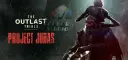







Against a black background, only a cold, austere title hangs in the air, like an unstarted spy film revealing its name before the characters, conspiracies, and gunfire emerge from behind the curtain; when PHYSINT was recently announced to have entered the casting stage, what first came to my mind was not whether it would be fun, but that it had finally begun to grow from a concept sketch into a work that could actually be “performed.” Kojima Productions has not released much information this time, but it is already clear enough: this new title, first unveiled at PlayStation State of Play in January 2024, is crossing the threshold from early conception into substantive production.

An even more crucial detail is the “bus hijacking” scene, whose motion capture and filming are expected to begin in June 2026. The premise itself carries a distinctly Kojima-like scent: a confined space, an extreme situation, a high-pressure vessel where characters’ positions can collide against one another, like a road thriller wound tight with suspense, throwing its characters into a machine of fate they cannot easily step out of. On the narrative level, scenes like this are usually not meant to be merely “exciting”; they are meant to set the tone, determining whether the work leans more toward cold-blooded espionage or toward dramatic spectacle.

It is not hard to understand why the outside world has so quickly regarded PHYSINT as a return to spy fiction after Metal Gear. Kojima originally defined it as a “next-generation tactical espionage action game,” and with the deep collaboration with Sony Interactive Entertainment, its genre and ambition are almost already written on the cover. But the deeper question is whether this return is merely a turn back in subject matter, or another act of self-proof in narrative ability; after all, the phrase “spiritual successor” sounds moving, but the real challenge is allowing new characters to break free from old shadows and a new world to establish its own gravity.
This casting update also contains another intriguing angle: the production is looking for an actor with a demeanor reminiscent of Mads Mikkelsen during his Hannibal period, yet one who must still retain a distinct personal presence. The requirement feels like a coded signal to players familiar with Kojima’s works—on one hand evoking the audience’s memory of an existing screen image, and on the other carefully avoiding turning the character into a complete imitation. Unfortunately, for that very reason, it also makes people realize even earlier the difficulty PHYSINT will face—if a character only stops at “looking like someone,” then the role can easily become nothing more than a shell for star charisma; only if an independent soul truly grows during the performance capture stage can that sense of familiarity become an effective literary echo.

From another angle, the claim that PHYSINT will not land on the current-generation PS5 but is instead aiming for Sony’s next-generation console, PS6, also in a sense explains why its progress has been so slow. Kojima previously mentioned that the project would use the most cutting-edge technology to blur the boundary between film and games and pursue more realistic visual presentation; that will of course raise expectations, but it also raises the risks, because technology can only amplify expression, never replace it. For players who care about story and characters, my advice is actually quite simple: there is no need to rush into betting on it as “the next Metal Gear.” What is more worth watching is whether the actor lineup, character relationships, and scene fragments revealed next can make this work feel not merely like a beautiful poster, but like a spy narrative that has truly begun to breathe.




Comentarios 0
Nos interesa tu opinión
¡Bienvenido! Cuéntanos qué te parece este juego: ser el primero puede tener premio.
Todavía no hay comentarios. Sé el primero.