 En ofertaResident Evil Requiem
Selecciones popularesVer todo
123456789101112
12 Best Mystery Games on PC (2026)
12 Best Space Sim Games on Steam (2026)
12 Best Story-Rich Games to Play (2026)
12 Best Turn-Based Tactics Games on Steam (2026)
12 Best Puzzle Games on Steam (2026)
12 Best Games to Play with Friends on PC (2026)
12 Best JRPGs on Steam (2026)
12 Best City Builder Games on Steam (2026)
12 Best Zombie Games on Steam (2026)
12 Best Free Indie Games on Steam (2026)
12 Best Short Indie Games to Try (2026) — Done in One Evening
12 Best Cozy Games on Steam (2026)
Juegos similares popularesVer todo
Games Like PowerWash Simulator - 12 Best Relaxing Cleaning and Restoration PicksGames Like ARC Raiders - 12 Best Extraction and Co-op Survival ShootersGames Like PEAK - 12 Best Co-op Climbing and Survival PicksGames Like R.E.P.O. - 12 Best Co-op Horror PicksGames Like Clair Obscur: Expedition 33 - 12 Best Turn-Based RPG PicksGames Like Path of Exile 2 - 12 Best Action RPG and Loot PicksGames Like Road to Vostok - 12 Best Hardcore Survival Shooter PicksGames Like Mina the Hollower - 12 Best Top-Down Action and Zelda-Like PicksGames Like Slay the Spire 2 - 12 Best Roguelike Deckbuilders to Play NextGames Like Resident Evil Requiem - 12 Best Survival Horror PicksGames Like Baldur's Gate 3 - 12 Best CRPGs and Turn-Based RPGsGames Like Monster Hunter Wilds - 12 Best Co-op Hunting and Action RPG PicksGames Like Hollow Knight: Silksong - 12 Best Metroidvania Picks (2026)Games Like Dead by Daylight - 12 Best Asymmetric & Co-op Horror PicksGames Like Final Fantasy VII Rebirth - 12 Best Action RPG & JRPG PicksGames Like Forza Horizon 6 - 12 Best Open-World Racing & Driving Picks (2026)Games Like Solarpunk - 12 Best Cozy Survival and Crafting GamesGames Like 007 First Light - 12 Best Stealth and Spy GamesGames Like Subnautica 2 - 12 Best Underwater and Alien-World Survival GamesGames Like Hell Let Loose - 12 Best Tactical Milsim Shooters
Análisis popularesVer todo

Hades II — Análisis

Clair Obscur: Expedition 33 — Análisis

Katana ZERO — Análisis

The Long Dark — Análisis

Shift At Midnight — Análisis

Middle-earth™: Shadow of Mordor™ — Análisis

The Mermaid Mask — Análisis

Killing Floor 2 — Análisis

The Outlast Trials — Análisis

American Truck Simulator — Análisis

Voidling Bound — Análisis

Go-Go Town! — Análisis

Desktop Explorer — Análisis

Dead as Disco — Análisis

Crushed In Time — Análisis

Beastro — Análisis
How should you choose the settings for *Resident Evil 9: Requiem*? First, check the ray tracing requirements.
Whenever a new title pushes visual technology one step further, what players feel first is often not amazement, but a higher hardware threshold. Resident Evil 9: Requiem is a textbook example this time.
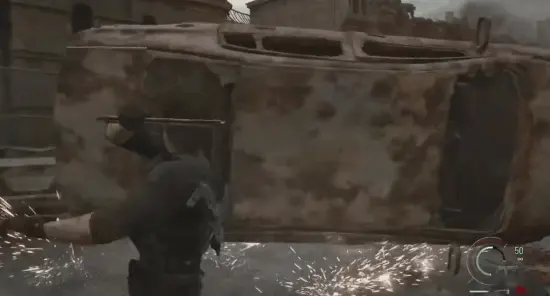
Based on the information currently provided in this system requirements guide, the game's biggest dividing line is not the traditional distinction between low and high graphics settings, but whether path tracing is turned on or off. The original text makes this point very directly: “The fact is that in this title, turning path tracing on or off is practically like playing two different games.” The wording may sound a bit strong, but in terms of hardware demands, it does hold true.
Objectively speaking, this means Resident Evil 9: Requiem is not simply a case of “the stronger the graphics card, the better.” It places more specific demands on the type of hardware itself. To experience path tracing smoothly, you first need an NVIDIA graphics card that supports the technology, and second, you need a fairly large amount of VRAM. The latter is actually even more important to pay attention to, because many players get stuck on GPU model choices within their budget while overlooking the decisive role VRAM now plays in new-generation ray-traced games.
From a design perspective, this feels a bit like an early test of a second-generation product. The technical presentation has clearly taken a step forward, but the cost is equally clear: if you want to fully benefit from the visual upgrade, your overall system build can no longer be just “barely enough.” Especially against the backdrop of rising storage prices, the article treats a “high-VRAM rig” as a necessary condition for newcomers to play smoothly. That judgment is grounded in reality and not exaggerated.
The practical value of this guide lies in the fact that it does not push every player toward the highest possible budget. Taking real-world needs and the current market into account, the author put together three configurations for 4K, 2K, and 1080P resolutions respectively. That approach makes sense, because in a game like Resident Evil 9: Requiem, resolution, ray tracing, and VRAM are tightly linked. For 4K users, the performance burden is more comprehensive; 2K is more of the mainstream sweet spot; and 1080P is better suited to players with limited budgets who still want to retain as much of the technical experience as possible.
If we are talking about buying advice, my view is very clear: when your budget is limited, prioritize GPU support for path tracing and VRAM capacity first, and only then consider your target resolution. If your total build budget is tight, blindly aiming for 4K is not cost-effective; 2K is often the more balanced choice in terms of value. As for the 1080P setup, it is more of a baseline option for controlling costs, suitable for users building a PC for the first time who do not want this game to scare them off right away.
In other words, Resident Evil 9: Requiem is sending a signal to the market: in the near future, path tracing may gradually shift from being an “optional feature” to becoming the ticket to a high-end experience. For players, this is not just a simple upgrade, but a shift in how they think about building a PC. Figure out first whether you are playing at 1080P, 2K, or 4K, and then decide which GPU to buy and how much VRAM to get—that matters more than looking at model numbers alone.
En ofertaResident Evil Requiem


Comentarios 0
Nos interesa tu opinión
¡Bienvenido! Cuéntanos qué te parece este juego: ser el primero puede tener premio.
Todavía no hay comentarios. Sé el primero.