
Noticia
Perfect World's UE5 Title Yihuan Hits 100 Million Yuan on Day One
Perfect World's Neverness to Everness launched its public beta and pulled over 100 million yuan glob
















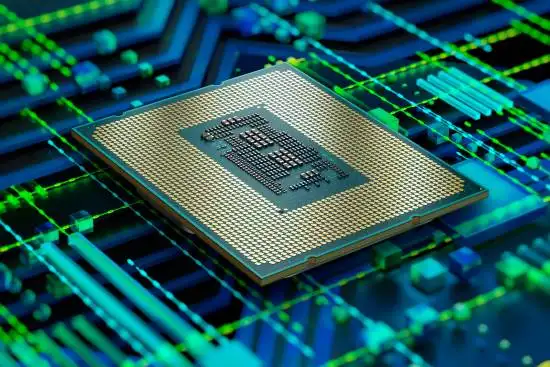
If Tesla’s AI5 tape-out this time is seen as a key level in a platformer+puzzle game, then it is not the ending cutscene, but the moment the character finally steps onto the lift leading to the next stage. Musk recently announced that Tesla’s in-house AI5 chip has completed tape-out, which means the design phase has officially wrapped up, the chip blueprints have been handed over to the factory, and the next step is manufacturing. For a company simultaneously betting on autonomous driving, robotics, and supercomputing, this step means far more than simply publishing a spec sheet.

AI5’s positioning is also very clear: it is not simply about cramming more hardware into the vehicle system, but about optimizing edge computing around FSD and the humanoid robot Optimus. In other words, the problem Tesla wants to solve is not “how fast a single device can run,” but “whether cars and robots can understand their environment more efficiently and make decisions locally.” Musk said the chip’s performance is “far beyond expectations,” while also specifically thanking partners such as TSMC and Samsung, which shows that Tesla’s in-house route is not about working behind closed doors, but about achieving completeness across design, manufacturing, and the supply chain.

What is even more intriguing is that Musk is not stopping at AI5. He has already confirmed that the more powerful AI6, as well as the restarted Dojo3 supercomputer project, are both moving forward. The pace feels a lot like opening several doors in succession in a puzzle game: AI5 handles compute on the endpoint side, Dojo3 handles infrastructure on the training side, and AI6 is like a high-level item planted in advance on the next map. The article also mentions that relevant sources expect the design to be completed by the end of 2026, with mass production in 2028, which means Tesla is betting on a long-term path rather than trying to stir short-term sentiment with a single generation of chips.

From an industry trend perspective, the most important signal behind AI5’s tape-out is that Tesla is accelerating the buildout of its own autonomous AI compute ecosystem, with the goal of minimizing reliance on external suppliers as much as possible. Musk even predicted that AI5 will become one of the highest-volume AI chips in the world in the future. That may sound aggressive, but if both FSD and Optimus need to be deployed at scale, then Tesla really does need a core chip that can both be mass-produced and continuously iterated. For readers following the smart vehicle and robotics sectors, this news is more valuable than “how much benchmark scores have improved,” because it signals that industry competition has shifted from competing on isolated performance points to competing on end-to-end control across the entire chain.
In my view, AI5 completing tape-out is only the first puzzle piece falling into place; the real challenges still lie ahead, including manufacturing yield, the pace of mass production, and whether the chip’s capabilities can be translated into actual improvements in the user experience of FSD and Optimus. For gamer-minded readers watching this track from the sidelines, it can be seen as a weather vane for the next two or three years: whoever can connect training, deployment, endpoints, and supply chains into a closed loop will have the better chance of clearing this long hardware game.
Comentarios 0
Nos interesa tu opinión
¡Bienvenido! Cuéntanos qué te parece este juego: ser el primero puede tener premio.
Todavía no hay comentarios. Sé el primero.