
If your brain is still spinning after work, but you have no patience left for demanding quests, long story campaigns, or layered progression systems, these 12 indie picks are the right kind of cooldown. The list is built around one specific use case: games with low onboarding friction, short sessions, and clear feedback loops that can deliver a real reset in roughly 20 minutes to 1 hour. This ranking is not about prestige or review standing. It is about which games fit weekday decompression best, starting with near-zero-effort observation and hidden-object games, then moving into light logic puzzles that can gently pull your attention away from work.
1. Keep an eye on your rubber duck. #

 Steam$1.99Voir le prix →
Strictly speaking, this barely qualifies as a game at all, which is exactly why it belongs here. Watch Your Plastic Duck gives you a pool, a flock of plastic ducks, looping water ripples, and a steady soundtrack. The whole point is to watch and wait. There is no puzzle pressure, and it is not driven by object hunting either. Instead, new duck variants and a faint sense of collection create a low-stimulation, companion-like form of downtime that you can leave at any moment. Compared with similar games, it feels more like a desktop ornament than a game you are trying to beat. You do not need to win. You just need to look.
2. Deep-Sea Fishing #
 Steam$2.99Voir le prix →
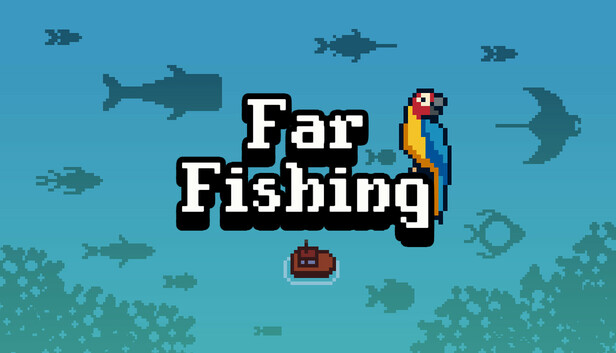
Far Fishing feels like fishing and route management compressed into a very light seafaring loop: leave port, cast your line, sell fish, upgrade, then push into more distant waters. Its strength is clarity. The goal is always obvious, and the resource feedback is immediate enough to keep you moving without asking you to learn a complicated system. Unlike pure hidden-object games or pure puzzles, this plays more like a low-pressure management-and-gathering game. You are always doing something, but the rhythm stays steady. It never feels empty, and it never feels exhausting.
3. London Hide-and-Seek with Cats #

 Kinguin$0.83-64%Steam $0.83Voir le prix →
If what you want is a zoning-out puzzle with almost no learning curve, Hidden Cats in London is an easy recommendation. It handles hidden-object design with restraint: the monochrome London streetscape starts with a clean silhouette, then slowly regains color as you find more cats. The feedback is immediate, and the sense of completion lands well. Unlike logic-first puzzle games, its calming effect comes from the rhythm of visual scanning, helping pull your attention back into one simple task. Sessions are short, and stopping midway does not break the mood.
4. A Cat Search in Paris #
 Kinguin$0.70-69%Steam $0.70Voir le prix →
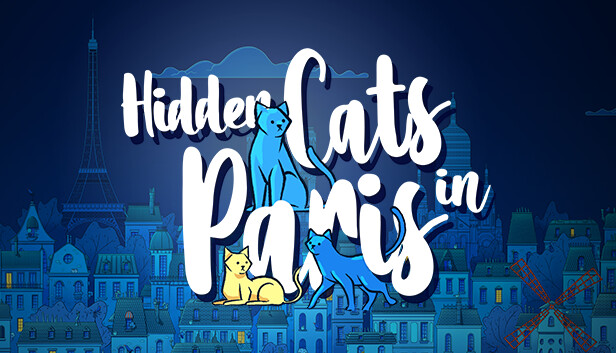
If what you want is a zoning-out puzzle with almost no learning curve, Hidden Cats in Paris is also a very safe pick. It compresses the whole hidden-object idea into a single hand-drawn Paris panorama: find cats in black-and-white line art, and color gradually fills in as you progress. The response is direct, and the payoff is satisfying. Unlike similar games that simply pile on more objects, this one puts more emphasis on image rhythm and visual reward. The main run is short, while extra stages offer a little more challenge for anyone who wants to linger.
5. Hidden Cats: New York #
 Kinguin$2.25-34%Steam $2.25Voir le prix →
The advantage of Hidden Cats in New York is not just that it asks you to find cats. It strips hidden-object play down to a very clean form. The black-and-white New York street scenes have moderate information density, the goals are clear, and the way your gaze moves across the image has a natural rhythm. It does not wear you down the way busier hidden-object games can. The feedback is also very readable: cats light up progressively, and the final full-color image gives the whole search a strong sense of completion. It takes only a few minutes to settle into, making it ideal for quickly clearing your head.
6. Endless Lines #
 Kinguin$0.50-56%Steam $0.50Voir le prix →
Lines Infinite feels like turning Numberlink into a minimalist meditation toy. All you do is connect same-colored nodes in one stroke while preventing paths from crowding each other out. The rules have almost no learning cost, but as the boards expand, space management and route order naturally raise the density of thought involved. Unlike hidden-object or hidden-cat games, the relaxation here comes from a stable, predictable process of deduction. Individual stages resolve quickly, and getting stuck does not trigger any punishment from the system. It is especially good when you want to empty your mind by focusing it.
7. Color Puzzle #
 Steam$1.99Voir le prix →
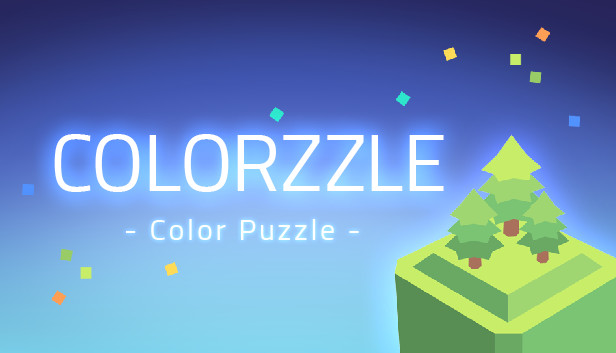
Colorzzle makes color matching its central rule set. By mixing and spreading color, you make a barren island grow trees, flowers, and layers of terrain. It carries almost no execution pressure, and the information on screen stays clean. The challenge sits in reading color relationships, not in reflexes or in wasting time on brute-force trial and error. Compared with the more passive observation of hidden-object games, this feels more like a set of short, efficient logic problems. The pace is quiet, the feedback is clear, and a few stages are enough to shift your attention out of work mode.
8. NABOKI #
 Steam$2.54$2.99-15%Voir le prix →
NABOKI plays like an inverted mechanical puzzle. You are not building something. You are taking it apart. Each level revolves around one question: which piece should come off first? The rule set is tiny, but layering, obstruction, and connection relationships create a natural sense of progression. The mental load stays light, yet it is very easy to slip into concentration. There is no timer, no punishment, and with the minimalist presentation and soft sound design, it is particularly well suited to pulling your attention away from clutter in a short session.
9. Tile City #
 Steam$2.99Voir le prix →
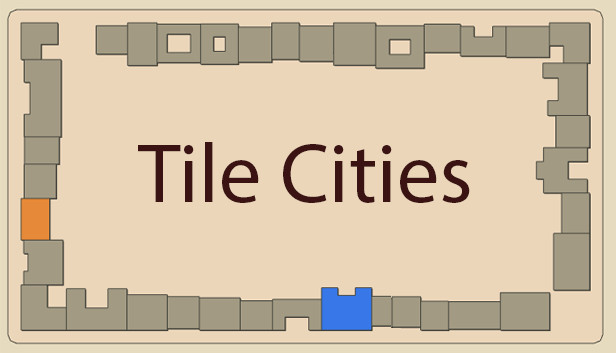
Tile Cities breaks city-building down into a minimalist puzzle. You place districts, rivers, and buildings according to terrain and adjacency rules. The system is easy to read at a glance, but every move involves trade-offs between score and board efficiency. Unlike pure hidden-object games or simple click-to-clear designs, Tile Cities has real strategy to it without the resource-chain pressure common to management sims. A run lasts around ten minutes, failure is cheap, and restarting is frictionless. It suits players who want to use their brain a little without getting tangled in a complicated system.
10. Micro Mobility #
 Steam$2.99Voir le prix →
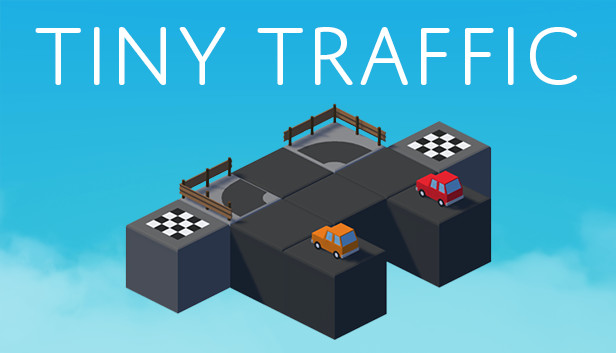
Tiny Traffic turns traffic control into a minimalist turn-based puzzle. You only need to adjust directions at key intersections and guide every vehicle into its proper place. The benefit is how readable everything is: the rules are intuitive, the information load is clean, and there is no management stress. At the same time, it is less passive than hidden-object games. Levels stay small, but gradually introduce route conflicts, sequencing, and spatial prediction. The thinking never leaves a comfortable range. It is a strong fit for people who want a bit of mental activity without being dragged into complexity.
11. Instant Farmer: A Logic Puzzle #
 GAMIVO$0.69Steam $0.69Voir le prix →
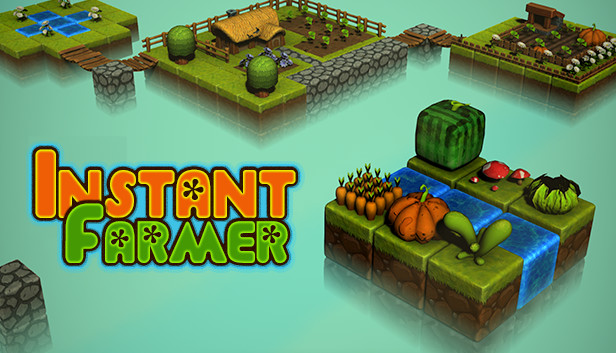
Instant Farmer - Logic Puzzle turns farming into pure logical deduction. You place fields, roads, and water sources in sensible positions so the entire farm can run efficiently. Its strength is the same kind of clarity seen elsewhere on this list: the rules are intuitive, the information is clean, and it avoids the resource math and long-term pressure typical of farming or management sims. Each level focuses on one spatial problem, and the payoff when it clicks is crisp. Compared with pure hidden-object or idle observation games, it feels more like low-burden mental organization for players who want to think a little without getting trapped in a larger system.
12. Retro Maze #
 Steam$0.99Voir le prix →
RetroMaze stands out by turning maze navigation into something close to pure rhythmic decompression. Its neon retro art, clean color palette, and steadily increasing path complexity can move your attention away from work tasks and onto spatial judgment very quickly. There are no extra systems getting in the way, the rules are straightforward, and restarting costs almost nothing. A run only takes a few minutes, enough for trial, error, and a clear. Compared with hidden-object games or conventional puzzle games, it leans more heavily on sense of direction and route memory. The process is quiet without becoming dull, which makes it a good fit if you want your brain to slow down without switching off completely.
The best budget stress-relief games for office workers are not just "easy" games. They are games that can seize your attention quickly without creating new pressure. Across these 12 picks, the cat-finding and observation-heavy options are best for fully clearing your head, while the puzzle and strategy games are better for gradually pressing stray thoughts into the background.





Commentaires 0
Votre avis nous intéresse
Participez à la discussion et partagez votre avis sur ce jeu.
Aucun commentaire pour l’instant. Partagez votre avis.