When parent-child families look for single-player games, the core question is not “can the child play on their own,” but whether the game can turn companionship into meaningful interaction: either by enabling discussion, observation, and taking turns to tackle challenges together, or by making knowledge input, skill practice, and emotional feedback feel natural enough. This list is ranked by “fit for parent-child scenarios,” considering not just whether a game is fun, but also its low barrier to entry, companionability, content safety, and communication value. Simply put, priority is given to games that truly let parents participate, rather than just leaving the child alone with a screen.
1. Little Mouse's Encyclopedia #

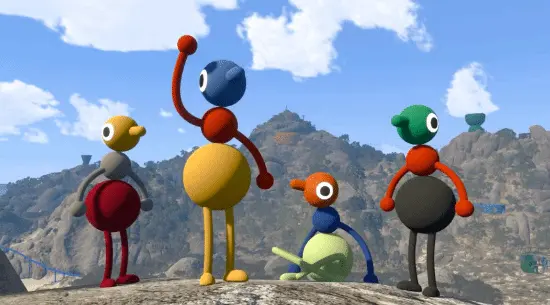
The key to this kind of game is not clearing levels, but whether it can naturally open up parent-child conversations. Little Mouse's Encyclopedia breaks knowledge points into observation, clicking, and light interaction, so children do not feel like they are in class, and parents can easily add everyday knowledge along the way. Its biggest strength is how reliably it supports “play while talking,” with a gentle pace and clear feedback, making it especially suitable for preschool to early elementary families seeking a companion-style experience.
2. It's Spring Again #
 Kinguin€0.14-82%Steam €0.14Voir le prix →
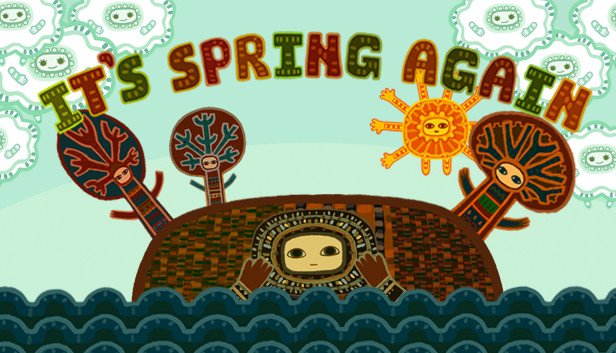
If the child at home is on the younger side, this game is a very strong match. Its design is clearly built around young children, with simple interactions, clear goals, and content focused on basic cognition. It does not require advanced reading or writing skills, nor does it create pressure through harsh failure penalties. Unlike many products that claim to be “for children” but are actually fairly complicated to operate, this one truly keeps the barrier low, making it one of the easiest beginner single-player games for parents to comfortably play alongside their children.
3. Typing Land #
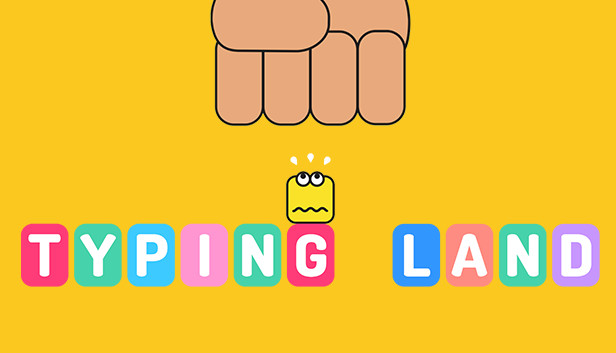
When skill training is turned into a game, many titles end up feeling too much like practice. Typing Land handles this relatively well by breaking typing into multiple mini-games with short goals and quick feedback, making it easier for children to stay engaged. For parent-child families, its value lies in highly efficient guided practice: parents can clearly see progress and give concrete help with finger placement, rhythm, and bad habits. It is well suited for families with specific learning goals who want to turn screen time into training time.
4. Zeus vs Monsters - Math Game for kids #
 Kinguin€1.62-73%Steam €1.62Voir le prix →
This one suits family situations where “the child resists worksheets, but responds well to immediate feedback.” It ties math problems directly to action-based responses. The approach is not complex, but it works very effectively for younger users: solving problems is no longer static input, but something with clear and immediate results. It may not be the deepest game here, but it wins with clear goals and straightforward use, and parents can treat it as a math warm-up tool. The premise is also clear: it is more for introduction and reinforcement, not for families looking for deep strategic gameplay.
5. Broken Age #
 Kinguin€0.59-95%Steam €0.59Voir le prix →
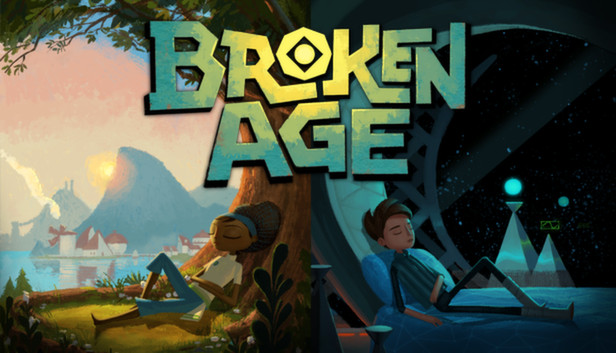
Broken Age is suitable for slightly older parent-child families who can engage with story-driven progression. Its strength is not challenge, but the fact that its hand-drawn art, character expression, and puzzle pacing are all gentle enough to avoid awkward content during family viewing. As a single-player game, it is well suited to a “one person plays, the whole family discusses” format: the child handles clicking and exploration, while the parent helps organize clues. Compared with purely child-oriented titles, it feels more like an interactive animated film that everyone can participate in together.
6. Poi #
 Kinguin€2.65-82%Steam €2.65Voir le prix →
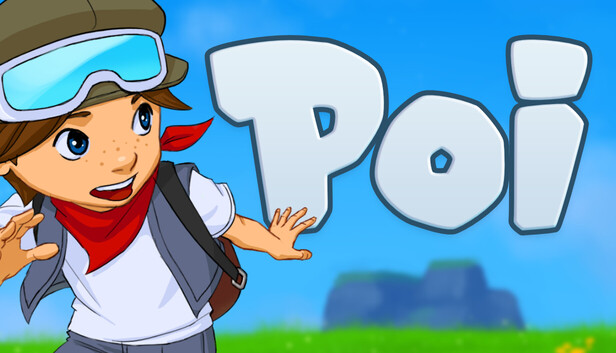
In parent-child families, platformers are most likely to fail in two ways: uncomfortable camera control and heavy punishment for failure. Poi handles both fairly well. Its 3D jumping feels intuitive, and overall frustration is kept under control. Children can directly jump into running, jumping, and collecting, while parents can help with route-finding and spotting hidden elements. Unlike hardcore platformers that emphasize extreme precision, it is better suited to taking turns and exploring together as a family, making it a relatively stable entry point into 3D platforming.
7. The Labyrinth of King Chaka #
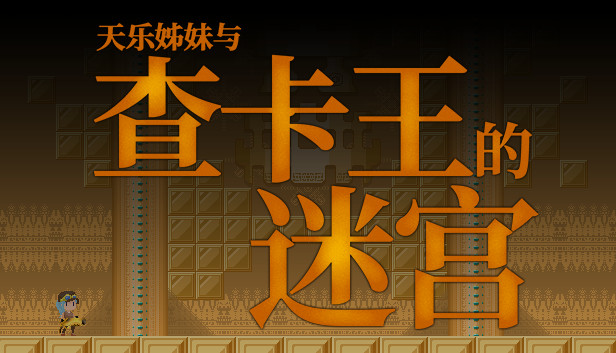
This game’s strength is its good sense of balance. It is a 2D action puzzle game, but it does not raise the barrier to the point of pushing family players away. The balance between controls, observation, and puzzle-solving is restrained and well judged. For parent-child families, it provides a clear sense of “we are playing a game,” without disrupting the shared play rhythm through high-pressure combat. Children can focus on trying things out and carrying them through, while parents can give hints and help review solutions afterward. It is a fairly well-balanced option in terms of both gameplay and family friendliness.
8. Snakebird Primer #
 Kinguin€0.36-95%Steam €0.36Voir le prix →
If what you want is a single-player game that truly gets you thinking together, Snakebird Primer is an excellent fit. Its rules are transparent and its goals are straightforward, but the solutions require spatial imagination and sequence planning, which naturally creates room for parent-child discussion. It is not the kind of lively game built around hand speed; rather, it is a classic “solve it together in the living room” experience: the child proposes intuitive ideas, and the parent helps test and refine them. Compared with many children’s puzzle games, it feels more like serious thinking training, just packaged in a friendlier way.
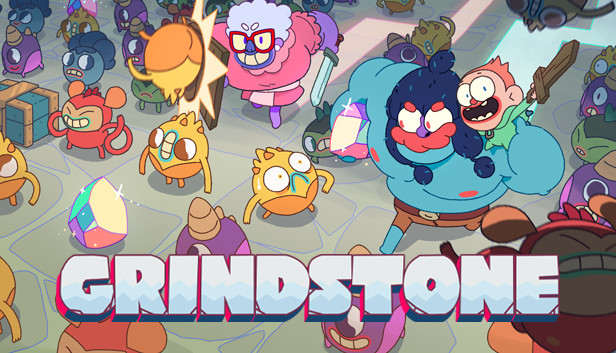
9. Grindstone #
 Kinguin€1.98-88%Steam €1.98Voir le prix →
Grindstone is not a children’s game in the traditional sense, but it is very well suited to parent-child families during short pockets of free time. Its matching rules are intuitive, while its decision-making depth is stronger than that of ordinary match games, making it both satisfying and strategic. Its advantage is that each round is short, which makes it ideal for taking turns on a level and discussing the next move together. For children who already have some gaming experience, this kind of title is more replayable than purely beginner-oriented products; for parents, it is also less likely to become boring halfway through.
10. Hidden Cats in Istanbul #

Some families do not need training-focused or challenge-focused products; they just want something safe, light, and pressure-free to enjoy together. Hidden Cats in Istanbul is the standard answer for that. The cat-finding gameplay has almost no learning barrier, and both elderly family members and children can get into it immediately. The art is also friendly and appealing. Its ceiling is not high, but its floor is extremely stable, making it ideal for light companionship after meals, on weekends, or during holidays. If there is one drawback, it is that the gameplay depth is limited, leaning more toward a one-time relaxation experience.
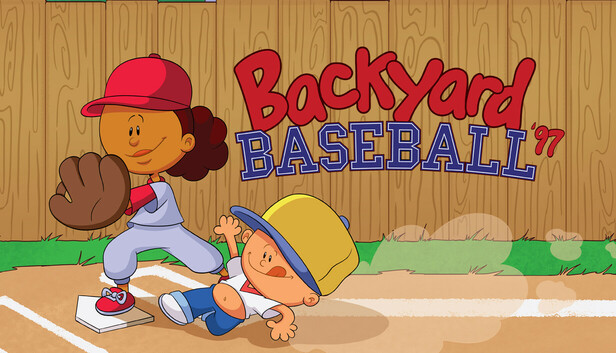
11. Backyard Baseball '97 #
 GAMIVO€29.32Steam €29.32Voir le prix →
Sports themes are naturally suited to family settings because the goals and rules are direct enough. Backyard Baseball '97 goes a step further: its backyard style tones down the competitiveness while preserving fun and childlike charm. Even if family members do not understand complex sports systems, they can quickly grasp the simple pleasures of batting and defense. It is suitable for taking turns, watching each other’s mistakes and highlight moments, and generally creates a positive family atmosphere. Still, it is ultimately sports-focused, so if the child is naturally uninterested in ball games, its appeal will drop noticeably.
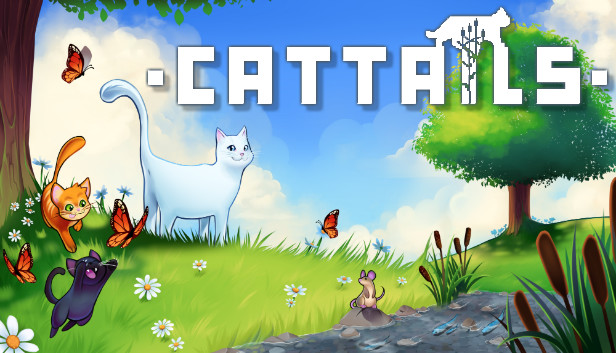
12. Cattails | Become a Cat! #
 Humble Bundle€12.93Steam €12.93Voir le prix →
For families who like animals and dislike high-pressure challenges, Cattails | Become a Cat! can be treated as a comfort-zone pick. The premise of living life as a cat has natural appeal, and its exploration and daily routines are fairly relaxed, making it easy for children to immerse themselves in it. The issue is that it leans more toward an individual immersive experience, and the room for discussion and cooperation between parent and child is not as strong as in puzzle, hidden-object, or training-focused titles. So it is better suited to families who enjoy watching and chatting together, rather than being the most interactive option on this list.
The filtering standard for this list is very clear: it does not simply look at whether a game carries a child-oriented label, but whether it truly allows parents to participate. The titles most worth prioritizing are still high-companionship, low-barrier games like Little Mouse's Encyclopedia and It's Spring Again; if you care more about thinking skills and taking turns through challenges, then look to Snakebird Primer, Poi, and Grindstone. The key to parent-child gaming has never been difficulty, but whether shared screen time can be turned into meaningful communication.



Commentaires 0
Votre avis nous intéresse
Bienvenue ! Partagez votre avis sur ce jeu — une surprise attend peut-être la première personne à commenter.
Aucun commentaire pour l'instant. Soyez le premier.