
























Opening
*Kingdoms and Castles* launched on April 19, 2017, with reception split across a 6.8/10 aggregate, YouYanShe’s 5/10, and Gamersky’s 7/10. The division is entirely justified. This title does not reward players who want to stack monuments. It rewards players who can withstand the pressure of a burning supply line.
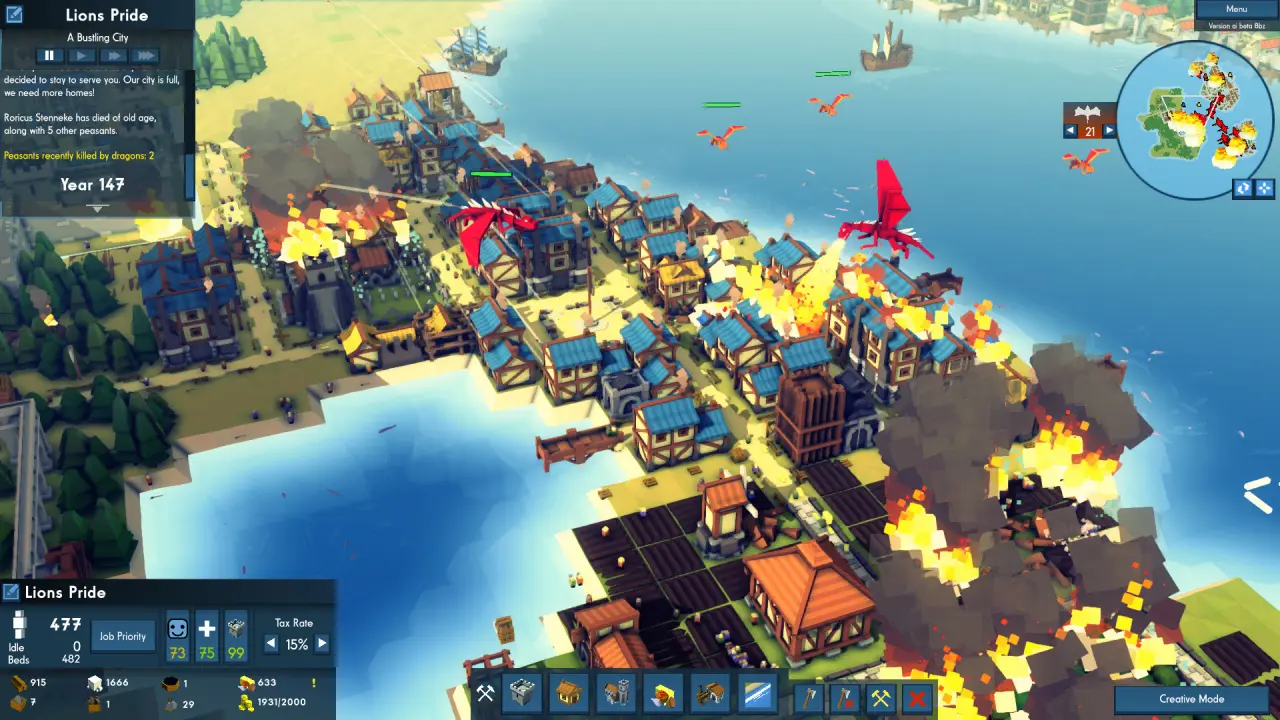
When dragon breath sweeps across your walls, the population counter drops like a leaking bucket. Your immediate reaction is not to order a retreat but to drag the carpenter’s workshop onto a distant slope. The actual design strength lives in that compulsion to save one more brick while low-poly villagers scramble through the fire. The game refuses to let you act like a monarch. It forces you to function as a stressed construction supervisor. Night cycles mixed with unpredictable rain and snow stitch together a medieval atmosphere using only these fragmented survival moments.
Gameplay | 8.0/10
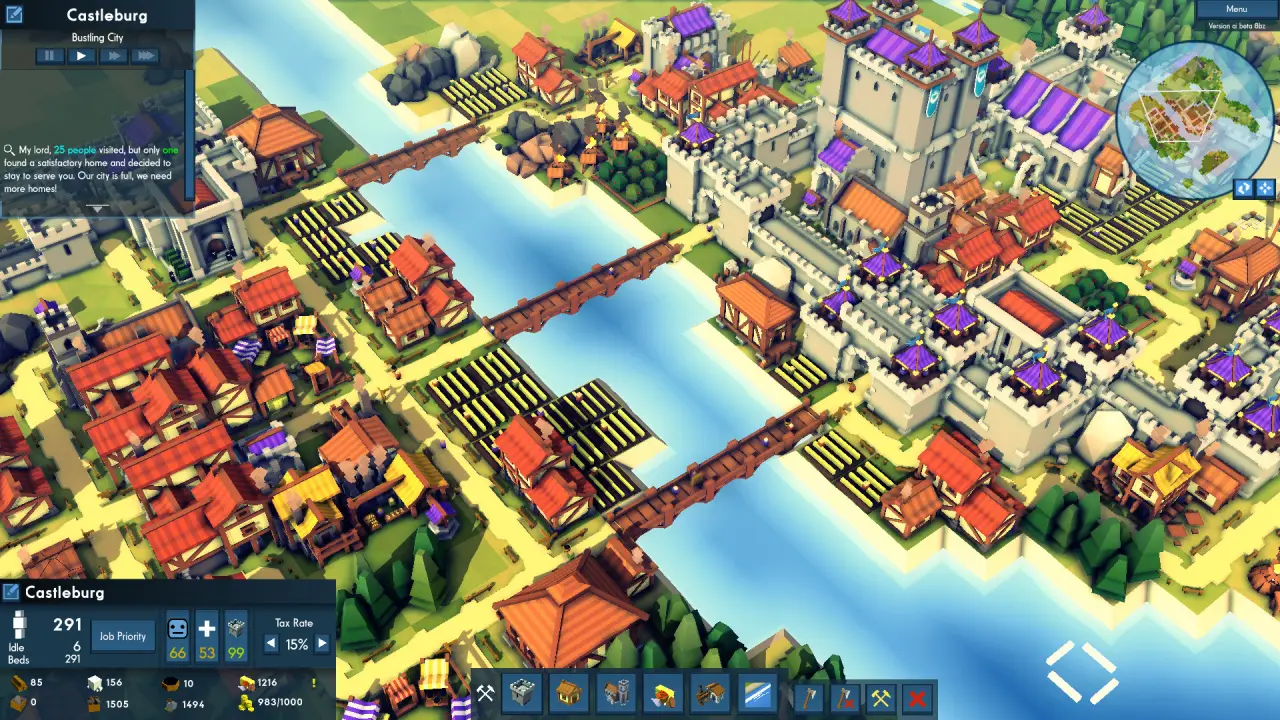
Gameplay: 8/10City-building simulation meets real-time defense, laying a remarkably solid foundation. You zone farmland, and workers automatically head out to sow seeds. Blacksmith shops clank away, forging weapons. Everything runs with quiet efficiency—until pirate ships appear on the coastline.
At first glance, the combat system feels like a frantic tower defense game. Play a bit deeper, and you realize it’s actually a calculated exercise in resource management. Here, juggling resources isn’t about filling spreadsheets—it’s a high-wire balancing act. The satisfaction of striking an enemy doesn’t come from floating damage numbers. It comes from that quiet moment of realization: “I got the calculation right.”
The sandbox mode grants you immense freedom. However, the late-game loop does start to show its age. The same bandit camps respawn over and over, and the rhythm of defense gradually devolves into a mechanical grind. It’s not game-breaking, but it inevitably dulls the tension.
The controller mapping on the console version holds the experience back. Complex, multi-layer building commands feel incredibly cumbersome on a gamepad. The UI logic simply hasn’t been adapted for a TV screen. If you plan to play exclusively on console, you’ll burn through most of your patience. Mouse-and-keyboard controls on PC are exactly what this system was designed for.
Content | 7.5/10
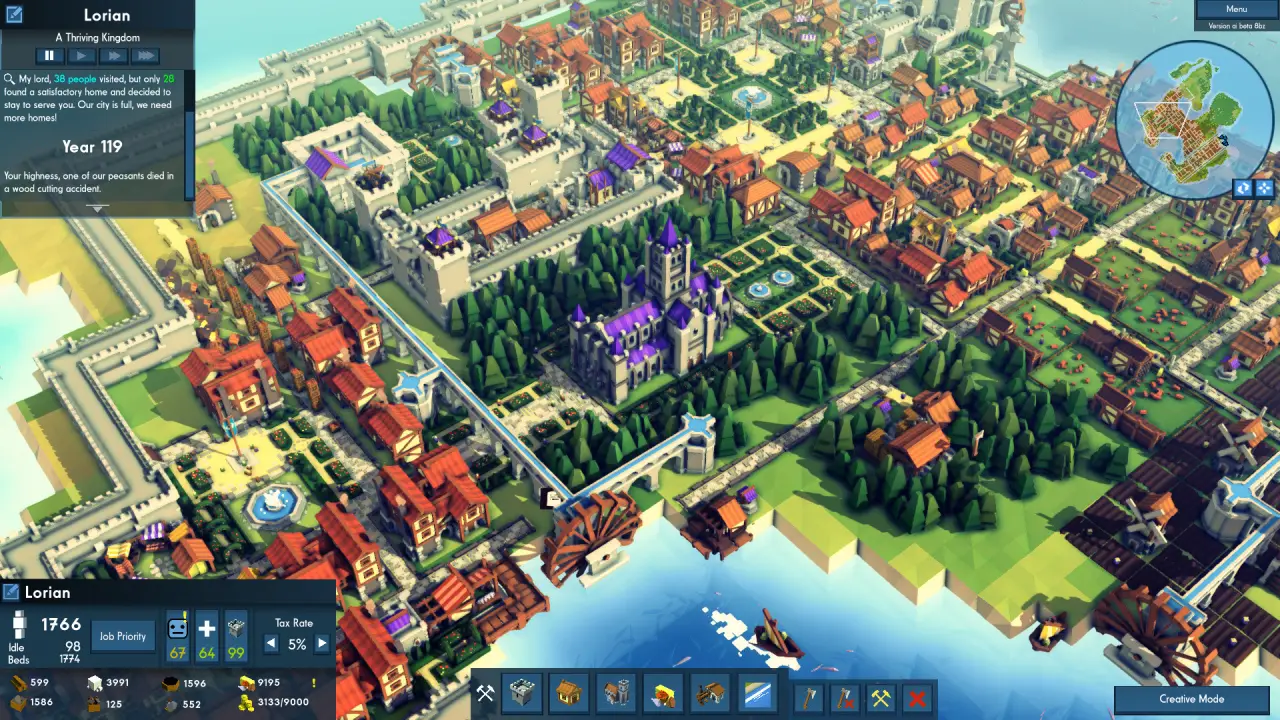
Contenu: 7.5/10Clearing the main campaign didn't take long, but after 70 hours, I've barely crossed 60% completion. The game's "just one more tower" loop is incredibly addictive. The sandbox mode, paired with custom rules, absolutely maxes out its replay value. You can restrict defenses to only wood, or crank enemy numbers up to hellish levels.
The multiple difficulty settings act like a master key, easily accommodating everyone from players seeking a casual farming experience to those craving hardcore survival. When compared to the Stronghold series, it trims down strategic depth but heavily invests in rule customization.
On PC, the mod community serves as a lifeline for this experience, but the console version misses out on that benefit. Lacking mod support is like cutting off the gas to a kitchen: no matter how solid the base ingredients are, you can't whip up new dishes. Still, the core content itself is quite substantial.
After experimenting with custom rules for a while, variable combinations inevitably hit a ceiling. You start to long for mods that can actually rewrite the underlying logic. Fortunately, the developers haven't shut the door completely; every update sneaks in a few practical new features.
Sound | 6.5/10
Audio: 6.5/10The background music is intelligently curated. There are no epic, large-scale choirs—just a few acoustic guitars and soft strings laying a gentle foundation. Its purpose isn't to force emotions, but to leave you with some breathing room. I even added one of the main city's dusk tracks straight to my playlist.
It doesn't steal the spotlight; it simply serves as ambient noise. The detail in the environmental sound effects exceeds expectations. The rustle of wind through the trees, the dull thud of an axe striking oak, and even a farmer's cough or throat-clearing are all blended into the same audio layer.
The game's sound design doesn't aim for sheer impact. Instead, it seeks to provide a gentle cushion for your ears. The problem is that dynamic transitions can occasionally feel abrupt. When the combat music kicks in, the volume spikes without warning.
You'll get used to it after a while, though it does fatigue your ears. The overall listening experience is comfortable, but it lacks memorable hooks. It's best enjoyed as background noise, not meant for focused, standalone listening.
Graphics | 6.0/10
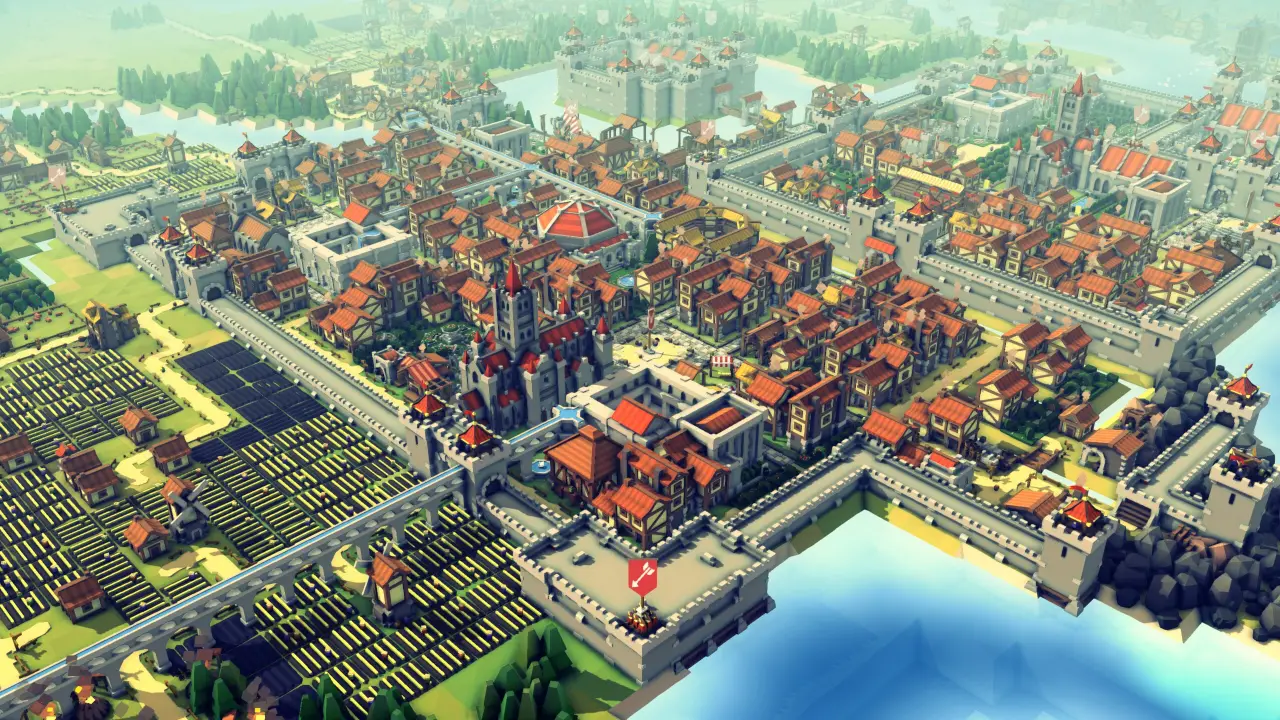
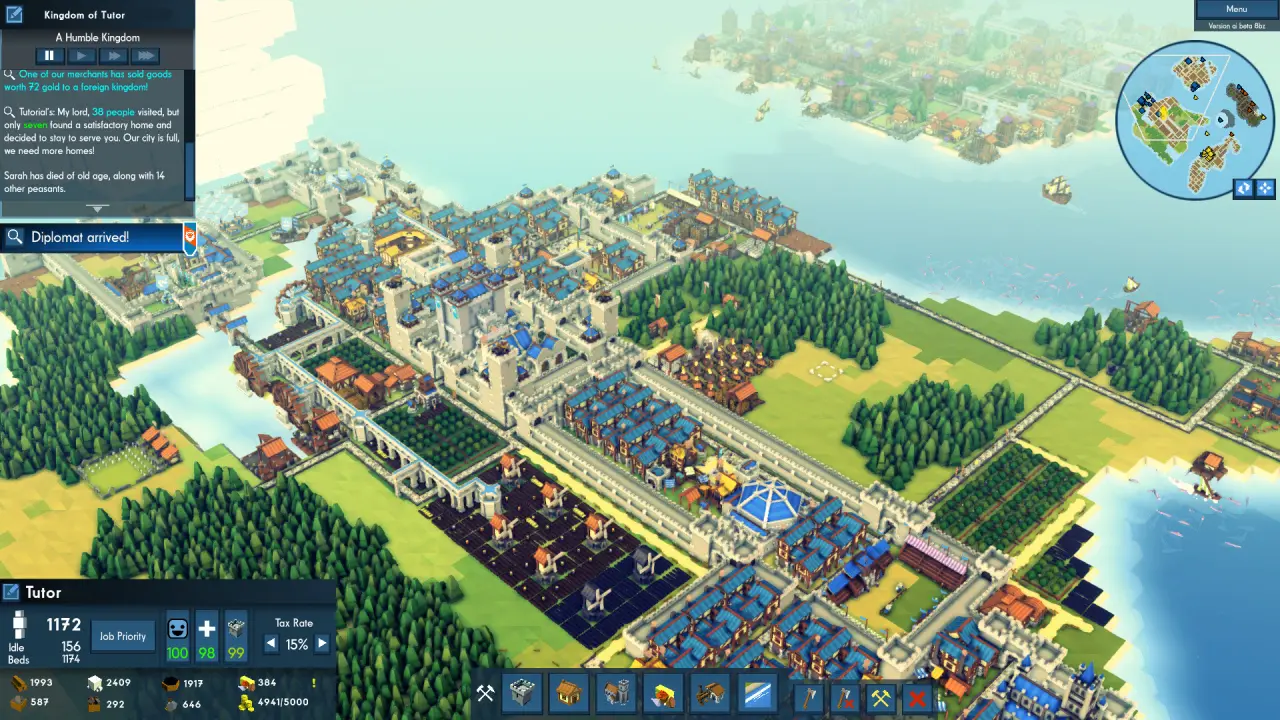
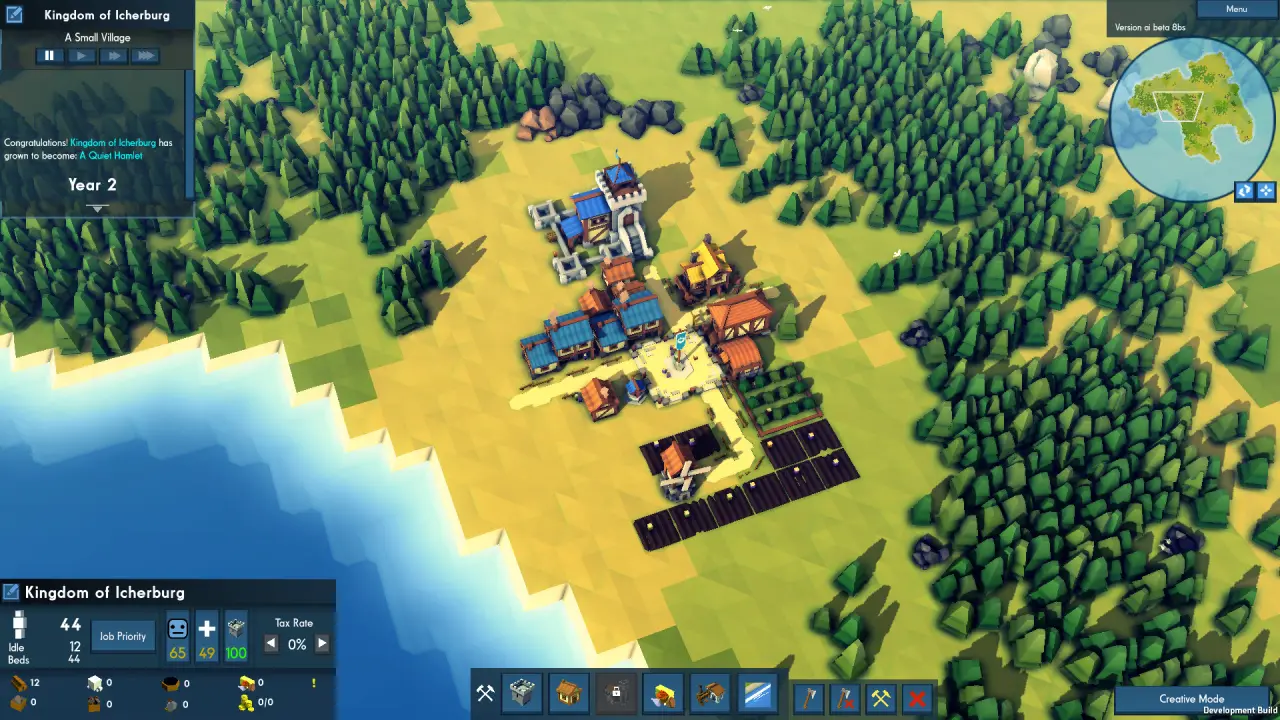
Graphismes: 6/10The first time you look up through the morning mist, the medieval low-poly art style is undeniably clever. It forgoes complex textures and photorealistic materials, relying instead on silhouettes and color to differentiate buildings. The game's art direction isn't about "piling on assets," but about "strategic trade-offs."
On PC, the visual presentation comfortably earns a passing grade. The console port, however, falls into a major optimization trap. As the city expands into the mid-game, frame drops and stuttering become frequent visitors. A quick camera pan turns the screen into a choppy slideshow.
When UI elements crowd the display, rendering overhead instantly maxes out. This isn't the art style's fault—it's the underlying code that hasn't kept pace. The details simply don't hold up to scrutiny; distant buildings are little more than flat 2D textures. Water reflections feel half-baked. Yet, when you step back, that rough, blocky feel actually serves as a protective camouflage. It masks performance shortcomings. It also lowers the hardware threshold.
Plot | 5.0/10
Scénario: 5/10Don’t expect a complete story here. There are no quest lists. No letters handed to you by an NPC. The main plot is thoroughly dismantled, ground into the turning of windmills and mills.
The medieval historical atmosphere is entirely stitched together through environmental details. A plague today, a gust of wind tomorrow. This fragmented narrative is a double-edged sword. Players who enjoy free-form building will find it relaxing, while those seeking a plot-driven experience will only feel a sense of emptiness.
The main storyline tells a passable survival story. It’s decent enough, but you’ll forget it by the next day. That said, a few random events are quite interesting, like the peculiar commissions brought by wandering merchants. No spoilers—I’ll let you stumble upon them yourself.
Weak storytelling is a common ailment in sandbox games, and this one doesn’t intend to fix it. It leaves the entire burden of narrative creation to the players. Every wall you raise is a line in your own chronicle.
When I put down the controller, I didn’t feel that typical relief of “finally beating the game.” Instead, it felt more like saying goodbye to an old friend who had been staying with me for two months. I hated to see them go, but I knew it was time to move on. The game doesn’t hand you grand narratives, nor does it bombard you with constant achievements.
It simply hands you a plot of land, a few trees, and a bunch of little folks to worry over. Is it worth sixty hours? If you’re looking for a flawlessly optimized industrial assembly line, or crave visceral, hit-confirming action feedback, its pacing will be so slow it puts you to sleep.
But if you enjoy the process of watching chaos gradually transform into order, its addictive pull will slowly take hold. The repetitive mob grinding in the mid-to-late game is indeed tedious, and the console version’s optimization certainly holds it back.
Yet, when you stand atop the walls expanded to their third ring, watching the sunset paint the low-poly roofs in shades of orange and red, while orderly training chants echo from the barracks, you’ll find that all those rough edges are easily forgiven.
It’s not a finely tuned economic clockwork, nor a hardcore strategic war game. It’s more like a box of building blocks with no instruction manual. You set the rules, and you bear the consequences. Picking it up on sale is a no-brainer, but at full price, the value might feel a bit steep.





Commentaires 0
Votre avis nous intéresse
Bienvenue ! Partagez votre avis sur ce jeu — une surprise attend peut-être la première personne à commenter.
Aucun commentaire pour l'instant. Partagez votre avis sur ce test.