Actualité
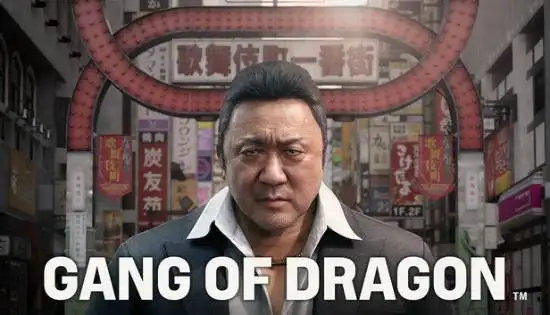
Gang of Dragon cancelled, raising questions about Nagoshi's indie future.
NetEase canceled Nagoshi studio’s Gang of Dragon citing high costs. Players condemn the publisher fo















For an MMO that has been in development for ten years, what ultimately left the deepest impression on outsiders was not its systems, lore, or player stories, but a string of ever-swelling financial figures. It opens like a road movie that seemed destined for epic heights, only to suddenly veer into a courtroom halfway through. Recently, the controversy surrounding Intrepid Studios and Ashes of Creation has continued to escalate: former CEO Steven Sharif has been accused by investor Jason Caramanis of misappropriating company development funds, while MMO analyst NefasQS released a 22-minute YouTube video claiming to possess complete financial records from 2015 to 2026 and presenting new evidence. 
From a narrative standpoint, the most glaring aspect of this incident is not merely the “failure of the project” itself, but how, after that failure, every figure involved was quickly dragged into an even uglier drama. According to the information currently available, Ashes of Creation performed poorly after entering early access at the end of 2025, and by late January, the original text even described its termination in terms bordering on collapse. Sharif then announced his resignation, the entire staff was laid off without warning, the final round of wages went unpaid, and the game was removed from Steam. More troubling still, the project’s development funding did not come solely from Kickstarter, but was heavily mixed with private investment, meaning that once investors felt they had been misled, a breakdown of the funding chain became almost inevitable.
The most explosive part this time comes from allegations of personal spending. According to figures cited by NefasQS, Sharif is accused of misappropriating more than $12 million in company funds, with expenditures allegedly including a private chef, cigars and luxury goods, spending at trading card and figurine shops, roughly $42,000 on historical collectibles auctions, over $80,000 in villa-related expenses, and even more than $700 spent on Fortnite. Several former employees added another blow, saying they had never once seen the so-called private chef who was supposedly “meant to serve employees in the future” at the studio. Taken together, it sounds less like a business expense and more like treating the company’s financial statements as an extension of one’s private life—details that wound more deeply than any slogan ever could.
But the deeper issue is that, for now, this remains a Rashomon-like case still mired in litigation. Although NefasQS has made the financial spreadsheets public and says their contents have been verified by former employees, the authenticity of those documents, as well as the allegations themselves, cannot yet be independently confirmed by a third party. Sharif, in an interview with Kotaku, categorically denied the accusations, saying he had “never misappropriated any Kickstarter crowdfunding funds,” and stressing that claims of a “lavish lifestyle” and “embezzlement of company money” are unfounded. At the same time, he has countered by accusing the investors of attempting to illegally force a takeover of the studio, and even alleged that a creditor group wanted to outsource development to the Philippines in order to keep the project’s remains alive at lower cost.
From another angle, the tragedy of Ashes of Creation is no longer just about a game collapsing before completion, but stands as a classic warning to the industry: when a project like an MMO—long-cycle, massively expensive, and dependent on constantly selling a future vision—relies too heavily on a founder’s personal credibility and ongoing injections of capital to survive, its narrative structure becomes extremely fragile. In the early stage, it gathers players through vision; in the middle stage, it extends hope through financing; but once preview impressions and word of mouth start to slide in the later stage, the story quickly falls from “the future looks promising” to “who is lying.” Sadly, the people who usually pay the true price for that fall are not the executives, but ordinary employees left with unpaid wages, canceled benefits, and legal battles they must fight on their own.
If you are still following this game now, my advice is straightforward: at least until there is some interim resolution regarding the copyright lawsuit, wage disputes, and management accountability, there is no need to hold out consumer-level expectations for its revival. The easiest mistake for a player community to make is to confuse “I once believed in it” with “it is still worth believing in.” But industry experience suggests that for a project entangled in control disputes, the breakup of its core team, and removal from Steam, getting back on its feet is harder than rebuilding an entire combat system from scratch. For MMO players, the real question this leaves behind is not whether Ashes of Creation can still survive, but whether, when faced with grand promises dressed up in dazzling rhetoric in the future, we will still be willing to stake our time, money, and emotions on them so easily in advance.



Commentaires 0
Votre avis nous intéresse
Bienvenue ! Partagez votre avis sur ce jeu — une surprise attend peut-être la première personne à commenter.
Aucun commentaire pour l'instant. Soyez le premier.