
Actualité
Sony's former exec reveals PC ports driven by cost pressure
Sony's AAA budgets have ballooned so severely that Shuhei Yoshida confirmed the company now ports Pl
















To put it simply, the fact that the original Xbox survived was like a freshman walking into the dorm and immediately wanting to be the room leader—bold, but with everyone else still watching from the sidelines. For players today, Xbox has long been a major name in the industry, but back in 2001, that was far from the case. Ed Fries recently talked about this period in a more systematic way for the first time on the podcast The Expansion Pass, laying out many of the awkward realities from those early years.
At the time, Microsoft had just launched the original Xbox, but there had already been plenty of failed console examples before it. Sega had just exited the console battlefield, and failed platforms like 3DO and Philips CD-i were still less than ten years in the past. If you put yourself in that situation, it makes perfect sense—it was like a transfer student suddenly showing up in class and saying they were going to form the strongest gaming squad. People might take a look, but they would not necessarily be ready to pick a side right away.
What is even more interesting is that many publishers actually did not want Sony to dominate alone. Fries put it very bluntly: everyone worried that if the market ended up with only one top player, the platform holder might be able to “do whatever it wanted.” Even now, that sounds realistic, because no one wants to be controlled by a single platform. Developers want room to operate, and players want more choices too.

The most bittersweet part is still the Final Fantasy story. Fries directly mentioned that “Final Fantasy was once a major IP Xbox missed out on.” Back then, he very much wanted to secure the series as a Microsoft console exclusive, and he frequently traveled to Japan to meet with publishers like Square Enix, Capcom, Konami, and Tecmo. But the problem was also very real: if Square had openly thrown its full support behind Xbox, the cost would have been too high, and the interests it stood to lose were simply too great, so communication between the two sides remained extremely difficult.
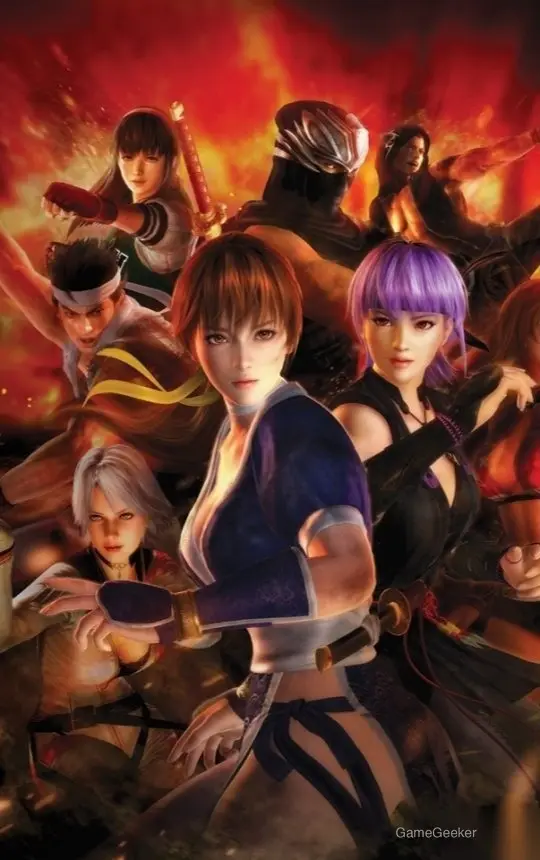
To put it plainly, it was not that publishers did not want competition—they just did not dare make their stance too explicit. Fries recalled that some companies could only signal their position in more subtle ways. For example, Tecmo releasing the Dead or Alive series on Xbox was, in essence, more like applying pressure on Sony: do not get too overbearing, or everyone will have to keep a backup plan. It was like four people in a dorm playing games—on the surface, everyone says they are fine with anything, but in reality, each of them wants to hold on to their own say in things. It is kind of hilarious, and very real.
Looking at industry trends, this old story actually helps explain today’s Xbox. Microsoft is still making consoles, but it is also putting many of its own games onto Sony platforms and continuing to make money through cross-platform publishing. Compared with that uncertain newcomer from back then, Xbox today is clearly much more pragmatic. It is no longer fixated on “having to win the console war,” but is instead finding ways to make the brand present in more places. Current Microsoft Gaming CEO 阿莎·夏尔马 has also stated that Xbox will continue focusing on core players going forward, while aiming to bring the brand back to new heights.
For players like us who care most about playing together, my view is simple: the fiercer the platform competition, the better the outcome usually is. Because publishers cannot afford to phone it in, exclusive strategies become more cautious, and opportunities for cross-platform multiplayer may actually increase. Great single-player masterpieces absolutely have value, but if a platform makes it easier for friends to get together, then its presence in those late-night dorm chats instantly goes through the roof. The original Xbox failing to land Final Fantasy back then was indeed a shame; but the fact that it endured to this day, and in doing so pushed the industry toward being more open, is in itself pretty significant.


Commentaires 0
Votre avis nous intéresse
Bienvenue ! Partagez votre avis sur ce jeu — une surprise attend peut-être la première personne à commenter.
Aucun commentaire pour l'instant. Soyez le premier.