
Actualité
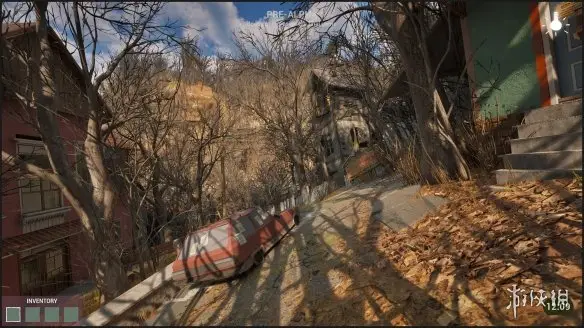
The Division 3 ramps up development with 7 new core hires
Ubisoft has posted 7 hires for The Division 3, including Lead Game Designer and Senior AI Game Desig
















On Saturday afternoon I finally booted up my PC. I was just about to play an online match, but I got stuck in a queue and couldn’t get into a room, the matchmaking spinner kept going forever. At that moment it suddenly hit me: the scariest thing in a game isn’t the monsters, it’s the “waiting.” Same for AI: with today’s large models, you’re basically stuck in “waiting for it to think” and “waiting for it to load,” and half of your two-hour weekend gaming window just vanishes.
Recently Google dropped a new thing called TurboQuant. To put it plainly, it’s like “memory slimming” for large models, especially the KV Cache during inference. They say it can compress that to about one-sixth of the original, and claim that on Nvidia H100 it can be up to 8× faster in real tests. For weekend gamers like us, that’s basically like cutting your dungeon queue time from ten minutes down to one or two. Suddenly you have way more time actually playing, and your mood goes from “working overtime” to “slacking off” in one shot.

Let me explain how it does the slimming, but at a difficulty level an office worker can follow. TurboQuant is made of two parts. One is called PolarQuant; it changes the original XYZ vector coordinates into polar coordinates of “radius + angle.” That’s like going from running three parallel straight tracks to running on a circular track, looping around more efficiently. The other part is called QJL, which uses an extra 1 bit to do a mathematical correction. With that, even when compressed down to 3 bits, the accuracy on long-text benchmarks like LongBench barely drops. It’s like turning graphics from “ultra” down to “high”: the FPS goes up, but the screen doesn’t visibly get blurrier.

What does this have to do with gamers? Let’s lay out the logic first. One of the biggest issues with large models right now is that once a conversation gets long, the KV Cache hogs GPU high-bandwidth memory like crazy. As the context window grows, VRAM ends up like a game stuffed with too many mods—touch it and it crashes. Google’s Gemini series already supports a 1 million token context, and they’ve tested 10 million tokens; they just haven’t opened that up because inference is too costly. TurboQuant’s goal is to slash that part of the cost so things like long-text processing and long-match analysis become less expensive to run. For us, if in the future “AI co-op assistant,” “AI match report analysis,” or “AI level designer” get cheaper to operate, then the time when they show up in games as standard built-in features will come much sooner.
That said, the capital markets saw “memory reduced to one-sixth” and panicked first. Storage stocks like Micron, Sandisk, and Western Digital all dropped, over fears that people won’t be buying as much memory in the future. But brokerages are split into two camps. Some pulled out “Jevons paradox” as their argument: the higher the efficiency, the more resources end up being used overall. In office-worker terms, when the company books you high-speed trains for business trips, it’s not so you can get off work earlier, it’s so you can hit two cities in a single day. Morgan Stanley also stressed that this compression targets the KV Cache during inference; it’s not cutting total memory usage to one-sixth. The demand for HBM in training large models basically isn’t being directly undercut.

For people like us who only sneak in games on weekends and subway rides, the key part is “on-device AI.” The industry generally thinks TurboQuant is more meaningful for terminal devices like phones and laptops, because they have very limited memory and still need to share it with games, background apps, and the OS. If compression tech matures and phones can run stronger models, then future features like “deck recommendations,” “lineup simulators,” and “dungeon guide generation” all have a good chance of becoming instant on-device computation instead of being queued up in the cloud every time. With lower compute costs, companies will be more willing to make these features free built-ins. For us, that’s like getting an AI butler that used to cost a monthly pass for free, which saves more money than skipping a takeout order.

Still, as an office worker whose time is tighter than money, my sense of cost-performance is a bit more down-to-earth. TurboQuant won’t suddenly save you thousands on GPUs or RAM in the short term—the pricey 4090 is still just as expensive. Its real value is probably that over the next three to five years it will help a wave of AI features—previously too costly to launch—actually land: smarter game NPCs, longer-term story memory, or even “weekend mode” matchmaking that understands your work schedule. Should you pre-pay for this trend right now? I’d suggest: don’t impulsively upgrade your PC just for this. For phones and handhelds, it might be worth waiting for the next generation and seeing which brand dares to use “local large model + gaming” as a real selling point at launch events. Then think about upgrading—that’s probably the most cost-effective investment you can make in your weekend time.




Commentaires 0
Votre avis nous intéresse
Bienvenue ! Partagez votre avis sur ce jeu — une surprise attend peut-être la première personne à commenter.
Aucun commentaire pour l'instant. Soyez le premier.