
Actualité
Bunny Garden 2 Adds Twin-Tail Lolita Roro in New Update
Bunny Garden 2's new 10-second trailer shows a twin-tailed lolita character in a sweet-yet-cutting promo. With six heroi
















This is explosive! This latest twist in the tech world really feels like a massive capital-backed multiplayer raid kicking off! Intel has officially announced that it will join Elon Musk’s Terafab super chip factory project, and the moment the news broke, market sentiment was instantly set ablaze. Even more intense, Intel isn’t entering alone—it will team up with SpaceX, xAI, and Tesla to take on the design, production, and packaging of ultra-high-performance chips. With a lineup like that, even the stage lights would have to tremble three times.

Here’s the key point: the most compelling part of this collaboration isn’t just “who is shaking hands with whom,” but that Musk is starting to seize control of computing power into his own hands. Previously, his chip supply depended heavily on Nvidia, Samsung, and TSMC. Now, he plans to build a super chip factory in Texas, with a very clear goal: to provide dedicated chips for SpaceX, xAI, and Tesla. To put it plainly, this is no longer just about buying equipment—it’s about stepping in personally to build servers, forge weapons, and rewrite the rules while he’s at it. The ambition is written all over his face.
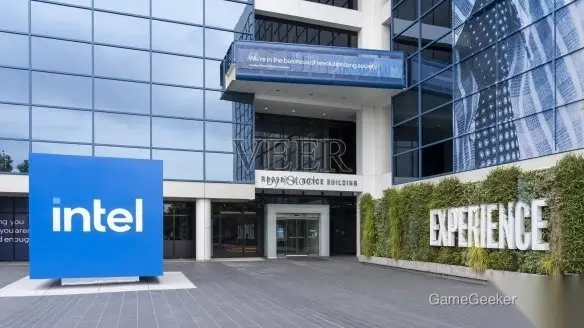
But! This move is also absolutely critical for Intel. After the announcement, Intel’s stock rose 4% and even hit its highest point in nearly three years. The capital market’s reaction was basically a direct high score for this move. Analysts also believe this collaboration could help Intel address its 18A capacity issues. If it can truly use demand from Musk’s ecosystem to ramp up its advanced process technology, then this won’t just be a simple lifeline for Intel—it could be a real chance to regain momentum on its home turf. Lip-Bu Tan has also weighed in, saying the project “represents a major transformation in the way chips are manufactured.” That’s no light statement, and clearly not the kind of language used for an ordinary business partnership.

Now let’s look at SpaceX, where things get even more intriguing. Reports say SpaceX is about to raise tens of billions of dollars through an IPO, which is seen as a major factor driving the partnership. Once the funding is in place, the pace of factory development and chip investment could accelerate significantly. What makes this even more unusual is that the factory is also intended to meet the needs of SpaceX’s space data centers. In other words, future chips won’t just need to run fast—they’ll also have to adapt to the space environment. This is no longer the logic of traditional consumer electronics, but a push into much more demanding industrial and aerospace scenarios.

If you place this in the context of the broader industry landscape, it gets even more exciting. SpaceX, OpenAI, and Anthropic, all of which are expected to go public this year, have been mentioned as meeting the relevant inclusion criteria for the Nasdaq 100. SpaceX is even pushing for rule changes, hoping that leading companies could be included in the Nasdaq 100 as soon as 15 trading days later. Meanwhile, OpenAI is also planning to raise 100 billion dollars. Although it is still expected to continue posting massive losses through 2030, investors remain willing to bet on its growth potential. My view is straightforward: over the next few years, the fiercest competition won’t be about any single AI model, but about who can connect all four cards—capital, chips, manufacturing, and application scenarios—into one integrated play. Whoever completes that closed loop first will look the most like the next-stage Boss.
For those watching tech stocks and the hardware supply chain, this is a story worth tracking closely, because it’s not just a co-branded announcement—it looks more like a signal that power in chip manufacturing is being redistributed. For ordinary users and gadget enthusiasts, there’s no need to jump to conclusions about immediate price cuts or sudden performance surges in the short term. Mega-projects like this still face a long engineering battle between factory construction and actual output. But in terms of the broader trend, Musk wants to hold computing power firmly in his own hands, and Intel wants to use major orders to revive its advanced manufacturing business. If this partnership really gets into stride, its long-term impact could be huge. This show has only just gone live.





Commentaires 0
Votre avis nous intéresse
Participez à la discussion et partagez votre avis sur ce jeu.
Aucun commentaire pour l’instant. Partagez votre avis.