Actualité
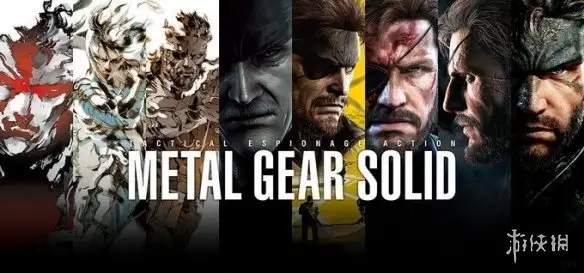
Metal Gear Series Sales Hit Record 66.4 Million Copies
Konami’s latest financial report puts the Metal Gear series at a record 66.4 million sales by March
















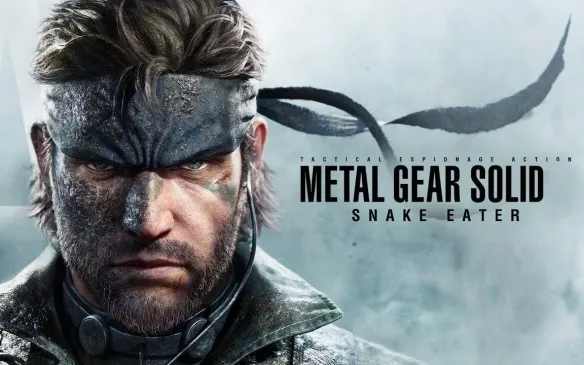
That figure who always lurks among cardboard boxes, radios, and shadows has finally been pushed onto the big screen once again, except this time, the news is no longer confined to the realm of rumor. According to The Hollywood Reporter, Sony Pictures’ Columbia Pictures has officially greenlit a live-action film based on Metal Gear, to be directed by Zach Lipovsky and Adam B. Stein of Final Destination: Bloodlines. For a series that has endured from 1987 to today and sold more than 65 million copies in total, this certainly feels like a reply that has arrived far too late—but whether that reply will be well written still depends on whether the film truly understands the narrative backbone of this work.

Metal Gear has never been an IP suited to a crude adaptation. It may appear to belong to the realm of stealth, firearms, and military conspiracies, but in truth it is more like a sprawling espionage novel stitching together the lingering chill of the Cold War, crises of identity, and the pleasures of genre cinema. Hideo Kojima was deeply influenced by action films of the 1980s and 1990s when creating it, so the series naturally carries a strong cinematic quality. Unfortunately, cinematic quality does not automatically mean it can become a good movie—just as a game with razor-sharp editing does not necessarily grow directly into a theatrically viable film with a working rhythm. On the directing side, Sony executive Sanford Panitch values the duo’s command of visuals and suspense-driven storytelling, and they have also stated their hope of bringing the characters and world of Metal Gear to the big screen. At the very least, that identifies the right priority, because what truly deserves to be preserved are the fractures in the characters’ relationships and the coldness embedded in the worldview.

From another angle, this greenlight is not an isolated event, but rather an industry move following the continued rise of the game adaptation boom. The report mentions that The Super Mario Bros. Movie grossed nearly $400 million, a result strong enough to make film studios recalculate the screen value of game IPs. As a result, projects that had been hovering at the edge of development hell have once again been given a chance to be reignited. Metal Gear was picked back up in exactly this context, and it was not without previous attempts. Deadline reported in 2020 that one version was being advanced by Jordan Vogt-Roberts, and there were even rumors at one point that Oscar Isaac might play Snake. But the project later stalled all the same, and that repeated back-and-forth itself shows that adapting it is far more difficult than adapting an ordinary action game.
On the level of storytelling, the hardest part of Metal Gear is not how to stage the thrill of stealth sequences, but how to tell those seemingly exaggerated yet internally coherent ideas in a way that feels both serious and absurd without losing either quality. The series’ appeal lies precisely in how it resembles an emotionally complex genre film: on one hand obsessed with the posture of spy thrillers, while on the other constantly dismantling the myth of the hero. After Metal Gear Solid V: The Phantom Pain, the series’ mainline entries came to a halt in 2015, with remakes largely sustaining its relevance afterward. For that reason, the player community will probably have deeply mixed feelings about this live-action film—on one hand hoping Snake will finally have a chance to be known by more people, and on the other fearing it will end up as just another generic spy movie with the name but none of the soul.
But the deeper question is whether today’s film industry is still willing to make room for the patience that complex storytelling requires. Metal Gear is not incapable of becoming a popcorn movie, but if all that remains in the end are a few iconic action poses, several explosions, and some symbolic nods, that would be a real shame. What was truly revolutionary about the series was never that it was “like a movie,” but that it turned games into a form of text that combined drama with self-reflection. For longtime players, there is really no need to rush to bet on success or failure at this stage; it may be more fitting to treat it as a case study for observation. In today’s fully industrialized era of game adaptations, will genre formulas swallow a work’s individuality, or can a work’s individuality in turn reshape the language of the screen? Metal Gear may well be an excellent touchstone for finding out.
Commentaires 0
Votre avis nous intéresse
Bienvenue ! Partagez votre avis sur ce jeu — une surprise attend peut-être la première personne à commenter.
Aucun commentaire pour l'instant. Soyez le premier.