Actualité
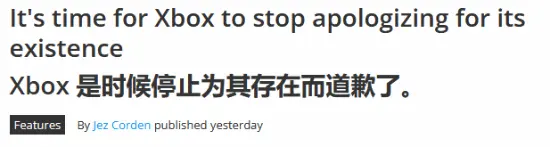
Xbox Stops Apologizing: New CEO Ends Defensive Marketing Strategy
Windows Central's editor slammed Xbox's "weak" marketing strategy, urging the brand to stop promotin
















Over the past two years, competition among internet products in content placement has become increasingly intense, and ad creatives have gradually evolved from being merely “watchable” to “eye-catching.” But objectively speaking, the more one pursues retention, the more it tests whether the review process is complete. What sparked discussion around NetEase Cloud Music this time was precisely the most basic issue of presentation.

According to available information, some netizens recently noticed that a character in a NetEase Cloud ad showed an obvious abnormality: the neck appeared to be twisted toward the back, while the body made no corresponding movement. This kind of visual dissonance is very intuitive and requires no professional judgment; ordinary users can spot it at a glance while scrolling through an information feed. Subsequently, some netizens publicly posted questions about whether its ad placement was insufficiently rigorous, and the matter quickly spread.
On April 14, a relevant person in charge at NetEase Cloud Music responded to the media, apologizing for the poor user experience and confirming that the relevant ad creative had been taken offline. Judging from the response, the takedown was not slow and at least completed the most direct damage control. But from a design perspective, the issue does not lie only with a single piece of creative material; rather, it lies in why it was able to pass the pre-launch inspection process.
If ad placement is viewed as the final round of acceptance testing before a product goes live, this mistake is more like a common process shortcoming in second-generation products: the creative side moved too fast, while quality inspection failed to keep up. Especially for a high-frequency app like a music platform, which has a broad user reach, the amplification effect after an error in creative material will be more obvious than for vertical products. A single abnormal image may not directly harm the core business, but it does weaken the brand’s credibility in terms of attention to detail.
Judging from feedback in the user community, the focus of discussion is actually quite consistent: it is not whether the ad’s style looks good, but rather “how such an obvious problem could still go live.” This shows that users now have basic expectations for the industrialized production of platform content. They can accept differences in creative style, but are less willing to accept low-level mistakes. In other words, users’ tolerance for errors in advertising is declining, and it is becoming difficult for platforms to lightly brush such issues aside as “a problem with an individual creative asset.”
Compared across the industry, such incidents have not been uncommon in recent years; the difference between platforms lies mainly in the speed of their follow-up response and the attitude of their explanation. NetEase Cloud has apologized and taken the material offline this time, which counts as completing the standard actions in crisis handling and is above the passing line. But if there is no clearer optimization of the review process afterward, this controversy may easily remain at the level of “handled” rather than “resolved.”
For ordinary users, this incident will not determine whether you continue using NetEase Cloud Music, after all, it is neither a functional failure nor a pricing adjustment. But from the perspective of platform operations, it offers a very practical reminder: when content production increasingly relies on efficiency, the last thing that should be cut corners on is, in fact, the most traditional manual review and rechecking. After all, advertising is the outermost façade of a brand. When something goes wrong with that façade, what it brings is not a gain in traffic, but a costly loss of trust.



Commentaires 0
Votre avis nous intéresse
Bienvenue ! Partagez votre avis sur ce jeu — une surprise attend peut-être la première personne à commenter.
Aucun commentaire pour l'instant. Soyez le premier.