
Actualité
Grab two free PC games before Epic's clock runs out, while Undertale and Divinity: Original Sin 2 are 75% off
Astral Ascent and LUFTRAUSERS are free to keep today, while two of PC gaming's most celebrated RPGs cost less than $14 c
















Those cold white corridors of a lunar base have always been the perfect place to house the subtle emotional distance between humans and machines, and the first gameplay footage released for Pragmata happens to reveal its character precisely through that sense of distance, little by little. Today, PlayStation Japan’s official channel updated the latest episode of “PLAY! PLAY! PLAY!”, officially unveiling the first part of the gameplay demo for Capcom’s new action-adventure title Pragmata, with game director Cho Yonghee and producer Naoto Oshima appearing to provide commentary. For a completely new title that has been in limbo for so long, this kind of reveal feels like a sci-fi movie trailer finally willing to show the structure of the actual film—it at least suggests the game is no longer relying solely on concept art to maintain its mystique.

What stands out most in this gameplay footage is not the gunfire or spectacle, but the simultaneous control of the two protagonists: the human lead Hugh and the robot girl Diana. On a narrative level, this kind of design is naturally more difficult than a solo action-adventure game, because it requires the system and the relationship to work in sync. Both characters need to feel “useful,” but both also need to feel “like characters,” rather than one simply being responsible for damage output and the other for opening doors. The demo focuses on a system that blends puzzle-solving and action combat, and if handled well, it could make the dual-protagonist dynamic more than just a story premise—it could embed that relationship directly into the player’s muscle memory.

From another angle, with Shoji Kawamori responsible for the worldbuilding and supervision, and with the stage set on the moon, Pragmata naturally carries a somewhat hard-edged sci-fi framework. Unfortunately, a common problem in many sci-fi games is that the world is vast and the terminology is plentiful, but the characters feel dragged along by the art design; judging from the current demo, however, Capcom seems to be avoiding that hollowness. In particular, the slice-of-life elements in the “safe house,” where players interact with Diana and carry out upgrades, give this relationship at least a few everyday cracks to breathe through. What truly makes a story stand is often not its grand setting, but how its characters coexist in enclosed spaces—like a two-person road movie set on the moon, except the wheels have been replaced by zero gravity and mechanical doors.
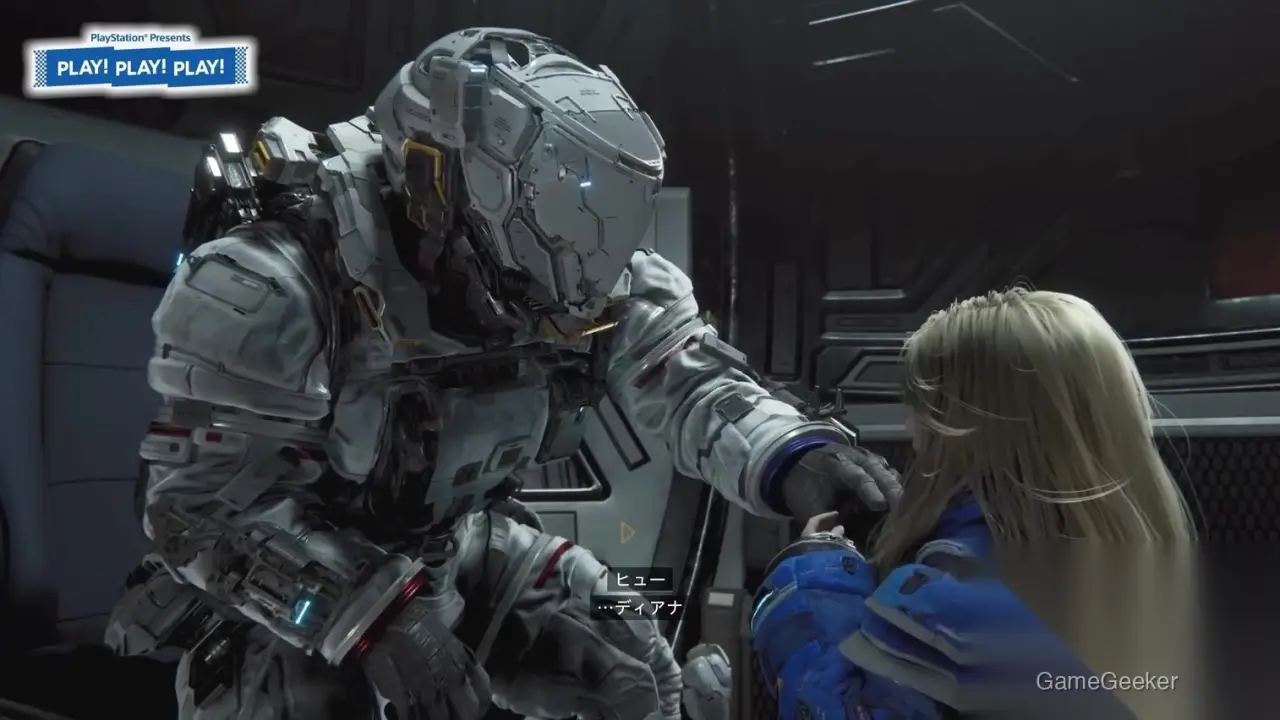
But the deeper issue is that the current gameplay footage is still at the stage of proving “the systems work”; there is still some way to go before “the characters stand on their own.” The official announcement has already previewed that the second gameplay showcase will be released on April 14, with further demonstrations of battles against large humanoid robots, diverse weapon switching, enhanced hacking functions, and mechanics such as Diana’s special moves and perfect dodge. In other words, the next question Capcom needs to answer is not just whether this gameplay framework is rich enough, but whether these mechanics can continue to serve Hugh and Diana as a duo, rather than breaking them back down into the familiar skill modules of a typical action game.

If I were to make a judgment about the trend, I would say that Pragmata has tapped into a key direction in narrative-driven action-adventure games in recent years: players are no longer satisfied with simply watching a story unfold, but want the relationship itself to be operable and systematized. Compared with works that treat companion characters as mere supporting decoration, it has at least already taken a more ambitious step. My suggestion is that, at this stage, it is better to keep watching closely, with particular attention on the second gameplay showcase on April 14, to see whether, once the high-intensity combat ramps up, this game can still preserve that precious density of character shown in today’s footage; if it can, then it will be more than just a moon adventure game—it could become a narrative work that truly explains “why humans and machines travel together.”






Commentaires 0
Votre avis nous intéresse
Participez à la discussion et partagez votre avis sur ce jeu.
Aucun commentaire pour l’instant. Partagez votre avis.