Actualité
"Conscious Existence" Breaks Records Before Sale: Should Office Workers Still Buy It?
Capcom's "Exoprimal" was cracked before release by hackers using virtual machine technology to bypas












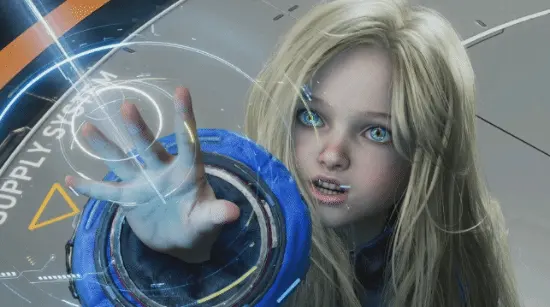
When a new release suffers an accident right before launch, the impact is often felt not only on the sales curve, but also on the market momentum during the debut phase. Pragmata was originally scheduled to launch on April 17 for PC, PS5, Xbox Series X|S, and Switch 2, but one day before its official release, it was leaked early by the cracking group DenuvOwO, with Denuvo protection bypassed as well. For Capcom, this is not simply a security issue, but a risk event in which launch performance may be diverted ahead of schedule.

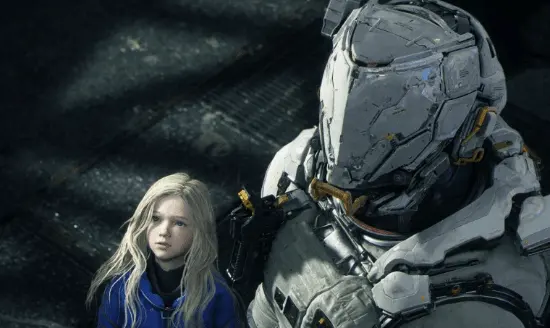
First, looking at the product itself, this game is not built on weak foundations. It is Capcom’s first original IP sci-fi action game in nearly eight years. The theme is fresh, the positioning is solid, and in some ways it resembles a second-generation experimental project made by a major studio outside its mature production pipeline: the scale may not be overwhelming, but the target audience is very clear. The game lets players control both the warrior Hugh and the robot girl Diana at the same time. The former handles combat output, while the latter infiltrates systems and exposes enemy weaknesses. Real-time switching and coordinated hacking are the core selling points.

Judging from media feedback, Pragmata originally had all the conditions for a strong opening in terms of word of mouth. It holds a Metacritic score of 86 and an OpenCritic score of 88. Reviews have focused on its real-time hacking mechanics and character interactions, while negative opinions have mainly pointed to a somewhat conventional story and a slightly repetitive mission structure. Objectively speaking, these shortcomings feel more like issues that wear on the experience in the mid-to-late stages, and are unlikely to hurt first-week conversions too much—especially when it had already climbed into Steam’s top five in sales before launch, making market expectations relatively optimistic.

The problem is that the leak happened at a terrible time. Normally, games like this take weeks or even months to crack, and being cracked before release is not especially common. However, the report also notes that this has been happening more often since the start of this year. Resident Evil 9: Requiem and DOOM: The Dark Ages both failed to keep their protection intact for long, showing that Denuvo’s ability to protect the launch window is shifting from the long-term barrier it once was into more of a short-term buffer.
For ordinary players, this incident does not automatically change Pragmata’s value as a product, but it does affect the timing of a purchase. If what appeals to you is the dual-protagonist coordination, sci-fi action, and Capcom’s attempt at a new IP, then buying at launch still makes sense, because current public reviews have already shown that it is at least not an unfinished product. On the other hand, if you are more sensitive to story execution and mission repetition, then it would be more suitable to wait a few days after release, observe feedback from the player community, and then decide whether to jump in. That offers better value for money and is closer to rational consumption.
From a design perspective, Pragmata looks like a game with clear selling points and equally clear limitations. What a launch like this fears most is not bad reviews, but having its momentum prematurely diluted by leaks. This may not ultimately determine total sales, but first-week buzz, platform chart placement, and the initial wave of word-of-mouth spread that an original IP needs most will indeed be affected. For Capcom, creating a well-reviewed new series is not easy, and going forward, figuring out how to protect the launch window may prove even more important than the protection technology itself.



Commentaires 0
Votre avis nous intéresse
Bienvenue ! Partagez votre avis sur ce jeu — une surprise attend peut-être la première personne à commenter.
Aucun commentaire pour l'instant. Soyez le premier.