Actualité
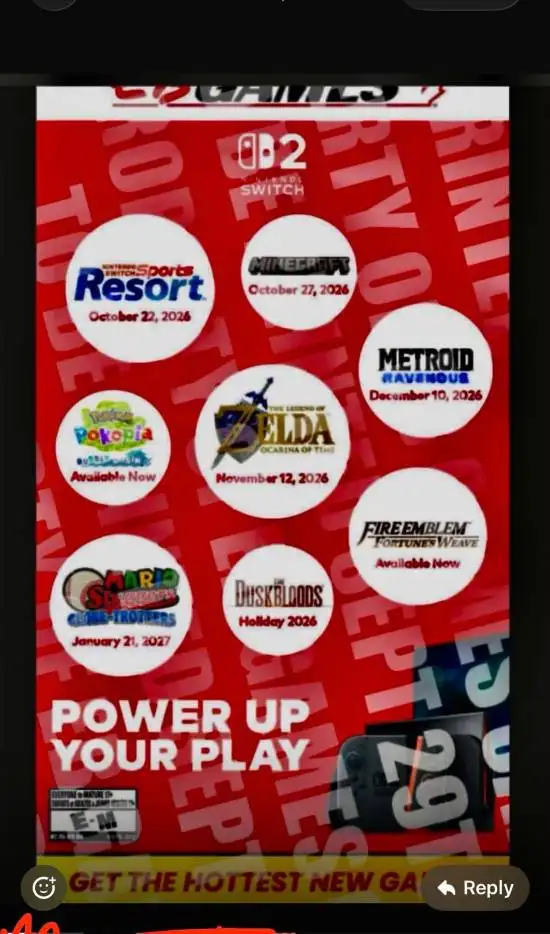
EB Games Leak Reveals Ocarina of Time Remake Release Date
A Reddit user claims an EB Games poster leaked several Switch 2 release dates, though the listing remains unverified. Ni













This time, they made a crucial trade-off: instead of having the core creators use imagination to “project themselves into” female fear, they handed the narrative input directly to people with real lived experience. From a design perspective, this is highly professional, because horror as a genre fears hollow premises most of all. No matter how brutal the writing may be, if the emotional source isn’t authentic, it ultimately becomes nothing more than a layer of artistic shock dressing. Silent Hill f is not the first game in the series to feature a female protagonist, but it pushes the perspective further down into the real-life plight of Japanese women in the 1960s, and that takes real skill.

According to a related GDC interview, game director Al Yang showed clear judgment: he explicitly believed he had no right to define women’s feelings on their behalf, so he entrusted the task of shaping protagonist Hinako’s fears to the female members of the team. The team includes not only young developers fresh out of school, but also members who are married and have children. These differences in age and life stage are, in effect, like a high-quality stratified user study, allowing “the female experience” to expand from a single emotional point into a full spectrum. From a technical standpoint, this creative process may be slower, but it can significantly reduce narrative distortion caused by misjudgments from a male perspective.
What they contributed was not vague generalities, but very specific life pressures: fear of marriage, anxiety about repeating their mothers’ life paths, the sadness of drifting apart from friends, the suffocating feeling of being trapped in one’s hometown, and a deep fear of pregnancy. The most valuable thing here is that these are not the “external threats” common in traditional horror games, but structural pressures that linger in the mind over time. In other words, if Silent Hill f can successfully translate these experiences into level design, monsters, and spatial metaphors, then its horror will not be the in-your-face kind of shock, but a more sophisticated psychological resonance.

The game’s horror imagery was likewise drawn by a female concept artist, and this division of labor is extremely important. Visual horror is not simply about “drawing something more disgusting”; at its core, it is part of the narrative system. What forms make people uncomfortable, and what symbols trigger a sense of oppression, all trace back to sources of lived experience. Al Yang said, "All I can do is listen, gather feedback, and do my best to translate it into the language of games." To me, this actually shows that the team was not overreaching—they understood who should speak and who should synthesize, and that feels far more thoughtful than the all-in-one approach taken by lead creators on many other projects.

From an industry trend perspective, this kind of creative approach is something more horror games should learn from. In the past, many works also tried to portray women’s suffering, but often ended up stopping at symbolic consumption, with characters feeling like functional modules pushed along by the plot, showing obvious laziness and reliance on stereotypes. What excites me most about Silent Hill f right now is not just that it dares to tackle this subject matter, but that it genuinely seems to be building a production framework around “who gets to define fear, and who gets to express fear.” For players who enjoy psychological horror and care about narrative texture, I would recommend keeping a close eye on it; if you prefer pure action or frequent combat feedback, its core appeal may not lie in gameplay exhilaration, but in emotional immersion.



Commentaires 0
Votre avis nous intéresse
Participez à la discussion et partagez votre avis sur ce jeu.
Aucun commentaire pour l’instant. Partagez votre avis.