
Actualité
Grab two free PC games before Epic's clock runs out, while Undertale and Divinity: Original Sin 2 are 75% off
Astral Ascent and LUFTRAUSERS are free to keep today, while two of PC gaming's most celebrated RPGs cost less than $14 c
















As The Legend of Zelda series marks its 40th anniversary, many developers have shared their own anniversary messages, but Eric Barone’s remarks this time actually contain quite a bit of substance. Rather than being a simple tribute, they read more like a public explanation of design lineage: why a farming simulation game ultimately ended up with such strong exploratory appeal.
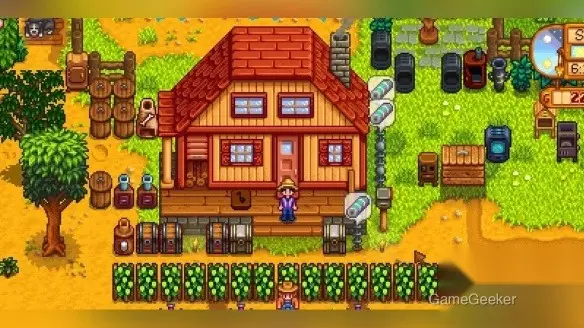
Barone explicitly mentioned that Stardew Valley was deeply influenced by The Legend of Zelda series, and that his personal favorite is probably Link’s Awakening on the Game Boy. The reason is straightforward: it was the first Zelda game he ever played, so it holds clear formative significance for him. He also especially emphasized that Link’s Awakening has a strong “indie game” spirit. Its density of ideas and distinctive personality, when viewed against today’s 3A production lines, actually feels more like an experimental second-generation project—riskier, but also far more recognizable.
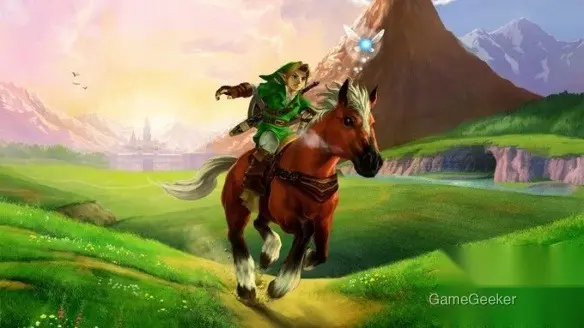
What is truly worth paying attention to is the influence path he pointed out. Barone believes the deepest impact Zelda had on him was the combination of exploration and foreshadowing: players first see an area they cannot reach yet, then later return and unlock it through new items and new abilities. From a design perspective, this approach is extremely efficient. It slows the rate at which content is consumed while planting anticipation directly into the map structure in advance. Although Stardew Valley appears on the surface to be about farming, socializing, and management, the motivation that keeps players moving forward does not come only from numerical growth, but also from the delayed gratification of “there are still areas not yet opened” and “there are still mechanics not yet seen.”
Objectively speaking, this also helps explain why Stardew Valley has shown especially stable retention compared with similar games. Many farming games focus on production loops and freedom of decoration; they feel lively in the short term, but are prone to fatigue over time. Stardew Valley, by contrast, carries an obvious action-adventure framework at fundamental levels such as menu interfaces, environmental interaction, and item-based unlock abilities. For example, cutting down bushes and getting direct responses from the environment, or expanding your range of action after obtaining specific abilities—these are not surface-level tributes, but a transfer of underlying design methodology.

If you extend this line of thought further into the industry, Barone’s remarks are actually quite candid. What the Zelda series has influenced is not a single gameplay module, but a whole system for managing player cognition: first present possibilities, then control the pacing, and finally create payoff through unlocking. This is also why it continues to influence indie developers, because the method is cost-controllable, broadly adaptable, and easy to turn into a high-value player experience. For small teams with limited budgets, that is more effective than simply piling on content.
For players, this kind of information is also highly valuable as a point of reference. If you like Stardew Valley, then looking back at works like Link’s Awakening often helps you understand where its pacing comes from. Conversely, if you prefer immediate stimulation and linear progression, then the real appeal of Stardew Valley may never have been the “farm” itself, but rather a gentler Zelda-style sense of exploration. In a way, Barone’s comments this time also serve as a reminder to the market: truly enduring games do not necessarily rely on the latest technology—more often, they rely on old methods being thoughtfully recontextualized.





Commentaires 0
Votre avis nous intéresse
Participez à la discussion et partagez votre avis sur ce jeu.
Aucun commentaire pour l’instant. Partagez votre avis.